
 Worksheets
Atoms and the Periodic Table
Total questions: 56
Worksheet time: 33mins
Which of the following is an element?
salt
oxygen
vinegar
water

A model of the most basic unit of oxygen is shown. Which of the following is true of oxygen?
Oxygen is an element because its most basic unit is a single type of atom
Oxygen is a compound because its most basic unit is a single type of atom
Oxygen is a mixture because its most basic unit contains more than one particle
Oxygen is a compound because its most basic unit contains more that one type of particle
How is an element different from a compound?
an element is highly reactive, and a compound is stable
an element exists in any state, and a compound is only a liquid
an element contains multiple substances, and a compound contains only one pure substance
an element is made of a single type of atom, and a compound is made of two or more atom types

This is a chemical formula for glucose, a type of sugar. What statement is true about glucose?
Glucose is an element, because it can be separated into smaller components
Glucose is an element, because it is made up of more than one kind of atom
Glucose is a compound, because it is made up of more than one element
Glucose is a compound, because it is made of protons, neutron and electrons

Which elements in the periodic table have similar properties?
a metal and a noble gas
a metal and a non metal
two elements in the same group
two elements in the same period
What is the atomic number of an element based upon?
mass of it's nucleus
number of electrons around it's core
number of protons in its nucleus
number of neutrons in its nucleus
A chemist determines that the atom she is studying has eight negatively charged particles outside the nucleus. What does this indicate about the atom?
it is very unstable
it contains eight neutrons
it contains eight electrons
it is a negatively charged ataom
Audra is looking at the diagram of an atom. Which particle(s) does she see inside the nucleus?
electrons only
protons only
electron and protons
protons and neutrons

A model of Nitrogen is shown, in this model, what do the blue spheres represent?
electrons
neutrons
photons
protons
Which subatomic particle or particles have a negative charge?
protons and electrons
electrons and neutrons
electrons only
neutrons only
Which best describes what happens when elements combine to form a compound?
the atoms in each compound dissolve
the atoms of both elements bind together
the nuclei in the atoms of both elements split and combine with the nuclei of other atoms
The subatomic particles in the atoms of both elements change to resemble each other
Atoms combine in many different ways to form different substances. Iron is an element. Brass is not an element, instead brass is a combination of two elements. what is the difference between iron and brass?
Iron, but not brass, consists of atoms
Brass, but not iron, is a metallic substance
Iron is a compound, brass is not
Brass is a compound, iron is not
the dense center of an atom
proton
nuetron
nucleus
election
a positively-charged particle in the atoms nucleus
proton
neutron
electron
a particle with no charge in the nucleus of the atom
proton
neutron
electron
the number of protons in the nucleus of an atom
protons
atomic number
electron
nucleus
average mass of all the isotopes of that element
proton
atomic mass
electon
nucleus
A version of an atom with the same protons but different neutrons
Isotope
Mass Number
Ion
Compound
A version of an atom with the same protons but with more or less electrons
Isotope
Mass Number
Ion
Compound
Elements can be identified by
their atomic number
their number of protons
their number of electrons
all of the above
Elements are organized in the periodic table based on increasing
atomic number
atomic models
atomic nucleus
atomic orbital
Groups in in the periodic table are
rows
columns
atomic numbers
mass numbers
Periods in the periodic table are
rows
columns
atomic numbers
mass numbers
Which of the following are characteristics of metals?
solids at room temperature, ductile, malleable, shiny, good conductors
can be solid, liquid, or gas at room temperature, dull, brittle, insulators

Where is the element's atomic NUMBER located?
the top
the bottom
the top + the bottom
the number of protons + the number of neutrons

Where is the element's atomic MASS located?
at the top
at the bottom
the top number + the bottom number
the number of protons + the number of neutrons
What are the 3 subatomic particles of an atom?
carbon atom, proton, electron
quarks, neutrons, protons
nucleus, protons, electrons
protons, neutrons, electrons
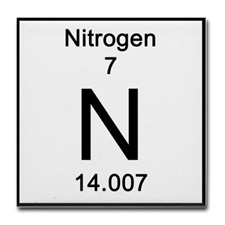


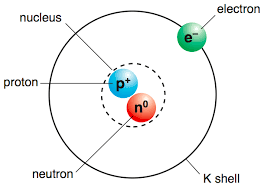
Which subatomic particles contribute the most to the mass of an atom?
Protons and Neutrons
Protons only
Electrons only
Valence electrons are the number of
protons in the atom
electrons in the atom
protons + neutrons in the nucleus
electrons in the outside shell of the atom
What does the number of proton tell us?
electrons
atomic number
atomic mass
neutrons

Which element has 2 valence electrons?
H
Ca
Na
C

Which element has 3 energy levels with electrons?
Al
C
K
I
Which element has 4 valence electrons and 2 energy levels with electrons.
Calcium
Nitrogen
Carbon
Copper

Which group has elements with a full valence shell?
Group 1
Group 2
Group 15
Group 18
What kind of change occurs if matter changes in amount, size, or shape?
substance change
chemical change
physical change
elemental change

Blue color: Chemical or Physical Property
Reacts with acid: Chemical or Physical Property
Which of the following represents the amount of space and object takes up?
density
volume
mass

is the ability of a substance to dissolve in a liquid
malleability
luster
oxidation
solubility
Properties that can be observed without changing the identity of the substance
Properties that describe how a substance changes into a completely different substance

