
 Worksheets
TEST - Chemistry 2nd 6wks
Total questions: 45
Worksheet time: 47mins

The positively charged particle in an atom.
Proton
Neutron
Electron
Nucleus
The total number of protons and neutrons in the nucleus of an atom
Atomic Number
Mass Number
Atomic Theory
Electron Cloud
The positively charged particle in an atom.
Proton
Neutron
Electron
Nucleus
The total number of protons in the nucleus of an atom
Atomic Number
Mass Number
Atomic Theory
Electron Cloud
The center of an atom where its neutrons and protons are is called the _____________.
nucleus
electron cloud
center

Atoms are made up of ________________
energy
electrons
subatomic particles
gasses

The following subatomic particles are in the nucleus.
Protons and nucleus.
Protons and neutrons.
Protons and electrons
Neutrons and electrons

The mass number of an atom is the mass of ______ + _____
protons + neutrons
protons + electrons
neutrons + nucleus
protons + nucleus

The mass number is always larger than the atomic number (exept for Hydrogen).
TRUE
FALSE
The separate atoms that make up a wooden table cannot be seen because the atoms are
too small
moving too fast
packed lightly together
hidden beneath the surface
An ion is an atom that has an electrical charge.
true
false
What are the building blocks of matter?
Atoms
Protons
Cells
Neutrons
What charge does an atom have when it GAINS electrons?
Positive
Negative
Neutral
What is the correct formula for Ammonium phosphate?
NH4PO4
NH43PO4
(NH4)3PO4
NH4(PO4)3
What is the correct name for the compound LiF?
Lithium fluoride
Lithium fluorine
monolithium monofluoride
lithium monofluoride

How would you write the isotope name from this nuclide symbol?
Sodium-23
Sodium-11
Sodium-12
Sodium-22
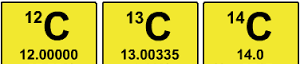
How many neutrons are in the isotope of sulfur,36S?
16
20
24
26

[Xe] 6s2 4f14 5d9
What atom matches this electron configuration? 1s2 2s2 2p6 3s2 3p6 4s2 3d10 4p3
Phosphorus (P)
Nitrogen (N)
Arsenic (As)
Niobium (Nb)

Click ALL the choices below the atom in the picture will bond with.
metals
metalloids
nonmetals
won't bond

Which of the following is the CORRECT Lewis Dot Structure of Boron?
2
3
4
Draw the Lewis Dot Structure for Sulfur.

What is the correct Lewis Dot Structure for ammonia NH3


What elements generally make an ionic bond ?
Metal and nonmetal
2 or more nonmetals
2 or more metals
2 elements

An ionic bond is formed when
Valence electrons are shared.
Valence electrons surround the cations.
Valence electrons are transferred between atoms.
Valence electrons are completely transferred between two metals.
What is a valence electron?
an electron that is found in the outermost shell of an atom
an electron found in the innermost shell of an atom
an electron found in the middle shell
an electon found in the nucleus

Predict the bond that will form between Se and Cl
Ionic-bond
Covalent-bond
Metallic-bond
Hydrogen-bond

Predict the bond formed between Be and F
Covalent-bond
Ionic-bond
Metallic-bond
Hydrogen-bond


A metallic bond is a bond between ________.
nonmetals
metals
transition metals
metalloids
What do electrons do in a metallic bond?
They stay on the metal atom.
They are transferred from atom to atom.
They form a covalent bond with another atom.
They float around freely.
Why are metals malleable? (They can bend without breaking.)
Metals are very smooth.
Metals have a sea of electrons.
The sea of electrons form a strong metallic bond.
Even though the metal ions repel each other, the electron sea holds all the atoms in place.

What do we call electrons that move freely in a metallic bond?
sea of electrons
lone electrons
unpaired electrons
covalent electrons

What is the mass number of an atom with 33 protons, 36 electrons, and 30 neutrons?
(a)
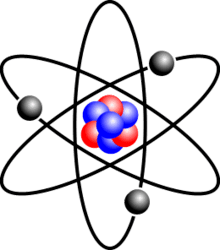
Which subatomic particle has a negative charge in the atom?
proton
neutron
electron
quark

