Wayground logo

Free Printable Worksheets

Font size

S
M
L
XL
Worksheets

Chemistry Revision acid base/ rates/ energy profile

Total questions: 50

Worksheet time: 28mins

Name
Class
Date
1.
Which factors increase the rate of a reaction.
a)
increasing temperature
b)
increasing concentration
c)
increasing surface area
d)
all of these
2.
Increasing the concentration of the reactants will slow down the reaction.
a)
false 
b)
true
3.
Why does a higher temperature increase the rate of a reaction?
a)
it increases both the frequency and energy of particle collisions
b)
it only increases the frequency of particle collisions
c)
it only increases the energy of particle collisions
d)
it reduces the activation energy of the reaction
4.

B represents

a)

Potential Energy of Products

b)

Potential Energy of Reactants

c)

Change in Enthalpy

d)

Activation Energy

5.

Is the following reaction endothermic or exothermic

a)

endothermic

b)

exothermic

6.

which factor that affect reaction rate is represented?

a)

Temperature

b)

Catalyst

c)

Surface Area

d)

Concentration

7.

When we investigate the rate of reaction we are looking at the...

a)

amount of product formed

b)

speed of reaction

c)

concentration of reacting particles

d)

combining reactants with products

8.
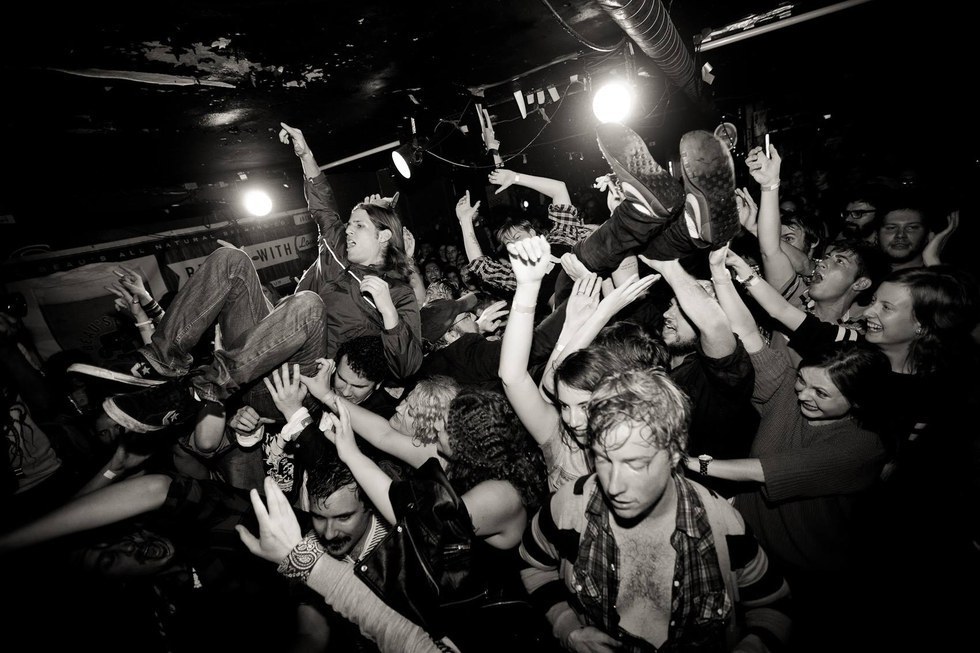
You add more bodies into a "mosh pit" to hope for more collisions.  You have increased-
a)
temperature
b)
concentration
c)
pressure
d)
catalyst
9.

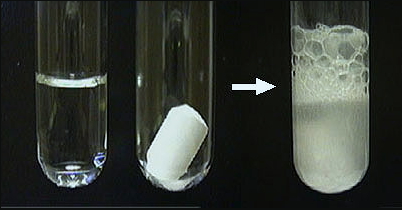
How could we make this reaction happen more quickly?

a)

Decrease the concentration of the acid

b)

crush the chalk to increase the surface area

c)

Put the test tube in an ice bath

10.

Which is the stronger acids ?

a)

pH 1

b)

pH 8

c)

pH 13

d)

pH 7

11.

Which of the following is an acid ?

a)

Shampoo

b)

Baking soda

c)

Orange juice

d)

Water

12.

Value from 0-14 that determine the acidity of a solution

a)

pH scale

b)

Base

c)

Number line

d)

Acid

13.

Pure water has a pH of 7

a)

is a base

b)

is a neutral substance

c)

is an acid

d)

could be either an acid or a base

14.

When dissolved in water, acids produce:

a)

bases

b)

salts

c)

hydrogen ions

d)

hydroxide ions

15.

Turns litmus red

a)

Acids

b)

Bases

c)

All

16.

Which has a pH below 7?

a)

Acid

b)

Base

17.

Tastes Sour

a)

Acids

b)

All

c)

Bases

d)

Salts

18.
If an acid is combined with a base of equal strength, the result will most likely be
a)
a neutral solution.
b)
a stronger acid.
c)
impossible to tell without testing the pH.
d)
a stronger base
19.
Which of the following statements is correct?
a)
Blue litmus paper turns red when placed in a base.
b)
Red litmus paper turns blue when placed in a base.
c)
Blue litmus paper stays blue when placed in an acid.
d)
Red litmus paper stays red when placed in a base.
20.
Ammonia has a pH of 12.  Ammonia is __________.
a)
an acid
b)
a base
c)
an element
d)
a metal
21.
BASE + ACID ----> SALT +?
a)
water
b)
oxygen
c)
hydrogen ion
d)
hydroxide ion
22.

How can you test for hydrogen gas?

a)

sniff it

b)

squeaky pop test

c)

add universal indicator

d)

add lemon water

23.
How can you tell that a metal is reacting with water?
a)
Colour change
b)
Bright light
c)
Fizzing
d)
It gets colder
24.
Which salt will be produced if magnesium react with hydrochloric acid?
a)
Magnesium oxide
b)
Magnesium sulfate
c)
Magnesium sulfide
d)
Magnesium chloride
25.

In an endothermic reaction, heat is ...

a)

taken in

b)

given out

26.
In an exothermic reaction, heat is ...
a)
taken in
b)
given out
27.

6. Which of these processes is always exothermic?

a)

A. evaporation

b)

B. burning

c)

C. insulation

d)

D. melting

28.

1. Equal amounts of four different substances (A-D) where added separately to equal amounts of an acid and a thermometer placed in the mixture. For which substance is the reaction the most exothermic?

a)

A. temperature rises by 3 °C\degree C    

b)

B. temperature falls by 5 °C\degree C   

c)

C. temperature falls by 3 °C\degree C    

d)

D. temperature rises by 5 °C\degree C  

29.
During an endothermic reaction in a beaker if we are part of the surroundings and touched the beaker, it would feel _______. 
a)
Warm
b)
Cold
30.
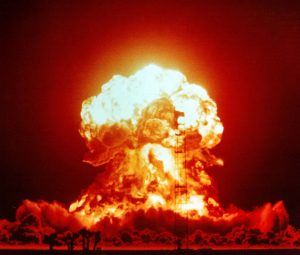
What type of reaction is shown in the photo?
a)
Exothermic
b)
Isothermic
c)
Endothermic
d)
None of the  above
31.

The graph shows a reaction profile for the reaction between methane and oxygen. What does X represent?

a)

Activation energy

b)

Overall energy

c)

Reactants

d)

Progress of the reaction

32.

Is this showing an endothermic or an exothermic reaction?

a)

Endothermic

b)

Exothermic

33.
Ice melting
a)
Chemical Change
b)
Physical Change
34.
True or false: A physical change can result in an entirely different substance.
a)
True
b)
False
35.

It is the process in which a liquid changes into a gas.

This process requires the addition or absorption of heat. 

a)

Melting

b)

Freezing

c)

Evaporation

d)

Condensation

36.

What instrument do scientist use to measure volume?

a)

thermometer

b)

balance scale

c)

graduated cylinder

d)

computer

37.

Which of the following could indicate that a chemical change took place?

a)

Change in color

b)

Production of Energy

c)

Formation of Gas

d)

All are correct

38.

What does a chemical change result in?

a)

A change in state of the substance (ex. liquid to solid)

b)

A change in texture of the substance.

c)

A change in the way atoms are bonded to each other.

d)

A change in the appearance of the substance.

39.

Which type of change is most often easily reversed?

a)

Chemical

b)

Physical

c)

Both a physical and chemical change.

d)

Neither a physical or chemical change.

40.

Identify what type of change happening in the picture below...

a)

Chemical Change

b)

Physical Change

c)

Endothermic Reaction

d)

Exothermic Reaction

41.

Identify what type of change happening in the picture below...

a)

Chemical Change

b)

Physical Change

c)

Endothermic Reaction

d)

Exothermic Reaction

42.

Which of the following is an example of a physical change?

a)

A glass falling and shattering on the floor.

b)

Baking a birthday cake.

c)

Burning a piece of paper.

d)

Baking soda and vinegar mixing together.

43.
Which two subatomic particles are found in the NUCLEUS of at atom?
a)
protons & nuetrons
b)
protons & electrons
c)
neutrons & electrons
d)
electrons & protons
44.
The subatomic particle with a neutral charge is:
a)
protons
b)
electrons
c)
neutrons
d)
cloud
45.
What type of subatomic particles are found in the cloud?
a)
neutrons
b)
electrons
c)
protons
d)
reactions
46.
If an element has 6 protons, 7 neutrons, and 6 electrons, what type of charge does the element have?
a)
positive
b)
negative
c)
neutral
d)
imaginary
47.
How many protons does this element have?
a)
40
b)
21
c)
20
d)
41
48.
What does the H stand for?
a)
Hydrogen
b)
atomic number
c)
atomic mass
d)
atomic explosion
49.
All matter is made of .....
a)
energy 
b)
atoms 
c)
air
d)
chemistry
50.
Which is an electron?
a)
A
b)
B
c)
C