wayground logo

Free Printable Worksheets

Font size

S
M
L
XL
Worksheets

S8P1_Matter_Cumulative Unit Exam_22-23

Total questions: 67

Worksheet time: 1hrs 3mins

Name
Class
Date
1.
The basic metric unit for mass is the _.
a)
gram
b)
meter
c)
liter
2.
1000 grams = _____ kilograms
a)
0.0001
b)
1,000,000
c)
10
d)
1
3.
What is the volume of the liquid in this graduated cylinder?
a)
1.5 mL 
b)
15 mL 
c)
1.05 mL 
d)
.15 mL
4.

What is the volume of this rectangular prism?

a)

3840 cubic cm

b)

48 cubic cm

c)

384 cubic cm

d)

32 cubic units

5.

Who uses the metric system?

a)

Liberia

b)

United States

c)

Myanmar

d)

Everybody in the entire world except for Liberia, Myanmar, and the United States

6.

The metric system is easier to use than the english system

a)

True

b)

False

7.

If a neutral atom of argon has 18 protons, then how many electrons does it have?

a)

18

b)

17

c)

16

d)

15

8.

What are the subatomic particles?

a)

Protons, Electrons, Neutrons

b)

Molecules, and atoms

c)

Electrons, Protons, Nucleus

d)

Nucleus, and Electrons

9.
What type of particles exist within an atomic nucleus?
a)
Protons and Neutrons
b)

Neutrons and Electrons

c)

Democritus and Dalton

d)

Large and Small

10.
How many protons are in the element, "Sodium?"
a)
23
b)
11
c)
13
d)
14
11.
All atoms of the same element have the same?
a)
number of neutrons
b)
number of protons
c)
mass number
d)
all of these
12.

Who do we credit for coming up with the term, "Atom"?

a)

Niels Bohr

b)

Ernest Rutherford

c)

Barney the dinosaur

d)

Democritus

13.

The Modern Periodic Table of Elements is arranged by

a)

atomic mass

b)

atomic number

c)

valence electrons

d)

number of isotopes

14.

Which group of the periodic table is composed of inert (not reactive) gases?

a)

alkali metals

b)

alkaline earth metals

c)

Transition metals

d)

noble gases

15.

Name this group: These metals are the most reactive.

a)
b)
c)
d)
16.

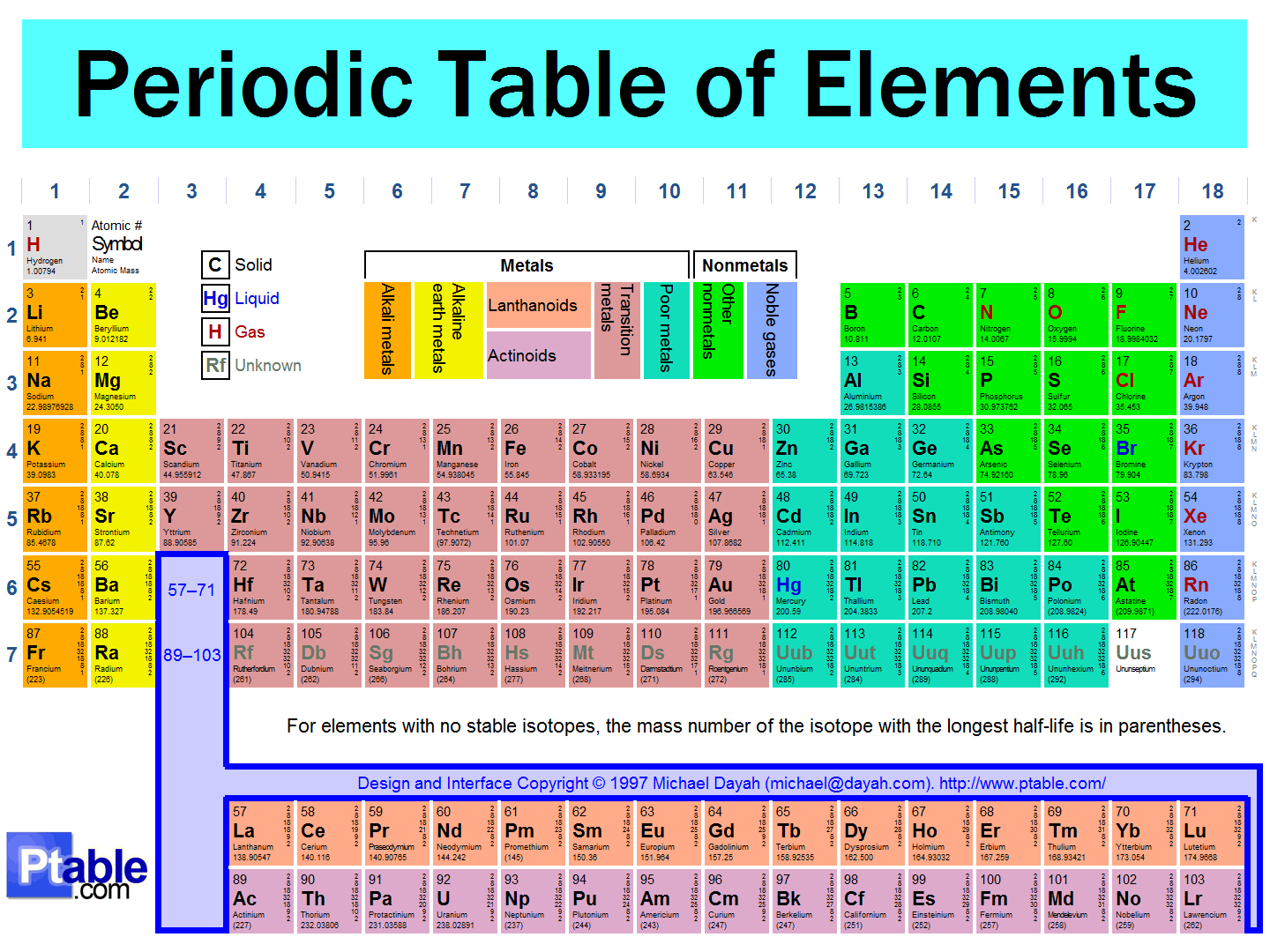
Name this group: These metals contain familiar metals such as gold, iron, and copper.
a)
b)
c)
d)
17.

This family of elements are sometimes called "semiconductors."

a)
Metals
b)
Nonmetals
c)
Metalloids
d)
Groups
18.

This family of elements sits along the "stair step" line on the periodic table and has properties of both metals and nonmetals.

a)

radioactive

b)

metals

c)

nonmetals

d)

metalloids

19.

What group is this element located in?

a)

2

b)

4

c)

6

d)

8

20.

What period is this element located in?

a)

1

b)

2

c)

3

d)

4

21.

Which scientist is credited with the creation of the original modern periodic table?

a)

Newlands

b)

Meyer

c)

Mendeleev

d)

Moseley

22.
Jack has a rock. The rock has a mass of 14g and a volume of 2cm3. What is the density of the rock?
a)
7 mL
b)
7 g/cm3
c)
28 g/cm3
d)
1/7 g/cm3
23.
If an object has a density of .6 g/mL and you put it into water, will it sink or float?  
a)
sink
b)
float
24.
What is the formula for density?
a)
density = mass x volume
b)
density = mass / volume
c)
density = mass + volume
d)
density = mass - volume
25.
What is the volume of Object X?
a)

10.0 ml

b)

15.0 ml

c)

20.0 ml

d)

25.0 ml

26.
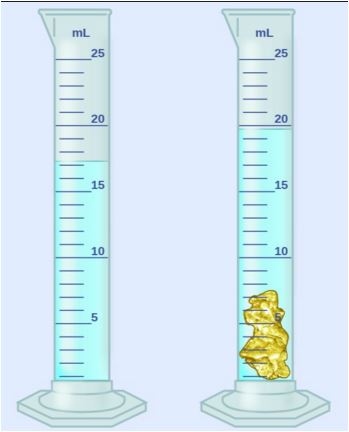
An irregularly shaped piece of gold was lowered into a graduated cylinder holding a volume of water equal to 17 ml. The height of the water rose to 20 ml. If the mass of the gold was 27 g, what was its density?
a)
9 g/mL
b)
10.5 g/mL
c)
6.5 g/mL
d)
8 g/mL
27.

In a ___________change, a substance changes into a new, different substance.

a)
Physical
b)
Chemical
28.

What is the BEST definition of a chemical reaction?

a)

A change in matter that produces one or more NEW substances

b)

When two things combine and change color, shape, and size

29.

In the equation 2Mg+O2  2MgO2Mg+O_2\ \rightarrow\ 2MgO   which are the reactants?

a)
Mg and O
b)
MgO
c)
Mg and MgO
d)
O and MgO
30.
A teacher is demonstrating physical and chemical changes to her class. Which action should she use to demonstrate a chemical change?
a)
cutting a piece of paper
b)
folding a piece of paper
c)
tearing a piece of paper
d)
burning a piece of paper
31.
What is an example of an element?
a)
Oxygen
b)
Pure water
c)
Air
d)
Table salt
32.
If reaction starts with 20g of reactants it should produce 
a)
a total of 40g of products
b)
a total of 10g of products
c)
a total of 80 g of products
d)
a total of 20g of products
33.

According to the Law of Conservation of Mass, what happens to the wood and oxygen when it is burned?

a)

The wood disappears.

b)

It stays the same chemically.

c)

The atoms in the wood and oxygen rearrange and form smoke and ash.

d)

Nothing.

34.
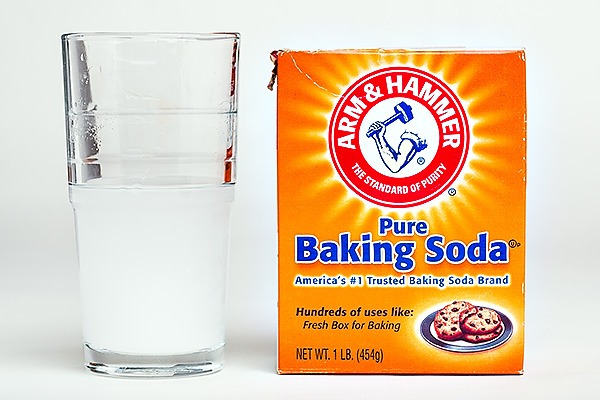
Anthony is performing an experiment. He adds 0.25 grams of baking soda to 5 grams of water and stirs. Anthony watches as the baking soda dissolves in the water. If Anthony weighs the water and baking soda solution, what will its mass be?
a)
4.75 grams
b)
5.0 grams
c)
5.25 grams
d)
7.5 grams
35.

What type of bonding does this picture show?

a)

Ionic

b)

Covalent

36.

What type of bonding does this picture show?

a)

Ionic

b)

Covalent

37.
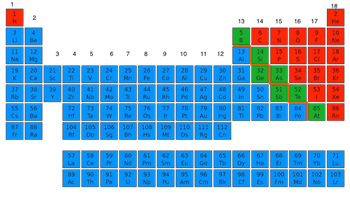
Where are the nonmetals located on the periodic table? 
a)
Blue
b)
Red
c)
Green
38.

The chemical bond between a non-metal and another non-metal will be a ________ bond.

a)

metal

b)

ionic

c)

covalent

d)

polar

39.

The chemical bond between a metal and a non-metal will be a _____ bond.

a)

metal

b)

ionic

c)

covalent

d)

polar

40.
According to the octet rule most elements need _______ valence electrons.
a)
2
b)
8
c)
6
d)
18
41.

This is a Bohr Diagram of Aluminum. How many valence electrons does Aluminum have?

a)

3

b)

4

c)

5

42.
Which of the following has a full valence shell?
a)
Oxygen
b)
Neon
c)
Barium
d)
Carbon
43.
If my charge becomes 2+ what does that say about me?
a)
I am stealing 2 electrons
b)
I am losing 2 electrons
c)
I am in period 2
d)
I have an atomic # of 2
44.

Identify the following compound as ionic or covalent: SO2

a)

ionic

b)

covalent

45.

Stronger acids have a pH closer to...

a)

7

b)

0

c)

14

d)

9

46.

A pH level of 7 indicates

a)

acid

b)

base

c)

neutral

d)

none of the following

47.

The pH scale is a range from:

a)

1-7

b)

0-14

c)

1-5

d)

1-14

48.

Ammonia has a pH of 11. Ammonia is __________.

a)

an acid

b)

a base

c)

an element

d)

a metal

49.

Why is water known as universal solvent?

a)

It is found anywhere.

b)

It gives life to living things.

c)

It covers the greater part of the earth.

d)

It dissolves almost all the substances on Earth.

50.

A __ mixture is a mixture in which the composition is not uniform throughout the mixture.

a)

element

b)

homogenous

c)

heterogenous

d)

compound

51.

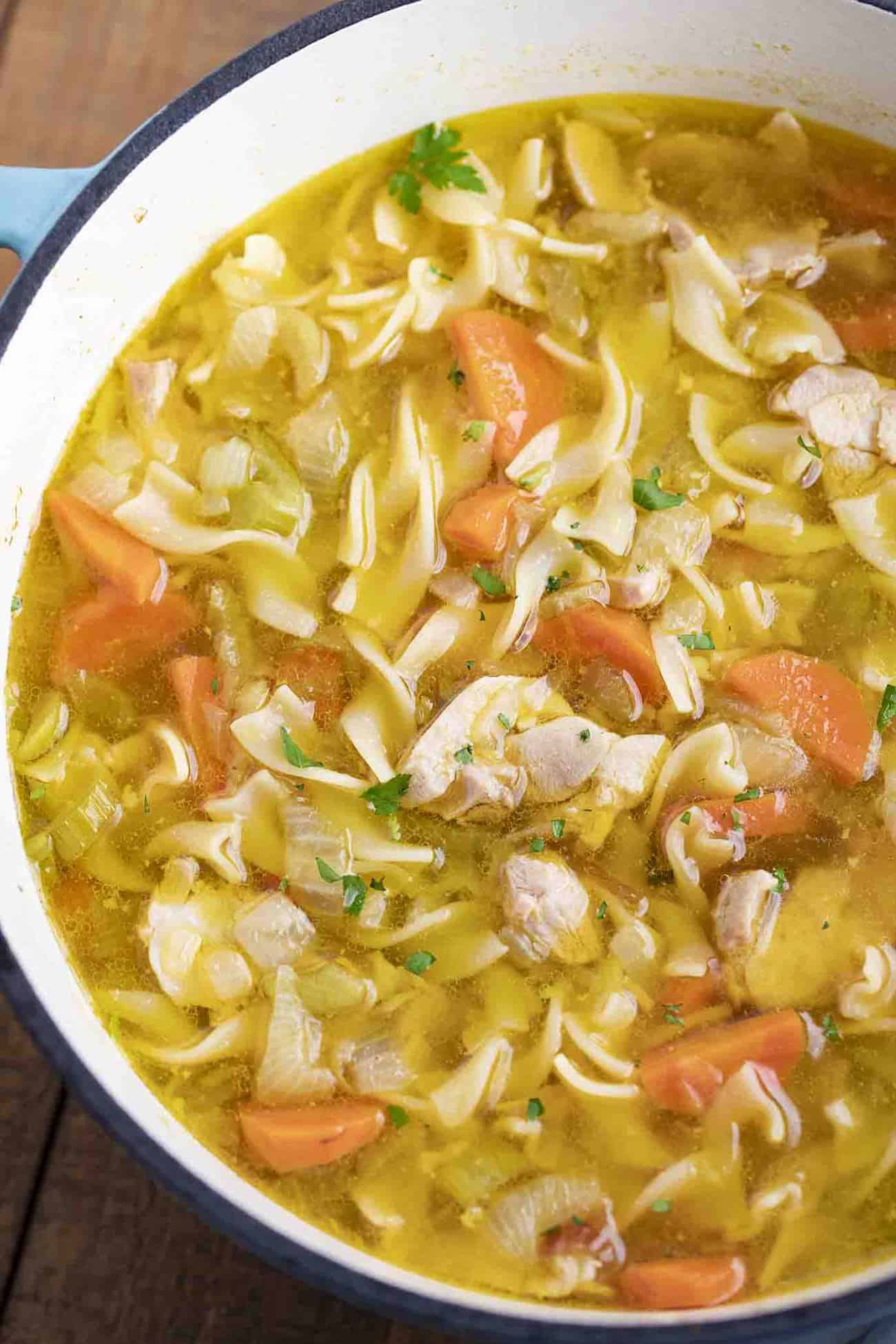
Chicken noodle soup is

a)

Homogeneous mixture

b)

Heterogeneous mixture

52.

Solutions are ___________ mixtures.

a)

Solid

b)

Homogenous

c)

Heterogeneous

d)

Gas

53.

Milk

a)

Solution

b)

Suspension

c)

Colloid

54.

Sand in Water

a)

Solution

b)

Suspension

c)

Colloid

55.

Identify the solvent in salt solution

a)

Water

b)

Salt

c)

Sugar

56.
You can make a solution more concentrated by adding __________.
a)
solute
b)
solvent
c)
water
57.

When an acid and alkali have been neutralized the pH will be?

a)

1

b)

4

c)

7

d)

10

58.

What are the building blocks of matter?

a)

Atoms

b)

Protons

c)

Cells

d)

Neutrons

59.

Which subatomic particle has a negative charge in the atom?

a)

proton

b)

neutron

c)

electron

d)

quark

60.

What charge does an atom have when it GAINS electrons?

a)

Positive

b)

Negative

c)

Neutral

61.

What is the picture displayed?

a)

atom

b)

element

c)

molecule

62.

The process of splitting atoms is called

a)

Nuclear Fusion

b)

Nuclear Fission

c)

Nuclear Waste

63.
Define a liquid.
a)
Indefinite shape, no definite volume
b)
Definite shape, definite volume
c)
Found in stars
d)
Definite volume, no definite shape
64.
Which state of matter has particles arranged like this?
a)
solid
b)
liquid
c)
gas
65.
Which state of matter has particles arranged like this?
a)
solid
b)
liquid
c)
gas
d)
plasma
66.
The most common state of matter in the universe is _________. 
a)
Plasma
b)
Solid
c)
Liquid
d)
Gas
67.
Water droplets forming on your mirror in your bathroom after you shower.
a)
vaporization
b)
sublimation
c)
condensation
d)
freezing