
 Worksheets
Classification and Properties of Matter
Total questions: 54
Worksheet time: 32mins
What is a physical property?
can be observed or measured without changing the composition of matter
characteristic of a substance that may be observed when it participates in a chemical reaction
flammability, toxicity, chemical stability, and heat of combustion
a chemical reaction
What is a chemical property?
characteristic of a substance that may be observed when it participates in a chemical reaction
can be observed or measured without changing the composition of matter
States of matter include liquid, solid, and gaseous states.
odor, boiling point, ability to conduct heat, ability to conduct electricity, ability to dissolve in other substances
Which is an example of a physical change?
A chemical going from solid to liquid
Formation of bubbles when two chemicals are put together
A piece of copper grows a coat of silver when put into a solution
A substance catching fire
Which is an example of a chemical change?
A chemical going form a liquid to a solid
A chemical going from a solid to a gas
Bending a piece of wire until it breaks
The formation of bubbles when two chemicals are put together.
Which of the following does NOT describe a pure substance?
has a fixed composition
distinct properties
contain only one type of matter
each substance retains its own properties
Which two describes an element?
Cannot be broken down into simpler substances
Composed of only one type of atom
Does not have same composition throughout
Can be seperate by physical means
The difference between a compound and an element is? Pick two
Contain two or more kinds of atoms
Can be separated into simpler particles
Can be separated by physical means
The components of it retain their unique properties
A mixture that does not have same composition throughout the mixture.
Heterogeneous
Homogeneous
Elements
Compounds
A mixture that does have uniform composition throughout the mixture.
Heterogeneous
Homogeneous
Elements
Compounds
Water is a compound and not an element or mixture because....
Can be decomposed into the elements and it has its own unique properties
Because it can be separated by physical means
Because all the components keep their own properties and do not change
Because it is heterogeneous

This substance can be separated by physical means
Mixtures
Pure Substances
Elements
Compounds
This substance can be separated by chemical means only
Homogenous mixtures
Heterogeneous misxtures
Elements
Compounds
The composition of this substance is uniform throughout
Homogenous mixtures
Heterogeneous misxtures
Elements
Compounds
Classify the following as an element, compound, homogeneous mixture, or heterogeneous mixture.
Gold (Au) and Oxygen (O2)
Homogenous mixtures
Heterogeneous mixtures
Elements
Compounds
Classify the following as an element, compound, homogeneous mixture, or heterogeneous mixture.
Water (H2O), Table Salt (NaCl)
Homogenous mixtures
Heterogeneous mixtures
Elements
Compounds
Classify the following as an element, compound, homogeneous mixture, or heterogeneous mixture.
Gravel and Dirt
Homogenous mixtures
Heterogeneous mixtures
Elements
Compounds
Classify the following as an element, compound, homogeneous mixture, or heterogeneous mixture.
Maple Syrup and Seawater
Homogenous mixtures
Heterogeneous mixtures
Elements
Compounds
Identify the following changes as chemical or physical
Boiling Water
Chemical
Physical
Cannot be determined
Identify the following changes as chemical or physical
Burning Paper
Chemical
Physical
Cannot be determined


Blood is a fluid found in the bodies of humans and other animals. It can be physically separated into plasma, red blood cells and white blood cells. Blood is a ___________________
pure substance
mixture
Which is a mixture of compounds?


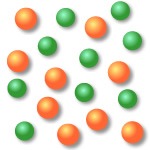
What type of substance is pictured?
element
compound
mixture
solution
Anything that has mass and takes up space is matter.
TRUE
FALSE
Which of the following is NOT matter?
pencil
air
light
water
The amount of space that an object takes up, or occupies is called:
mass
weight
volume
density
The amount of matter in an object is called:
mass
weight
volume
density
A characteristic of a substance that can be observed or measured without changing the identity of the substance is called a:
physical property
chemical property
A substance's ability to change into a new substance with different properties is called a:
physical property
chemical property
Which of the following is NOT an example of a physical property?
color
shape
conductivity
flammability
Chemical properties describe how a substance can _____.
change
stay the same
Which of the following is NOT an example of a physical property?
texture
ability to be attracted to a magnet
ability to rust
odor

Does this image represent a physical or chemical change?
chemical change
physical change

Does this image represent a physical or chemical change?
chemical change
physical change

Does this image represent a physical or chemical change?
chemical change
physical change

Does this image represent a physical or chemical change?
chemical change
physical change

Does this image represent a physical or chemical change?
chemical change
physical change

Does this image represent a physical or chemical change?
chemical change
physical change

