
Font size
 Worksheets
Cells: Function & Structure Test
Total questions: 35
Worksheet time: 1hrs 21mins
Schleiden and Schwann determined that the basic unit of structure and function in living things is the _________.
atom
molecule
cell
nucleus
This type of microscope allows light to pass through a specimen and uses two lenses to form an image. It's the type of microscope most classrooms have to observe cells with. (It's what you used in class.)
Compound Light microscope
Electron microscope
Transmission microscope
Scanning microscope
When using a classroom microscope, looking though the eye lenses and a 40X objective lenses, what is the total magnification?
4X
40X
400X
4000X
What are the main points of the cell theory? Choose ALL that apply!
All cells enclose their DNA in a nucleus.
Cells are the basic units of all living things.
All cells were created from preexisting cells.
All cells have the same function
All living things are made up of cells.
The biggest difference in prokaryotic cells and eukaryote cells is?
Prokaryotic cells are generally larger and more complex cells.
Prokaryotic cells do not have a nucleus. and are single celled.
Eukaryotic cells do not have a nucleus.
All Eukaryotic cells are single celled.
Plant and animal cells are examples of
Single celled organisms
Eukaryotes
Prokaryotes
Bacteria
What do ALL cells contain or have at some point? Choose ALL that apply.
Nucleus
DNA
Cell Wall
Chloroplast
Cell membrane
The ____________ is the control center of eukaryotic cells.
Mitochondrion
Ribosome
Nucleus
Cytoplasm
Proteins are assembled on the ______________?
Ribosomes
Cell membrane
Mitochondria
Lipid bilayer
_______________ maintains the cells shape, moves cell parts, and helps the cell move.
Golgi apparatus
Endoplasmic reticulum
Cytoskeleton
Mitochondria
The ____________ store water, salts, carbohydrates, proteins and waste products.
Ribosomes
Nucleus
Golgi apparatus
Vacuoles
____________ uses sunlight to produce energy rich compounds.
Cytoplasm
Chloroplasts
Cytoskeleton
The cell wall
The powerhouse which convert chemical energy into compounds the cell can use is called the ______________.
Chlorplast
Golgi apparatus
Mitochondria
Lysosome
____________ contain enzymes to break down nutrients and only found in animal cells.
Lysosomes
Chloroplast
Ribosomes
Vacuoles
Cell membranes are made of which of the macromolecules?
Carbohydrates
Proteins
Lipids
Amino acids
The ___________ sorts and packages proteins and other materials and transports them out of the cell.
Nucleus
Cytoplasm
Vacuole
Golgi apparatus
_____________ refers to the constant internal (balance) physical and chemical conditions of an organism.
Aquaporin
Osmosis
Homeostasis
Diffusion
Passive transport includes which of the following? Choose ALL that apply.
Endocytosis
Diffusion
Exocytosis
Osmosis
Facilitated diffusion
______________ is the process where molecules move through protein channels in the cell membrane.
Endocytosis
Exocytosis
Osmosis
Facilitated diffusion
Larger molecules enter the cell by this process.
Endocytosis
Diffusion
Exocytosis
Osmosis
Facilitated diffusion
Types of Active Transport include: (Choose all that apply)
Endocytosis
Diffusion
Exocytosis
Osmosis
Facilitated diffusion
When a great deal of water travels through channel proteins called aquaporins, this is know a __________?
Endocytosis
Exocytosis
Osmosis
Facilitated Diffusion
The cellular process in which materials are moved across a membrane from an area of low concentration to an area of high concentration is called:
Passive Transport
Active Transport
Diffusion
Osmosis
Substances such as oxygen, move through the cell membrane from an area of higher concentration to an area of lower concentration.
Endocytosis
Diffusion
Exocytosis
Active Transport
____________ is when the solutions on either side of a membrane are the same in concentration.
Hypertonic
Hypotonic
Supertonic
Isotonic
A more dilute solution is _____________. The solution has a lower solute concentration than the cell, which will cause the cell to swell.
Hypertonic
Hypotonic
Supertonic
Isotonic
The correct order to show the relationship among the four levels of organization of life from smallest to largest is:
Organ system, organ, cell, tissue
Cell, tissue, organ, organ system
Tissue, cell, organ, organ system
Organ, Organ system, tissue, cell
True or False: Diffusion requires energy in order to occur.
True
False
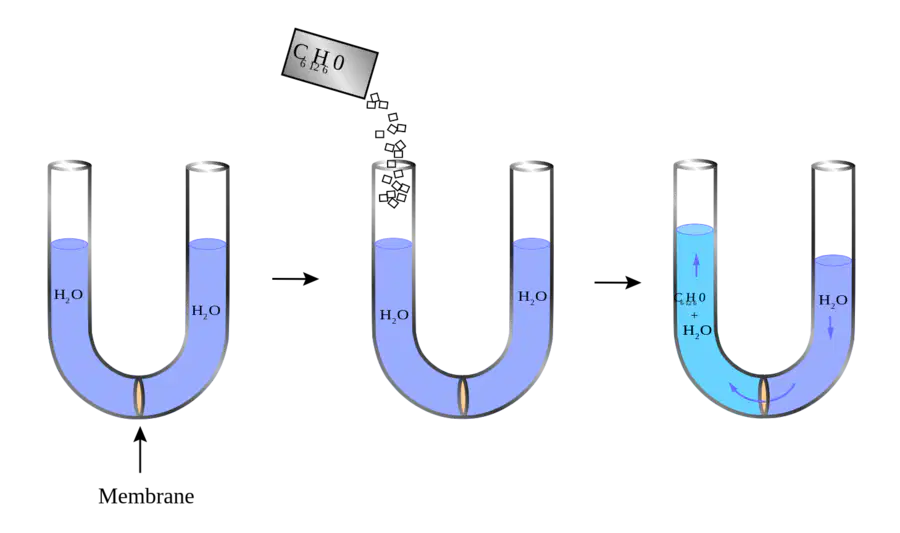
Identify the specific type of transport being illustrated. (Click on the picture to make it bigger.)
Endocytosis
Diffusion
Exocytosis
Osmosis
A semi-permeable layer that encloses the contents of all cells is called a
Nucleus
Cell Wall
Cell Membrane
Chloroplast

Which red blood cell is in a hypotonic solution? (click on the picture to make it bigger.)
A
B
C
None of these
True or False: Active Transport requires energy in order to occur.
True
False
If a red blood cell was placed in a hypertonic solution, what would happen to the cell?
It would stay the same size.
It would increase in size and eventually burst.
Nothing would happen to it.
It would shrink in size.
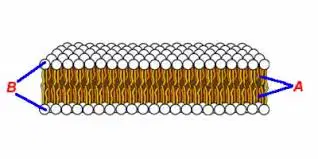
What is pictured in the illustration?
Mitochondria
Protein Channel
Protein Layers
Phospholipid Bilayer
Large particles, cell products, or waste are released to the outside of the cell through:
Exocytosis
Diffusion
Osmosis
Endocytosis

