Wayground logo

Free Printable Worksheets

Font size

S
M
L
XL
Worksheets

Cardiorespiratory Anatomy

Total questions: 36

Worksheet time: 2hrs 53mins

Name
Class
Date
1.
a)
Left atrium
b)
Right atrium
c)
Left ventricle
d)
Right ventricle
2.
Which side of the heart has oxygen rich blood?
a)
Left Side
b)
Right Side
3.
Which side of the heart pumps blood into the lungs?
a)
Right
b)
Left
4.
______ carry blood to the heart.
a)
Arteries
b)
Veins
c)
Capillaries
d)
Vena Cava
5.
The heart has ___ chambers.
a)
1
b)
2
c)
3
d)
4
6.

This part of the heart separates the left and right heart chambers.

a)

Mitral valve

b)

Septum

c)

Aortic valve

d)

Inferior vena cava

7.
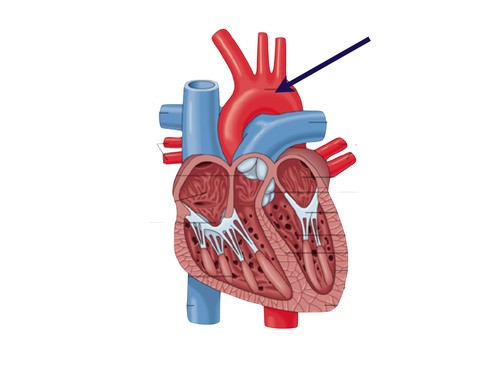
Identify
a)
Pulmonary veins
b)
Pulmonary artery
c)
Aorta
d)
Vena cava
8.
A flap of tissue that prevents blood from flowing backward
a)
Aorta
b)
Atrium
c)
Septum
d)
Valve
9.

Arteries carry oxygenated blood ________ the heart

a)

to

b)

away from

10.

Letter D is pointing to

a)

Aorta

b)

Right Pulmonary Artery

c)

Superior Vena Cava

d)

Pulmonary Trunk

11.

Which letter is pointing to the tricuspid valve?

a)

M

b)

N

c)

L

d)

O

12.

The mitral valve is another name for the

a)

Aortic valve

b)

Pulmonary valve

c)

Tricuspid valve

d)

Bicuspid valve

13.

Which of the following carries blood TO the lungs?

a)

pulmonary veins

b)

pulmonary arteries

c)

aorta

d)

superior vena cava

14.
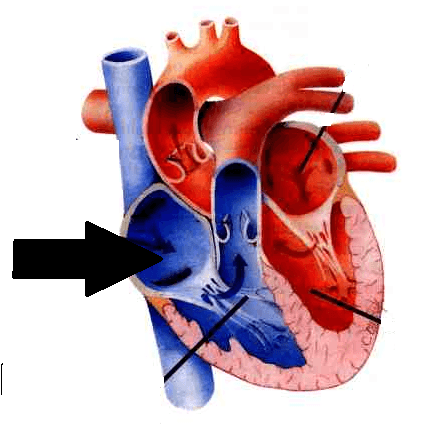
Identify
a)
Left atrium
b)
Right atrium
c)
Left ventricle
d)
Right ventricle
15.
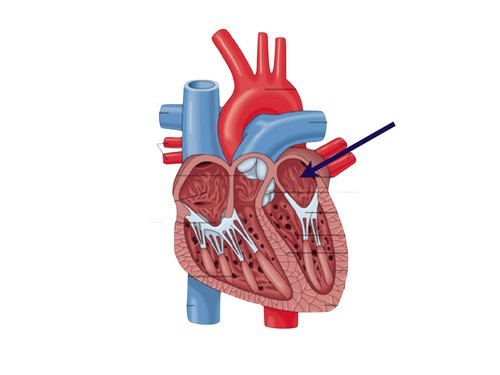
Identify
a)
Left atrium
b)
Right atrium
c)
Left ventricle
d)
Right ventricle
16.

Which is the Inferior Vena Cava?

a)

A

b)

B

c)

O

d)

P

17.

The largest artery in the body is the:

a)

Aorta

b)

Pulmonary Artery

c)

Carotid Artery

d)

Brachiocephalic Artery

18.

Which term refers to the lungs?

a)

Hepatic

b)

Coronary

c)

Pulmonary

d)

Thoracic

19.
When you breathe, your lungs take in ___ and remove ___. 
a)
air/oxygen
b)
oxygen/carbon dioxide 
c)
carbon dioxide/waste 
d)
waste/air 
20.
What is the main bone structure that protects the lungs
a)
Vertebrae
b)
Rib cage
c)
Skull
d)
Pelvis
21.
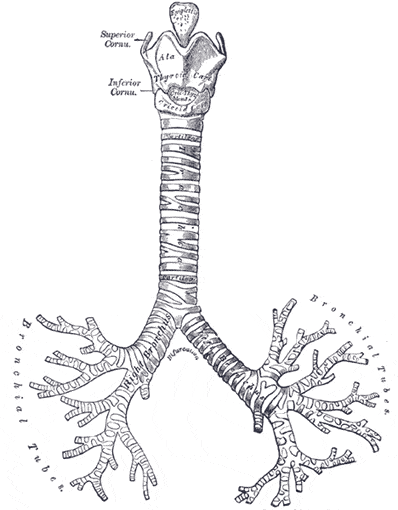
Given the following structures:
1. larynx
2. nasal cavity
3. pharynx
4. trachea
Which of the following is the correct order that air would flow during inhalation. 
a)
1,2,3,4
b)
2,3,1,4
c)
2,1,3,4
d)
4,2,3,1 
22.
Tiny tubes that branch off of bronchi
a)
capillaries
b)
alveoli
c)
bronchioles
d)
pluera
23.
The two main branches from the trachea (one to each lung)
a)
bronchi
b)
alveoli
c)
capillaries
d)
bronchioles
24.

Name the structure labeled 8

a)

lungs

b)

trachea

c)

diaphragm

d)

alveoli

25.

Please choose the correct pathway air travels though into the lungs

a)

Nasal passage, pharynx, larynx, trachea, bronchiole, bronchi, alveoli

b)

Nasal passage, pharynx, larynx, trachea, bronchi, bronchiole, alveoli

c)

Nasal passage, pharynx, larynx, trachea, bronchi, alveoli, bronchiole

d)

Nasal passage, trachea, pharynx, larynx, bronchi, bronchiole, alveoli

26.

Where are the vocal cords located?

a)

Sinuses

b)

Oropharynx

c)

Pharynx

d)

Larynx

27.

What is number one?

a)

Bronchi

b)

Alveoli

c)

Trachea

d)

Bronchioles

28.

Which best defines heart rate?

a)

 The rate in which the blood travels through the heart

b)

The amount of blood the heart pumps per minute

c)

The number of times the heart contracts or beats per minute

d)

The number of times the heart contracts or beats per second

29.

When we exercise, cardiac output increases due to the increase in both...

a)

Stroke volume and steady state

b)

Heart rate and stroke volume

c)

The amount of blood being pumped from the heart

d)

Blood volume and blood flow redistribution

30.
CARDIAC OUTPUT IS...
a)
The number of times the heart beats in one minute.
b)
The amount of blood ejected by the left ventricle per beat. 
c)
The amount of blood pumped out of the heart in one minute
d)
Pressure in the arteries following contraction of ventricles as blood is pumped out of the heart. 
31.
STROKE VOLUME IS...
a)
The amount of blood ejected by the left ventricle per beat. 
b)
The amount of blood pumped out of the heart in one minute
c)
The number of times the heart beats in one minute.
d)
The blood returning to the heart via the inferior and superior vena cava. 
32.
TIDAL VOLUME IS...
a)
How much air is inspired or expired in one breath.
b)
How much air is breathed in or out in one minute.
c)
The number of breaths taken in one minute. 
d)
(VO2 )The volume of oxygen that can be taken up and used by the body per minute. 
33.
VENTILATION IS...
a)
How much air is inspired or expired in one breath.
b)
How much air is breathed in or out in one minute.
c)
The number of breaths taken in one minute. 
d)
(VO2 )The volume of oxygen that can be taken up and used by the body per minute. 
34.

Acute respiratory responses to exercise do not include:

a)

Ventilation

b)

Cardiac Output

c)

Tidal Volume

d)

Pulmonary Diffusion

35.

Ventilation is:

a)

Tidal volume x Cardiac output

b)

Stroke volume x Heart rate

c)

Tidal volume x Respiratory rate

d)

Stroke volume x Respiratory rate

36.

Cardiac output is:

a)

Tidal volume x stroke volume

b)

Stroke volume x heart rate

c)

Heart rate x ventilation

d)

Stroke volume x venous return