
NEW
Font size
 Worksheets
Abiotic Cycles
Total questions: 35
Worksheet time: 24mins

What part of the water cycle does this picture show?
condensation
precipitation
evaporation
transpiration

What is it called when plants give off water vapor as a waste product?
condensation
precipitation
evaporation
transpiration
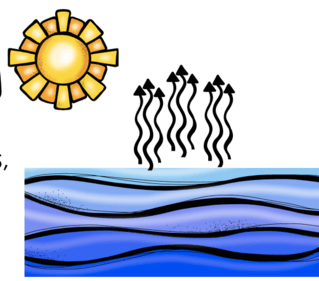
What part of the water cycle does this picture show?
condensation
precipitation
evaporation
transpiration
What converts nitrogen into a useable form for plants and animals?
bacteria
fungi
plants
animals

What cycle is reprsented in the picture?
The Water Cycle
The Carbon Cycle
The Nitrogen Cycle
None of the above
One of the nutrient cycles moves from an atmospheric gaseous form to the soil through both abiotic and biotic processes, moves through the food web, then is returned to the soil or to the atmosphere. Which cycle fits this description?
carbon
nitrogen
phosphorus
water

How does carbon in a grass plant get into a lion?
The lion eats an antelope that ate the grass
Carbon from grass doesn't end up in a lion.
The lion absorbs the carbon given off by transpiration
The lion breathes in carbon given out by the plant
All of the carbon in existence is continually recycled in the carbon cycle.
Which of the following is the correct general equation for PHOTOSYNTHESIS?
CO2 + light + H2O --> O2 + Sugar
CO2 + sugar + H2O --> O2 + light
O2 + light + H2O --> CO2 + Sugar
CO2 + O2 + H2O --> Light+ Sugar
Where does the phosphorous cycle begin?
Rocks
Atmosphere
Plants
Animals
Which cycle is considered the slowest?
Carbon
Hydrologic (Water)
Phosphorous
Nitrogen
What is the process called when bacteria change nitrates into nitrogen gas, returning it back into the atmosphere?
Nitrification
Nitrogen Fixation
Ammonification
Denitrification
All of the following are fossil fuels EXCEPT...?
Oil
Soil
Natural Gas
Coal
Which cycle is driven by the Sun?
Nitrogen
Hydrologic (Water)
Carbon
Phosphorous
Liquid water that runs along the surface and collects into a river, lake, or ocean is called?
Infiltration
Groundwater
Surface Runoff
Evaporation
Rain, snow, sleet, and hail are examples of what?
Precipitation
Evaporation
Condensation
Transpiration
Which of the following must occur before precipitation can occur?
Surface Runoff
Evaporation
Condensation
Transpiration
Which process captures carbon dioxide from the atmosphere and uses it to make sugar?
Deforestation
Cellular Respiration
Photosynthesis
Pollution
How do humans negatively impact the nitrogen cycle?
Fertilizers causing Eutrophication
Urinating
Littering
Cleaning/Purifying Water
What is the main thing that carries out Nitrogen Fixation?
Lightning
Bacteria
Plants
Humans
Describe how human's negatively impact the water cycle (short answer- need detail)
Pollution
Deforestation
Building on and paving areas
All of the above
Describe how humans negatively impact the Carbon Cycle (short answer- need detail)
Cutting down trees
Eating plants
Combustion (putting CO2 into the atmosphere)
Cellular Respiration
The systems that recycle the chemical elements & water that are needed by organisms in their ecosystems are called ___. They use both abiotic and biotic factors from the environment.
biogeochemical cycles
exchange pool
condensation
photosynthesis
Living things such as trees, insects, fish, and bacteria are known as
Biotic factors
Abiotic factors
Nonliving things such as rocks, water and air are known as
Biotic Factors
Abiotic Factors
True or False. Nitrogen is found in the atmosphere.
True
False


