
NEW
Font size
 Worksheets
8.P.1.3 and 8.P.1.4 Test Review
Total questions: 56
Worksheet time: 39mins
Which of the following is an example of a physical property?
flammability of a piece of paper
toxicity of a solution
burning of a candle
color of a car
Which of the following is an example of a chemical property?
freezing an ice cube
shape of a basketball
color of the science table
reactivity of sodium and water
Which task in the kitchen describes only a physical change?
baking a cake
melting butter
burning a piece of toast
frying an egg
What do bubbles most likely indicate in a chemical reaction?
gas formation
phase change
temperature change
precipitate formation
Students performed an investigation on how newspapers can be taken to a recycle center were able to be reused. When the newspapers are shredded, it undergoes which type of change?
a physical change because the paper is heated
a chemical change because new paper is formed
a physical change because the material remains the same
a chemical change because the old newspaper is changed into a new newspaper
Which is the best evidence of a chemical change occurring when bread is baked?
The bread is warm and soft.
Steam rises from the bread after it is baked.
The dough rises during baking, and its texture changes.
The loaf of bread appears exactly the same before and after baking.
Which is an example of a physical change?
rusting iron
baking a cake
boiling water
frying an egg
Which is an example of a chemical change?
boiling water
ice melting
iron rusting
freezing water
When an Alka-Seltzer tablet reacts with water, the reaction is ______________________ because the temperature decreases.
exothermic
endothermic
cancelled
explosive
In a chemical equation, the ______________________ are listed on the left hand and the ______________________ are listed on the right.
protons, neutrons
reactants, products
products, reactants
nominator, denominator
A ______________________ change is characterized by the production of a new substance.
chemical
physical
electrical
weather
A ______________________ is a solid that is produced from a solution during a chemical change.
solvent
precipitate
molecule
compound
Water freezing is an example of ______________________ change because water and ice have the same molecular formula (H2O).
physical
chemical
electrical
manual
Flammability is a ______________________ property because when a substance burns, new substances are formed.
new
old
chemical
physical
Juan Carlos placed 35 grams of ice into a dry, 200-gram container. The top of the container was attached tightly. When the ice was completely melted, the student weighed the container with the liquid water. What mass of liquid water should be in the container?
35 grams
165 grams
200 grams
235 grams
The reactants involved in a chemical reaction are shown.
Na2O + H2O --> ?
How many oxygen (O) atoms must be present in the product that forms from the reaction?
1
2
3
4
Which equation is balanced according to the Law of Conservation of Mass?
NaCl + Mg → MgCl2 + Na
2NaCl + Mg → MgCl2 + Na
2NaCl + Mg → MgCl2 + 2Na
Which best represents a balanced equation?
120 grams of carbon plus 20 grams of oxygen → 200 grams of carbon dioxide
120 grams of carbon plus 50 grams of oxygen → 200 grams of carbon dioxide
120 grams of carbon plus 80 grams of oxygen → 200 grams of carbon dioxide
The Law of Conservation of Mass says that matter can neither be __________ or __________.
created; destroyed
recycled; renewed
subtracted; added
joined; separated
How many atoms of Carbon (C) are in C6H12O6?
3
6
12
24
How many different elements are present in H2COCH2
5
4
3
2
Calculate the number of Oxygen atoms in Al(OH)3
1
2
3
4

How many total POTASSIUM (K) atoms are in this formula?
8
2
4
12
Read the following reaction: 2 Ca + O2 → 2 CaO Which of the following represents the product of the reaction?
2Ca + O2
2CaO
2Ca
O2
How many oxygen atoms are in the products for the chemical reaction below?
4Fe + 3O2 → 2Fe2O3
2
3
5
6
Which is a balanced chemical equation according to the law of conservation of mass?
CH4 + O2 ---> CO2 + 2H2O
CH4 +2O2 ----> CO2 + 2H2O
2CH4 + O2 ----> CO2 + 2H2O
In the equation below, supposed 11 grams of zinc react with 12 grams of hydrogen chloride to form 16 grams of zinc chloride and an unknown amount of hydrogen gas.
Zn + 2HCl ----> ZnCl2 + H2
Base on the law of conservation of mass, how many grams of hydrogen gas will form?
1 gram
7 grams
10 grams
3P + 5O2 ----> P4O10
Balanced Equation
Unbalanced Equation
A chemistry student combines 32 grams of one chemical and an unknown amount of another chemical in a closed system. A chemical reaction occurs and the mass of the products is 114 grams. How much of the unknown chemical was used in the reaction?
32 grams
82 grams
114 grams
146 grams
What is the total number of oxygen atoms on the reactant side of the equation shown below?
CH3COOH + NaHCO3 → CH3COONa + H2O + CO2
2
3
5
7

A student uses universal indicator pH paper and gets the following results. The substance that was tested is:
an acid
a base
neutral
a pure substance
When frozen carbon dioxide (CO2) is heated, it changes directly into a gas. Which statement BEST indicates that a physical change has taken place?
Heat caused an increase in gas production.
Heat caused a new substance to form.
Heat caused a decrease in energy.
Heat caused a change in state.
What is needed to change ice into water?
air
energy/heat
stirring
chemicals
Which of the following is a general property of an acid?
tastes sour
feels soapy/slippery
tastes bitter
changes the color of litmus paper from red to blue
Coefficients in chemical formulas...
Multiply just the first atom
Add to the subscripts at the end of the molecule
Multiply elements without subscripts
Multiply EVERYTHING!
A student heated a 10 gram sample of a compound in an open container. A chemical reaction occurred. The mass of the sample was measured again and found to be less than before. Which of the following explains the change in mass of the sample.
The heat caused the compound to become less dense
The reaction gave off more heat than was added
Some of the lighter atoms were converted to energy
One of the reaction products was a gas.
The number placed below an element's symbol in a chemical formula is called a
subscript
coefficient
reactant
product.
A ___________ substance has a definite volume but not a definite shape.
gas
liquid
solid
How many states of matter are there?
2
4
100
10000000000
What is a gas?
matter that has an indefinite volume but definite shape
matter that has a definite shape but no definite volume
matter that doesn't have a definite shape or definite volume
matter that does not exist
How much of the universe do scientist believe to be made of plasma?
100%
50%
25%
99%
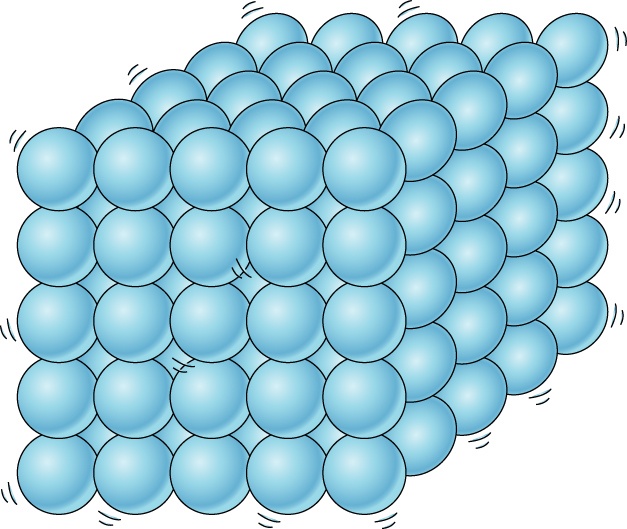
What state of matter?
Solid
Liquid
Gas
Plasma!!!
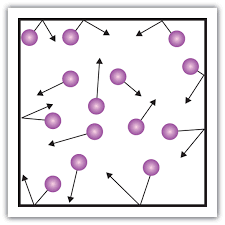
What state of matter?
Solid
Liquid
Gas
Which process could cause a material to change state from gas to liquid?
Adding heat
Adding energy
Removing particles
Removing energy

Which object has the highest density in this picture?
A
B
C
Regardless of size and amount, what physical property of matter will always be the same?
Mass
Volume
Density
Solubility
Based on your knowledge of the states of matter and density, which of the below states is the LEAST dense?


You are a scientist and have been given the task of identifying an unknown compound on the basis of its physical properties. The substance is a colorless liquid at room temperature. Its melting point is below 0 °C and it boiling point is above 50 °C. Using the table, name the unknown substance.
Mercury
Oxygen
Ethanol
Water
A chemical that changes color in acids and bases is called
an indicator
a metal
a non-metal
On the pH scale, which number identifies a neutral substance?
1
100
7

