
 Worksheets
SB1a: Cell structure and function review
Total questions: 90
Worksheet time: 2hrs 34mins

What is located in eukaryotic cells, all cellular contents outside of the nucleus and is in prokaryotic cells, all of the cells’ contents.
cytoplasm
golgi apparatus
nucleus
oragnelles
What are the specialized structure that performs important cellular functions within a cell called?
cytplasm
ribosome
golgi apparatus
organelles

What are the cell organelle's consisting of RNA and protein found throughout the cytoplasm in a cell and are the site of protein synthesis called?
golgi apparatus
lysosomes
ribosomes
nucleus

What is the internal membrane system found in eukaryotic cells? It is the place where lipid components of the cell membrane are assembled.
golgi apparatus
endoplasmic reticulum
nucleus
ribosome

What organelle in cells modifies, sorts, and packages proteins and other material from the endoplasmic reticulum for storage in the cell or release outside the cell?
vacuoles
endoplasmic reticulum
golgi apparatus
nucleus

What cell organelle stores materials such as water, salts, protein, and carbohydrates?
vacuole
lysosomes
nucleus
Cytoplam

What is the structure that contains the cell's genetic material in the form of DNA?
nucleus
lysosomes
cell wal
vacuole

What cell organelle breaks down lipids, carbohydrates, and proteins into small molecules that can be used by the rest of the cell?
mitochondria
cytoplasm
lysosomes
vacuole

What organelle found in cells of plants and some other organisms that captures the energy from sunlight and converts it into chemical energy?
chloroplast
cytoplasm
ribosome
mitochodria

What cell organelle converts the chemical energy stored in food into compounds that are more convenient for the cell to use.
golgi apparatus
chloroplast
nuclues
mitochondria

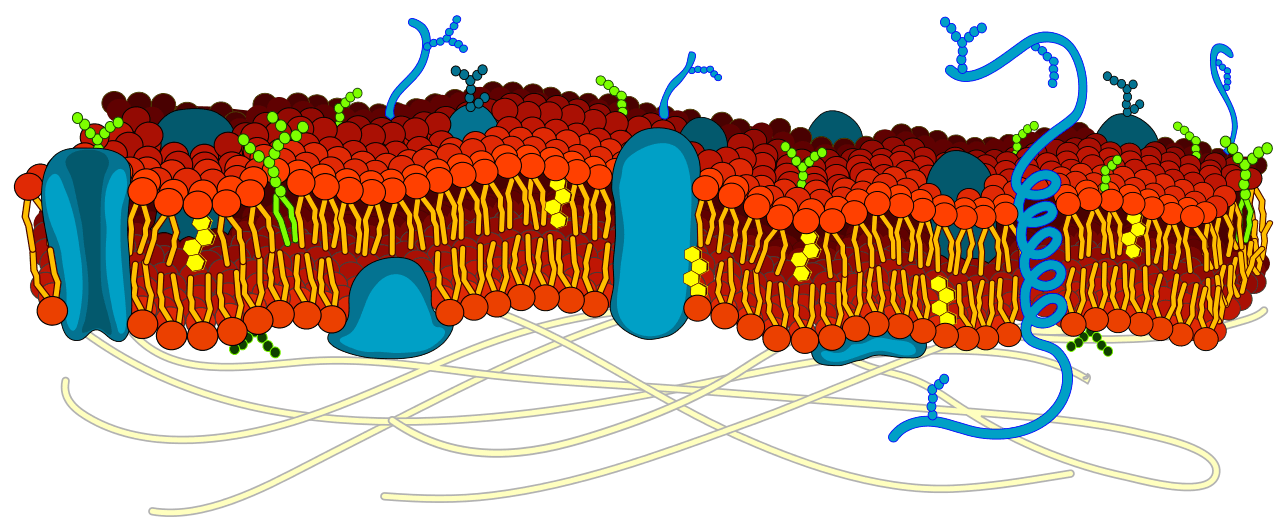
What is the thin, flexible barrier that surrounds all cells and regulates what enters and leaves the cell?
cell wall
cytoskeleton
cell membrane
endoplasmic reticulum

What is the strong, supporting layer around the cell membrane in some cells?
chloroplast
cell wall
cell membrane
golgi apparatus
Which of the following is not part of the cell theory?
All living things are made of cells
Cells are the basic unit of life
Cells only exist is eukaryotes
All cells come from pre-existing cells
German scientists Schleiden and Schwann determined that the basic unit of structure and function in living things is the
atom
cell
molecule
nucleus
What is the smallest, most basic unit of life?
Atom
Cell
bacteria
Molecule
Atoms are smaller than cells. Can atoms be considered living?
Yes
No
What is the least amount of cells an organism can have and still be considered living.
1
3
5
more than 5
How can you tell the difference between unicellular and multicellular organisms?
By looking to see if they have a nucleus
Determine if they are eukaryotic of prokaryotic
By determining how many cells it has.
By determining if it is an animal or plant cell.
If cells are considered living, can cell organelles be considered living as well?
Yes
No
What did you learn about eukaryotic and prokaryotic cell?
plant and animal cells are both __________________ and _________________. SELECT ALL THAT APPLY.
Eukaryotic
Prokaryotic
Multicellular
Unicellular
If you discovered something on mars and wanted to determine if it was living, what 1 characteristic should you look for?
if it is breathing
if it can move
if it has a heartbeat
if it is made of cells
Which of the following is true about living things?
All cells have the same shape
All living things have more than one cell
Organelles within a cell are considered living things
All living things carry out life functions
Why can single celled organisms be considered alive? SELECT ALL THAT APPLY
unicellular organisms are considered living (cell theory)
single celled organisms are not considered living
because they have everything they need to perform life functions within a single cell.
because they are microscopic
What organelle would a cell use to store waste products?
Rough ER
Golgi Body
Ribosome
Vacuole
What 2 organelles do plant cells have that animal cells do not?
Cytoplasm
Chloroplast
Cell Wall
Cell Membrane
How do organelles within a cell help the cell to function?
Cells do not need organelles to function
They work independently
They work together as a system
What are the most important functions of the nucleus? SELECT ALL THAT APPLY
provides structure and support
control center
provides energy for the cell
contains the dna
What is the function of the mitochondria
to make food for the cell
photosynthesis
to provide energy for the cell
storage site
what is the function of the chloroplast?
control center
to produce energy for the cell
storage site
to make food for the cell
which organelle allows for objects to enter and leave the cell?
nucleus
vacuole
cytoplasm
cell membrane
which organelle is responsible for providing additional structure and support for some types of cells?
cell membrane
cell wall
cytoplasm
nucleus
What is the function of cytoplasm?
to control what enters and leaves the cell
to allow organelles to move within the cell
to make food for the cell
to store waste for the cell
how are vacuoles and mitochondria similar?
they have nothing in common
they both store things for the cell
they both provide energy for the cell
they are both organelles
Cells make proteins on small structures called RIBOSOMES.
True
False
What is the difference between a cell wall and a cell membrane?
The cell wall is rigid and is outside the flexible cell membrane.
The cell membrane is flexible and outside the rigid cell wall.
The cell wall is flexible and is outside the rigid cell membrane.
The cell membrane is rigid and inside the flexible cell wall.
In eukaryotes, the _______ is where cellular respiration takes place.
Golgi apparatus
Mitochondria
Nucleus
Vacuole
_________ are organelles that use light energy to make food.
Mitochondria
Vaculoles
Chloroplasts
Nuclei
The Golgi apparatus is what packages _______ onto vesicles in a eukaryotic cell.
Sugars
Oxygen
Proteins
Water
A lysosome's main function is to...
Use light energy to make food
Protect the cell
Break down materials
Fight off infections
Molecules move through the cell membrane from areas of _____ concentration to areas of _____ concentration
high, low
low, high
high, high
low, low
Ziyah is making a model of a living plant cell. The following objects are available to her for her model:
a cloth bag
a wire cage
a solar panel
a battery with wires
a zippered sandwich bag
Ziyah wants to represent the function of different plant cell parts by using objects that have functions similar to the cell’s parts.
Which object would represent the cell membrane?
cloth bag
solar panel
battery with wires
zippered sandwich bag
In plant cells, the vacuole has two main functions. What are they?
To provide structure and a place for storage
To provide a place for the cell to create proteins and digest sugars
To provide structure and to store all the chloroplasts
To provide a place for storage and to collect bacteria.
What organelles transport proteins in a cell?
Golgi apparatus
vesicles
popsicles
vacuoles
What is the function of smooth endoplasmic reticulum (ER)?
Removes harmful substances from a cell
Synthesizes proteins
Transports oxygen
Stores the genetic material of the cell
Ziyah is making a model of a living plant cell. The following objects are available to her for her model:
a cloth bag
a wire cage
a solar panel
a battery with wires
a zippered sandwich bag
Ziyah wants to represent the function of different plant cell parts by using objects that have functions similar to the cell’s parts.
Which object would represent the cell wall?
wire cage
solar panel
battery with wires
zippered sandwich bag
Ziyah is making a model of a living plant cell. The following objects are available to her for her model:
a cloth bag
a wire cage
a solar panel
a battery with wires
a zippered sandwich bag
Ziyah wants to represent the function of different plant cell parts by using objects that have functions similar to the cell’s parts.
Which object would represent the chloroplast?
solar panel
cloth bag
wire cage
battery with wires
Ziyah is making a model of a living plant cell. The following objects are available to her for her model:
a cloth bag
a wire cage
a solar panel
a battery with wires
a zippered sandwich bag
Ziyah wants to represent the function of different plant cell parts by using objects that have functions similar to the cell’s parts.
Which object would represent the mitochondrion (singular for mitochondria)?
battery with wires
zippered sandwich bag
wire cage
solar panel

This regulates what goes in and out of the cell.
Cell membrane
Nucleus
Ribosome
Mitochondria

Gel-like fluid inside the cell that suspends the organelles
cytokines
vacuole
cytoplasm
boba

This organelle helps organize cell division and creates microtubules.
Mitochondria
Centriole
Lysosome
Vacuole

Cellular respiration takes place here and produces energy called ATP.
Lysosome
Golgi apparatus
Nucleus
Mitochondria

Breakdown lipids, carbs, proteins, old organelles. Clean up crew. Also fight against bacteria, viruses, and other antigens
Lysosome
Vacuole
Centriole
Mitochondria

Store materials like water, salts, proteins, and carbs. And also store wastes to prevent cell contamination. Plants have a large one.
Nucleus
Vacuoles
Mitochondria
Ribosomes

Transport important things (like proteins) throughout the cell
Lysosomes
Vacuoles
Nucleus
Vesicles

Makes and stores lipids (fats). Also breaks down toxins.
Rough ER
Smooth ER
Golgi Apparatus
Vacuoles

Transports material throughout the cell. Looks rough because of the ribosomes.
Rough ER
Golgi Apparatus
Smooth ER
Ribosomes

Makes proteins (protein synthesis)
Ribosomes
Rough ER
Nucleus
Cytoplasm

Main function is to produce and assemble ribosomes.
Nucleus
Vacuole
Nucleolus
Mitochondria

Usually found in the center. This is the “Control Center.” It coordinates activities like metabolism and growth. It also houses genetic information (DNA).
Nucleolus
Nucleus
Mitochindria
Ribosomes

Modify, sort, and package proteins and other materials from the ER for storage in the cell or secretion outside the cell
Golgi Apparatus
Rough ER
Smooth ER
Nucleus

Protein filaments that help maintain structure
Mitochondria
Cytoplasm
Cytoskeleton
Lysosomes

Short hairlike appendages. Helps in locomotion, circulation and aeration.
Flagellum
Cilia
Follicles
Hair fans

Long thread like appendage that helps in locomotion
Cilia
Flagellum
Propeller
Leg

Traps sunlight and converts it into energy for plants.
Chloroplasts
Cell wall
Cell membrane
Vacuole

It provides plant and some bacterial cells with protection and structural support.
Nucleus
Cell Wall
Cytoplasm
Mitochondria

What is the function of the organelle depicted in the photo?
To dispose of waste in the cell.
To capture sunlight and convert it into glucose for the cell.
To release energy into the cell.
To control what leaves and enters the cell.
True or False:
Chloroplasts are found in both plant and animal cells.
True
False
Which photo shows the mitochondrion of the cell?


This organelle is found in both plant and animal cells, but is usually much bigger in plant cells.


The purple organelle in photo depicts which organelle?
Nucleus
Endoplasmic Reticulum
Lysosome
Ribosome

Identify the structure that is indicated by the arrow in the image.
cell wall
central vacuole
chloroplast
cell membrane
Which of these organelles is not found in a animal cell?
Cell Membrane
Nucleus
Mitochondria
Cell Wall
This organelle is responsible for disposing of waste in the cell.
Mitochondria
Nucleus
Cell Wall
Lysosome
Which organelle serves as an internal transport system, and can be either "rough" or "smooth"?
Nucleus
Mitochondria
Cell Wall
Endoplasmic Reticulum
Which organelle makes proteins?
Mitochondria
Chloroplast
Ribosome
Lysosome

All the organelles in a cell work together to help the cell and the whole organism function. Some diseases are caused by the failure of one type of organelle. Read the description below of an example of this type of disease. A mosaic is a picture made up of small colored pieces. Mosaic viruses cause plant leaves to look like mosaic art. A mixture of dark and light green patches appear on the leaves. The light green patches are not able to capture much energy from sunlight. Which organelle is affected by mosaic viruses?
cell membrane
mitochondrion
chloroplast
cell wall

What is the function of the cell membrane?
To control what comes in and out of the cell
To break down food inside the cell
to serve as a barrier
to eat the cells food

Which organelle produces the energy a cell needs to carry out its function
Mitochondria
Golgi Bodies
Cytoplasm
Nucleus

Which organelle receives proteins and materials from the ER, packages them and distributes them
Vacuoles
Golgi Bodies
Nucleus
Chromatin

what is the function of ribosomes
to assemble amino acids to create proteins
to pack proteins
to clean proteins

The control center of cell is
the nucleus
ribosomes
chromatin

Chromatin is
tiny strands inside the nucleus that contain the instructions for directing the cell's function
found inside the nucleus
needed to make proteins

