wayground logo

Free Printable Worksheets

NEW

Font size

S
M
L
XL
Worksheets

Chemical Reactions

Total questions: 72

Worksheet time: 1hrs 27mins

Name
Class
Date
1.
the starting materials in a chemical reaction
a)
Products
b)
Reactants
c)
Starters
d)
Enders
2.
The substances listed on the right side of a chemical equation are the
a)
Yields
b)
Reactants
c)
Products
d)
Precipitates
3.

The process by which one or more substances change to produce one or more different substances

a)

Chemical Process

b)

Reactant

c)

Chemical Reaction

4.
In the equation,          2Mg + O2 ---> 2MgO, which are the reactants?
a)
Mg and O
b)
MgO
c)
Mg and MgO
d)
O and MgO
5.
What are Chemical Reactions?
a)
It's when you mix substances.
b)
a process in which atoms rearrange to form new substances
c)
When something bubbles.
d)
letter and numbers showing the types and number of atoms
6.

6CO2+ 6H2O  C6H12O6 + 6O26CO_2+\ 6H_2O\ \rightarrow\ C_6H_{12}O_{6\ }+\ 6O_2  

The carbon atoms are balanced with ____ on each side of the reaction.

a)

1

b)

6

c)

2

7.

Determined whether the following equation is balanced or unbalanced. Ag + O2 ---> 2Ag2O

a)

Balanced

b)

Unbalanced

8.

Determine whether the following equations is balanced or unbalanced. H4 + O2 ---> 2H2O

a)

Balanced

b)

Unbalanced

9.

Determine whether the following equation is balanced or unbalanced. H2 + Br2 ---> 2HBr

a)

Balanced

b)

Unbalanced

10.

Determine whether the following equation is balanced or unbalanced. 2Fe + 3Cl2 ---> FeCl3

a)

Balanced

b)

Unbalanced

11.

In order for an equation to be balanced, there must be ...

a)

an equal amount of atoms on both sides

b)

a greater mass on the product side

c)

a greater mass on the reactant side

d)

elements with the same atomic # on both sides

12.
In this image, what are the information in red is called the_______.
a)
Product
b)
Reactant
c)
Chemical Subscript
d)
Coefficient
13.
In this image, what are the information to the right of the arrow (in black) is called the_______.
a)
Product
b)
Reactant
c)
Chemical Subscript
14.
The law of conservation of mass states that....
a)
Matter can be made
b)
Matter can be destroyed
c)
Matter can neither be made or destroyed
d)
Matter can evaporate
15.
Is the following equation balanced or unbalanced?
Fe + S --> FeS
a)
balanced
b)
unbalanced
16.
Is this balanced?...
Al + O2 --> 2Al2O3
a)
Yes!
b)
NO!
17.

Determine whether the following equation is balanced or unbalanced. 4P +5O2 ---> 2P2O5

a)

Balanced

b)

Unbalanced

18.
How many atoms of aluminum are on each side of the following equation: 4Al + 3O--> 2AlO3
a)
2
b)
6
c)
1
d)
4
19.
Grinding a seltzer tablet into powder increases the rate of reaction due to increased
a)
concentration
b)
surface area
c)
temperature
d)
reactants
20.
Which factors increase the rate of a reaction.
a)
increasing temperature
b)
increasing concentration
c)
increasing surface area
d)
all of these
21.

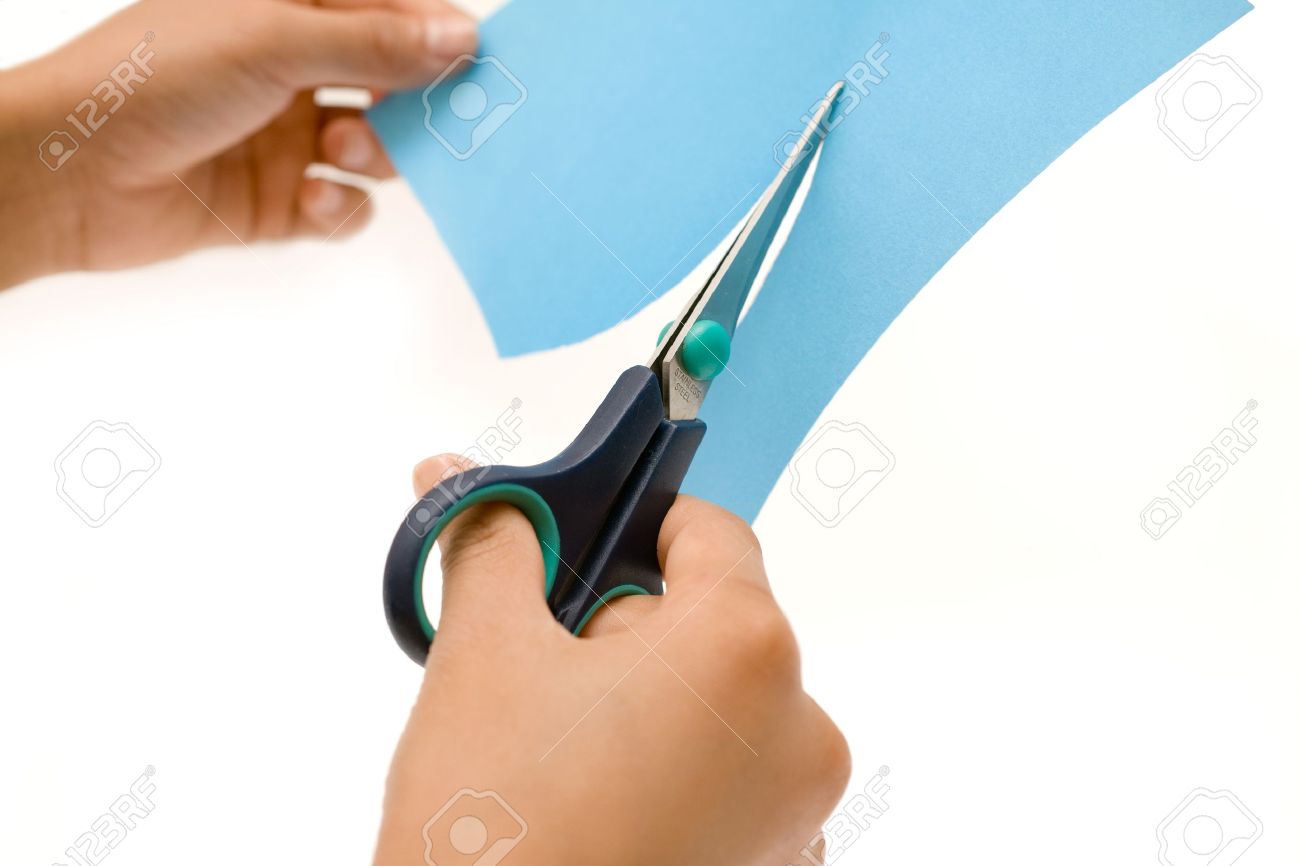
What kind of change is cutting paper?
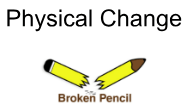
a)
b)
22.

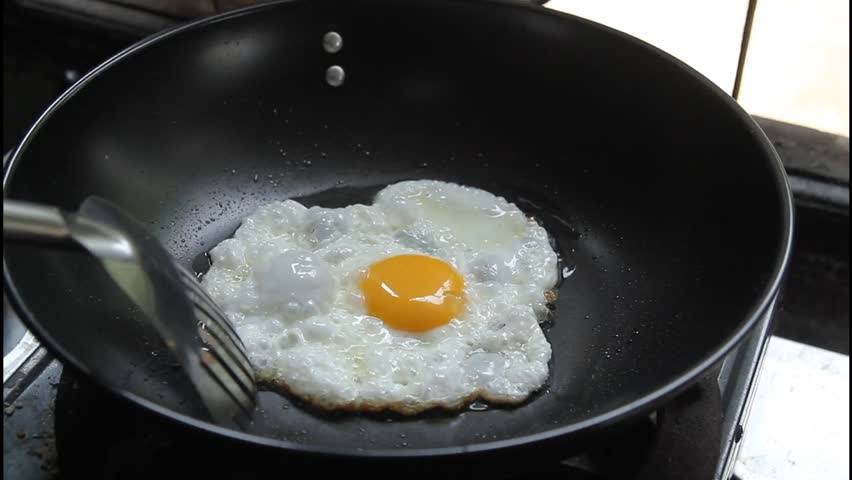
What kind of change is frying an egg?
a)
b)
23.

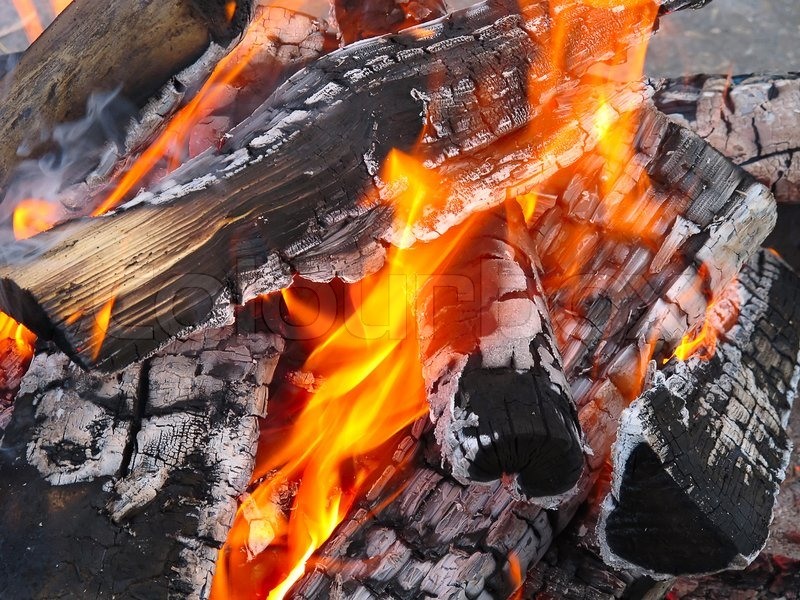
What kind of change is burning wood?

a)
b)
24.

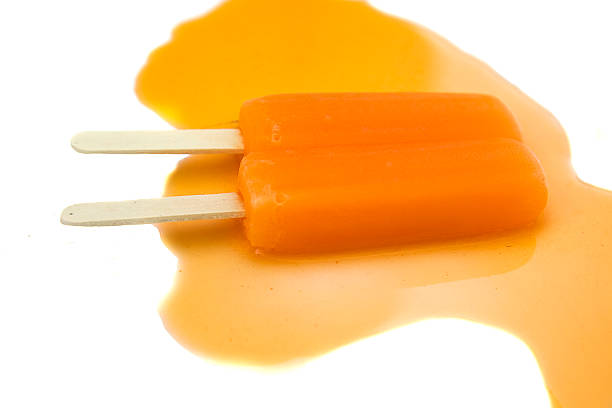
What kind of change is a melting popsicle?
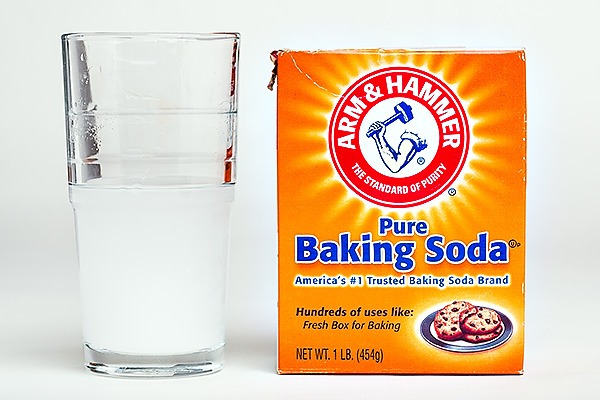
a)
b)
25.
Measure of the amount of matter 
a)
mass
b)
volume
c)
weight
d)
density
26.
Smallest unit of an element
a)
compound
b)
atom
c)
molecule
d)
product
27.
Which of these is not a chemical reaction?
a)
Burning of wood
b)
Milk going bad
c)
Mixing vinegar and baking soda
d)
Melting of ice
28.
Anthony is performing an experiment. He adds 0.25 grams of baking soda to 5 grams of water and stirs. Anthony watches as the baking soda dissolves in the water. If Anthony weighs the water and baking soda solution, what will its mass be?
a)
4.75 grams
b)
5.0 grams
c)
5.25 grams
d)
7.5 grams
29.

How many oxygen atoms are in the products for the chemical reaction below?
4Fe + 3O2  2Fe2O34Fe\ +\ 3O_{2\ }\rightarrow\ 2Fe_2O_3  

a)

2

b)

3

c)

5

d)

6

30.

The Law of Conservation of Mass says that matter can neither be __________ or __________.

a)

created; destroyed

b)

recycled; renewed

c)

subtracted; added

d)

joined; separated

31.

How many atoms are in the products below?
4Fe +3O2  2Fe2O34Fe\ +3O_{2\ }\rightarrow\ 2Fe_2O_3  

a)

7

b)

10

c)

17

d)

20

32.
Substances present at the start of a chemical reaction
a)
subscripts
b)
coefficients
c)
reactants
d)
products
33.
In a reaction A + B ----> C,  reactant A has 5g and product  C has 9g. How many grams does reactant B should have? 
a)
4g
b)
5g
c)
9g
d)
14g
34.
Is this equation balanced or unbalanced? 
H2 + O2 --> H2O
a)
balanced
b)
unbalanced
35.

How confident are you in balancing equations?

a)

I got this!

b)

Mostly Good.

c)

Still working on it.

d)

Mostly Lost

36.

(NH4)2Cr2O7 How many H are in this atom?

a)

2

b)

4

c)

6

d)

8

37.

PCl5 +H2O --> POCl3 +HCl. How many chlorine (Cl) atoms?

a)

Reactants: 5; Products: 3

b)

Reactants 5; Products 5

c)

Reactants 5: Products 4

d)

Reactants 3; Products 5

38.

Which option is correctly balanced?

a)

Fe + H2O --> Fe3O4 + H2

b)

3 Fe + H2O --> Fe3O4 + H2

c)

3 Fe + 4 H2O --> Fe3O4 + 4 H2

d)

3 Fe + 2 H2O --> Fe3O4 + H2

39.

Which Option is Correctly Balanced?

a)

Hg + O2 --> Hg2O2

b)

2 Hg + 2O2 --> Hg2O2

c)

2 Hg + O2 --> Hg2O2

d)

Hg + 2 O2 --> Hg2O2

40.
In chemical reactions, what does the principle of conservation of mass mean?
a)
Matter is not created or destroyed.
b)
The total mass of the reactants is greater than the total mass of the products.
c)
The total mass of the reactants is less than the total mass of the products.
d)
Matter is not changed.
41.

How many atoms of Carbon are in the following formula?

3C2H6

a)

3

b)

6

c)

9

d)

18

42.

What are the coefficients that will balance the skeleton equation below?

__Na + __F₂ → __NaF

a)

1, 2, 1

b)

2, 1, 2

c)

1,1,1

d)

2,2,2

43.

What are the coefficients that will balance the skeleton equation below?

__Na + __MgF₂ → __NaF + __Mg

a)

2,1,1,2

b)

1,2,1,2,

c)

2, 1, 2, 1

d)

1,2,2,1

44.

What are the coefficients that will balance the skeleton equation below?

___N₂ + __H₂ → __NH₃

a)

1,3,2

b)

1,2,3

c)

3,2,1

d)

1,2,1

45.

What are the coefficients that will balance the skeleton equation below?

__Sn + __HF → __SnF₂ + __H₂

a)

2,1,1,2

b)

1, 2, 1, 1

c)

2,1,2,1

d)

1,2,1,2

46.

What are the coefficients that will balance the skeleton equation below?

__Fe +__O₂ → __Fe₂O₃

a)

3,4,2

b)

4, 3, 2

c)

2,3,4

d)

4,2,3

47.

What are the coefficients that will balance the skeleton equation below?

__MgS + __O₂ → __MgO + __SO₂

a)

3,2,2,3

b)

2,3,2,2

c)

2,3,2,3

d)

3,2,2,1

48.

What are the coefficients that will balance the skeleton equation below?

__CH₄ + __O₂ → __CO₂ + __H₂O

a)

2,1,2,1

b)

2,1,1,2

c)

1,2,1,2

d)

1,2,2,1

49.
__Na + __Cl2 --> __NaCl
a)
1,1,2
b)
2,1,2
c)
2,1,1
d)
already balanced
50.
__H2O2 --> __H2O + __O2
a)
already balanced
b)
2,1,1
c)
2,2,1
d)
2,1,2
51.
__C6H12O6 + __O2 --> __H2O + __CO2
a)
1,6,6,6
b)
already balanced
c)
1,6,1,6
d)
2,12,12,12
52.
What is the right ratio of chemicals for the BCE (Balanced Chemical Equation)?__Na + __H2O --> __NaOH + __H2
a)
2,2 --> 2,1
b)
4,4 --> 4,1
c)
1,2 --> 2,4
d)
1,2 --> 2,1
53.
Balance this equation:
MgCl2 --> Mg4+ Cl2
a)
It's already balanced.
b)
4MgCl2 --> Mg4+ 4Cl2
c)
4MgCl2 --> Mg4+ 5Cl2
54.
Balance this reaction: ____ BaS + ____ PtF2 ---> ____ BaF2 + ____ PtS
a)
1,1,1,1
b)
1,2,1,1
c)
1,1,1,2
d)
2,1,1,1
55.

How many Oxygen atoms do I have in the following two compounds?

2(NH4)3PO42\left(NH_4\right)_3PO_4  

a)

4

b)

6

c)

8

d)

24

56.

How many Hydrogen atoms do I have in the following two compounds?

2(NH4)3PO42\left(NH_4\right)_3PO_4  

a)

4

b)

12

c)

9

d)

24

57.

What number do I need to balance the following chemical reaction?

C4H8+C_4H_8+  _ O24CO2+4H2OO_2\rightarrow4CO_2+4H_2O  

a)

2

b)

4

c)

6

d)

8

58.
What type of reaction involves the production of CO2 and/or H2O usually? 
a)
Synthesis
b)
Decomposition
c)
Combustion
d)
Activity Series 
59.
What type of reaction is this example? 
Mg + __HCl  --->   MgCl2H2
a)
Single Replacement 
b)
Double Replacement
c)
Synthesis 
d)
Combustion 
60.
What's the correct way to balance this equation?
Mg + HCl  --->   MgCl2 +  H2
a)
Mg + 2HCl  --->   MgCl2 +  H2
b)
2Mg + 2HCl  --->   4MgCl2 +  H2
c)
Mg + HCl  --->   2MgCl2 +  2H2
d)
Mg + HCl  --->   MgCl2 +  H2
61.
During a chemical reaction-- is matter destroyed
a)
No, matter can never be destroyed-- it only moves
b)
Yes.  Matter is destroyed every day. 
c)
Depends on the type of chemical reaction. 
d)
You are a magician, sir. 
62.
What type of reaction is this formula? 
A  + B ---->  A 
a)
Synthesis 
b)
Decomposition
c)
Single Replacement
d)
Double Replacement 
63.
What type of reaction is this formula? 
AB --->   A + B
a)
Decomposition
b)
Synthesis
c)
Single Replacement
d)
Combustion 
64.
What is the correct way to balance this chemical equation? 
Cl2 + NaBr  --->   NaCl +  Br2
a)
Cl2 + 2NaBr  --->   2NaCl + Br2
b)
4Cl2 + 2NaBr  --->   2NaCl + Br2
c)
2Cl2 + 4NaBr  --->   4NaCl + Br2
d)
Cl2 + 1NaBr  --->   3NaCl +  7Br2
65.
What type of reaction is this example? 
Ag(NO3) + NaCl ---->  AgCl + Na(NO3)
a)
Double Replacement 
b)
Decomposition
c)
Single Replacement 
d)
Combustion 
66.
The PRODUCTS in this equation are: 
Mg + 2HCl --->  MgCl2 + H2
a)
Mg + 2HCl
b)
MgCl2  + H2
c)
MgCl2
d)
HCl
67.
The REACTANTS in this equation are: 
Mg + 2HCl --->  MgCl2 + H2
a)
Mg + 2HCl
b)
MgCl2  + H2
c)
MgCl2
d)
HCl
68.
Balance this equation
_Al +_HCl --> _H+_AlCl3
a)
2, 6, 3, 2
b)
it is already balanced
c)
4, 12, 3, 4
d)
2, 1, 4, 5
69.
Balance this equation-
__P+ __O--> __P2O3
a)
it is already balanced
b)
2, 1, 3
c)
1, 2, 3
d)
1, 3, 2
70.
What is the molar mass of fluorine gas?
(beware!)
a)
18.998 g/mol
b)
38 g/mol
c)
9 g/mol
d)
18 g/mol
71.
What is the molar mass of table salt (NaCl)?
a)
116.886 g/mol
b)
35.453 g/mol
c)
22.990 g/mol
d)
58.443 g/mol
72.
How many particles are in a mole?
a)
602
b)
602 million
c)
602 moles
d)
6.02 x 10²³