wayground logo

Free Printable Worksheets

Font size

S
M
L
XL
Worksheets

Science 7 Revision 2 Sem1 A

Total questions: 97

Worksheet time: 1hrs 13mins

Name
Class
Date
1.

Given this arrangement of magnets, in which case/s would the magnets REPEL each other?

a)

B only

b)

B and C

c)

A and C

d)

A only

2.

Are the forces exerted by the cats balanced or unbalanced?

a)

Balanced

b)

Unbalanced

3.

The ability to do work is ____.

a)

Force

b)

Energy

c)

Sound

d)

Power

4.

Energy from sunlight is called ___.

a)

Mechanical energy

b)

Power energy

c)

Solar energy

5.

A magnet attracts ___ objects.

a)

Metal

b)

Wood

c)

Paper

d)

Leather

6.
What are the three states of matter?
a)
Rock, Brick, Shoe
b)
Solid, Liquid, Gas
c)
Liquid, Water, Soda
d)
Rain, Sleet, Snow
7.
When water vapor gets cold, it turns to a...
a)
liquid
b)
solid
c)
raindrop
d)
ice
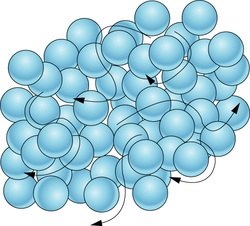
8.
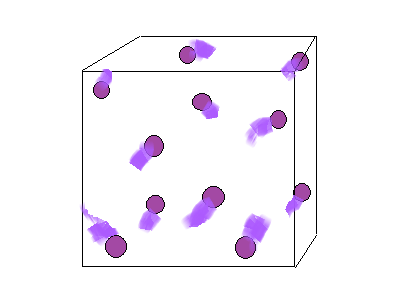
What state of matter does this picture show?
a)
Liquid
b)
Gas
c)
Solid
d)
Matter
9.
What is anything that takes up space and has mass?
a)
Mass
b)
Volume
c)
Melting
d)
Matter
10.
When you heat water it turns into a ____
a)
liquid
b)
water
c)
gas
d)
solid
11.
The amount of space a liquid takes up is ________
a)
Volume
b)
Matter
c)
Solid
d)
Liquid
12.

State of matter with a definite shape and definite volume.

a)

solid

b)

liquid

c)

gas

13.

What happens to particles when their temperature increases?

a)

The particles move slower

b)

The particles move faster

c)

The particles lose mass

d)

The particles gain mass

14.
Freezing
a)
Solid to gas
b)
Liquid to solid
c)
Gas to solid
d)
Liquid to gas
15.
Boiling
a)
liquid to gas
b)
gas to solid
c)
gas to liquid
d)
solid to liquid
16.
Which state of matter has tightly packed molecules?
a)
solid
b)
liquid
c)
gas
17.
Which state of matter has a definite shape?
a)
solid
b)
liquid
c)
gas
18.
What is happening when my ice cream changes from a solid to a liquid?
a)
freezing
b)
melting
c)
burning
d)
evaporation
19.
Define a liquid.
a)
Indefinite shape, indefinite volume
b)
Definite shape, definite volume
c)
Found in stars
d)
Definite volume, indefinite shape
20.
What term describes a solid changing to a gas?
a)
Deposition
b)
Sublimation
c)
Evaporation
d)
Freezing
21.
The speed of the molecules determines the _____.
a)
volume
b)
density
c)
pressure
d)
temperature
22.
What is condensation?
a)
gas to solid
b)
gas to liquid
c)
liquid to solid 
d)
solid to liquid 
23.
Thermal energy is...
a)
heat energy.
b)
the energy of motion
c)
energy of nuclear processes.
d)
an indication of physical change.
24.
A chemical change
a)
doesn't really change much.
b)
creates a new substance
c)
is a change in the state of matter
25.

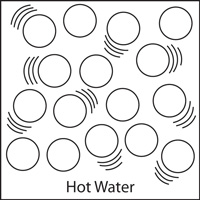
What state of matter does this picture show?

a)

Solid

b)

Liquid

c)

Gas

26.

What is happening in this picture of water boiling?

a)

Molecules are speeding up

b)

Molecules are slowing down

27.

What is happening in this picture of this lake freezing?

a)

Molecules are speeding up

b)

Molecules are slowing down

28.

Transparent and brittle

a)

Metal

b)

Sponge

c)

Glass

d)

Plastic

29.

Shiny and conducts electricity

a)

Meetal

b)

Polythene

c)

Rubber

d)

Metal

30.

Flexible and elastic and a opaque

a)

Fabric

b)

Tissue paper

c)

Rubber

d)

Wood

31.

Soft and a good thermal insulator

a)

Fabric/cotton/sponge

b)

Rubber/metal/tissue

c)

Wood/polythene/plastic

32.

Weak and absorbent

a)

Fabric /faabrick

b)

Paper /tissue paper

c)

Polythene/plastic

d)

None of theme

33.

Waterproof material

a)

Plastic

b)

Wood

c)

Fabric

d)

Paper

34.
The ability of a material to withstand a force without breaking or bending
a)
durability
b)
hardness
c)
toughness
d)
strength
35.
The ability of a material to conduct heat or electrical energy
a)
conductivity
b)
ductility
c)
malleability
d)
fusibility
36.

What do you call the dye that changes into a different color depending on whether it is an acid or base?

a)

crayon

b)

indicator

c)

paint

d)

pH

37.
The pH scale is a range from:
a)
1-7
b)
0-14
c)
1-5
d)
1-20
38.
What is the only substance with a neutral pH of 7?
a)
Milk
b)
Orange Juice
c)
Water
d)
Blood
39.

What does pH measure?

a)

the amount of hydrogen (H+) ions

b)

the amount of hydroxide (OH-) ions

c)

amount of water

d)

all of the above

40.

Which of the following is the strongest acid?

a)

1

b)

5

c)

3

d)

8

41.

Which of the following is a characteristic of an acid?

a)

bitter

b)

slippery

c)

sour

d)

releases hydroxide ions in water

42.

Which of the following is a characteristic of an alkali?

a)

bitter

b)

sour

c)

corrosive

d)

releases hydrogen ions in water

43.

Which of the following is the strongest alkali?

a)

4

b)

14

c)

7

d)

15

44.

Neutralisation is a reaction between

a)

Acid and base

b)

Acid and a neutral substance.

c)

Two acids

d)

Two bases

45.
What mineral is used for pencils?
a)
Graphite
b)
Galena
c)
Magnetite
d)
Quartz
46.
What is molten or liquid rock material that is deep beneath the Earth's surface?
a)
grain
b)
lava
c)
magma
d)
rock
47.
What is molten rock that erupts onto or above the Earth’s surface?
a)
grain
b)
lava
c)
magma
d)
sediment
48.

Which of the following lists Earth's compositional layers starting with Earth's center and ending with the outermost layer.

a)

mantle, crust, core

b)

crust, mantle, core

c)

crust, core, mantle

d)

core, mantle, crust.

49.
Which physical layer is the thinnest?
a)
crust
b)
mantle
c)
core
50.

Gravity is a:

a)

contact force

b)

non-contact force

51.
What are the two types of crust?
a)
top crust,bottom crust
b)
oceanic crust, continental crust
c)
water,land
d)
none of the above 
52.

When a car stops suddenly, passengers continue moving forward.

a)

True

b)

False

53.

What term is missing?


Friction acts in the ______ direction as an object's motion.

a)

same

b)

opposite

c)

perpendicular

54.

When a car stops suddenly, passengers continue moving forward.

a)

True

b)

False

55.

What term is missing?


Friction acts in the ______ direction as an object's motion.

a)

same

b)

opposite

c)

perpendicular

56.

Named after the famous scientist, I am the unit for measuring Force

a)

Tesla

b)

Newton

c)

Neutron

d)

Sheldon

57.

Named after the famous scientist, I am the unit for measuring Force

a)

Tesla

b)

Newton

c)

Neutron

d)

Sheldon

58.

The girl's hair is attracted to the balloons because of which force?

a)

Electrostatic

b)

Magnetic

c)

Friction

d)

Buoyancy

59.

In this force diagram, which way will the van move?

a)

Upward

b)

To the left

c)

To the right

d)

Downward

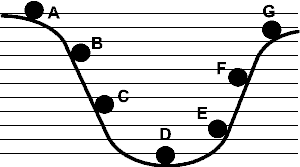
60.

Which point has the most potential energy?

a)

G

b)

F

c)

B

d)

A

61.
You and your friend, are playing tug of war. Your friend pulls with a force of 55 N, to the rights. You pull with a force of 65 N, to the left. What is the net force on the rope?
a)
10 n, to the left
b)
20 N
c)
10 N, to the left
d)
10 N, to the right
62.

Energy that comes from moving charged particles

a)

gravitational potential energy

b)

nuclear energy

c)

electrical current

d)

sound energy

63.

Energy sources from derived from the remains of living organisms - includes oil, gas, and coal

a)

thermal energy

b)

renewable resource

c)

sound

d)

fossil fuel

64.

The gradual warming of Earth's climate

a)

fossil fuel

b)

ozone depletion

c)

global warming

d)

carbon footprint

65.

Stored energy that exists based on the position of an object

a)

gravitational potential energy

b)

kinetic energy

c)

solar energy

d)

chemical energy

66.

There is a limited supply, because they do not have the ability to be quickly replenished

a)

renewable resource

b)

nonrenewable resource

c)

wind power

d)

solar power

67.

Resources that are produced all the time, so they will not run out

a)

crude oil

b)

natural gas

c)

nonrenewable resource

d)

renewable resource

68.

Energy vibrating materials or air molecules

a)

electromagnetic waves

b)

nuclear energy

c)

sound

d)

light

69.

The energy of moving particles. As an object heats up, particles move faster and it increases

a)

thermal energy

b)

little energy

c)

mass energy

d)

potential energy

70.

A principle stating that energy cannot be created or destroyed.

a)

law of conservation of mass

b)

law of conservation of energy

c)

law of energy transformation

d)

law of energy principles

71.

What is considered the source of all energy on our planet?

a)

the Moon

b)

gravity

c)

the Sun

d)

the atmosphere

72.
Which is the correct order of our planets?
a)
Mercury, Venus, Earth, Mars, Jupiter, Saturn, Uranus, Neptune
b)
Mars, Venus, Earth, Mercury, Jupiter, Saturn, Uranus, Neptune
c)
Neptune, Uranus, Saturn, Jupiter, Mars, Earth, Venus, Mercury
d)
Mercury, Venus, Earth, Mars, Neptune, Saturn, Jupiter, Uranus
73.

What is gravity?

a)

A push or pull on an object

b)

The force of attraction (pull) between two objects

c)

The tendency to keep moving in a straight line

d)

Any object that orbits another object

74.

What is caused by the tilt of Earth's axis?

a)

Months

b)

Years

c)

Seasons

d)

Hours

75.

Why do stars appear to move across Earth's sky each night?

a)

Earth rotates on its axis

b)

The stars orbit each other

c)

Earth revolves around the Sun

d)

The stars rotate with the Moon

76.

Why does the moon appear to shine?

a)

It is like a star and gives off light

b)

It refracts light from space

c)

It reflects light from the sun

d)

It absorbs light from the sun

77.
What is a huge ball of very hot gases in space?
a)
galaxy
b)
equator
c)
star
d)
constellation
78.
A pattern of stars, named after mythological or religious figure, an object, or an animal
a)
galaxy
b)
star
c)
constellation 
d)
planet
79.
The path one body takes in space as it revolves around another
a)
universe
b)
orbit
c)
refraction
d)
moon
80.

Which characteristic is shown in the image?

a)

Organisms grow and develop

b)

Organisms react to stimuli

c)

Organisms can adapt

d)

Organisms use and obtain energy

e)

Organisms are made up of cells

81.
The community of organisms that live in a particular area along with the non-living surroundings as well...
a)
Population
b)
Community
c)
Ecosystem
82.

Cells are the building blocks of:

a)

living things

b)

matter

c)

energy

d)

rocks

83.

Genetic material is located here

a)

Mitochondria

b)

Vacuole

c)

Nucleus

d)

Cytoplasm

84.

Which characteristic is shown in the image?

a)

Organisms reproduce

b)

Organisms react to stimuli

c)

Organisms can adapt

d)

Organisms use and obtain energy

e)

Organisms are made up of cells

85.
An environment that provides the things a specific organism needs to live, grow, and reproduce is its ________.
a)
ecosystem
b)
community
c)
habitat
d)
population
86.
what needs of an organism are provided by its habitat
a)
organism
b)
population
c)
food, shelter, water
d)
species
87.
What are the biotic factors in this image?
a)
sunlight, elephants, and grasses
b)
sunlight, water,  and air
c)
elephants, plants, trees 
88.
One way to prevent the spreading of disease is:
a)
to cough without covering your mouth.
b)
to wash your hands often.
c)
to rub your eyes and nose when sick.
89.

A substance produced during a chemical reaction

a)

Product

b)

Reactant

c)

Properties

90.
Which of the following is evidence of a chemical reaction?
a)
fizzing
b)
water changing to ice
c)
saltwater
d)
paper being cut in half
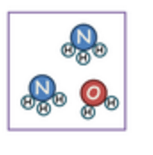
91.
This picture represents: 
a)
Element
b)
Compound
c)
Mixture of Elements
d)
Mixture of Compounds
92.

What does vibration mean?

a)

moving back and forth quickly

b)

the way sound travels

c)

loudness or quietness

d)

the speed of vibration

93.

What is an echo?

a)

Loudness or quietness

b)

Moving back and forth quickly

c)

Reflecting sound

d)

Speed of vibration

94.
Which material does sound travel through the fastest?
a)
air 
b)
outer space
c)
water
d)
brick
95.
If a student playing the drums hits the drums with greater force, the sound would be
a)
quieter
b)
louder
c)
lower in pitch.
d)
higher in pitch.
96.
How are light and sound ALIKE?
a)
Both travel as rays
b)
Both can vary in pitch
c)
Both depend on vibrations in air
d)
Both are forms of energy that travel as waves
97.

A wave produced when a sound is made that is responsible for carrying the sound to the ear.

a)

Sound

b)

Pitch

c)

Amplitude

d)

Sound Wave