
 Worksheets
HFN2O1 - Nutrition Test Review
Total questions: 63
Worksheet time: 35mins
What is the difference between micronutrients and macronutrients?
Macronutrients are more important than micronutrients.
Macronutrients are larger than micronutrients.
Macronutrients are needed larger quantities, micronutrients are needed in smaller quantities.
Which of the following is classified as a micronutrient?
Carbohydrates
Fats
Proteins
Vitamins
Which of the following is classified as a macronutrient?
Proteins
Vitamins
Minerals
Fiber
Sugar is ______.
a quick source of energy.
a long, sustained source of energy.
not a required nutrient.
Grains, fruits, and vegetables are sources of ______.
Sugar
Starch
Fiber
Amino acids are building blocks for _______.
Proteins
Carbohydrates
Fats
Vitamins
Which type of protein contains all 9 essential amino acids?
Complete
Incomplete
Both are correct
Which of the following vitamins are not stored in abundance (need to be replenished regularly)?
Fat-soluble
Water-soluble
Both are correct
Phosphorus (P), calcium (Ca), potassium (K) are examples of _______.
Vitamins
Minerals
Fiber
Carbohydrates
Which of the following helps us to build muscles and repair damaged tissues?
carbohydrates
fats
proteins
vitamins
Fiber helps us to build muscles.
True
False
Fat helps our body to keep warm.
True
False
Substances in food that provide nourishment essential for growth and the maintenance of life are called nutrients. What are the 6 nutrients?
Carbohydrates, Meats, Minerals, Water, Protein, and Dairy
Fruits, Milk, Vitamins, Water, Pork, and Vitamins
Carbohydrates, Fats, Water, Protein, Minerals and Vitamins
Carbohydrates, Fats, Minerals, Cheese, Protein, and Vegetables
You need ___________ and _____________ for ENERGY.
Protein
Vitamins and minerals
Fats and carbohydrates
fiber and food
Which food contains starch?


What is the main nutrient in OLIVE OIL?
Protein
Carbohydrates
Fat
Vitamins

Proteins are found in:
meat, fish, eggs
fruits and vegetables
bread, potatoes, rice, pasta

Which of the following foods is NOT a protein?
eggs
milk
chicken
tomatoes
Plant-based proteins tend to be:
Complete proteins
Incomplete proteins
Animal-based proteins tend to be:
Complete proteins
Incomplete proteins
Fiber does not provide our body with energy.
True
False
__________ - artificially made in an industrial process that adds hydrogen to liquid vegetable oils to make them more solid.
Trans Fats
Saturated Fats
Polyunsaturated Fats

Which are macronutrients?
Protein
Carbohydrates
Fats
Sugar
Starch
Strawberries
Vitamins
Minerals
Water
Bread
Cereal
Rice
Saturated fats are __________ at room temperature.
liquid
solid

Which kind of fat is always bad for us?
Unsaturated
Saturated
Trans Fat
Which type of fat is considered healthier than others?
Saturated Fat
Unsaturated Fat
Trans Fat
What are some healthy eating habits?
Be mindful of what you eat
Cook more often
Enjoy your food
Eat meals with others
All of the above
Of the following, which is NOT a healthy food choice?
Eat plenty of vegetables and fruits, whole grain foods and protein foods. Choose protein foods that come from plants more often.
Eat processed foods in large quantities.
Make water your drink of choice.
Use food labels.
Be aware of food marketing.
What do healthy eating patterns accomplish?
help you feel good
maintain your health
meet your nutritional needs
all of the above
According to Canada's Food Guide, how much of your plate should be fruits and vegetables?
one third
one quarter
one half
none
According to Canada's Food Guide, how much of your plate should be protein?
one third
one quarter
one half
none
According to Canada's Food Guide, how much of your plate should be whole grains?
one third
one quarter
one half
none
According to Canada's Food Guide, how much of your plate should be whole-grain foods?
the whole plate - yummmmm pasta!
half the plate
one third
one quarter
Which of the following is NOT a snack that contains a lot of protein?
hummus and veggies
hard-boiled eggs
low-fat yogurt and berries
crackers
nuts and seeds
What is the best drink to pair with your meals?
pop
juice
water
iced-tea
Who should be reading a food label?
Everyone
People with allergies, diseases and those on a diet
For a Cheetos Packet, If the serving size is 21 chips, and the servings per container is 4, this means the whole packet has
21 chips
21x4 chips
4 chips
21x2 chips
Other than Vitamins and Minerals, what nutrient do we want more of in a food label and in our food?
Fiber
Sugar
Saturated Fat
Protein
How are the ingredients listed on food packaging?
There is no specific order.
From the least to the most.
From the most to the least.
None of the above.
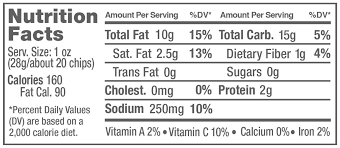
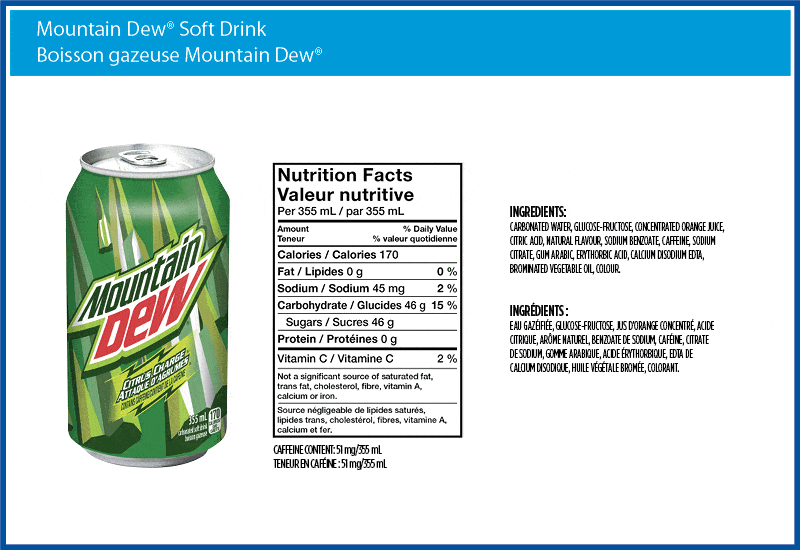

Which ingredient is there the most of in this lentil soup?
filtered water
lentils
onions
black pepper
Per can, this soup is a good source of
dietary fiber
sodium
saturated fat
Vitamin D
Per can, this soup is low in sodium
false
true
Per can, this soup is cholesterol-free.
false
true
Per can, this soup is low fat.
false
true
"Supports the immune system"
nutrient claim
health claim
"An excellent source of fiber"
nutrient claim
health claim
"Low in cholesterol"
nutrient claim
health claim
"Contains natural cancer fighters"
nutrient claim
health claim
"Starting your day with a big bowl of fiber-rich oatmeal can lower your risk of heart disease."
nutrient claim
health claim
A vegetarian diet is one that does not include which of the following?
Beans
Apples
Pecans
Chicken
A lacto-vegetarian diet excludes meat and eggs but allows dairy products and honey.
True
False
A vegan diet excludes all meat, dairy, eggs, and honey from the diet.
True
False
Ovo-vegetarian diet excludes meats and dairy products but includes eggs.
True
False
What nutrient must a vegetarian be extra conscious of in their diet?
Carbs
Fats
Proteins
Water
Which of the following would be a source of protein for a vegan?
Eggs
Brisket
Salmon
Tofu
Vegans avoid eating (check all that apply):
seafood
fruits and vegetables
wholegrain products
eggs
milk, yogurt
People follow a vegan diet because they (check all that apply):
do not want animals to suffer
get all the nutrients from their bodies
care about environmental issues
disapprove of the immense water waste in meat production
are picky eaters
Which of the following statements is true?
We should maximize the nutrient dense foods in our diets, and minimize empty calories.
We should maximize the empty calories in our diets, and minimize nutrient dense foods..
We should maximize both nutrient dense foods and empty calories.
We should minimize both nutrient dense foods and empty calories.

