
 Worksheets
Semester One Final
Total questions: 68
Worksheet time: 1hrs 17mins
What concept was the belief in "divine right" used to support?
Absolute Rule
Freedom of religion
Separation of Church and state
waging war for religious purposes

What is Divine Right?
a set of rules used by the greeks
the God given right to rule
Hitler's reason to exterminate Jewish people
Machiavelli's theory on power

Which monarch was the Czar of Russia?
King Louis XIV
Peter the Great
Phillip II
Henry VIII
Who was an absolute monarch in France?
Peter the Great
King Ferdinand
King Louis XIV
The English Bill of Rights was created to …
limit the power of English monarchs
establish laws protecting the rights of Protestants
organize England’s colonial empire
abolish the role of Parliament
The English Bill of Rights (1689) inspired the…
American Bill of Rights
Rise of Monarchies in Europe
Second Dark Ages
First instance of world peace
Notable Events During The Reign of William & Mary
King and Queen of England after the Glorious Revolution
Signed the English Bill of Rights in 1689
Recognized the supremacy of the English Parliament.
William & Mary are an example of a…
Limited Monarchy
Absolute Monarchy
Enlightened Monarchy
Who was Louis XIV?
This man promoted Westernization campaigns to make his country more European
This man demonstrated absolutism by building Versailles as a way of distracting the French nobility
This man believed that humans were naturally good and would not need a large government to rule over them.
This man did not believe that the average person was intelligent enough to participate in government, which led him to believe that an enlightened monarchy was best.
Which of the following was a problem with the age of absolutism?
Wars were fought for status, religion, territory, and power
Taxes were raised to build roads, canals, factories, and merchant ships
Countries gained vast territories of land throughout Europe
Tremendous wealth was gained by utilizing their colonies raw materials

In 1497, who found a water route to Asia by rounding the tip of Africa and landing on India's southwest coast?
Henry the Navigator
Dias
Vasco da Gama
Columbus

Which was traded from the Old World to the New World?
horses and major diseases
squash, pumpkins, and turkeys
cocoa and horses
cocoa and llamas

Which was traded from the New World to the Old World?
major diseases
horses
potatoes and corn
slaves

Conquistadors is a Spanish word meaning:
to entrust
to connect
court
conquerors

What was the motivation for exploration?
Write a book about it
Gold, God, Glory
Land, food, water
Position in the government

What is mercantilism?
A system where a mother country gains power by exporting more goods than they import.
where colonies trade gold and silver with each other.
A theory that global wars that start over money so countries should avoid it.
Plantation colonies trading slaves for money.

The inhumane voyage of slaves across the Atlantic ocean was called the
End of Days
Middle Passage
Final Destination
End of Freedom

Japan responded to European exploration by introducing what policy?
Mercantilism
Closed Country
Open Country
Free Trade
What prompted the explorers to explore other areas?
America
Africa
Coffee
Spices
His trip was funded by King Ferdinand and Queen Isabella of Spain.
Christopher Columbus
Ferdinand Magellan
Hernan Cortes
Marco Polo
Who was the first European to come to the Americas? What year did he arrive?
Columbus in 1492
Ponce de Leon in 1493
Vasco da Gama in 1502
Leif Ericson in 1000 AD
The movement of people, animals, plants, and cultures between the Eastern and Western hemispheres:
expedition
Columbian Exchange
slave trade
navigation
Which exchange most impacted the native populations in Mesoamerica?
Gunpowder
Smallpox
Horses
Cacao
One of the most important ideas from the Renaissance that allowed ideas to spread more quickly.
Perspective
Greece and Rome
Building designer
Printing Press
Which was a key intellectual movement or philosophy of the Renaissance?
Humanism
City State
Cultural relativism
Behavioralism
Who was the painter of the Sistine Chapel?
da Vinci
Raphael
Machiavelli
Michelangelo
What does the word Renaissance translate to?
Rebirth
New Born
Secular
Dowry
Book of Machiavelli which stated it was "okay to do bad if you do good for your people"....
Dante's Inferno
Dowry
Secular
The Prince
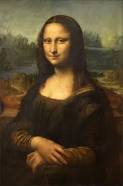
Which of these men of the Renaissance was known equally for his art as well as inventions?
Rueben
Leonardo da Vinci
Michelangelo
Aristotle

What is one way European society changed thanks to the printing press?
People quit the feudal system to find work else where
People began reading books in their vernacular
Literacy declined during the Renaissance
People began writing scripts for movies

a reform movement against the Roman Catholic Church that began in 1517; it resulted in the creation of Protestant churches
Reformation
Indulgence
Purgatory
Protestant

A release from sin given by the Catholic church
fundamental
indulgence
predestination
Transubstantiation


What was the Catholic Church's response to Martin Luther's 95 Theses?
Excommunication
They ignored it

Luther's followers called themselves what?
Protestants
Protestors
Reformers

According to Martin Luther, where is ultimate religious authority determined?
The decisions of the Pope
The bible
The actions of the Priest
Whatever feels good in the moment
What Church did the people believe was corrupt?
Protestant
Catholic
Greek
Roman

A right, such as life and liberty, that a person is born wth
divine right
philosophes
natural rights
contract
An agreement between rulers and the people to cooperate for mutual social benefits in pursuit of a better society
divine right
free enterprise
laissez-faire
social contract
A place where Enlightenment thinkers got together to discuss Enlightenment ideas
divine right
salon
laissez-faire
bourgeoisie
Separation of Powers
Separating the ruler from the military.
Dividing powers equally among organizations
Dividing powers equally among three people
Dividing powers equally among three branches of government.
Enlightenment thinker who believed in the natural rights of "Life, Liberty, and the right to Property".
Montesquieu
John Locke
Rousseau
Enlightenment thinker who was a pioneer for women's rights and education.
Mary Wollstonecraft
Voltaire
Thomas Hobbes
Thomas Jefferson was greatly influenced by "John Locke" and took his ideas to write the ____.
Song "America's Most Wanted"
The Eagle Code
The Declaration of Independence
The Magna Carta
People are naturally cruel, greedy, and selfish. Powerful government needed to ensure orderly society
John Locke
Thomas Hobbes
Montesquieu
Rousseau
Voltaire
fought for freedom of speech and opposed religious intolerance and corruption in government
John Locke
Thomas Hobbes
Montesquieu
Rousseau
Voltaire
Belief that authority comes from reason and not God
Enlightenment
Constitution
Absolutism
Philosophers
Which scientist is considered the father of modern astronomy?
Kepler
Galileo
Brahe
Copernicus
Who created the first telescope and is considered the Father of Experimental Science?
Newton
Bacon
Descartes
Galileo
The process that is used today by scientists to conduct experiments is called the
(a)
According to Medieval Catholic teaching, which was reliant on ancient teachings of Ptolemy and others, it was believed that the ___ was the center of the universe.
sun
moon
Jupiter
Earth
Who first proposed the heliocentric theory of the universe?
Nicolas Corpernicus
Johannes Kepler
Which Newton law says an object will remain in motion or at rest unless acted on by another force?
Universal Gravitation
Inertia
Ancient Greek doctor who many doctors depended on for their knowledge of the workings of the human body?
Ptolemy
Socrates
Galen
Who is considered the "father of anatomy" because of his discoveries about the organs, muscles, and joints.
Francis Bacon
Andres Vesalius
Sir Isaac Newton
He used math to show how the planets have an oval shaped rather than a circular shape orbit around the sun.
Johannes Kepler
Ptolemy
William Harvey
Who refused to accept the ideas of Copernicus and Galileo?
Church
Johannes Kepler
Sir Isaac Newton
Why did Nicolaus Copernicus wait until late in his life to publish his theory of a heliocentric universe?
He risked punishment by Church officials.
He feared criticism from politicians.
In it he announced that Jupiter had four moons which went against the Pope’s teachings.

