Worksheets
Electricity Revision
Total questions: 75
Worksheet time: 2hrs 51mins
The rate of electron flow in a circuit
Voltage
Resistance
Current
Energy used or gained across two points in a circuit
Current
Voltage
Resistance
Opposition to the flow of electrons
Current
Voltage
Resistance
Measured using an ammeter
Voltage
Current
Resistance
Measured using a Voltmeter
Voltage
Current
Resistance
Unit is Ohms Ω
Current
Resistance
Voltage
Unit is Amps (A)
Current
Voltage
Resistance
Unit is Volts (V)
Current
Voltage
Resistance
Splits down different paths in parallel circuits
Current
Resistance
Voltage
Stays the same no matter where you measure it in series circuits
Current
Resistance
Voltage
Flows down the path of least resistance
Current
Voltage
Resistance
Increases as you add more bulbs to a series circuit
Resistance
Current
Voltage
Decreases as you add more pathways in a parallel circuit
Resistance
Voltage
Current
Is shared when you add two or more bulbs in series
Voltage
Current
Resistance

A material that allows heat and electricity to pass through it.
electron
parallel circuit
conductor
insulator

coal fired, hydroelectricity, gas fired, solar, wind
parallel circuit
series circuit
methods of generating power
volts

The parts of an atom which move from one atom to the next to create a flow of electricity
current
electron
proton
neutron
Unit used for charge.
Newtons (N)
Coulombs (C)
Newtons per Coulomb (N/C)
Volts (V)
What is the SI unit used for current?
Volts V
Ohms Ω
Amperes A
Farads F
Determine how the following factor would affect the amount of resistance: longer wire
increase resistance
decrease resistance
would not affect resistance
Determine how the following factor would affect the amount of resistance: cooler temperature
increase resistance
decrease resistance
would not affect resistance
Determine how the following factor would affect the amount of resistance: thick wire
increase resistance
decrease resistance
would not affect resistance

If you increase the size of the resistor and keep the voltage the same, what will happen to the current?
Current will increase
Current will decrease
Current will stay the same
In a series circuit, how is the brightness of a light bulb affected when another bulb is connected?
It gets brighter
It stays the same
It gets dimmer
It goes out

What is the voltage at the battery?
9.33 V
10 V
12 V
22 V
28 V
What is a resistor?
An electrical component that produces light
An electrical component that helps to limit current, divide voltage and produce heat
An electrical component that produces sound
An electrical component that generates power supply
What is the correct symbol for a thermistor?


What happens to the resistance of LDR when the light intensity increases?
increases
decreases
does not change
first increases then decreases

What is this symbol?
resistor
battery
capacitor
photo switch
In a _____ circuit, if one light bulb goes out, all light bulbs will go out.
parallel
series
partial
closed
Select all the representations of Ohm's Law.
V = IR
I = V/R
Current = Battery Voltage
/Resistance
I = R/V
The symbol for resistance is ...
Ω
θ
A
V
The symbol for current is _____ and the unit is _______.
C, Amps
I, Volts
C, Ohms
I, Amps

If you double the voltage, then, according to Ohm's Law, the current will be (a) .

If you double the resistance, then, according to Ohm's Law, the current will be (a) .

The graph shows current and voltage are _____.
both positive
directly proportional
inversely proportional
decreasing

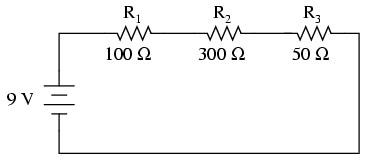
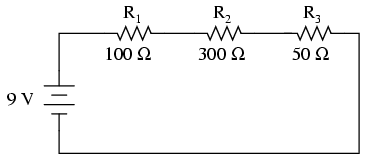
What is the total resistance in this series circuit?
10 Ohms
25 Volts
30 Volts
30 Ohms

How many volts are in a circuit with a light bulb that has a resistance of 10 Ohms and a current of 2 Amps?

A light bulb has a resistance of 7Ω with a potential difference of 21V across it. What is the current flowing through the light bulb?
147 A
28 A
3A
30A

Calculate the voltage of the battery using Ohm's Law (V = IR)
24.9 Volts
24.9 Ohms
30 Ohms
30 Volts

A wire has a certain electrical resistance. The diameter and length of the wire may be changed. Which pair of changes must cause the resistance of the wire to increase?
A
B
C
D
What is the unit of electrical power?
ampere
joule
volt
watt

The circuit shown contains a battery, a 6 ohms resistor and two meters X and Y. One meter records current and one meter records potential difference.
A
B
C
D

The circuit shown contains three ammeters, X, Y and Z. Which ammeter has the largest reading?
A
B
C
D

Which component matches this symbol?
LDR
Fuse
Cell
Variable resistor

Which component matches this symbol?
fuse
LDR
thermistor
LED
Which of these 4 circuits can be used to measure how the current varies with a change in voltage across a bulb?


The least resistance obtained by using 2 Ω, 4 Ω, 1 Ω and 100 Ω is
< 100 Ω
< 4 Ω
< 1 Ω
> 2 Ω
Work of 14 J is done to move 2 C charge between two points on a conducting wire. What is the potential difference between the two points?
28 V
14 V
7 V
3.5 V
What is the relationship between resistance and current?
They are directly related to each other.
They are inversely related to each other.
The resistance has a greater magnitude than current.
The current has a greater magnitude than resistance.

This is the symbol for a(n) ..................?
single cell
bulb
battery
AC current source


A battery, a switch S, and four identical lightbulbs A, B, C, and D are arranged in a circuit as shown. How does the current in lightbulb A change, if at all, when the switch is closed, and why?
It does not change because the path through the battery and bulbs A, B, and C has not changed.
It increases because the equivalent resistance of parallel bulbs C and D is less than the resistance of lightbulb C.
It decreases because the current now passes through both bulbs C and D as it travels clockwise around the circuit.
The currents cannot be compared without knowing the values of the resistances and the voltage.

Four resistors and a 6-V battery are arranged as shown in the circuit diagram. The largest potential difference is across which resistor?
10 ohm
20 ohm
30 ohm
60 ohm

In the circuit shown, the current through the ammeter is 2 A. What is the current through the resistor of unknown resistance R ?
6 A
4 A
3 A
The current cannot be determined without knowing the value of R.

Rank the brightness of the bulbs shown.
C > B > E > D > A
E > D > A = B = C
E > D > C > B > A
C > B > A = D = E

A lamp, a voltmeter V, an ammeter A, and a battery with zero internal resistance are connected as shown right. The switch is initially open. What happens when the switch closes?
The voltmeter reading will increase.
The ammeter reading will decrease.
The ammeter reading will increase.
The voltmeter reading will decrease.

What is the pd of the 12 Ohm resistor?
(a)
What is the pd of R1 resistor?
(a)
What is the current in the 12 Ohm resistor?
(a)
What is the current in R2?
(a)
What is the resistance of R2?
(a)
What is the resistance of R1?
(a)