
Font size
 Worksheets
2nd 9 weeks review
Total questions: 87
Worksheet time: 3hrs 52mins
When is an ionic bond formed?
when electrons are shared
when protons are shared
when ions of opposite electrical charges attract each other
when a positive hydrogen attracts a negative atom in another molecule

A covalent bond forms
when one or more electrons are transferred from one atom to another.
when electrons are shared between atoms.
Which two subatomic particles are found in the nucleus of an atom?
Neutrons and Protons
Shells and Electrons
Electrons and Protons
Electrons and Neutrons

An atom becomes a positive ion when it
gains electrons
gains protons
loses electrons
loses electrons or gains protons
Which subatomic part of an atom gives it a positive charge?
Neutron
Proton
Electron
Nucleus
What is the smallest 'building block' of the elements that make up the universe?
An atom
An electron
A proton
A cell

How many protons are in carbon?
12
6
0
7

Which of the following atomic particles has NO CHARGE?
proton
electron
neutron
positron

Usually the number of protons in an atom is equal to the number of what?
protons
neutrons
electrons
particles

How many energy levels (e- shells) does Calcium have in period 4?
1
2
3
4

Neutral Atom
the same amount of protons and electrons
an atom with an overall charge (not neutral)
proton does not equal electrons
the mass of a specific atom
variation of an element based on mass

How many protons does Potassium (K) have?
19
39
20
58
What are rows on the periodic table called?
Groups
Families
Periods
What are regular columns on the periodic table called?
Groups
Families
Periods

Match the following elements to their period.
Oxygen (O)
2
Calcium (Ca)
4
Silver (Ag)
5
Francium (Fr)
7
Lead (Pb)
6
Match the family with its properties.
Alkali Metals
Group 1 (Minus H); Soft Metallic Solids; Low Melting Points & Densities
Alkaline Earth Metals
Group 2; Soft Metallic Solids; Low Melting Points & Densities
Transition Metals
Groups 3-12; Hard Metallic Solids; High Melting Points & Densities
Halogens
Group 17; Nonmetals; Super Reactive
Noble Gases
Group 18; Nonreactive Gases; Very Stable Atoms


Water, H2O
Ionic
Covalent
Metallic
Magnesium Bromide is an ionic compound with the formula MgB2. What does the 2 tell you?
Bromide has a 2- charge
There are two magnesium ions for every one bromide ion.
There are two bromide ions for every one magnesium ion
Bromide has a 2+ charge
When an atom loses an electron, it becomes a
positive ion
negative ion
neutral ion
neutral atom
In the chemical formula for an ionic compound, which item is written first?
the name of the positive ion
the name of the negative ion
the subscripts
the charges
Covalent bonding is between a
nonmetal and nonmetal
metal and nonmetal
metal and metal
It depends on the situation
Valence electrons are
neutral (no charge)
found in the outer most energy level of the atom
equal to the number of protons
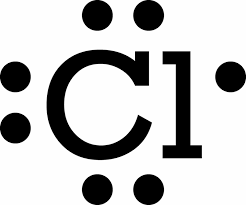
An atom has 10 protons, 15 neutrons and 10 electrons what is its mass number.
20
10
35
25
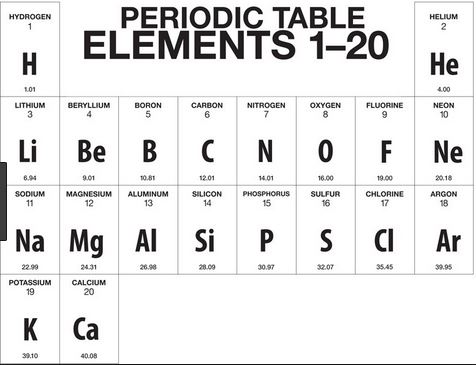
How many valence electrons does Aluminum Have?
1 Valence electron
2 Valence electron
3 Valence electron
4 Valence electron
5 Valence electron

A student pours 5.49 g hydrochloric acid (HCl) into an open beaker that contains a piece of magnesium (Mg). The Total mass of the product is 5.73 g. What was the mass of the magnesium?
5.71 g
11.22 g
0.24 g

How many oxygen atoms are in this chemical formula?
6 oxygen atoms
2 oxygen atoms
3 oxygen atoms
4 oxygen atoms
H2 + O --> H2O

2HgO → 2Hg + O2

Which periodic table correctly shades the location of the metals?
3
2
4
1

Students conducted an investigation on the properties of three elements. What type of element should sulfur be labeled?
Nonmetal
Metal
Metalloid
Undermetal
In which direction do periods run on the periodic table of elements?
horizontal
vertical
zigzag
diagonal

Which of the following is true for sodium (Na)?
Its atomic number is 11, its atomic weight is 22.99, and it is in the same family as magnesium (Mg).
Its atomic number is 22.99, its atomic weight is 11, and it is in the same family as lithium (Li).
Its atomic number is 11, its atomic weight is 22.99, and it is in the same family as lithium (Li).
Its atomic number is 22.99, its atomic weight is 11, and it is in the same family as magnesium (Mg).
The atomic number of an element that has 4 protons and 5 neutrons is ___.
4
5
9
20
Which of the following is a compound?
Methane (CH4)
Silicon (Si)
Blood
Air

The picture shows ____.
a compound
an element
a mixture
an organic
What type of ion will Calcium (Ca) in Family 2 form?
2+
2-
3+
3-

Which of the following is a covalent bond?
H2O
CaF2
MgF2
ScBr2
What are group 15 elements most likely to do when combining with other substances?
gain three electrons
lose three electrons
lose two electrons
gain two electrons


Calcium Oxide, CaO
Covalent Bond
Ionic Bond
Calcium Chloride, CaCl2
Covalent Bond
Ionic Bond
Why do ionic bonds form?
so the number of protons equals the number of electrons
to fill the outermost energy level to make the atom stable
so an atom can become unstable
A(n) _________ is an ion with a positive (+) charge.
anion
cation
ion
solute
if NONMETALS are more likely to GAIN electrons, they will form ...
anions
neutral atoms
cations
How do covalent bonds form?
Donating & receiving valence electrons between atoms
Oppositely charged ions attract each other & form bonds
Scientists are still not sure how they form
Sharing valence electrons between atoms
The formation of a covalent bond relies on the interaction or bonding of...
2 Nonmetals
1 Nonmetal & 1 Metal
2 Metals
2 Noble Gases

What does this picture illustrate? (Select all that apply)
Sharing valence electrons
Covalent bonding
transferring valence electrons
ionic bonding
two nonmetals

What type of bond will this compound likely form H-Cl?
Ionic compound
Covalent compound
Metallic compound
What does the number 3 represent in 4NH3?
Subscript
Superscript
Coefficient
What does the number 4 represent in 4NH3?
Subscript
Superscript
Coefficient

In the equation shown, what are the reactant(s)?
N2 + H2
NH3

How many Hydrogen (H) atoms are in 4NH3?
4
1
3
12

Is this equation balanced?
Yes
No

Is this equation balanced?
Yes
No

Is this equation balanced?
Yes
No

To balance an equation you should:
ONLY change subscripts.
ONLY change coefficients.
Change BOTH subscripts and coefficients.
How many atoms of hydrogen are in
C6H12O6
6
12
18
2
How many oxygen (O) atoms are in
Fe(NO3)2

