
Font size
 Worksheets
Function Operations, Composition, Inverse
Total questions: 55
Worksheet time: 3hrs 15mins
If f(x)=4x+1 and g(x)=4x−3
Find f(x)∗g(x)
16x2+8x−3
16x2−8x+3
16x2−8x−3
16x2−16x−3
If f(n)=x2+1 and g(n)=2x−5 Find f(n)−g(n)
x2−2x+6
−x2+2x+4
−x2−2x−6
x2−2x−4
If f(x)=3x2+7x and g(x)=2x2−x−1 ,
find (f+g)(x) .
11x2−1
5x4+6x2−1
5x2+6x−1
5x2+8x−1
If f(x)=x2+9 and g(x)=x−9 ,
Find f(x)−g(x) .
x2+x+9
x2−x+9
x2−x
x2−x+18
All possible y values are known as _________

Complete the operation and evaluate.


What is the definition of a function?
Has inputs and outputs
Inputs have different outputs every time
x-values and
y-values
Every input has only one output
g(x) = 3 - x,
what is g(-4) + f(1)?

A
B
C
D

A
B
C
D

A
B
C
D

A
B
C
D

Find the inverse of g(x).
A
B
C
D

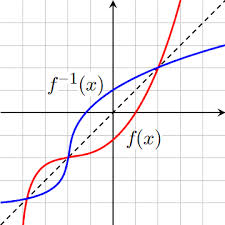
Find the inverse of f(x). Then graph f(x) and its inverse.
A
B
C
D
f(x)= x+3
g(x)= x-2
Find (g(x) / f(x))
Be careful!!
(x + 3)/(x - 2)
(x - 2)/(x + 3)
-2/3
3/2
g(x) = x2+3 , find f(g(x)).
g(x) = x - 2
Find g(f(-10))
f(x)= x2 - 1
g(x)= x - 1
Find (f(x)/g(x))
Then simplify using x = 10
9
11
90
110
g(x) = x - 2
Find f(g(5))
g(x) = x - 2
Find f(g(0))
q(x) = 2x2
Find p(q(x))
f(x) = 3x2 + 7x and g(x) = 2x2 - x - 1, find (f + g)(x).
Find the inverse of f(x)=41x−7
f-1(x) = 4x + 7
f-1(x) = -4x + 28
f-1(x) = -4x - 7
f-1(x) = 4x + 28

Inverse Functions
Not Inverse Functions
f(x)=56x+3
Find f−1(x)
65x−3
65(x−3)
65x−3
65x+3
F(x) = 11x
Then use 4 step to find inverse F-1(x)
S1: let F(x), x = 11y
S2: Interchange x <=> y
y = 11x
S3: Solve for y
y = x
S4: F(x)-1 = x
S1: let y = x + 11
S2: Interchange x <=> y
x = 11y
S3: Solve for y
y = 11x
S4: F(x)-1 = 11x
S1: let y = 11x
S2: Interchange x <=> y
x = 11y
S3: Solve for y
x/11 = y
S4: F(x)-1 = x/11
S1: let y = 11x
S2: Interchange x <=> y
x = 11y
S3: Solve for y
11/x = y
S4: F(x) = 11/x

Find the domain and range of the INVERSE of the following function
Domain: {-2, -1, 1, 8}
Range: {2, 3, 5}
Domain: {2, 3, 5}
Range: {-2, -1, 1, 8}
Domain: {-1, 8, 1, -2}
Range: {3, 2, 3, 5}
Domain: {3, 2, 3, 5}
Range {-1, 8, 1, -2}

Graph the inverse


If this is the table for f(x), what is the correct table for f-1(x)?


Which of the following is the inverse function for ? f(x) = 4x2+ 1
f−1(x) = (4x + 1)2
f−1(x) = 4x + 1
f−1(x) = 4x − 1
f−1(x) = 2x+ 1
If f(x) and g(x) are inverse functions, which statements are true?
SELECT ALL THAT APPLY.
f(x) and g(x) are reflection images over y=x
The domain of f is the range of g and vice versa.
f(g(x)) = g(f(x)) = x
The functions are equivalent.

Find the inverse function


Find the inverse function


Find the inverse function


G(x) = x . Find G-1(x)
S1: Let y = x
S2: x <=> y
x = y
S3: solve for y
x2 = y
S4: y = G(x)-1 = x2
S1: Let y = x2
S2: x <=> y
x = y2
S3: solve for y
x = y
S4: y = G(x)-1 = x
S1: Let y = x
S2: x <=> y
x = y
S3: solve for y
x - 2 = y
S4: y = G(x)-1 = x - 2
S1: Let y = x
S2: x <=> y
x = y
S3: solve for y
x = y
S4: y = G(x)-1 = x
G(x) = 4x3 - 1. Find G-1(x)
S1: Let
y = 4x3 - 1
S2: x <=> y
x = 4y3 - 1
S3: solve for y
(4x+1)3 = y
S4: G(x)-1 = (4x+1)3
S1: Let
y = 4x3 - 1
S2: x <=> y
x = 4y3 - 1
S3: solve for y
(x3 - 1)/4= y
S4: G(x)-1 = (x3 - 1)/4
S1: Let
y = 4x3 - 1
S2: x <=> y
x = 4y3 - 1
S3: solve for y
34x+1 = y
S4: G(x)-1 = 34x+1
S1: Let
y = 4x3 - 1
S2: x <=> y
x = 4y3 - 1
S3: solve for y
4x3 + 1 = y
S4: G(x)-1 = 4x3 + 1
G(x) = x + 1. Find G-1(x)
S1: Let y = x + 1
S2: x <=> y
x = y + 1
S3: solve for y
(x-1)2 = y
S4: G(x)-1 = x2 - 1
S1: Let y = x + 1
S2: x <=> y
x = y2 + 1
S3: solve for y
x - 1 = y
S4: G(x)-1 = x - 1
S1: Let y = x + 1
S2: x <=> y
x = y + 1
S3: solve for y
x - 1 = y
S4: G(x)-1 = x - 1
S1: Let y = x + 1
S2: x <=> y
x = y
S3: solve for y
(x− 1)2 = y
S4: G(x)-1 = x2 −2x+1
Give the domain of x−2x+2
all real numbers except −1
all real numbers except 1
all real numbers except −2
all real numbers except 2
What value of x is restricted from the domain? 3x+7x3
−7
7
−37
−73
0
x2+9x+184xy
The domain of the rational algebraic expression above is:
all real numbers except −3 and −6
all real numbers except 3 and 6
all real numbers except 9 and 2
all real numbers except −9 and −2
If f(x)=x−3 , what is the domain?
x=3
x=-3
x≥3
x≤3
Given a(x)=−4x+5 and q(x)=x2−5x+6 , what is the domain of q(x)a(x) ?
All real numbers
All real numbers, x≠5/4
All real numbers, x≠3, x≠2
All real numbers, x≠0, x≠3, x≠2

