
 Worksheets
Chapter 11 Review for Test
Total questions: 55
Worksheet time: 39mins
Which substance would have the weakest intermolecular forces of attraction?
CH4
NaCl
H2O
MgF2

main intermolecular force for: NH3
Dispersion Force
Dipole dipole
Hydrogen bonding
Which substance has the weakest intermolecular forces?
Substance A, boiling point of 75 °C
Substance B, boiling point of 105 °C
Substance C, boiling point of 25 °C
Substance d, boiling point of 45 °C
The weaker the intermolecular forces of a substance the _____________ the boiling point
higher
lower

Intermolecular forces for: CO2
Dispersion Force
Dipole dipole
Hydrogen bonding
covalent bond
London forces
hydrogen bond
dipole-dipole attraction

Which substance will have the highest vapor pressure? Hint: the weaker the intermolecular forces the faster it vaporizes.
CH3CH2CH2CH2CH2CH3
H2O
CH4
CH3F
What is vapor pressure
the amount of energy required to evaporate
the amount of energy required to boil
the force per unit area exerted by the gaseous layer above a liquid
the force per unit area exerted by a liquid on the gaseous layer above it

CRYSTALLINE
AMORPHOUS

CRYSTALLINE
AMORPHOUS

CRYSTALLINE
AMORPHOUS
This type of soilds have ordered internal structures.
Crystalline solids
Amorphous solids
Pseudo solids
Supercooled liquids
It is the smallest repeating structure of solids
Unit cell
lattice
crystal
cell
It is the network formed from the combination of unit
cells.
Unit cell
Crystal Lattice
Shape
Rigidity
What is an amorphous solid?
Solid that does not has ordered internal structure
Solid that has a crystal lattice
Solid that cannot change its state
Halite is a crystalline solid. Which means
Its structure is not symmetrical
It exhibits isotropy
It can be compressed
It has a sharp melting point
What does it mean when a solid has a sharp melting point?
It will turn into a gaseous state at a defined value of temperature
It will melt over a range of temperature
It will completely melt at a fixed value of temperature
It will have sharp edges before it turns to liquid
An amorphous solid has a definite melting point.
True
False
An allotrope is defined as _____.
different forms of a pure element
different forms of two different elements
similar forms of different elements
two pure elements bonded together
Which of the following allotropes of carbon can be used to cut glass?
graphite
graphene
buckyball
diamond
Surface tension is the property of water in which...
water molecules at the surface tend to stick together.
water spills easily.
water tends to be see-through.
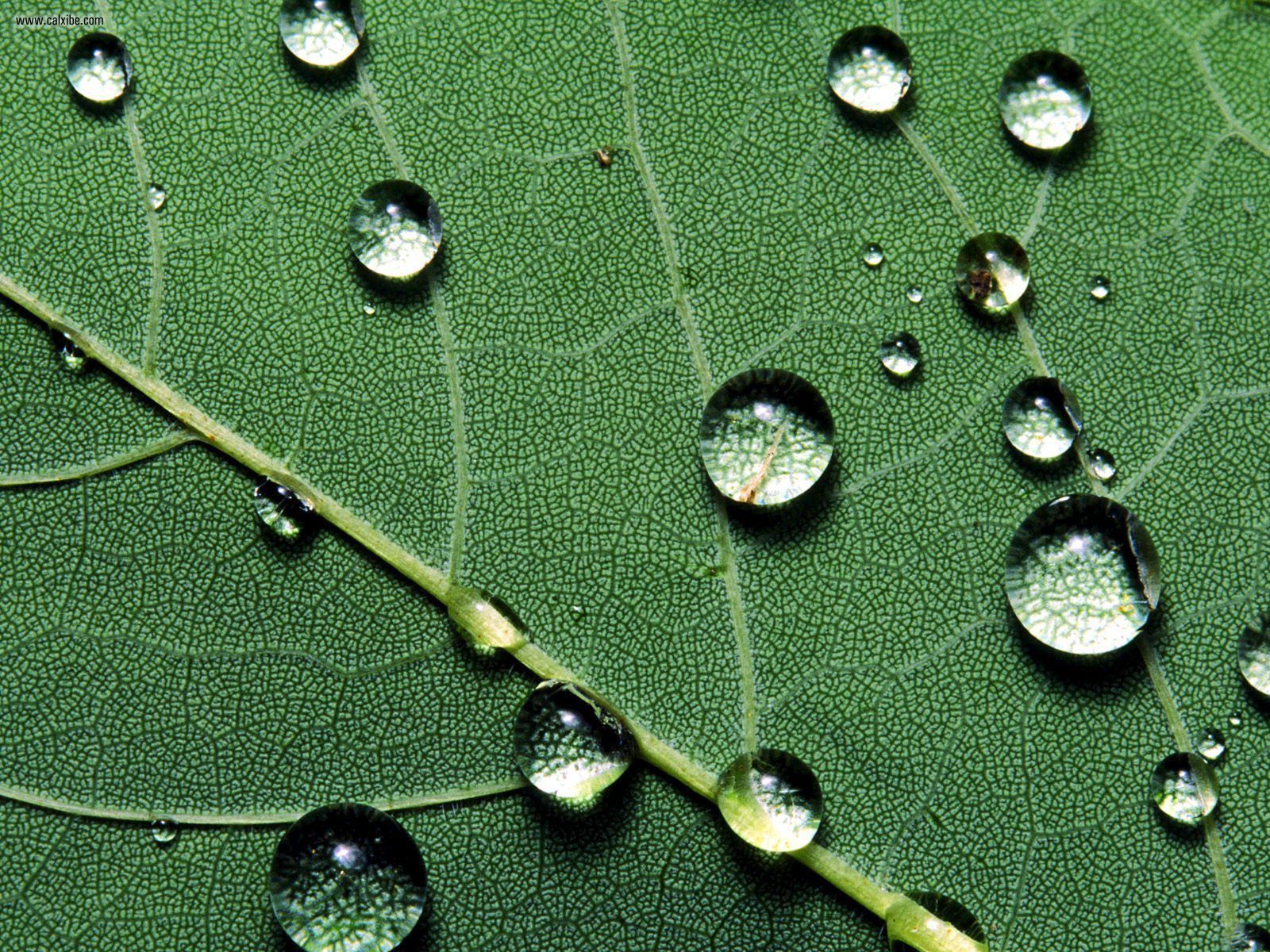
Refer to the picture of water sticking to a leaf; this is occurring because of:
Adhesion
Cohesion
Describe COHESION.
Water molecules attracted to other substances.
Water molecules climbing upwards against the force of gravity.
Water molecules dissolving many substances because of its polarity.
Water molecules attracted to other water molecules.


What is the normal melting point of this substance at standard pressure?
150 °C
100 °C
-50 °C
0 °C
What happens to molecules when the temperature drops or lowers?
The molecules get closer together
The molecules start moving faster.
The molecules stop moving.
The molecules become smaller.
A substance has a melting point of 25 oC and a boiling point of 235 oC. What state is it at 5oC?
Solid
Liquid
Gas
A substance has a melting point of -125 oC and a boiling point of -35 oC. What state is it at 15oC?
Solid
Liquid
Gas
The weaker the intermolecular forces of a substance the _____________ the boiling point
higher
lower
What are the intermolecular forces for CF4 ?
dispersion
dispersion and dipole-dipole
dispersion, dipole-dipole, and hydrogen bonding
ionic bonding
What are the intermolecular forces for CHBr3 ?
dispersion
dispersion and dipole-dipole
dispersion, dipole-dipole, hydrogen bonding
ionic bonding
What are the intermolecular forces for CH3OH ?
dispersion
dispersion, dipole-dipole
dispersion, dipole-dipole, hydrogen bonding
ionic bonding
Molecule A has a low melting point. It is likely
polar and has dipole-dipole IMFs
non-polar and has strong dispersion forces
non-polar and weak dispersion forces
polar and has hydrogen bonds
vaporization
liquid to gas at any temperature
evaporation
liquid to gas below the boiling point
boiling
vaporization at the boiling point
condensation
gas to liquid
deposition
gas to solid
In order to (a) , vapor pressure must equal (b) .
Lattice energy is always ...........
endothermic
exothermic
can be both endothermic or exothermic
Lattice energy is the energy (a) when gas particles form crystals.

