
 Worksheets
Principals Final Review 1st Semester
Total questions: 105
Worksheet time: 55mins
What software is made for making text-based documents?
Word
Publisher
Excel
PowerPoint
What software is primarily used to keep make presentations?
Word
Publisher
Excel
PowerPoint
Paint

Writing a communication in capital letters is
suggested to make the message clear
always useful
considered to be rude
the right way to write an e-mail
To be affective written communication should have
Clarity
Conciseness
Correctness
Courtesy
People can live without written communication
TRUE
FALSE
When writing a business correspondance please consider the
Audience
Message
Purpose
All of the above
Proofreading allows the writer to check and verify the spelling or wording of a document.
True
False
Soft skills are...
Having a gentle touch
Attributes that help you work effectively and harmoniously with others
skills that you think need improvement
only required if you work in the health care field
There are soft skills and hard skills.
True
False
Hard skills are...
Skills you learn with a strict curriculum
Technical abilities that you've gained through life experiences
Learning the hard way
Training for 10 hours a day
Being an effective communicator is a soft skill
True
False
Soft skills are more about behaviors and hard skills are more about your technical abilities
True
False
Taxes are collected by
Businesses
Parents
Foreign countries
Government
IRS stands for
Internal Revenge Service
International Revenue System
Internal Revenue Service
Inspection Ravioli Sauce
The official date for when taxes are due
January 15
February 15
March 15
April 15
When you receive a new job, you are mandated to file a
Complaint
Divorce
W-4
W-2
When you are ready to file for taxes you must have form
W-2
W-6
WD40
W-2484
Who pays taxes
You
Adults
Immigrants
Everyone
What word means:
Money taken from your paycheck to cover things like taxes or health insurance
Rate
Deduction
Gross Pay
Net Pay
What word means:
The amount of money you take home after taxes and expenses are taken out?
Net Pay
Gross Pay
Deduction
Rate
What document contains your total number of hours worked in a payment period?
Pay Stub
Paycheck
W-4
Social Security
Which of the following taxes come out of your paycheck?
State Income Taxes
Federal Income Taxes
Social Security
Ramen Noodle Tax
What is an hourly wage?
Money paid for time worked beyond a worker's regular schedule.
The amount of money paid by an employer per hour worked.
The amount of money deducted from a worker's paycheck.
A worker's total annual income.
What is overtime?
When a worker puts in time beyond their regularly scheduled hours.
When a worker puts in hard work within their working day.
When a worker has to leave their work site to complete a task.
When a worker clocks out before the end of the work day.
What is the difference between a salary and an hourly pay rate?
A salary is a fixed amount of money; hourly pay is determined by how many hours one works.
A salary is based upon how many hours one works; hourly pay is a fixed amount of money.
A salary is always better than an hourly rate of pay.
There is no difference between salary and hourly pay rates.
What is gross pay?
The amount of money a worker earns after deductions.
The amount of money a worker earns for overtime.
The amount of money a worker earns for cashing in vacation time.
The amount of money a worker earns before deductions.
What is a deduction?
The amount of money a worker receives per pay period.
The amount of money subtracted from a worker's gross pay.
The amount of money subtracted from a worker whose work is poor in quality.
The amount of money subtracted fro ma worker who is continually logging overtime.
What does the phrase Net Pay refer to?
The amount of money a person is paid per hour.
The amount of money before deductions.
The amount of money a person is paid per year.
The amount of money left over after deductions.
What does "YTD" stand for on a paystub?
"Year To Date" - Total sick time used since the beginning of the year.
"Year To Date" - Total number of paychecks since the beginning of the year.
"Year To Date" - Total pay since the beginning of the year.
"Year To Date" - Total number of deductions since the beginning of the year.
Which of the following is not a reason to double check your paystub?
To make sure the net amount is accurate after taxes.
To make sure you have agreed to the voluntary deductions.
To make yourself upset about how much money is taken out of your check.
To make sure you are paid for the time you have worked.
Education and Experience should be listed
From most relevant to least
From most recent to oldest
From first job to last
I does not matter
Final hiring decisions are usually based on your resume.
True
False
How many pages should your resume be?


As many as it takes to showcase your awesomeness
What's the best way to apply for a position?
Online
In person
Whichever way Watton tells me to
Follow the directions on the posting or ad
People create and keep a personal budget to help them _____.
set and reach financial goals
apply for loan
buy anything they want
earn promotions at work
Which of the following are considered variable expenses? (You can choose more than one.)
Magazine subscription
Electricity
Insurance coverage
Clothing
Recreation and vacation
Which of the following are considered fixed expenses? (You can choose more than one.)
Cable subscription
Electricity
Insurance coverage
Rent
Medical fees
Which of the following are considered WANTs? (You can choose more than one.)
Concert tickets
Water
A new pair of shoes
Rent
Medical fees
Which of the following are considered NEEDs? (You can choose more than one.)
Airpods
Water
A new pair of shoes
Food
Playstation 5
The following could be considered long-term financial goals, except:
College tuition fee
Retirement
Dinner date for two
Real estate
Which of the following people would benefit MOST from a personal budget?
Tim carefully keeps track of his expenses.
Sue spends less than she earns.
David is saving for a major purchase.
Bob does not have enough money to pay bills.
The first step in creating a budget is _________.
know your income
determine fixed expenses
determine variable expenses
review periodically
A budget is ___________.
a list of what to buy at a store
a plan for managing your money. It compares how much you earn (make) to how much you spend
is things you shouldn't do
Income is all the money you earn (make) over a period of time. Usually a month.
True
False
All of these are "NEEDS" EXCEPT:
BUS FARE
MOVIE TICKETS
RENT
GROCERIES
Rent and car insurance payments are both which type of expenses?
fixed costs that are needs
fixed costs that are wants
variable costs that are needs
variable costs that are wants
The expenses section of a personal budget
should be larger than the income section of the budget.
shows the amount of money that is spent each month.
includes the amount of interest earned on investments.
is not important if income is greater than expenses.
What is an expense?
Money that you spend or give away.
Money that you earn.
Money that you put away for later.
Money that you put away or in a bank for the future.
Expense
Savings
Income
What is overspending?
Using money you get to spend.
Using more money than you have available.
Using money you have in the bank.
A plan for spending and saving.
Budget
Savings
Income
An expense that does not change from month to month.
Variable expense
Fixed expense
Unexpected expense
What is a variable expense?
An expense that changes every month.
An expense that is unexpected.
An expense that is the same month to month.
Something thought to be an essential item required for life (food, water etc.).
Need
Want
Desire
Something unnecessary but you desire.
Need
Want
Expect
Money earned after taxes and other deductions.
Net income
Gross income
Monthly income
What is a record of income and expenses and a plan for managing your money called?
Budget
Income
Equity
What do families spend most of their money on?
Transportation
Housing
Food
People create and keep a personal budget to help them _____.
set and reach financial goals
apply for loan
buy anything they want
earn promotions at work

Which of the following are TRUE about gross income and net income? (hint: choose 2 correct answers)
Gross income and net income are the same
Net income is sometimes called "take home pay"
Gross income is the total amount earned before deductions
Net income is the total amount earned before deductions

Which of the following might you pay WHEN you sign your lease?
Finder's fee
Application fee
Security deposit
Renter's insurance
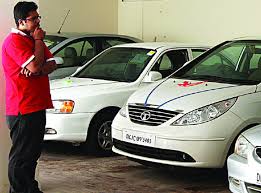
Which of the following is a step you can take to mitigate the risk of buying a used car? (hint: choose 2 correct answers)
Get a vehicle history report
Have a mechanic inspect the car after you buy it
Skip the test drive; you have time after you buy it to drive
But a certified, pre-owned car from the dealer

Which of the following is NOT a cost of owning a car?
License and Registration fees
Gasoline
Utilities
Insurance

How does the 50/30/20 rule of thumb for budgeting allocate your income?
50% Needs, 30% Wants, 20% Savings & Debt Repayment
50% Wants, 30% Needs, 20% Savings & Debt Repayment
50% Savings & Debt Repayment, 30% Wants, 20% Needs
50% Needs, 30% Savings & Debt Repayment, 20% Wants
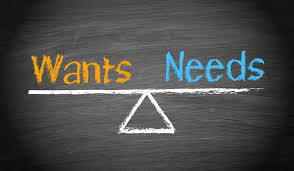
Which of the following is an example of buying something you NEED?
"I want to replace something that is no longer working."
"I want to impress someone/ change how they feel about me."
"I'm feeling down, and I need to boost my spirits."
"I don't want to miss out on these deals during the sale!"
What is something you already own (positive cash value)?
asset
liability
What is debts you owe (negative cash value)?
assets
liabilities
When creating a resume it is important to use...
Lot of fancy words
Fancy fonts and lots of content
Your picture
Perfect punctuation and grammar
Which of the following is not considered Income?
Tips
Cash from Garage Sale
Sales Commission
The money you save buying an item on sale
What is money paid to you for keeping your money in an account OR a fee charged to you for a loan or credit card
Maintenance
Insurance
Expense
Interest
The purpose of a resume' is to
Get you an interview
Get you a job
Impress your friends
What are 3 things that the FAFSA determines your eligibility for?
admission, loans, scholarships
loans, scholarships, grants
admission, programs, certificate
diploma, certificate, admission
Federal income taxes, state income taxes, and Social Security withholdings are all ________.
payroll taxes
real estate taxes
capital taxes
sales taxes
The deadline for filing your federal tax return each year is ________.
December 25
July 4
January 1
April 15
Employee Withholding Certificate that is filled out when you are first hired so your employer can withhold taxes from your paycheck.
W-2
1099
W-4
How long does it normally take to obtain an Associates' Degree?
4 years
2 years
6 years
8 years
What month does the FAFSA open up to be filed?
October
November
December
January

Credit Score can be described as?
a table used to enter time in and time out every workday
a card issued by a lender that allows a borrower to spend the amount of money on the card
a rating listed on someone's credit report based on someone's lending history. Lets lenders know your if you pay back your loans or not
the number of hours someone works per week or month
When you receive a new job, you are mandated to file a
Complaint
Divorce
W-4
W-2
When you are ready to file for taxes you must have form
W-2
W-6
WD40
W-2484
60 hours or completion of a 2 year degree program
community college
Certification Program
Dual Credit
Associate's Degree
Completion of 4 year program
Academic Concentration
Major
Program Of Study
Bachelor's Degree
Two year degree
Associates
Bachelors
Masters
How many years should it take to get a bachelor's degree
1
2
4
7
Highest degree available
associates
bachelors
masters
doctoral
Student aid coming from the state or federal
government, the college itself, or from private sources that
does not need to be repaid
Scholarships
Grants
Unsubsidized Loan
Subsidized Loan
A form prepared annually by current or prospective college students to determine their eligibility for financial aid
FIFA
FASFA
FAFSA
FILA
After completing your undergrad degree - many students look to take an additional 1-2 years to earn a..
Master's degree
PhD
Gap Year diploma
Bachelor's degree
the main subject studied by a college or university student
major
minor
alumni
GPA
money that is paid to a college so you can study there
tuition
scholarship
financial aid
GPA
2 year college degree from a community college, university, college, or technical school.
associate's degree
bachelor's degree
master's degree
doctoral degree
Degrees earned after earning a four-year bachelor's degree
master's degree
bachelor's degree
doctoral degree & master's degree
associate's degree

