
 Worksheets
Fall Semester Exam Part 2
Total questions: 80
Worksheet time: 3hrs 45mins
A substance that is shiny and a good conductor would be classified as a
nonmetal
metalloid
metal
A substance that is dull, brittle, and a nonconductor would be classified as a
metal
nonnmetal
metalloid
A substance that can be hammered into different shapes would be classified as a
metal
nonmetal
metalloid
A shiny and malleable substance that is not always a good conductor of electricity
metal
nonmetal
metalloid
Carbon is dull and brittle. Carbon is a
metal
nonmetal
metalloid

Which elements are to the right of the zig zag?
metals
nonmetals
metalloids
Silicon is shiny, brittle and conducts electricity. It is a:
metal
metalloid
nonmetal

Which elements are to the LEFT of the zigzag?
metals
nonmetals
metalloids

Which elements are colored red?
nonmetals
metals
metalloids
An unknown element conducts some heat and electricity, has a shiny luster, and broke easily. This element is most likely a
metal
nonmetal
metalloid
cannot be determined
Elizabeth described an element is her science journal as having no shine, an insulator, and very brittle. What would this element be a metal, nonmetal, or metalloid?
metal
nonmetal
metalloid
Elements that are normally in a gas form, that are dull, brittle, and poor conductors
Metals
Nonmetals
Metalloids
Solids
High melting point:
metals
nonmetals
metalloids
Low melting point:
Metals
Nonmetals
Metalloids

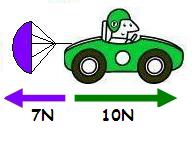
What is the net force?
3 N
3 N, right
17 N, right
3 N, left


A ____________ is a push or a pull on an object.
friction
force
magnet
gravity
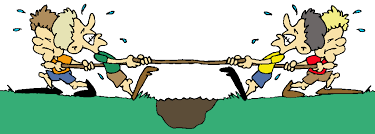

Forces that have a net force of zero Newtons
Balanced force
Unbalanced force


When forces are going in the same direction what function do you use?
subtract
add
multiply
divide

When forces are going in opposite direction what function do you use?
add
subtract
multiple
divide

Which statement best describes the picture?
The box will not move
The box will move in the direction of combined forces
The box will move to left
The forces cancel each other out because they are balanced

Which statement best describes the result of the forces being applied?
the rope will not move
they will fall
the rope will move in the direction of the lease force
the rope will move in the direction of the most force

Muscles operate to push the pedals on a bicycle causing the wheels to turn. What type of energy being represented?
mechanical
physical
thermal
chemical

What energy transformation occurs in the chameleon as it quickly launches its tongue to catch an insect?
Radiant --> Chemical
Thermal --> Chemical
Chemical --> Mechanical
Mechanical --> Chemical

Which energy transformation takes place when using a corded power drill?
thermal to mechanical
chemical to electrical
mechanical to chemical
electrical to mechanical

Identify the correct sequence of energy transformations using a television.
Electric --> radiant + sound + thermal
Electric --> solar + sound + elastic
Electric --> mechanical + radiant + thermal
Electric --> chemical + thermal + nuclear

Identify the correct sequence of energy transformations in the campfire.
Chemical --> thermal + radiant
Chemical --> solar + radiant
Nuclear --> sound + thermal
Chemical --> electric + sound

In a nuclear power plant, uranium atoms are split in a process called “fission.” This releases a tremendous amount of energy. In order to provide this energy to factories and homes, the power plant converts the energy to –
water
oil
natural gas
electricity

People get energy from the food that they eat and transform that energy as they move. Which energy transformations occur as a student rapidly rubs the palms of his hands together?
mechanical to thermal to electrical
chemical to mechanical to thermal
mechanical to chemical to sound
chemical to sound to electrical
Which of the following transfers occurs when food is digested?
Chemical to mechanical
Mechanical to thermal
Mechanical to solar
Chemical to thermal
Plants turn_______ energy into _______ energy for food.
thermal, mechanical
radiant, chemical
electromagnetic, light
potential, kinetic
How many Laws of Motion did Isaac Newton Create?
2
4
5
3
In Newton's first Law of Motion, an object at rest will ___________.
defy gravity
want to move
remain at rest
Go to the Moon!
According to Newton's Second Law of Motion, an object in motion will _________.
Stay in motion
want to stop right away
spontaneously combust
Go to the Moon!
Mass of an object can be defined by...
how small an object is
how large an object is
how far an object is from the sun
How much matter an object is made out of.
The greater the mass of an object, the greater the amount of ______ is needed to make it accelerate.
Force
Matter
Acceleration
Velocity
In the equation f=ma, what does the "m" stand for
acceleration
matter
mass
force
In the equation f=ma, what unit of measure is used for force?
Kilogram
Newton
Feet per second
Meters per second
According to Newtons Third Law of Motion, every action has an equal and opposite _________.
gravity
force
mass
reaction
In the equation f=ma, "F" stands for _______.
force
mass
velocity
acceleration

Jumping into the air is an example of _________.
Action-reaction forces
Momentum
electromagnetic fields
Mass

True or False. If an object is hit opposite sides with the same amount of force on each side, the forces cancel out and the object will NOT move.
True
False
True or false. If you change ONLY the direction of an object, you have then changed its velocity.
True
False
Which choice below best defines gravity?
A force that pushes away
an objects ability to accelerate
An objects mass attracting other objects towards it
The ability to change the speed and direction of an object
Select the term that BEST matches the definition below.
Definition: Energy that causes movement.
Force
Gravity
Momentum
Newton's Third Law of Motion
What is the net force?
3 N
3 N, right
17 N, right
3 N, left
When the vectors (arrows) point away what function do you use?
Dividing
Multiplying
Subtracting
Adding
When forces are going in opposite direction what function do you use?
add
subtract
multiple
divide
A ____________ is a push or a pull on an object.
friction
force
magnet
gravity

