wayground logo

Free Printable Worksheets

Font size

S
M
L
XL
Worksheets

Chemistry Practice Final Exam - 2nd Block

Total questions: 76

Worksheet time: 2hrs 15mins

Name
Class
Date
1.

How many moles of sodium chloride are in a 321.8 g sample?

a)

18810 moles

b)

3.315 x 1024 moles

c)

5.507 moles

d)

4.767 moles

2.
How many molecules are in 9.44 moles of AlCl3?
a)
5.68 molec AlCl3
b)
5.68x1024 molec AlCl3
c)
0.705 molec AlCl3
d)
1.25x10²³ molec AlCl3
3.
What is the molar mass of CO2?
a)
12
b)
16
c)
32
d)
44
4.

What is the mass of 1.2 x 1024 atoms of C?

a)

2.0 grams

b)

24 grams

c)

0.17 grams

d)

1.4 x 1025 grams

5.

What percentage of the total atomic mass of carbon monoxide (CO) is composed of oxygen?

a)

29%

b)

43%

c)

57%

d)

73%

6.
Find the percent composition of Cu2S?
a)
%Cu= 67.987 %S= 32.013
b)
%Cu= 79.854   %S= 20.145
c)
%Cu= 35.946   %S= 64.054
7.
How many moles of NaCl are present in a solution with a molarity of 8.59 M and a volume of 125 mL?
a)
1074 mol
b)
0.069 mol
c)
1.07 mol
d)
62.7 mol
8.
What are the coefficient used to balance the equation below?
__Ag2O →__ Ag +___O2
a)
2,4,1
b)
1,1,1
c)
2,1,2
d)
2,2,2
9.
The following is what type of reaction:
PbCl2 + AgNO3 → Pb(NO3)2 + AgCl
a)

Combination/Synthesis

b)
Decomposition
c)

Single Displacement

d)

Double Displacement

10.
The following is what type of reaction:
NH3 + HCl  → NH4Cl
a)

Combination/Synthesis

b)
Decomposition
c)

Single Displacement

d)

Double Displacement

11.
Predict the products for the this reaction:
K + HCl --> 
a)
KCl + H2
b)
KHCl 
c)
KH + Cl2
d)
KCl + H
12.
2Al + 3H2SO4 -> Al2(SO4)3 + 3H2
How many grams of aluminum sulfate would be formed if 250g H2SO4 completely reacted with aluminum?
a)
0.85 g
b)
290 g
c)
450 g
d)
870 g
13.
Mole ratios are obtained from the
a)
balanced chemical equation
b)
periodic table
c)
molar mass
14.
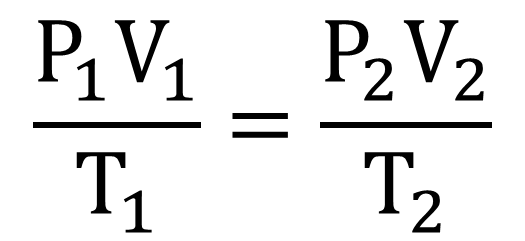
A gas is heated from 263K to 298K. The volume is increased from 24.0L to 35.0L. If the original pressure was 1.00 atm, what is the new pressure?
a)
0.78 atm
b)
1.65 atm
c)
1.28 atm
d)
0.61 atm
15.

Increase P = ________ V

a)

increase

b)

decrease

c)

remain the same

16.
Calculate the volume that a 0.323-mol sample of a gas will occupy at 265 K and a pressure of 0.900 atm.
a)
7.18 L 
b)
7.81 L
c)
4.63 L
d)
4.36 L
17.
What is a solute?
a)
The substance that does the dissolving in a solution.
b)
The substance that is dissolved into the solution.
c)
The mixing of different substances.
d)
The process in which neutral molecules lose or gain electrons
18.
What is the following method called?
a)
Distillation
b)
Filtration
c)
Decanting
d)
Evaporating
19.

What is the molality of a solution in which 3.0 moles of NaCl is dissolved in 1.5 Kg of water?

a)

2.0 M

b)

0.22 m

c)

135 m

d)

2.0m

20.
Which has a bitter taste?
a)
Base
b)
Acid
c)
flagella
d)
cila
21.
Which of these pH values would indicate that a solution is a weak base?
a)
4
b)
5.6
c)
8
d)
13
22.

Phenolophalein turns from clear to pink when the pH turns

a)

acidic

b)

basic

c)

saline

d)

ionic

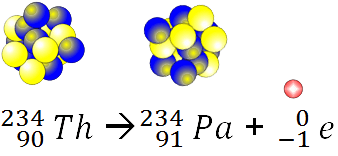
23.
Which type of nuclear radiation is being emitted here?
a)
Alpha
b)
beta
c)
gamma 
d)
none
24.
Takes two small nuclei and combines them into a larger nucleus
a)
fission
b)
fusion
25.
The splitting of a nucleus into smaller nuclei is
a)
fusion
b)
fission
c)
half-life
d)
gamma radiation
26.
The half-life of strontium-90 is 25 years. How much strontium-90 will remain after 100 years if the initial amount is 4.0 g?
a)
3.0g
b)
0.25mg
c)
0.3g
d)
0.25g
27.
An alpha particle can penetrate
a)
a sheet of paper.
b)
a thin layer of cloth.
c)
a sheet of aluminum.
d)
none of the above
28.
Identify the missing substance in each of the following nuclear reactions.
 _____→137 56 Ba + 0 −1
a)
13755Ba
b)
13757La
c)
13856Ba
d)
137 55Cs
29.

Colligative properties of solutions are those properties that depend on

a)

the amount of solute only

b)

the identity of solute only

c)

both the identity and the amount of solute

30.

What is the formula of boiling point elevation?

a)

ΔTb=Kb x m x i

b)

ΔTc=Kb x m x e 

c)

Δtb= Kb x m x i

d)

ΔTb= Kb x M x i

31.

Who discovered the electron

a)

Rutherford

b)

Thomson

c)

Millikan

d)

Dalton

32.

Developed an atomic theory of matter.

a)

Chadwick

b)

Millikan

c)

Rutherford

d)

Dalton

33.

The scientist that discovered a positive center of an atom.

a)

Millikan

b)

Rutherford

c)

Dalton

d)

Thomson

34.
Who performed the Gold Foil Experiment?
a)
J. J. Thomson
b)
Ernest Rutherford
c)
Neils Bohr
d)
John Dalton
35.

What is this element?

a)

Beryllium (atomic #4)

b)

Boron (atomic #5)

c)

Carbon (atomic #6)

d)

Nitrogen (atomic #7)

36.

How many orbitals does an s sublevel have?

a)

1

b)

3

c)

5

d)

7

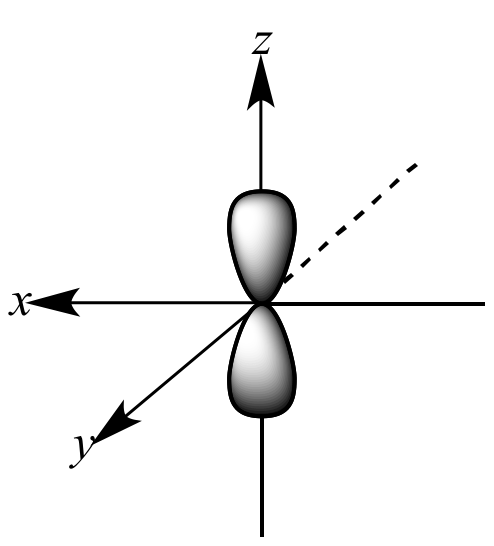
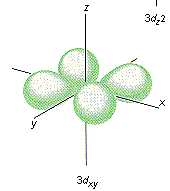
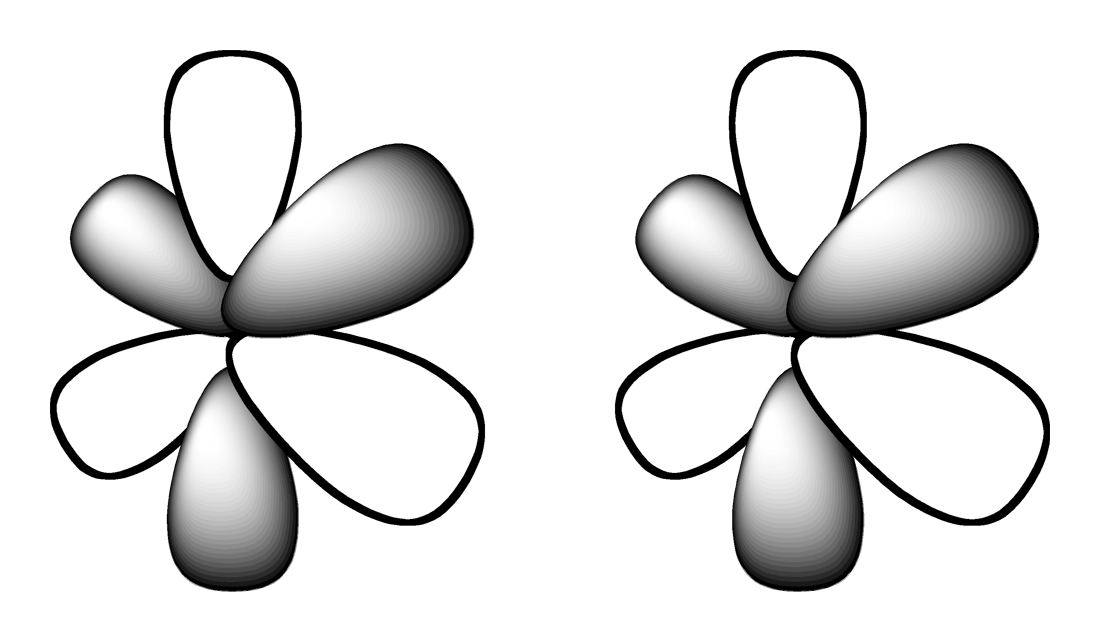
37.

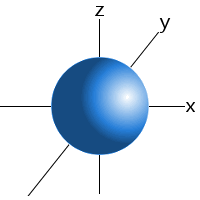
Which shape represents the shape of an "p" orbital?
a)
b)
c)
d)
38.
How many neutrons does the isotope of lithium have?
a)
8
b)
3
c)
4
d)
5
39.

12 protons and 13 neutrons

a)

Mg-12

b)

Mg-13

c)

Mg-25

d)

Mg-24.305

40.
24.1% of all the isotopes of a an element have a mass of 75.23 amu, 48.7% have a mass of 74.61 amu, and 27.2% have a mass of 75.20 amu.
What is the average mass of this element?
a)
74.92 amu
b)
24.97 amu
c)
75.01 amu
d)
74.51 amu
41.
Which atom has the largest atomic radius?
a)
potassium
b)
rubidium 
c)
francium
d)
cesium
42.
As atoms of elements in group 16 are considered in order from top to bottom, the electronegativity of each successive element....
a)
decreases
b)
increases
c)
remains the same
d)
none of the above
43.
Francium (Fr) has the lowest ionization energy in Group 1 because - 
a)
it has the smallest number of valence electrons
b)
it has the greatest atomic mass
c)
it has the greatest number of protons, so it attracts its electrons the strongest
d)
its 1 valence electron is very far from the nucleus, so little energy is needed to remove it
44.
Ions are: 
a)
atoms with a positive or negative charge
b)
atoms with no charge
c)
atoms with ONLY a positive charge
d)
atoms with ONLY a negative charge
45.

What is the charge of a sodium ion?

a)

+2

b)

+1

c)

-1

d)

-2

46.
What charge will an Oxygen ion have? 
a)
+1
b)
-1
c)
+2
d)
-2
47.
What is a valence electron?
a)
an electron that is found in the outermost shell of an atom. 
b)
an electron found in the innermost shell of an atom.
c)
an electron found in the middle shell.
48.

This orbital diagram represents

a)

Nitrogen

b)

Oxygen

c)

Carbon

d)

Neon

49.

Covalent bonds occur between....

a)

Metals

b)

Metalloids

c)

Non-metals

d)

Actinide

50.

Ionic bonds occur between..

a)

Metals

b)

Metals and Non-metals

c)

Non-metals

d)

Metalloids

51.

This is the correct dot diagram for neon (Ne)

a)

True

b)

False

52.
How do the following two elements bond together?
Cr3+  O2-         
a)
CrO
b)
Cr3O2
c)
Cr2O3
d)
CrO3
53.
Name this compound: 
Ca(CO3)
a)
Calcium carbon oxide
b)
Calcium (II) carbonate
c)
Calcium carbonate
d)
Carbonate (I) calcide
54.
The name of FeCl₂ is
a)
iron chloride
b)
iron (II) chloride
c)
iron (I) chloride
d)
iron dichloride
55.

Formula for Disilicon Heptasulfide

a)

SiS6

b)

SiS7

c)

Si2S6

d)

Si2S7

56.
Hydrogen needs _____ electrons in its valence shell to be stable.
a)
4
b)
6
c)
8
d)
2
57.

What term means that two liquids that will not dissolve in each other?

a)

miscible

b)

immiscible

c)

soluble

d)

insoluble

58.

What is known as the process of the solvent surrounding the solute in the solution as dissolving begins?

a)

solvation

b)

immiscibility

c)

dissociation

d)

saturation

59.

What factors affect dissolving rates?

a)

mass

b)

volume

c)

temperature

d)

surface area

e)

stirring/shaking

60.
How many grams of K2Cr2O7, are soluble in 100 g of water at 95 ºC?
a)
83 grams
b)
75 grams
c)
40 grams
d)
12 grams
61.
When 20 grams of KNO3 is dissolved in 100 grams of water at 80 ºC, the solution can be correctly described as:
a)
supersaturated
b)
saturated
c)
unsaturated
62.

How does heat transfer when you hold an ice cube in your hand?

a)

from the cold ice cube to your warm hand

b)

the cold ice cube makes your hand cold

c)

from your warm hand to the cold ice cube

d)

very carefully

63.
The energy transferred between object's at different temperatures
a)
heat
b)
thermal energy
c)
radiation
d)
convection
64.

In which region(s) does temperature increase?

a)

Region C only

b)

Regions B and D

c)

Regions A, C, and E

d)

Regions A and B

65.
What line segment represents only the solid state?
a)
A-B
b)
B-C
c)
C-D
d)
D-E
66.
What is point A?
a)
triple point
b)
critical point
c)
equilibrium point
d)
normal melting point
67.
What state of matter is Y?
a)
solid 
b)
liquid
c)
gas
d)
supercritical fluid
68.
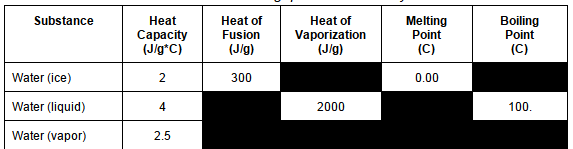
How many Joules of energy are required to change 10 gram of water from 20 C to 90 C?
a)
1400 J
b)
2800 J
c)
210,000 J
d)
1,400,000 J
69.
In an exothermic reaction, heat is ...
a)
taken in
b)
given out
70.

In an endothermic reaction, heat is ...

a)

taken in

b)

given out

71.
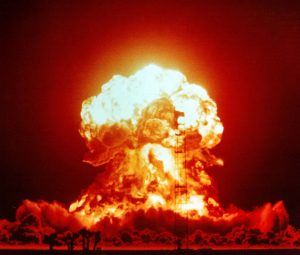
What type of reaction is shown in the photo?
a)
Exothermic
b)
Isothermic
c)
Endothermic
d)
None of the  above
72.
'Have you ever eaten sherbet sweets? They fizz in your mouth and your tongue feels cold. Why do you think that is?'
a)
It is an exothermic reaction
b)
It is an endothermic reaction
c)
It is made of ice
d)
It is dissolving your mouth
73.

What type of reaction is this?

a)

Exothermic

b)

Endothermic

c)

Energy Producing

d)

No way to tell

74.
For an electron to change from ground state to an excited stated it must...
a)
Absorb energy
b)
Release energy
75.
Who is responsible for the model of the atom where electrons travel in specific paths or orbits around the nucleus?
a)
Einstein
b)
Bohr
c)
Planck
d)
Dalton
76.
Emission of light from an atom occurs when an electron
a)
drops from a higher to a lower energy level.
b)
   jumps from a lower to a higher energy level.   
c)
   moves within its atomic orbital.
d)
falls into the nucleus.