
 Worksheets
Biology Semester 1 Final - 2025
Total questions: 70
Worksheet time: 2hrs 18mins
What's the dependent variable?

In which of the following months did the eighth graders raise more money than the seventh graders?
April
May
August
September

What is the total per-student budget for the years 2012 and 2013?
$40
$50
$70
$80

How many students are there in total?
15
17
39
49

Which restaurant sold the fewest number of pizza slices?
Pizza
Pizza Italia
Antonio's Pizzeria
They all sold the same amount of slices

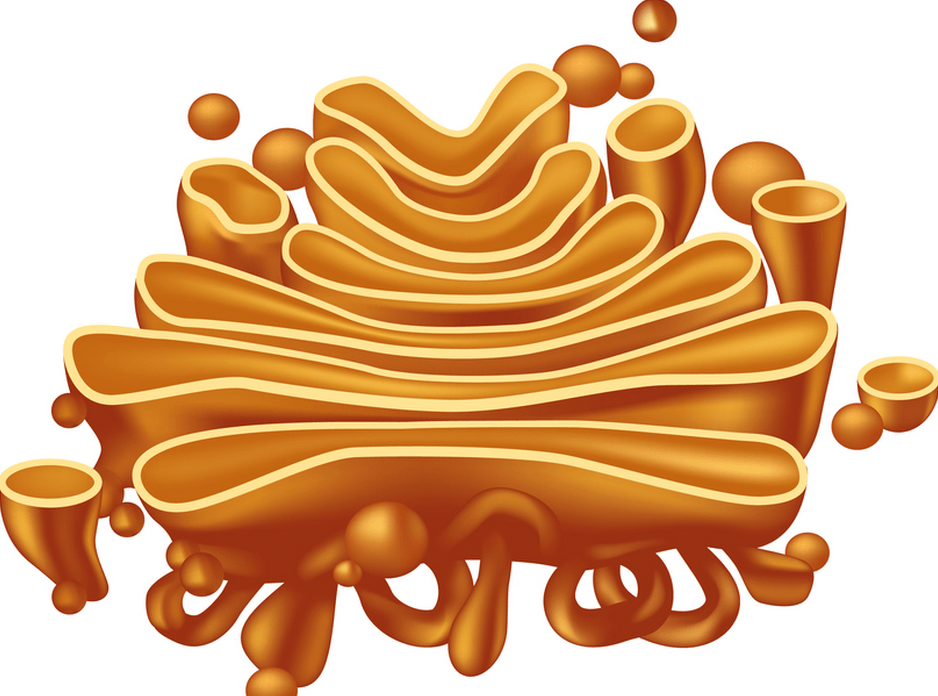
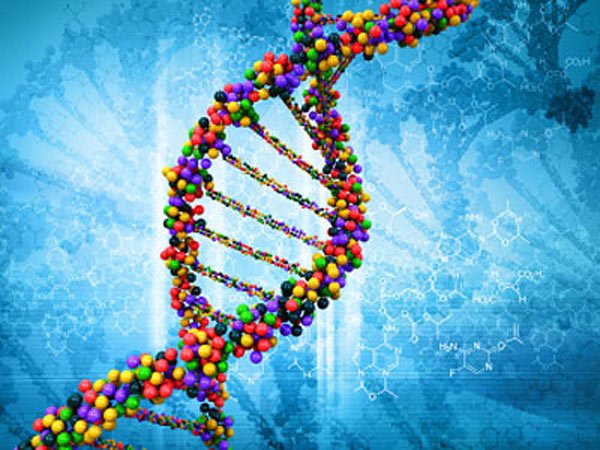
What is the name of the genetic material that is inside the nucleus; it is also known as deoxyribonucleic acid?
This is the site of protein synthesis.

I am the outer most layer of an animal cell. I control what enters and leaves the cell. What am I?
Carbon-12, Carbon-13, and Carbon-14 are
polymers
isotopes
biomolecules
macromolecules
Electrons move about the nucleus of an atom in regions called
nuclei
electron clouds
air
isotopes
Diffusion occurs only in solids
True
False
How do the particles move in diffusion?
From a region of low concentration to a region of high concentration
From a region of high concentration to a region of low concentration
From a region of low concentration to a region of low concentration
From a region of high concentration to a region of high concentration
The movement of particles is __________, resulting in the particles being spread throughout the container
Structured
In a straight line
Random
In curved, way motions
In a test of pH levels, a baking soda has a pH of 9 and bleach has a pH of 12. What is true about there relationship?
Both of the solution are Bases
Both of the solution are Acids
The Baking soda is an acid and the Bleach is a base
The baking soda is a base and the Bleach is an Acid.
Something is ___________ ____________ when some molecules can cross the membrane while others cannot.
Selectively (or Semi) Permeable
Passive Transport
Full Diffusion
Heavily Patrolled
_______ are all the chemical reactions that take place within a cell or organism.
Metabolism
Nutrition
Cell
Defense
______ is keeping conditions in the cell balanced and maintaining a stable internal environment.
Homeostasis
Response
Metabolism
Nutrition
Which choice is NOT part of the cell theory.
All organisms are composed of cells.
Cells are the basic unit of life.
All cells come from previous cells.
Cells are always the same size and shape.
Eukaryotes DO have...
Nucleus
Membrane Bound Organelles
They have both
They have neither

This is a(n)...
Prokaryotic Cell
Eukaryotic Cell
Neither
The set of instructions that is found in DNA
phenotype
meiosis
trait
gene
The symbiotic relationship between a flower and the insect that feeds on its nectar is an example of
mutualism because the flower provides the insect with food and the insect pollinates the flower.
parasitism because the insect lives off the nectar from the flower.
commensalism because the insect doesn't harm the flower, and the flower doesn't benefit from the relationship.
predation because the insect feeds on the flower.


Biome with plants and grasses, but no trees.
grassland
desert
forest
arctic tundra

Biome with many different species of cacti and reptiles and very little rainfall.
Desert
Temperate Rainforest
Tropical Rainforest
Arctic Tundra

Which one of these is not a major type of aquatic biome?
marine
estuaries
freshwater
lakes
The region in water where light cannot penetrate is known as the __________.
photic zone
aphotic zone
trophic zone
atrophic zone
An aquatic biome where freshwater and saltwater mix is known as a(n) ______________.
marine
estuary
freshwater
Missouri would be most like which two biomes?
desert and temperate forest
temperate forest and taiga
taiga and grassland
grassland and temperate forest


Which statement best defines ecology?
the study of how living things interact with each other
the study of how living things interact with each other and their environment
the study of how living things interact with their environment
the study of how living things interact with their habitat

Organisms that look similar and can produce fertile offspring
Species
Organism
Community
Ecosystem
The relationship between autotrophs and producers is:
that autotrophs make the food the producers eat
that producers make the food the autotrophs eat
that autotrophs eat producers
that they are the same organism
This increases when resources are scarce.
community
food
competition
population
Which describes the best possible flow of energy in an ecosystem:
snakes to frogs to caterpillars to trees
trees to frogs to snakes to caterpillars
trees to caterpillars to frogs to snakes
caterpillars to trees to frogs to snakes
Which organism would usually be in the 4th trophic level?
rats
humans
rabbits
hawks
A heterotroph that eats only plants:
herbivore
carnivore
omnivore
decomposer
A heterotroph that eats other animals:
carnivore
omnivore
decomposer
scavenger
A heterotroph that eats both plants and animals:
omnivore
decomposer
scavenger
herbivore
A type of heterotroph that breaks down and uses nutrients from dead organisms:
decomposer
scavenger
herbivore
carnivore
A niche refers to the place an organism lives within its ecosystem.
True
False
Herbivores are a necessary link between producers and other consumers.
True
False
One species benefits and the other is neither benefited nor harmed by the relationship.
mutualism
parasitism
commensalism
One species benefits from the relationship at the expense of the other.
mutualism
parasitism
commensalism
Both species benefit from the relationship.
mutualism
parasitism
commensalism
A climax community occurs when ______________:
prey and predator population are equal
there are no biotic factors
herbivore and omnivore population are growing quickly
stable populations or little to no change

What is the carrying capacity?
40
60
65
3
J curve - as population gets larger, it also grows faster. This occurs because there are more individuals reproducing as the population grows and is known as
exponential growth
logistic growth
stable growth
birth rate



