wayground logo

Free Printable Worksheets

Font size

S
M
L
XL
Worksheets

AP Bio: Semester 1 Final Review

Total questions: 79

Worksheet time: 2hrs 38mins

Name
Class
Date
1.
The image below shows a polymer of glucose molecules. What type of macromolecule is this?
a)
carbohydrate
b)
protein
c)
lipid
d)
nucleic acid
2.
What type of macromolecule is shown in the image below?
a)
Carbohydrate
b)
Nucleic Acid
c)
Fatty Acid
d)
Protein
3.
An unknown molecule contains a sugar and a phosphate group. It is likely what?
a)
carbohydrate
b)
protein
c)
lipid
d)
nucleic acid
4.
Larger polymers are formed when monomers are joined together by a _______ reaction.
a)
dehydration synthesis
b)
digestion
c)
hydrolysis
d)
redox
5.
What is the monomer of proteins?
a)
monosaccharides
b)
amino acids
c)
phospholipids
d)
nucleotide
6.
Which of the macromolecules contain nitrogen?
a)
proteins only
b)
nucleic acids only
c)
proteins and lipids
d)
nucleic acids and proteins
7.
What is the function of fats for living organisms?
a)
short term energy storage
b)
store hereditary information
c)
long term energy storage
d)
catalyze metabolic reactions
8.
Identify the macromolecule in the image below.
a)
carbohydrate
b)
nucleic acid
c)
protein
d)
lipid
9.
How are the subunits of proteins linked together?
a)
ionic bonds
b)
amino acids
c)
monomers
d)
peptide bonds
10.
The image depicts which level of structure in proteins?
a)
primary
b)
secondary
c)
tertiary
d)
quaternary
11.
Which 4 elements make up most of all living matter?
a)
Carbon, Hydrogen, Nitrogen, Oxygen
b)
Carbon, Oxygen, Sodium, Potassium
c)
Carbon, Hydrogen, Calcium, Nitrogen
d)
Carbon, Oxygen, Nitrogen, Sulfur
12.
When atoms share electrons unequally...
a)
a nonpolar covalent bond is formed.
b)
an ionic bond is formed.
c)
a polar covalent bond is formed.
d)
a hydrogen bond is formed.
13.
Which type of lipid forms the primary structure of the cell membrane?
a)
triglycerides
b)
wax
c)
cholesterol
d)
phospholipid
14.
When water freezes the molecules form a matrix by forming hydrogen bonds and
a)
sinking in water
b)
becomes more dense than water
c)
becomes less dense than water
d)
becoming more tightly packed
15.
What is the difference between carbon-12 and carbon-14? (Hint: 12 and 14 are mass #)
a)
The number of protons in the nucleus.
b)
The number of protons and neutrons in the nucleus.
c)
The number of neutrons in the nucleus.
d)
The number of electrons in the orbitals.
16.
A covalent bond is likely to be polar when...
a)
The two atoms sharing electrons are equally electronegative.
b)
One of the atoms sharing electrons is much more electronegative than the other atom.
c)
Ooxygen is one of the two atoms sharing electrons.
d)
One of the atoms has absorbed more energy than the other atom.
17.
Which of the following explains most specifically the attraction of water molecules to one another?
a)
Ionic bond
b)
Hydrogen bond
c)
Hydrophobic interaction
d)
Polar covalent bond
18.
In a single molecule of water, two hydrogen atoms are bonded to a single oxygen atom by...
a)
Van der waals interactions
b)
Nonpolar covalent bonds
c)
Polar covalent bonds
d)
Hydrogen bonds
19.
Which of the following solutions would require the greatest amount of base to be added to bring the solution to neutral pH?
a)
Black coffee at pH 5
b)
Household bleach at pH 12
c)
Gastric juice at pH 2
d)
Vinegar at pH 3
20.

One of the key innovations in the evolution of eukaryotes from a prokaryotic ancestor is the endomembrane system. What eukaryotic organelles or features might have evolved as a part of, or as an elaboration of, the endomembrane system?

a)

ribosomes

b)

chloroplasts

c)

mitochondria

d)

nuclear membrane

21.
In a bacterial cell, one of the subunits of the ribosome is called 30s and is composed of about 20 different proteins. A mutation occurs that changes the structure of one of these proteins.  What effect will this most likely have on the bacterial cell?
a)
It would stimulate binary cell fission and the cell would divide uncontrollably.
b)
The cell would be unable to properly synthesize proteins.
c)
Development of abnormal hereditary features would occur in the cell.
d)
Increased protein absorption would occur through the cell membrane
22.
Which of the following statements regarding the mitochondria is correct?
a)
Mitochondria contain their own ribosomes and thus produce some of their own proteins.
b)
Mitochondria are involved in the transport that occurs as a part of the endomembrane system.
c)
Mitochondria rely on the DNA of the eukaryote cell in order to function correctly.
d)
Mitochondria produce ATP only used by themselves.
23.
Which of the following statements correctly matches a cell part with its function
a)
The cell membrane packages lipids for export
b)
The mitochondria perform photosynthesis
c)
The lysosome digests molecules
d)
The nucleus produces energy
24.

Trichondia is a eukaryotic organism that attaches itself to fish and eats bacteria. Which of the following distinguishes Trichodina from all prokaryotes?

a)

Trichodina is unicellular

b)

Trichodina has a nucleus

c)

Trichodina has cytoplasm

d)

Trichodina is heterotrophic

25.

Keratin is a protein found in hair. Where in a cell is keratin made?

a)

nucleus

b)

vacuole

c)

ribosomes

d)

mitochondria

26.

Which of the following statements is consistent with the structure of the cell shown?

a)

It is an epithelial cell

b)

It is a mature red blood cell

c)

It requires high levels of oxygen

d)

It converts carbon dioxide into glucose

27.
After a protein is constructed at the ribosome, it can be transported to the Golgi complex for modification. What cellular structure is used in this transport?
a)
Lysosome
b)
Mitochondrion
c)
Nuclear pore
d)
Endoplasmic reticulum
28.

Tay-Sachs disease is a human genetic abnormality that results in cells accumulating and becoming clogged with very large and complex lipids. Which cellular organelle must be involved in this condition?

a)

the endoplasmic reticulum

b)

the Golgi apparatus

c)

the lysosome

d)

membrane-bound ribosomes

29.

Liver cells are specialized cells that carry out a multitude of tasks, including the synthesis of cholesterol and the breakdown of protein metabolites. These cells would be expected to contain a large proportion of which organelle relative to all others?

a)

smooth ER

b)

rough ER

c)

golgi

d)

nucleolus

30.

Which of the following is evidence to support the endosymbiotic theory?

a)

Mitochondria and chloroplasts have their own DNA, which is similar to prokaryotic DNA.

b)

Fossil evidence shows that the first forms of life were prokaryotic cells.

c)

All eukaryotic cells have a double-layered membran composed of phosplipids and proteins.

d)

Prokaryotes have the same number and types of enzymes as eukaryotes.

31.

This organelle contains chlorophyll, which is a green pigment. It's job is to use energy from the sun to create food molecules (glucose)

a)

Chloroplast

b)

Mitochondria

c)

Vacuole

d)

Ribosome

e)

Cell Wall

32.

All of the following are evidence of endosymbiosis EXCEPT

a)

mitochondria and chloroplast ribosomes are similar to bacterial ribosomes

b)

mitochondria and chloroplast are similar in size to bacteria

c)

mitochondria and chloroplast have double membranes

d)

mitochondria and chloroplast have a nucleus

33.
Which of the following cells would have the highest surface area to volume ratio?
a)
1
b)
2
c)
3
d)
they are all the same
34.

Phosphate head is _______________.

a)

hydrophobic

b)

hydrophilic

c)

cell wall

d)

semi-permeable.

35.

What is the function of the transport protein?

a)

guard the cell

b)

allow bigger molecules into the cell

c)

it has no function

d)

running away from bunnies

36.
Which of the following processes requires the cell to spend energy in the form of ATP?
a)
active transport
b)
passive transport
c)
diffusion
d)
osmosis
37.
Movement of water across a selectively permeable membrane is known as ___.
a)
osmosis
b)
active transport
c)
exocytosis
d)
facilitated transport
38.
When cells are placed in a __________ solution they begin to swell.
a)
Hypertonic
b)
Isotonic
c)
Hypotonic
d)
Equalized
39.

Which way would the purple molecules move through the membrane?

a)

From the A side to the B-side

b)

From the B side to the A side

c)

none of the purple molecules would move

d)

they would move equally back and forth in a state of dynamic equilibrium

40.
Which form of active transport is being shown? (Inside of  the cell is tan colored) 
a)
Facilitated Diffusion
b)
Exocytosis
c)
Endocytosis
d)
Receptor-mediated endocytosis
41.
What type of transport is represented by figure "B" 
a)
Active Transport
b)
Facilitated Diffusion 
c)
Protein Transport 
d)
Osmosis 
42.

The location where the enzyme and substrate bind is the...

a)

allosteric site

b)

inhibition site

c)

reaction site

d)

active site

43.

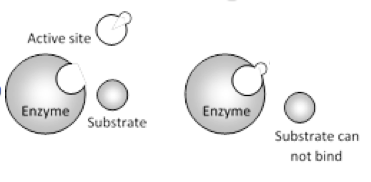
This image shows...

a)

Competitive Inhibition

b)

Uncompetitive Inhibition

c)

Noncompetitive Inhibition

d)

Normal enzyme function

44.

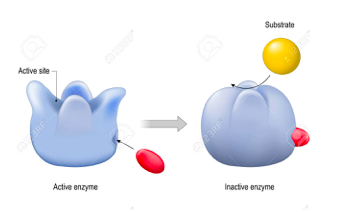
This image shows...

a)

Competitive Inhibition

b)

Uncompetitive Inhibition

c)

Noncompetitive Inhibition

d)

Normal enzyme function

45.

Which of the following is NOT a product of the light reactions in photosynthesis?

a)

Oxygen

b)

Glucose

c)

NADPH

d)

ATP

46.

Chemiosmosis is best described as...

a)

Moving high energy electrons through carrier molecules toward oxygen

b)

The use of a proton gradient to power ATP Synthase and produce ATP

c)

The breakdown of pyruvate into electron carrier molecules

d)

The enzyme that combines ADP and inorganic phosphate to produce ATP

47.

What effect does adding an enzyme to a reaction cause?

a)

increasing the time it takes for the reaction to occur

b)

increases the activation energy

c)

decreases the activation energy

d)

increasing the amount of energy necessary for the reaction

48.

Enzyme X has an optimum rate of reaction at 97 degrees Fahrenheit. How would rate of reaction be affected if temperature fell to 92 degrees Fahrenheit?

a)

increase - not as hot

b)

decrease - no substrate would be produced

c)

increase - more substrate would be produced

d)

decrease - cause a change in the shape of the protein

49.

Which enzyme functions best in acidic environments?

a)

neither enzyme

b)

Enzyme A

c)

Enzyme B

d)

Both enzymes

50.

What serves as the final acceptor of the electrons moving down the ETC during cellular respiration?

a)

sulfur

b)

carbon dioxide

c)

ATP

d)

oxygen

51.
What is the function of NADP+?
a)
It absorbs light
b)
It is an electron carrier
c)
It is a light-reflecting pigment
d)
It acts as long-term energy storage
52.

Which option best describes "A"?

a)

Activation energy with enzyme

b)

Activation energy without enzyme

c)

Energy released as heat

d)

Products produced

53.

Which of these locations is INCORRECTLY matched with its process?

a)

Glycolysis = cytoplasm

b)

Krebs Cycle = mitochondrial matrix

c)

Light reactions = thylakoid membrane

d)

Calvin Cycle = inner mitochondrial membrane

54.

The breakdown of ATP into ADP is useful because...

a)

It stores energy that can be used later

b)

It releases energy for cells to do work

c)

ADP is smaller and can be stored in cells easily

d)

It releases the least amount of energy, making it most efficient.

55.

Which statement about photosynthesis is true?

a)

The light reactions produce ATP and NADPH that are used in the Calvin cycle

b)

The Calvin cycle produces NAD+ and ADP that are then used in the light reactions

c)

The Calvin cycle produces G3P

d)

All of these statements are true

56.
When oxygen is released as a result of photosynthesis, it is a direct by-product of
a)
reducing NADP+
b)
splitting water molecules
c)
chemiosmosis
d)
electron transfer in photosystem II and I
57.
CAM plants keep stomata closed in daytime, thus reducing loss of water. They can do this because they
a)
fix CO2 into organic acids during the night when temperatures are cooler.
b)
fix CO2 into by combining it with RuBP in the Calvin cycle.
c)
obtain CO2 through their roots during the day.
d)
fix CO2 into organic acids in the mesophyll cells, which do not rely on stomata.
58.

Which of the following best describes how the amount of DNA in the cell changes during M phase?

a)

The amount of DNA doubles as the DNA is replicated

b)

The amount of DNA slightly increases as a result of new organelle synthesis.

c)

The amount of DNA does not change while the cell grows.

d)

The amount of DNA is halved as the cell divides into two daughter cells

59.

Cancer can result from a variety of different mutational events. Which of the following is LEAST likely to result in the initiation of a cancerous tumor?

a)

A receptor mutation results in activation of a cell-division pathway in the absence of the appropriate ligand.

b)

A mutation results in the loss of the ability to produce a tumor-suppressor protein.

c)

A defect in a cell-cycle checkpoint prevents a cell from entering the S phase

d)

At the anaphase checkpoint, separation of chromatids occurs without all centromeres being attached to kinetochore microtubules from both poles.

60.

Most cells that have become transformed into cancer cells have which of the following characteristics when compared to normal, healthy cells?

a)

Shorter cell cycle

b)

More carefully regulated rates of cell division

c)

Lower rates of mitosis

d)

Higher rates of protein translation

e)

Identical DNA

61.
A signal molecule that binds to a plasma-membrane protein is a
a)
ligand
b)
second messenger
c)
protein kinase
d)
receptor protein
62.
Which of the following can activate a protein by transferring a phosphate group to it?
a)
cAMP
b)
G Protein
c)
protein kinase
d)
protein phosphatase
63.
What do second messengers do?
a)
transport a signal through the lipid bilayer
b)
relay a signal from the outside to the inside of the cell
c)
relay message from the inside of the mebrane throughout the cytoplasm
d)
dampen the message
64.
Signal amplification is most often achieved by
a)
an enzyme cascade
b)
binding of multiple signals
c)
branching pathways
d)
action of adenylyl cyclase
65.
The 3 steps of signal transduction in order are
a)
reception, transduction, response
b)
response, transduction, reception
c)
reception, response, transduction
d)
transduction, reception, response
66.

What word means programmed cell death?

a)

apoptosis

b)

mitosis

c)

Ced-9

d)

bleb

67.
During which phase of the cell cycle does the cell spend the most time?
a)
Mitosis
b)
Cytokinesis
c)
Interphase
68.
During which part of the cell cycle does the cell divide?
a)
Interphase
b)
Mitosis
c)
S phase
69.
What does NOT happen during interphase?
a)
growth
b)
DNA replication 
c)
obtaining nutrients
d)
cell divison
70.
Which of the following statements is true of cytokinesis
a)
takes place in plant cells only
b)
completes the cell cycle
c)
organizes DNA
d)
occurs in prophase
71.
The phase of mitosis in which the sister chromatids separate from each other
a)
prophase
b)
metaphase
c)
anaphase
d)
telophase
72.
How does mitosis in plant cells differ from mitosis in animal cells?
a)
animal cells form a cell plate
b)
plant cells form a cell plate
c)
plant cells go through the process in reverse
d)
plant cells go through two rounds of mitosis while animal cells just do one
73.
In which phase of mitosis do the sister chromatids line up on the equator of the cell?
a)
Prophase
b)
Metaphase
c)
Anaphase
d)
Telophase
74.
Structure (b) is a ____.
a)
chromosome
b)
chromatid
c)
centromere
75.

What two components make an active MPF

a)

a growth factor and a mitotic factor

b)

ATP synthetase and a protease

c)

cyclin and tubulin

d)

cyclin and a cyclin-dependent kinase

76.
This is an example of
a)
paracrine signaling
b)
synaptic signaling
c)
long-distance signaling
d)
all of the above
77.

Testosterone does not affect all cells of the body because __________.

a)

testosterone cannot cross the plasma membrane

b)

not all cells have cytoplasmic receptors for testosterone

c)

not all cells in the body have membrane receptors for testosterone

d)

it is a local regulator

e)

it affects only cells that have ion-channel receptors
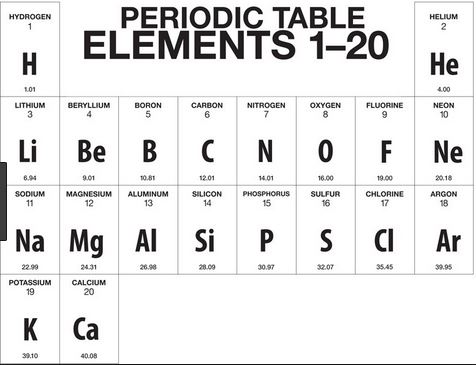
78.

How many valence electrons does Hydrogen Have?

a)

1 Valence electron

b)

2 Valence electron

c)

3 Valence electron

d)

4 Valence electron

e)

5 Valence electron

79.

How many valence electrons does Magnesium Have?

a)

1 Valence electron

b)

2 Valence electron

c)

3 Valence electron

d)

4 Valence electron

e)

5 Valence electron