
 Worksheets
human Eye And coloful World
Total questions: 168
Worksheet time: 1hrs 29mins
The perpendicular line drawn from the surface of any surface is called as
Normal
Incident Ray
Refracted ray
Emergent ray
A ray of white light enters the raindrop and undergoes __________ and __________ to form a spectrum.
refraction; dispersion
reflection; dispersion
dispersion; diffraction
scattering; dispersion
The refraction of light passed by the Earth’s Atmosphere having air layers of varying __________ is called atmospheric refraction.
optical densities
densities
volumes of air
winds
Statement: Blue light scatters more than red light during
day time
night time
twilight
none of the above
Red light has
longer wavelength
shorter wavelength
longer frequency
none of the above
One cannot see through the fog, because
refractive index of the fog is very high
fog absorbs light
light is scattered by the droplets
light suffers total reflection at droplets
The danger signals installed at the top of tall buildings are red in colour. These can be easily seen from a distance because among all other colours, the red light
is scattered the most by smoke or fog
is absorbed the most by smoke or fog
is scattered the least by smoke or fog
moves fastest in air
Which of the following is a natural phenomenon which is caused by the dispersion of sunlight in the sky?
Rainbow
Twinkling of stars
Advanced sunrise and delayed sunset
Stars seem higher than they actually are
Which of the following phenomena contributes significantly to the reddish appearance of the sun at sunrise or sunset?
Dispersion of light
Scattering of light
Total internal reflection of light
Reflection of light from the earth
View Answer
The air layer of atmosphere whose temperature is less then the hot layer behave as optically
denser medium
rarer medium
inactive medium
either denser or rarer medium
The deflection of light by minute particles and molecules of the atmosphere in all direction is called ____________ of light.
scattering
interference
tyndell effect
Reflection
One cannot see through the fog, because
refractive index of the fog is very high
fog absorbs light
light is scattered by the droplets
light suffers total reflection at droplets
Assertion: Planets do not twinkle
Reason: Light rays do not come from planet
Assertion and reason are true. Reason is the correct explanation of Assertion
Assertion and reason are false
Assertion is false, but reason is true
Assertion is true, but reason is false
Assertion(A) : The phenomenon of scattering of light by the colloidal particles gives rise to Tyndall effect.
Reason (R): The colour of the scattered light depends on the size of the scattering particles.
Both A and R are true and R is the correct explanation of A.
Both A and R are true but R is not the correct explanation of A.
A is true but R is false.
A is false but R is true.
Assertion(A) : A rainbow is sometimes seen in the sky in rainy season only when observer’s back is towards the Sun.
Reason (R) : Internal reflection in the water droplets cause dispersion and the final rays are in backward direction.
Both A and R are true and R is the correct explanation of A.
Both A and R are true but R is not the correct explanation of A.
A is true but R is false.
A is false but R is true.
Which of the following is the best example of white light?
Danger signals
laser light
sun light
sodium lamp
When white light enters a prism, it gets split into its constituent colours. This is due to
different refractive index for different wavelength of each colour
each colours has same velocity in the prism.
prism material have high density.
Scattering of light
What is the time difference between actual sunset and apparent sunset ?
2 seconds
20 seconds
2 minutes
20 minutes
IN CASE OF TOTAL INTERNAL REFLECTION LIGHT GOES FROM
RARER TO DENSER MEDIUM
DENSER TO RARER MEDIUM
ONE MEDIUM TO ANOTHER HAVING SAME REFRACTIVE INDEX
NONE OF THESE
IN CASE OF TOTAL INTERNAL REFLECTION, ANGLE OF REFRACTION FOR CRITICAL ANGLE IS
900
00
450
DEPENDS ON THE MEDIUM
SKY APPEARS —————- TO AN ASTRONAUT WHEN HE IS ON EARTH
BLUE
BLACK
DARK
VIOLET
REFRACTION OF LIGHT TAKES PLACE IN GLASS SLAB
2 TIMES
ONCE ONLY
3 TIMES
4 TIMES
The flickering of an object through turbulent stream of hot air rising above holi fire is seen because of the phenomenon of
Reflection
Dispersion
Refraction
Atmospheric Refraction
Assertion: Refractive index of prism is different for different colors
Reason: The color that has higher speed deviates less and the color that has lesser speed deviates more.
Assertion is true, Reason is true. Reason is a correct explanation for Assertion
Assertion is true, Reason is true. Reason is not a correct explanation for Assertion
Assertion is true, Reason is false
Assertion is false, Reason is true
THE ANGLE OF DEVIATION OF THE PRISM LIES
OUTSIDE THE PRISM
WITHIN THE PRISM
ON THE PRISM
BEHIND THE PRISM

Angle of incidence
Angle of deviation
Angle of dispersion
Angle of refraction
When white light passes through a prism,
red bends more, violet bends least
red bends least, violet bends most
dispersion doesn't occur
refraction doesn't occur
The splitting of white light into the seven colors when it passes through a transparent material is called
Refractrion
Dispersion
Reflection
Diffraction
A ray of white light enters the raindrop and undergoes __________ and __________ to form a rainbow.
dispersion and internal reflection.
reflection; dispersion
dispersion; diffraction
scattering; dispersion
Red light has
longer wavelength
shorter wavelength
longer frequency
none of the above
The danger signals installed at the top of tall buildings are red in colour. These can be easily seen from a distance because among all other colours, the red light
is scattered the most by smoke or fog
is absorbed the most by smoke or fog
is scattered the least by smoke or fog
moves fastest in air
Which of the following is a natural phenomenon which is caused by the dispersion of sunlight in the sky?
Rainbow
Twinkling of stars
Advanced sunrise and delayed sunset
Stars seem higher than they actually are
When white light enters a prism, it gets split into its constituent colours. This is due to
different refractive index for different wavelength of each colour
each colours has same velocity in the prism.
prism material have high density.
Scattering of light
The air layer of atmosphere whose temperature is less then the hot layer behave as optically
denser medium
rarer medium
inactive medium
either denser or rarer medium
The deflection of light by minute particles and molecules of the atmosphere in all direction is called ____________ of light.
scattering
interference
tyndell effect
Reflection
At noon the sun appears white as
light is least scattered
all the colours of the white light are scattered away
blue colour is scattered the most
red colour is scattered the most
Scattering of light by colloidal solution is known as
Scattering
Dispersion
Tyndall effect
Stability
Color which is having maximum angle of deviation is
Red
Violet
Green
Yellow
IN CASE OF TOTAL INTERNAL REFLECTION LIGHT GOES FROM
RARER TO DENSER MEDIUM
DENSER TO RARER MEDIUM
ONE MEDIUM TO ANOTHER HAVING SAME REFRACTIVE INDEX
NONE OF THESE
PHENOMENON RESPONSIBLE FOR FORMATION OF RAINBOW
REFRACTION
DISPERSION
TOTAL INTERNAL REFLECTION
ALL THE ABOVE
STARS TWINKLE BCOZ OF
DISPERSION
ATMOSPHERE REFRACTION
REFLECTION
SCATTERING
SKY APPEARS —————- TO AN ASTRONAUT WHEN HE IS ON EARTH
BLUE
BLACK
DARK
VIOLET
PHENOMENON OF SPLITTING OF WHITE LIGHT INTO ITS SEVEN CONSTITUENT COLOURS IS KNOWN AS
SCATTERING
DIFFRACTION
DISPERSION
REFRACTION
IN CASE OF PRISM ANGLE OF DEVIATION DEPENDS ON
WAVELENGTH
REFRACTIVE INDEX
ANGLE OF INCIDENCE
ALL THE ABOVE
Colour of the sun at sunrise and sunset
(a)
When a white light falls on a triangular prism, the colour of light which will deviate the least is
violet
green
blue
red
Which of the following is the best example of white light?
Danger signals
laser light
sun light
sodium lamp
Angle of the prism is (a) degree
The perpendicular line drawn from the surface of any surface is called as
Normal
Incident Ray
Refracted ray
Emergent ray
Statement: Blue light scatters more than red light during
day time
night time
twilight
none of the above
Refraction of light by the earth’s atmosphere due to variation in air density is called
atmospheric reflection
atmospheric dispersion
atmospheric scattering
atmospheric refraction
Which of the following phenomena contributes significantly to the reddish appearance of the sun at sunrise or sunset?
Dispersion of light
Scattering of light
Total internal reflection of light
Reflection of light from the earth
View Answer
Assertion: Planets do not twinkle
Reason: Light rays do not come from planet
Assertion and reason are true. Reason is the correct explanation of Assertion
Assertion and reason are false
Assertion is false, but reason is true
Assertion is true, but reason is false
Advanced sunrise and delayed sunset is due to
Scattering of light
Atmospheric refraction
dispersion of light
reflection of light
Assertion: Refractive index of prism is different for different colors
Reason: The color that has higher speed deviates less and the color that has lesser speed deviates more.
Assertion is true, Reason is true. Reason is a correct explanation for Assertion
Assertion is true, Reason is true. Reason is not a correct explanation for Assertion
Assertion is true, Reason is false
Assertion is false, Reason is true
The perpendicular line drawn from the surface of any surface is called as
Normal
Incident Ray
Refracted ray
Emergent ray
Angle of incidence
Angle of deviation
Angle of dispersion
Angle of refraction
When white light passes through a prism,
red bends more, violet bends least
red bends least, violet bends most
dispersion doesn't occur
refraction doesn't occur
Sunlight is white, it contains all the colors of the (a) .
The splitting of white light into the seven colors when it passes through a transparent material is called
Refractrion
Dispersion
Reflection
Diffraction
A ray of white light enters the raindrop and undergoes __________ and __________ to form a spectrum.
refraction; dispersion
reflection; dispersion
dispersion; diffraction
scattering; dispersion
The refraction of light passed by the Earth’s Atmosphere having air layers of varying __________ is called atmospheric refraction.
optical densities
densities
volumes of air
winds
Stars are (a) sources.
Planets are (a) sources
The scattering of a beam of light is called
(a)
Statement: Blue light scatters more than red light during
day time
night time
twilight
none of the above
Red light has
longer wavelength
shorter wavelength
longer frequency
none of the above
When white light passes through a prism,
red bends more, violet bends least
red bends least, violet bends most
dispersion doesn't occur
refraction doesn't occur
The splitting of white light into the seven colors when it passes through a transparent material is called
Refractrion
Dispersion
Reflection
Diffraction
A ray of white light enters the raindrop and undergoes __________ and __________ to form a spectrum.
refraction; dispersion
reflection; dispersion
dispersion; diffraction
scattering; dispersion
The refraction of light passed by the Earth’s Atmosphere having air layers of varying __________ is called atmospheric refraction.
optical densities
densities
volumes of air
winds
Red light has
longer wavelength
shorter wavelength
longer frequency
none of the above
When white light enters a prism, it gets split into its constituent colours. This is due to
different refractive index for different wavelength of each colour
each colours has same velocity in the prism.
prism material have high density.
Scattering of light
The air layer of atmosphere whose temperature is less then the hot layer behave as optically
denser medium
rarer medium
inactive medium
either denser or rarer medium
The danger signals installed at the top of tall buildings are red in colour. These can be easily seen from a distance because among all other colours, the red light
moves fastest in air
is absorbed the most by smoke or fog
is scattered the least by smoke or fog
is scattered the most by smoke or fog

The deflection of light by minute particles and molecules of the atmosphere in all direction is called ____________ of light.
scattering
interference
tyndell effect
Reflection
At noon the sun appears white as [NCERT Exemplar Problems]
light is least scattered
all the colours of the white light are scattered away
blue colour is scattered the most
red colour is scattered the most
Scattering of light by colloidal solution is known as
Scattering
Dispersion
Tyndall effect
Stability
The colored light that refracts most while passing through a prism is
Red
Yellow
Blue
Violet
Refraction of light by the earth’s atmosphere due to variation in air density is called
atmospheric reflection
atmospheric dispersion
atmospheric scattering
atmospheric refraction
One cannot see through the fog, because
refractive index of the fog is very high
fog absorbs light
light is scattered by the droplets
light suffers total reflection at droplets
Which of the following phenomena contributes significantly to the reddish appearance of the sun at sunrise or sunset?
Dispersion of light
Scattering of light
Total internal reflection of light
Reflection of light from the earth
View Answer
Assertion: Planets do not twinkle
Reason: Light rays do not come from planet
Assertion and reason are true. Reason is the correct explanation of Assertion
Assertion and reason are false
Assertion is false, but reason is true
Assertion is true, but reason is false
Angle of incidence
Angle of deviation
Angle of dispersion
Angle of refraction
Assertion(A) : The phenomenon of scattering of light by the colloidal particles gives rise to Tyndall effect.
Reason (R): The colour of the scattered light depends on the size of the scattering particles.
Both A and R are true and R is the correct explanation of A.
Both A and R are true but R is not the correct explanation of A.
A is true but R is false.
A is false but R is true.
Assertion(A) : A rainbow is sometimes seen in the sky in rainy season only when observer’s back is towards the Sun.
Reason (R) : Internal reflection in the water droplets cause dispersion and the final rays are in backward direction.
Both A and R are true and R is the correct explanation of A.
Both A and R are true but R is not the correct explanation of A.
A is true but R is false.
A is false but R is true.
The perpendicular line drawn from the surface of any surface is called as
Normal
Incident Ray
Refracted ray
Emergent ray
Angle of incidence
Angle of deviation
Angle of dispersion
Angle of refraction
When white light passes through a prism,
red bends more, violet bends least
red bends least, violet bends most
dispersion doesn't occur
refraction doesn't occur
The splitting of white light into the seven colors when it passes through a transparent material is called
Refractrion
Dispersion
Reflection
Diffraction
A ray of white light enters the raindrop and undergoes __________ and __________ to form a spectrum.
refraction; dispersion
reflection; dispersion
dispersion; diffraction
scattering; dispersion
The refraction of light passed by the Earth’s Atmosphere having air layers of varying __________ is called atmospheric refraction.
optical densities
densities
volumes of air
winds
The muscular diaphragm that controls the size of the pupil is
cornea
ciliary muscles
iris
retina
Having two eyes facilitates in
A : Increasing the field of view
B : Bringing three-dimensional view
C : Developing the concept of distance/ size
Then the correct option is/are
A only
A and B only
B only
A, B and C
The black opening between the aqueous humour and the lens is called
retina
iris
cornea
pupil
Near and far points of a young person normal eye respectively are
0 and infinity
0 and 25 cm
25 cm and infinity
25 cm and 150 cm.
The defect of vision in which the person is able to see distant object distinctly but cannot see nearby objects clearly is called
Long-sightedness
Far-sightedness
Hypermetropia
All above
The ability of eye lens to adjust its focal length to form a sharp image of the object at varying distances on the retina is called
Power of observation of the eye
Power of adjustment of the eye
Power of accommodation of the eye
Power of enabling of the eye
The image formed by retina of human eye is
Real and inverted
Virtual and inverted
Virtual and erect
Real and erect
When white light enters a prism, it gets split into its constituent colours. This is due to
different refractive index for different wavelength of each colour
each colours has same velocity in the prism.
prism material have high density.
Scattering of light
The air layer of atmosphere whose temperature is less then the hot layer behave as optically
denser medium
rarer medium
inactive medium
either denser or rarer medium
The danger signals installed at the top of tall buildings are red in colour. These can be easily seen from a distance because among all other colours, the red light
moves fastest in air
is absorbed the most by smoke or fog
is scattered the least by smoke or fog
is scattered the most by smoke or fog
Which eye disease has blurred images and clouding of the lens?
Myopia
Pink Eye
Cataracts
Hypermyopia
Bi-focal lens are required to correct
presbyopia
astigmatism
coma
myopia
An image is formed on
Iris
Pupil
Retina
Cornea
Light enters the eye through a thin membrane called the
Iris
Pupil
Retina
Cornea
The shape of eye-ball is nearly _________________
Elliptical
Oval
Circular
Spherical
Following controls and regulates the amount of light entering the eye
Iris
Pupil
Retina
Corena
_________________ send signals to the brain
Optical nerve
Aqueous Humour
Viterous humour
Eye lens
When the light is very bright, the diameter of pupil
Expends
Contract
Remain same
All of these
When an object is placed closer to eye ____________
the ciliary muscles contract
curvature of the eye lens increases
Eye lens become thicker
All of the above
To see an object comfortably and distinctly, we must hold it about _______ cm from our eyes.
10
25
15
infinity
The ability of the eye lens to adjust its focal length is called
Accommodation
Accomplish
Composition
None of the above
The farthest point upto which the eye can see objects clearly is ____________ for a normal eye.
25 cm
15 cm
infinity
1 km
Following is far-sightedness
Myopia
Hypermetropia
Presbyopia
All of the above
The person who is suffering from the following disease cannot donate eyes.
diabetes
asthma
hypertension
tetanus
The person who is suffering from _____________ requires bi-focal lens.
(a) Hypermetropia
(b) Myopia
both option(a) and (b)
none of these
Following is true for Hypermetropia
It can be corrected by using a convex lens
It may arise when focal length of eye lens is too long
it may arise when eyeball has become too small
all of above
Having two eyes facilitates in
A: Increasing the field of view
B: Bringing three-dimensional view
C: Developing the concept of distance/size
Then the correct option is/are
A only
A and B only
B only
A,B and C
the black opening between the aqueous humour and the lens is called
retina
iris
cornea
pupil
The defect of vision in which the person is able to see distant object distinctly but cannot see nearby objects clearly is called
far-sightedness
near-sightedness
presbyopia
All of above
Myopia and Hypermetropia can be corrected by
Concave and plano-convex lens
Concave and convex lens
Convex and concave lens
Plano-concave lens for both defects.
The image formed on the retina of the human eye is
virtual and inverted
real and inverted
virtual and erect
real and erect
When the light rays enters the eye, most of the refraction occurs at the
crystalline lens
outer surface of cornea
iris
pupil
The muscular diaphragm that controls the size of the pupil is
Cornea
Ciliary muscles
Iris
Retina
The image formed on the retina of the human eye is
virtual and erect
real and erect
real and inverted
virtual and inverted
When white light enters a prism, it gets split into its constituent colours. This is due to
different refractive index for different wavelength of each colour
each colours has same velocity in the prism.
prism material have high density.
Scattering of light
The air layer of atmosphere whose temperature is less then the hot layer behave as optically
denser medium
rarer medium
inactive medium
either denser or rarer medium
The deflection of light by minute particles and molecules of the atmosphere in all direction is called ____________ of light.
scattering
interference
tyndell effect
Reflection
At noon the sun appears white as [NCERT Exemplar Problems]
light is least scattered
all the colours of the white light are scattered away
blue colour is scattered the most
red colour is scattered the most
The danger signals installed at the top of tall buildings are red in colour. These can be easily seen from a distance because among all other colours, the red light
moves fastest in air
is absorbed the most by smoke or fog
is scattered the least by smoke or fog
is scattered the most by smoke or fog
When light rays enter the eye, most of the refraction occurs at the
Pupil
Iris
outer surface of the cornea
crystalline lens
In human eye,image is formed on
Iris
Cornea
Retina
Lens
Scattering of light by colloidal solution is known as
Scattering
Dispersion
Tyndall effect
Stability
When white light enters a prism, it gets split into its constituent colours. This is due to
different refractive index for different wavelength of each colour
each colours has same velocity in the prism.
prism material have high density.
Scattering of light
The deflection of light by minute particles and molecules of the atmosphere in all direction is called ____________ of light.
scattering
interference
tyndell effect
Reflection
The danger signals installed at the top of tall buildings are red in colour. These can be easily seen from a distance because among all other colours, the red light
moves fastest in air
is absorbed the most by smoke or fog
is scattered the least by smoke or fog
is scattered the most by smoke or fog
When a white light falls on a triangular prism, the colour of light which will deviate the least is
violet
green
blue
red
Advanced sunrise and delayed sunset is due to
Scattering of light
Atmospheric refraction
dispersion of light
reflection of light

What is the time difference between actual sunset and apparent sunset ?
2 seconds
20 seconds
2 minutes
20 minutes
Which of the following is a natural phenomenon which is caused by the dispersion of sunlight in the sky?
Rainbow
Twinkling of stars
Advanced sunrise and delayed sunset
Stars seem higher than they actually are
When white light passes through a prism,
red bends more, violet bends least
red bends least, violet bends most
dispersion doesn't occur
refraction doesn't occur
The splitting of white light into the seven colors when it passes through a transparent material is called
Refractrion
Dispersion
Reflection
Diffraction
Phenomenon of ............ happens in eyes.
Reflection
Refraction
None of above
Data Missing


To correct fuzzy vision, many people use to wear:
hats
goggles
glasses
binoculars


Which would you rather walk on barefoot if the sun is out all day long?
grass
black top
sand at the beach
concrete sidewalk
When light hits an area and bounces back it is called:
echo
refraction
reflection
absorbing
When light goes from one material(medium) to another it becomes bent, what term means bent?
reflected
refracted
absorbed
turned
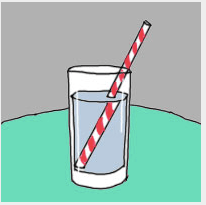
Why does the straw appear to be bent?
light is reflected
light is absorbed
light is turned
light is refracted
When light passes from air to water, what does happen to the speed of the light?
speeds up
slows down
stays the same
flint glass n=1.70
barium glass n=1.60
crown glass n=1.523
water n=1.33
diamond n=2.45

............. is used to separate white light into colors.
prism
reflection
sunlight
spectrum
Materials that allow light to pass through them clearly are called transparent. Which of the following material is NOT transparent?
window glass
clean air
a mirror
water
Which of following is an example of a translucent object?
glass
book
opaque
waxed paper

