
 Worksheets
Budgeting
Total questions: 33
Worksheet time: 25mins
Best ways to use leftover cash after you budget is emergency fund and ______________?
Pay off debt
Give it back to your employer as a mistake.
Hide it under your mattress
What percentage should go to Saving?
10% - 20%
25% - 30%
5% - 15%
Whatever is leftover
What are Fixed Expenses?
Expenses that only happen once a year.
Expenses that change every month.
Expenses that stay the same from one month to the next.
Expenses that all Needs
What are Flexible/Variable Expenses?
Expenses that only happen once a year.
Expenses that change every month.
Expenses that stay the same from one month to the next.
Expenses that all Needs
What is the 50/30/20 Rule?
50 savings/30 needs/ 20 wants
50 wants/ 30 savings/ 20 needs
50 needs/30 wants/ 20 saving
50% groceries / 30% home/ 20% car
What is a zero-based budget?
A budget for those that are on a low income.
A budget where you spend zero on wants.
A budget where every dollar has a name and purpose so the budget ends at zero.
A budget where you start with zero and build your way up.
About how much of your income should go towards transportation?
5-10%
15-20%
25-30%
35-40%
What is an impulse purchase?
A planned purchase
An item bought without previous planning or consideration of the long-term effects
A purchase made when your pulse begins to rise.
A purchase you make at the end of the year to save on taxes
What is an envelope system?
Envelopes with cash in them to only be used for that budget category.
Envelopes with cash in them that are divided into categories and are used to pay fixed bills.
Envelopes with cash in them that are used to store emergency funds.
Envelopes with cash in them that are used just for those who have irregular incomes.

Jenna wants to decrease the amount of $ she spends on food. Which of the following would help? (hint: choose 2 correct answers)
Decide what she will make for dinner that same day
Go to the grocery store with a list
Go to the store whenever she needs 1-2 items
Keep staple foods (e.g. beans, rice) readily stocked
In the 50-30-20 Budget - you should "Pay Yourself First" by putting AT LEAST __________% of your budget into savings.
20%
30%
50%
None of the above - these don't go in the budget
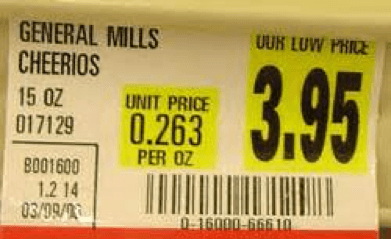
Which of the following is TRUE about unit pricing?
Unit prices can help you compare the prices of similar items
Unit price labels are universal throughout the country
It's easy to compare quantities on a unit price label
All states require unit price labels
In the 50-30-20 Budget - anything that is necessary (needs) for a person to live a healthy life should be __________% of their budget
20%
30%
50%
None of the above - these don't go in the budget
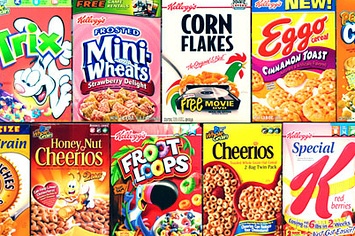
A 18oz box of cereal costs $4.99. How would you calculate the unit price?
18oz / $4.99
9 oz / $2.50
$4.99 / 18oz
(18oz) x ($4.99)
What type of analysis does this question represent?
Items of value that a person owns
bartering
liabilities
assets
net worth
NSF stands for
non satisfactory financing
not saving fully
non sufficient funds
non surplus funds
Assets - Liabilities =
Net Worth
Share
insolvent
personal inventory
Automatically putting money away into savings before spending on anything else?
Fixed Expenses
Variable Expenses
Pay Yourself First
Cash Flow
In the 50-30-20 Budget - anything that you would like to have (wants) should be NO MORE than __________% of their budget
20%
30%
50%
None of the above - these don't go in the budget
Match the following acronyms with their Agency
FTC
FEDERAL TRADE COMMISSION
CPSC
CONSUMER PRODUCT SAFETY COMMISSION
FDA
FOOD & DRUG ADMINISTRATION
CFPB
CONSUMER FINANCIAL PROTECTIONS BUREAU
BBB
BETTER BUSINESS BUREAU
Match the following Acts with their purpose
Fair Credit Billing Act
Outlines the dispute process to help you fix mistakes on credit cards & revolving charge accounts
Equal Credit Opportunity Act
Makes it illegal for creditors to discriminate against you (race, religion, age, gender, etc.)
Fair Credit Reporting Act
The law regulates the way credit reporting agencies can collect, access, use & share your info
Credit Card Accountability, Responsibility, and Disclosure Act
Protections include: interest rate, fees, billing, payments, and opt-out.
Truth in Lending Act
Requires lenders to disclose information about all charges and fees associated with a loan

