
 Worksheets
Revision of LO5 Homeostasis
Total questions: 61
Worksheet time: 37mins

Which of the following hormones is / are produced by the pancreas? (chose more than 1 answer)
Insulin
Oxytocin
glucagon
Cortisol


Warms the skin
Moisturises
sweat evaporates, it cools the skin
Provides sun protection


Homeostasis in the human body is often maintained by the:
brain only
positive feedback loop
muscles
negative feedback loop
When your glucose level is too high, what is the appropriate response?
Urinate
Release glucagon
Eat sugar
Release insulin
Which component of the homeostatic system detects change?
Effector
Control Center
Stimulus
Receptor
A nurse is reviewing lab reports. The nurse recalls blood plasma is located in which of the following fluid compartments?
Intracellular fluid (ICF)
Extracellular fluid (ECF)
Interstitial fluid
Intravascular fluid
What is Not the other name of tissue fluid?
interstitial and intracellular fluids
interstitial and extracellular fluids
intracellular and extracellular fluids
interstitial and intercellular fluids
Homeostasis mechanisms...
keep everything exactly the same.
usually operate by positive feedback systems.
act to keep the internal environmental conditions outside the normal range
is the ability to maintain a relatively stable internal environment
This feedback system amplifies a change until a desired outcome is reached.
positive feedback system
negative feedback system
neutral feedback system
self-monitoring feedback system
This is the term used to describe the normal range of a variable in an organism
control center
effector
stimulus
set point
This is the term used to describe a body part that provides the response needed to influence a change.
control center
effector
sensor
set point
It transmits signals to the control center when it detects a change.
control center
effector
response
sensor
receives and analyzes information received from the sensors
control center
effector
sensor
response
A noticeable change in an organism's environment.
control center
response
stimulus
set point
The feedback system that returns the body back to the normal set point.
positive
negative
neutral
returnable

What type of feedback system is described above?
positive
negative
neutral
leofied

What type of feedback system does the model represent?
positive
negative
neutral
glyogen

What is the control center in the model above?
Hypothalamus
muscles
thermoreceptors
Blood vessels

Why does pulse rate increase during exercise?
Oxygen and carbon dioxide must be removed from the body ASAP
Gas exchange must happen more quickly than when a person is at rest
Oxygen must be moved to the lungs and carbon dioxide must be moved to cells more quickly
Carbon dioxide must be moved to the kidneys to be excreted

which organ will balance the glucose level in the blood by releasing hormones like insulin or glucagon?
Stomach
Small intensine
large intestine
Pancreas

Excess of glucose will be stored in what form?
insulin
glycogen
glucagon
glucose
Which hormone is released when blood sugar gets too low?
glucose
glucagon
glycogen
insulin
Glucagon causes muscles and the liver to release _____ back into the bloodstream
glucose
glucagon
glycogen
insulin
____________________ helps warm the human body when we are cold.
sweating
shivering
inhaling oxygen
exhaling carbon dioxide
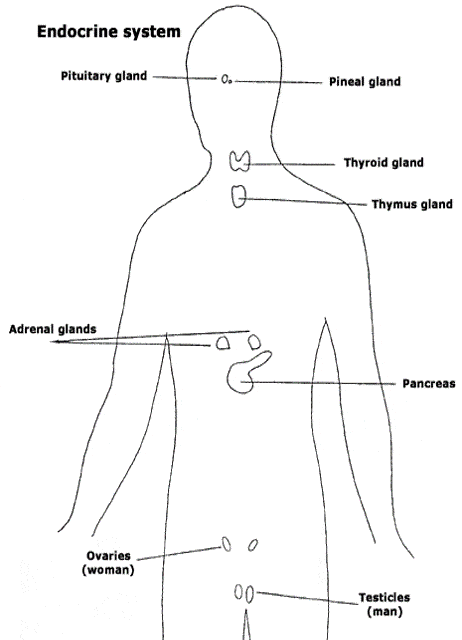
Which of the following body systems are the most involved in maintaining homeostasis?
Nervous system and respiration system
Nervous system and digestive system
Endocrine system and digestive system
Nervous system and endocrine system
What is the significant for dilation of blood vessels in skin?
To increase body metabolism
Causes more blood flow to the skin so that the heat can be eliminated
Causes less blood flow to the skin so that the heat can be conserved
To reduce sweating rate
What part of the negative feedback loop is what happens inside of the organism, as the result of the effector?
Initiation event
Response
Receptor
change
The fluid, originating from the blood capillary, that is formed in the spaces between the cells is known as:
interstitial fluid
blood
lymph
plasma
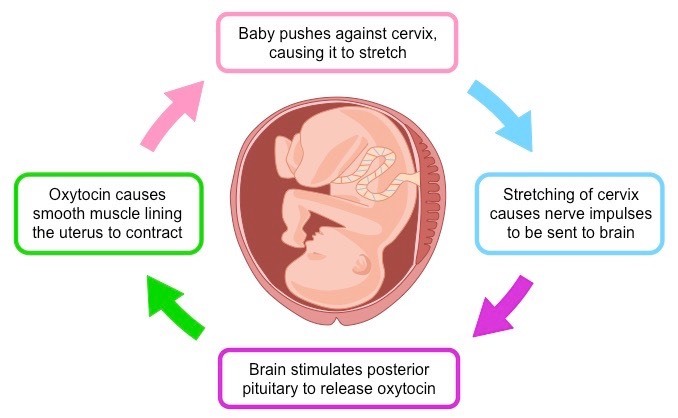
What type of feedback loop is shown?
negative
neutral
positive
When a blood vessel is injured, the injured tissue releases chemicals that activate platelets to form a clot. Clotted platelets then release chemicals to attract more platelets.
Positive feedback
Negative feedback
No feedback
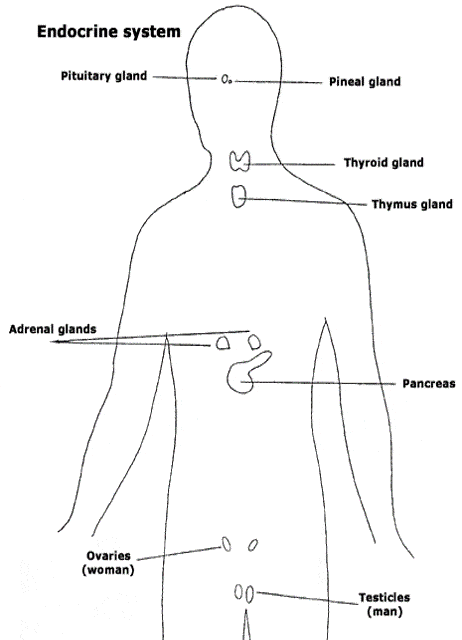
What is the order of the homeostasis Feedback loop?
stimulus->receptor->control center->effector->response
stimulus->response->control center->effector->receptor
receptor->stimulus->control center->effector->response
stimulus->effector->control center->receptor->response

Loops that cause a response to build up and build up until something big happens are called ____________ loops
positive
negative
Blood clotting is an example of a ____________ feedback loop
positive
negative
The heater kicks on and the house warms up, so it kicks off. Then the house cools a bit and the heater kicks back on. This continues all day. It's a _____________ loop.
positive
negative
Blood sugar regulation is an example of a ______________ feedback.
positive
negative
Body temperature regulation is an example of a ______________ feedback.
positive
negative
In a negative feedback loop, each action creates a consequence that ____________________.
produce opposite effect.
has no effect on
amplifies /enhances the change.
Plasma is one example of
extracellular fluid
intracellular fluid
tissue fluid
metabolic water
Specific internal variable that regulates sugar levels
Thermo-regulation
Osmo-regulation
Gluco-regulation
Respi-regulation
what is osmoregulation?
Control of water and salt in the body
Control of blood pressure in the body
Control of blood glucose in the body
Osmoregulation happens when organisms regulate
temperature
blood glucose
oxygen
water and solutes

