wayground logo

Free Printable Worksheets

Font size

S
M
L
XL
Worksheets

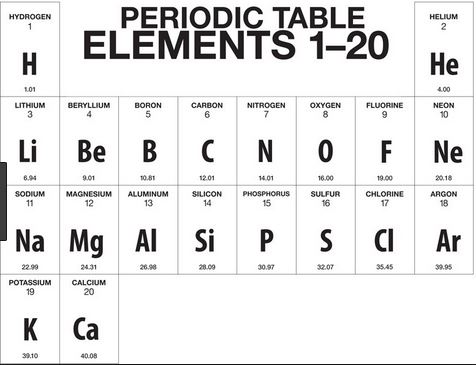
Quiz 2 Revision ; PART 1

Total questions: 100

Worksheet time: 3hrs 59mins

Name
Class
Date
1.
Columns are called?
a)
Groups
b)
Columns
c)
Periods
d)
Rows
2.
Rows are called?
a)
Rows
b)
Periods
c)
Groups
d)
Columns
3.
Rows are called?
a)
Rows
b)
Periods
c)
Groups
d)
Columns
4.
Group 1 is called...
a)
Alkaline earth metals
b)
Alkali metals
c)
Halogens
d)
Noble Gases
5.
Which group are known as the noble gases?
a)
8
b)
7
c)
2
d)
1
6.
Group 2 is called?
a)
Halogens
b)
Alkaline earth metals
c)
Alkali metals
d)
Noble gases
7.
Group 7?
a)
Alkali metals
b)
Alkali earth metals
c)
Halogens
d)
Noble gases
8.
The majority of the elements in the periodic table are...?
a)
Metals
b)
Non-metals
c)
Metalloids
d)
Not elements
9.
Which of the following are metalloids?
a)
Si
b)
Al
c)
Ge
d)
P
10.
Group number is equal to the....
a)
# energy levels
b)
Total # electrons
c)
# valence electrons
d)
# ions
11.
Period number is equal to...
a)
# energy levels
b)
# valence electrons
c)
Total # neutrons
d)
Total # electrons
12.
Group 1 elements react by...
a)
Losing one electron
b)
Gaining one electron
c)
Losing one neutron
d)
Gaining one neutron
13.
Group 2 metals react by ...
a)
Losing 2e-
b)
Gaining 2e-
c)
Gaining 1e-
d)
Losing 1e-
14.
Which of the following is the name of a charged atom?
a)
Isone
b)
Isotope
c)
Allotrope
d)
Ion
15.
Which of the following is the charge of ions formed by group 2 metals?
a)
2+
b)
1+
c)
2-
d)
1-
16.
Fluorine forms which of the following ions?
a)
F+
b)
F-
c)
F2-
d)
F2+
17.
Oxygen forms which of the following ions?
a)
O3+
b)
O3-
c)
O2-
d)
O2+
18.
Which of the following element(s) forms an ion with a 3- charge?
a)
Al
b)
N
c)
P
d)
Br
19.

The element Nitrogen (N) has 2 electrons in the first energy level and 5 electrons in the second energy level. This means that:

a)

the atomic number of nitrogen is 2

b)

the atomic number of nitrogen is 7

c)

the mass number of nitrogen is 2

d)

the mass number of nitrogen is 7

20.

What is the symbol of the element that is located in group 1A period 3?

a)

Li

b)

Ca

c)

Br

d)

Na

21.

Which of the following elements has the most valence electrons?

a)

Helium( He)

b)

Oxygen (O )

c)

Neon (Ne)

d)

Aluminum (Al)

22.

Which of the following elements has only one valence electron in its outermost shell?

a)

Beryllium (Be)

b)

Potassium (K

c)

Magnesium (Mg)

d)

Neon Ne

23.
Which of the following will have a lower ionization energy than Scandium (Sc)?
a)
Helium (He)
b)
Titanium (Ti)
c)
Calcium (Ca)
d)
Magnesium (Mg)
24.
The atom with the largest atomic radius in Group 18 is - 
a)
Ar
b)
He
c)
Kr
d)
Rn
25.

Ionization energy (and electronegativity) __________ from left to right within a period and __________ from top to bottom within a group.

a)

decreases, increases

b)

increases, increases

c)

increases, decreases

d)

stays the same, increases

26.
Atomic radius generally increases as we move __________.  
a)
down a group and from right to left across a period 
b)
up a group and from left to right across a period 
c)
down a group and from left to right across a period 
d)
up a group and from right to left across a period 
27.
Which of these elements has the highest ionization energy?
a)
Lithium (Li)
b)
Potassium (K)
c)
Francium (Fr)
d)
Sodium (Na)
28.
Which of these elements has the lowest ionization energy?
a)
Oxygen (O)
b)
Boron (B)
c)
Carbon (C)
d)
Fluorine (F)
29.
Which of these elements has the lowest ionization energy?
a)
Oxygen (O)
b)
Boron (B)
c)
Carbon (C)
d)
Fluorine (F)
30.

The elements in Group 1 (also called Alkali Metals) tend to have how many valence electrons in their outermost energy level?

a)

1

b)

2

c)

4

d)

8

31.


All of the following are halogens EXCEPT ______.

a)

F

b)

Ne

c)

I

d)

Cl

32.

All of the following elements are noble gases EXCEPT ______.

a)

Helium (He)

b)

Neon (Ne)

c)

Chlorine (Cl)

d)

Argon (Ar)

33.

What is the element symbol for the element with atomic number 11?

a)

Na

b)

nA

c)

NA

d)

Ne

34.

Using (s, p, d, f) sublevels, choose the correct electron configuration for Phosphorus (P) (Z = 15):

a)

A. 1s²2s²2p⁶3s²3p³

b)

B. 1s²2s²2p⁶3s¹

c)

- C. 1s²2s²2p⁶

d)

C. 1s²2s²2p⁶

35.

Sulfur (S) has an atomic number of 16. Which of the following represents the most likely electron configuration for Sulfur?

a)

A. 1s²2s²2p⁶3s²3p⁴

b)

B. 1s²2s²2p⁶3p⁶

c)

C. 1s²2s²2p⁴3s⁴

d)

D. 1s²2s⁸

36.
The Modern Periodic Table of Elements is arranged by
a)
atomic mass
b)
atomic number
c)
valence electrons
d)
number of isotopes
37.
Which group of the periodic table is composed of inert (not reactive)  gases?
a)
alkali metals
b)
alkaline earth metals
c)
halogens
d)
noble gases
38.
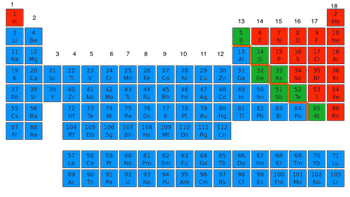
The atoms along the staircase are called 
a)
metals
b)
nonmetals
c)
metalloids
d)
noble gases
39.
Which is an alkali metal?
a)
Magnesium
b)
Iron
c)
Sodium
d)
Europium
40.
Which is a halogen?
a)
Helium
b)
Chlorine
c)
Oxygen
d)
Neptune
41.
Elements in a ..................have similar chemical properties.  
a)
period
b)
group
c)
row
42.
Francium (Fr) has the lowest ionization energy in Group 1 because - 
a)
it has the smallest number of valence electrons
b)
it has the greatest atomic mass
c)
it has the greatest number of protons, so it attracts its electrons the strongest
d)
its 1 valence electron is very far from the nucleus, so little energy is needed to remove it
43.

Which element has bigger atomic radii?

a)

Beryllium is bigger than Fluorine

b)

Oxygen is bigger than Sulphur

c)

Litihium is bigger than Sodium

d)

Phosphorus is bigger than Bromine

44.

Which element has higher ionization energy?

a)

Chlorine is higher than Sodium

b)

Phosphorus is higher than Nitrogen

c)

Silicon is higher than Carbon

d)

Magnesium is higher than Aluminium

45.

Which element has lower ionization energy?

a)

Chlorine is lower than Sodium

b)

Phosphorus is lower than Nitrogen

c)

Carbon is lower than Silicon

d)

Aluminium is lower than Magnesium

46.

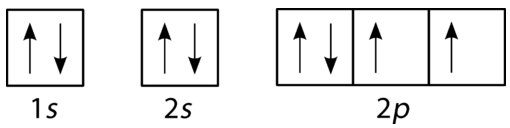
This orbital diagram represents:

a)

Carbon

b)

Boron

c)

Nitrogen

d)

Oxygen

47.

This orbital diagram represents

a)

Nitrogen

b)

Oxygen

c)

Carbon

d)

Neon

48.

What is incorrect about this orbital diagram?

a)

Both arrows in the 2p box should be pointing up

b)

There are too many electrons in the 1s orbital

c)

In the 2p boxes, there should only be 1 electron in the first 2p box and one in the 2nd 2p box

d)

All the arrows should be pointing up

49.

This orbital diagram represents

a)

Sodium

b)

Magnesium

c)

Aluminum

d)

Iron

50.
Which element is depicted from this orbital diagram
a)
Fluorine
b)
Neon
c)
Chlorine
d)
Argon
51.
The maximum number of electrons that can be placed in an p orbital.  
a)
2
b)
6
c)
10
d)
14
52.
Maximum number of electrons that can be placed in an s orbital.  
a)
2
b)
6
c)
10
d)
14
53.

What electron configuration matches an oxygen atom?

a)

1s22s22p63s2, 3p64s23d104p5

b)

1s22s22p4

c)

1s22s22p6

d)

1s22s22p63s23p64s23d1

54.

This is a correct dot diagram for neon (Ne)

a)

true

b)

false

55.

How many valence electrons does Aluminum Have?

a)

1 Valence electron

b)

2 Valence electron

c)

3 Valence electron

d)

4 Valence electron

e)

5 Valence electron

56.
What is the correct formula for this molecule?
a)
NH
b)
N3H
c)
NH3
d)
NH4
57.
Which of the following is the correct Lewis dot structure for the molecule fluorine (F2)?
a)
A
b)
B
c)
C
d)
D
58.

Which is the correct molecular structure for carbon dioxide CO2?

a)
b)
c)
d)
59.

What bond type shares electrons?

a)

Covalent bond

b)

Ionic bond

c)

Metallic bond

60.
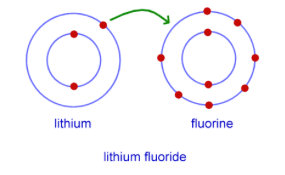
What type of bond is this?
a)
ionic
b)
covalent
61.
This picture shows a...
a)
Ionic Bond
b)
Covalent Bond
c)
Both bonds
d)
Neither bond
62.
Compounds made from only nonmetals are _________________ compounds.
a)
ionic
b)
covalent
c)
metallic
d)
chemical
63.
The chemical formula shows one carbon atom bonded to __________ oxygen atoms.
a)
one
b)
two
c)
three
d)
four
64.

Where are metals located on the periodic table?

a)

right side of the staircase

b)

on the staircase

c)

left side of the staircase

65.

What is the formula of this molecule?

a)

CH

b)

HC4

c)

CH4

d)

C4H4

66.

How many covalent bonds in this molecule

a)

1

b)

2

c)

3

d)

4

67.

CO2 has how many lone pairs?

a)

0

b)

1

c)

2

d)

3

e)

4

68.
This is a correct dot diagram for fluorine (F)
a)
true
b)
false
69.
According to the octet rule most elements need _______ valence electrons.
a)
2
b)
8
c)
6
d)
18
70.

By replacing the element symbol, this could be a diagram of which element?

a)

Li

b)

Al

c)

C

d)

Be

71.
+  and  N-3
a)
KN
b)
KN3
c)
K3N3
d)
K3N
72.
The chemical formula for an ionic compound of potassium and oxygen is
a)
KO.
b)
K2O.
c)
K2O2.
d)
KO2.
73.
How do the following two elements bond together?
Al3+  O2-         
a)
AlO
b)
Al2O3
c)
Al3O6
d)
Al3O2
74.
What formula results when Ca+2  and  Br- ions bond?
a)
Ca2Br2
b)
CaBr
c)
Ca(br)2
d)
CaBr2
75.
What is the correct ionic formula for sodium chloride?
Sodium = Na
Chlorine = Cl
a)
Na1Cl1
b)
Na1Cl2
c)
Na2Cl
d)
NaCl
76.
What is the correct formula for lithium sulfide?
Lithium = Li
Sulfur = S
a)
LiS
b)
Li2S
c)
LiS2
d)
Li2S1
77.
What is the correct formula for potassium nitride?
potassium = K
nitrogen = N
a)
KN
b)
K2N
c)
K3N
d)
KN3
78.

What is the correct formula for barium sulfide?

Barium = Ba

Sulfur = S

a)

BaS

b)

BaS2

c)

Ba2S

d)

Ba2S3

79.
What is the correct formula for potassium oxide?
Potassium = K
Oxygen = O
a)
KO
b)
KO2
c)
K2O
d)
K3O2
80.
What is the correct formula for calcium iodide?
a)
CaI
b)
CaI2
c)
Ca2I
d)
Ca2I3
81.
What is the correct formula for potassium bromide?
Potassium = K
Bromine = Br
a)
KBr
b)
KBr2
c)
K2Br
d)
K2Br3
82.
What is the charge of an atom that has lost one electron?
a)
-1
b)
-2
c)
+1
d)
+2
83.

Which type of element typically loses electrons to form a bond?

a)

metal

b)

metalloid

c)

noble gas

d)

nonmetal

84.

Which pair of elements will MOST LIKELY form an ionic bond?

a)

neon and argon

b)

beryllium and lithium

c)

magnesium and sulfur

d)

phosphorus and oxygen

85.

Select the correct name for the covalent compound provided. N2S

a)

dinitrogen monosulfide

b)

nitrogen disulfide

c)

mononitrogen disulfide

d)

dinitrogen monosulfur

86.

What is the formula for Potassium Nitride?

a)

KN3

b)

P3N

c)

K3N

d)

PN3

87.

H2O, Cl2, NH3

What do all of these compounds have in common?

a)

They are ionic compounds

b)

They are all covalent compounds

c)

They all are positively charged

d)

They are all ugly looking

88.

An atom or element that gains a valence electron(s) to be stable becomes a ________ ion.

(2)

a)

positive

b)

negative

c)

cation

d)

anion

89.

Trisulfur tetrafluoride is correctly represented by which formula below?

a)

S3F4

b)

S4F3

c)

SF

d)

S2F

90.

The chemical name for Al2O3 is ...

a)

aluminum oxide

b)

aluminum oxygen

c)

dialuminum trioxide

d)

trialuminide trioxide

91.

Al2O3, LiF, BeCl2 are...

a)

ionic compounds

b)

covalent compounds

c)

metallic compounds

92.
The chemical formula of sulfur hexabromide is
a)
SBr₆
b)
S₆Br
c)
S(VI)Br
d)
S6Br
93.
The chemical formula of carbon tetrachloride is
a)
CCl
b)
C₄Cl
c)
CCl₄
d)
C(IV)Cl
94.
The chemical formula of dinitrogen textroxide is
a)
Ni₂O₄
b)
NiO
c)
N₂O₄
d)
NiO₂
95.
The chemical formula of tetraphosphorus heptaoxide is
a)
F₄O₁₀
b)
P₄O7
c)
PO
d)
P₁₀O₄
96.
The chemical formula of dinitrogen textroxide is
a)
Ni₂O₄
b)
NiO
c)
N₂O₄
d)
NiO₂
97.
What is the correct name for NO?
a)
Mononitrogen Monoxide
b)
Nitrogen Monoxide
c)
Mononitrogen Dioxide
d)
Nitrogen Oxide
98.

Rubber is made up of many, many repeats of the molecular formula C5H8. What is its systematic name? 

a)

carbon octahydride

b)

tetracarbon nonahydride

c)

pentacarbide octahydrogen

d)

pentacarbon octahydride

99.
The chemical formula of carbon tetrachloride is
a)
CCl
b)
C₄Cl
c)
CCl₄
d)
C(IV)Cl
100.
The chemical formula of dinitrogen textroxide is
a)
Ni₂O₄
b)
NiO
c)
N₂O₄
d)
NiO₂