wayground logo

Free Printable Worksheets

NEW

Font size

S
M
L
XL
Worksheets

Quiz #7: Atomic Theory and Atomic Symbols

Total questions: 61

Worksheet time: 1hrs 3mins

Name
Class
Date
1.
The smallest unit of a pure substance that has the properties of that substance
a)
element
b)
atom
c)
neutron
d)
compound
2.
Atoms are made up of three basic parts, which are -
a)
Protons, neutrons, electrons
b)
neutrinos, protons, neutrons
c)
quarks, protons, electrons
d)
electrons, neutrons, and quarks
3.
The nucleus is made up of -
a)
neutrons and electrons
b)
protons and neutrons
c)
protons and electrons
d)
electrons and quarks
4.
Protons have this charge -
a)
positive
b)
negative
c)
neutral
d)
no charge
5.
Electrons have this charge - 
a)
positive
b)
negative
c)
neutral
d)
no charge
6.
Neutrons have this charge -
a)
positive
b)
negative
c)
neutral
d)
They don't exist
7.
What scientist is best known for his "Plum Pudding" model of the atom?
a)
J.J. Tomson
b)
Ernest Rutherford
c)
John Dalton
d)
Democritus
8.
Place the following scientists in order, from earliest to latest: 
A) Ernest Rutherford
B) J.J. Thomson
C) John Dalton
a)
B,C,A
b)
C,A,B
c)
A,C,B
d)
C,B,A
9.
J.J. Thomson provided evidence that an atom...
a)
is the smallest particle of matter
b)
contains negatively charged particles
c)
has an overall negative charge
d)
has an overall positive charge
10.
Rutherford's gold foil experiment provided evidence that...
a)
negative and positive charges are spread evenly throughout the atom.
b)
alpha particles have a positive charge.
c)
gold is not a dense as previously thought.
d)
there is a dense positively charged nucleus at the center of an atom.
11.

Which part of the atomic theory did Niels Bohr prove?

a)

there are electrons

b)

there is a nucleus

c)

electrons are in energy levels

d)

gold foil experiment

12.

Which part of the atomic theory did JJ Thomson prove?

a)

there are electrons

b)

electrons are in energy levels

c)

there is a nucleus

d)

cathode ray tube

13.

What experiment did JJ Thomson use?

a)

gold foil experiment

b)

cathode ray tube experiment

14.

John Dalton wrote postulates to make the idea of the atom useful. Which postulate below was proven wrong?

a)

All elements are made up of tiny indivisible particles called atoms.

b)

The atoms of one element are different from the atoms of another element.

c)

Atoms of different elements chemically combine to form chemical compounds.

d)

During chemical reactions, atoms are rearranged.

15.

Which subatomic particle has a neutral charge?

a)

protons

b)

neutrons

c)

electrons

d)

isotope

16.

What are atoms with the same number of protons but different numbers of neutrons?

a)

electrons

b)

protons

c)

neutrons

d)

isotopes

17.

Which describes the same atomic number but different numbers of neutrons?

a)

ions

b)

isotopes

c)

atoms

d)

neutrons

18.
"Everything is composed of atoms" was stated by:
a)
Democritis
b)
Dalton
c)
Moseley
d)
Einstein
19.
The scientist responsible for "discovering" the nucleus is:
a)
Bohr
b)
Rutherford
c)
Schroedinger
d)
Einstein
20.
Electrons are not factored into atomic mass because:
a)
They are so small their mass is negligible
b)
They're not in the nucleus
c)
They're too big
d)
They move so quickly their mass is zero
21.
True or False: The majority of an atom is made up of empty space
a)
True
b)
False
22.
The word "atom" comes from a Greek word that means
a)
Invisible
b)
Indivisible
c)
Undivided
23.
Electrons can be found in
a)
The protons
b)
The nucleus
c)
Electron Clouds
24.
His atomic model was depicted similar to a planetary/solar system
a)
Niels Bohr
b)
Joseph Thomson
c)
Ernest Rutherford
d)
Democritus
25.
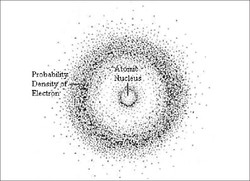
Who's model is this? 
a)
Millikan
b)
Rutherford
c)
Thomson
d)
Bohr
26.

What is the atomic number?

a)

the number of protons in the nucleus

b)

the number of neutrons in the nucleus

c)

the number of protons and neutrons in the nucleus

d)

the number of protons in the energy levels

27.

What is the mass number?

a)

the number of protons in the nucleus

b)

the number of neutrons in the nucleus

c)

the number of protons and neutrons in the nucleus

d)

the number of protons and electrons in the atom

28.

What is the atomic number of this atom?

a)

1

b)

3

c)

4

d)

7

29.

How is the number of neutrons in the nucleus of an atom calculated?

a)

Add the number of e- and p+ together

b)

Subtract the number of p+ from the mass number

c)

Subtract the number of e- from p+

d)

Add the mass number to the number of e-

30.

If an atom has 12 positively charged subatomic particles, which of the following must it also have to be considered a neutral atom?

a)

12 neutrons

b)

12 protons

c)

12 electrons

d)

24 protons and neutrons

31.

An atom has 10 protons, 15 neutrons and 10 electrons what is its mass number.

a)

10

b)

20

c)

25

d)

35

32.

What is the atomic number of the atom pictured?

a)

9

b)

8

c)

18

d)

19

33.

A neutron has a charge of

a)

+2

b)

+1

c)

-1

d)

no charge

34.

How are elements ordered on the Periodic Table?

a)

Alphabetical Order

b)

By their atomic mass.

c)

By their color.

d)

By their atomic number.

35.
Which of the following scientist discovered the current model of the atom?
a)
Dalton
b)
Schrodinger.
c)
Thomson
d)
Dalton
36.
What is the difference between the Electron Cloud Model and the Bohr Model
a)
placement of the electrons
b)
placement of the neutrons
c)
placement of protons
d)
Bohr model did not include a nucleus
37.
Which is the correct sequence of the scientists who made major changes in the model of the atom?
1-JJ Thomson
2-Erwin Schrodinger
3-John Dalton
4-Niels Bohr
5-Ernest Rutherford
a)
2, 1, 4, 3, 5
b)
3, 1, 5, 4, 2
c)
5, 3, 2, 1, 4
d)
4, 3, 2, 1, 5
38.

Boron has an atomic number of 5 and a mass number of 11. How many neutrons are in Boron's nucleus?

a)

5

b)

6

c)

7

d)

11

39.

What did Aristotle believe?

a)

That all matter was made up of atoms

b)

That protons were positively charged

c)

That electrons were found in orbits

d)

That matter was made up of the 4 elements

40.

In this image, what is the mass number?

a)

27

b)

Co

c)

Cobalt

d)

58.933

41.

In this image, what is the atomic number?

a)

27

b)

Co

c)

Cobalt

d)

58.933

42.
How many protons does He have?
a)
4
b)
2
c)
6
d)
0
43.
Different isotopes have...
a)
different masses
b)
different atomic numbers
c)
different electrons
d)
different protons
44.
Isotopes occur when atoms of the same element have a different number of ___________.
a)
protons
b)
neutrons
c)
electrons
d)
nucleons
45.
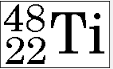
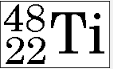
How many protons does this isotope of titanium have?
a)
48
b)
22
c)
26
d)
70
46.
What do these isotopes of carbon all have in common?
a)
neutrons & mass number
b)
atomic number and neutrons
c)
atomic number and electrons
d)
protons, atomic number, and mass number
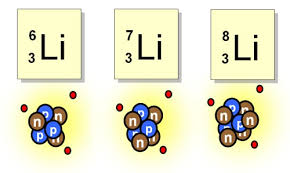
47.
which atom has  4 neutrons?
a)
Li-6
b)
Li-7
c)
Li-8
d)
they have the same # of neutrons
48.
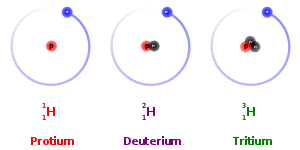
What is the atomic number of this atom?
a)
2
b)
4
c)
6
d)
none of the above
49.
What is the mass number of this atom?
a)
1
b)
3
c)
4
d)
7
50.
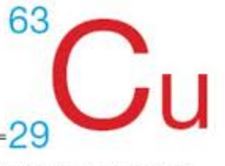
How many electrons does a Copper atom have?
a)
63
b)
29
c)
92
d)
34
51.

In a correctly written nuclear notation what would be located in the "A" position?

a)

number of neutrons

b)

atomic number

c)

number of electrons

d)

mass number

52.

In the name Carbon-14 the "14" represents the ______.

a)

mass number

b)

atomic number

c)

number of protons

d)

number of electrons

53.
How many electrons does Si contain? (click to see image)
a)
14
b)
28
c)
2
d)
None of these
54.
Isotopes have different numbers of
a)
protons
b)
neutrons
c)
electron
d)
properties
55.
How many electrons does potassium K contain? 
a)
19
b)
39
c)
20
d)
40
56.

131.293

a)

atomic number

b)

mass number

c)

atomic mass

d)

ion charge

57.

How many protons does this isotope of titanium have?

a)

48

b)

22

c)

26

d)

70

58.

How many protons are in the nucleus of the element shown?

a)

19

b)

9

c)

10

d)

28

59.

Which of these shows an isotope of Fluorine that has 12 Neutrons?

a)
b)
c)
d)
60.

Which of these shows an isotope of Sulfur that has 18 Neutrons?

a)
b)
c)
d)
61.

What is the nuclear notation for Carbon-14?

a)

Carbon - 6

b)
c)
d)