wayground logo

Free Printable Worksheets

Font size

S
M
L
XL
Worksheets

E.8.7 Relative Age Dating

Total questions: 46

Worksheet time: 43mins
Name
Class
Date
1.
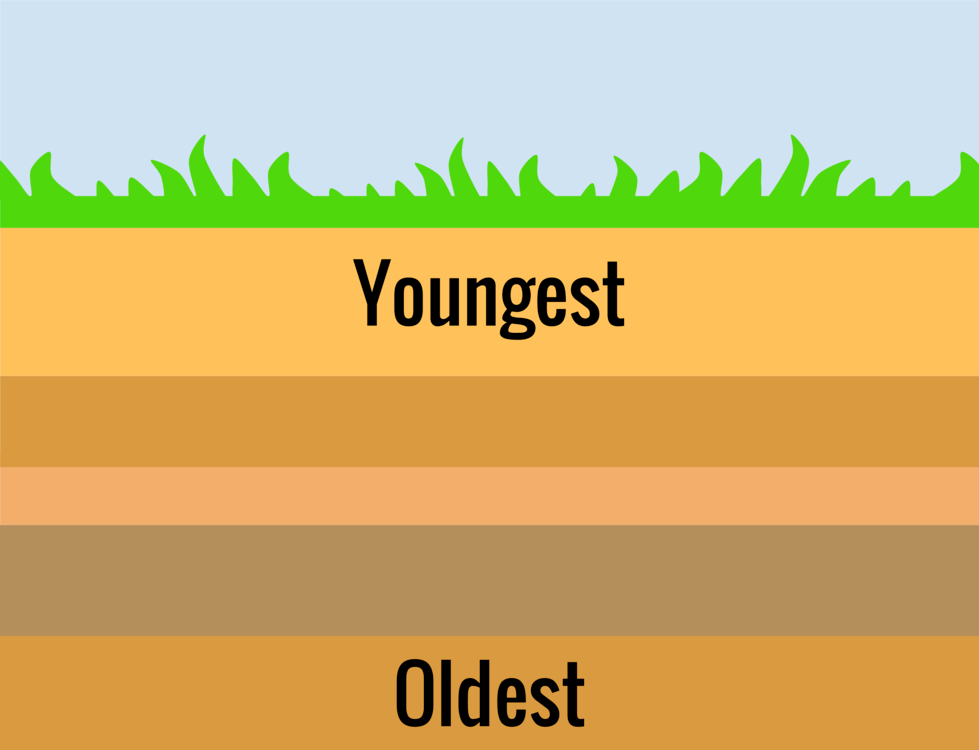
According to the law of superposition, the oldest fossils are found 
a)
At the top of the rock layers
b)
Near the bottom of the rock layers
c)
In the middle of the rock layers
d)
Somewhat near the surface
2.
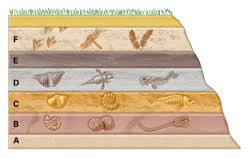
Which rock layer in the diagram seems to be the oldest?
a)
F
b)
E
c)
B
d)
A
3.
This rock was formed by smaller pieces of rock that settled at the bottom of a lake millions of years ago. What type of rock is this?
a)
Sedimentary
b)
Igneous
c)
Metamorphic
4.
Which of the following is the oldest?
a)
Layer L
b)
Intrusion D
c)
Intrusion H
d)
Layer E
5.
Which of the following correctly lists the layers in order from oldest to youngest?
a)
A, B, C, D, E
b)
E, B, C, D, A
c)
E, D, C, B, A
d)
C, B, A, D, E
6.
The rock formation labeled "P" is a(n)...
a)
fault
b)
intrusion
c)
inclusion
d)
unconformity
7.
Letter "F" is a....
a)
inclusion
b)
intrusion
c)
fault
d)
unconformity 
8.
In this rock layer diagram there are two unconformities, a fault at E and an intrusion at D. Which unconformity occurred first?  How do you know?
a)
Intrusion D occurred first because the instrusion has been moved by the fault.
b)
The fault occurred first because it has moved the intrusion D.
c)
Intrusion D occurred first because it can be seen in all of the rock layers.
d)
Fault E occurred first because it is a normal fault.
9.
Which Rock layer or intrusion is the youngest?
a)
A
b)
B
c)
C
d)
D
10.
An archaeologist made the following diagram of a dig site. What can be said about the pottery as compared to the skull found in the site?
a)
The rock layer with the pottery is more recent than the rock layer with the skull.
b)
The rock layer with the skull is more recent than the rock layer with the pottery.
c)
The rock layer with the skull is approximately the same age as the rock layer with the pottery.
d)
The rock layer with the skull has an absolute date of 17,000 years.
11.
How old do Paleontologists believe the Earth is?
a)
2016 years old
b)
3.54 billion years old
c)
4.54 billion years old
d)
4.54 million years old
12.
Relative age of a rock is the number of years that have passed since the rock formed?            
a)
true
b)
false
13.
Look at the diagram, what layer did animal E first show up in?         
a)
Layers #4
b)
Layers #5
c)
Layers #6
d)
Layers #7
14.

Which layer is OLDER? Layer M or Intrusion P?

a)

Layer M

b)

Intrusion P

15.

Which layer is OLDER? Layer E or Intrusion A?

a)

Layer E

b)

Intrusion A

16.

Which layer is OLDER? Intrusion M or Layer D?

a)

Intrusion M

b)

Layer D

17.

Which layer is OLDER? Layer M or Intrusion P?

a)

Layer M

b)

Intrusion P

18.

Which layer is OLDER? Layer E or Fault H?

a)

Layer E

b)

Fault H

19.

Which layer is OLDER? Layer E or Intrusion A?

a)

Layer E

b)

Intrusion A

20.

What geologic principle(or law) is best displayed here?

a)

Superposition

b)

Original horizontality

c)

Cross-cutting relationships

d)

Inclusions

21.

What geologic principle(or law) is best displayed here?

a)

Superposition

b)

Original horizontality

c)

Cross-cutting relationships

d)

Unconformities

22.
Used to determine whether an object is older or younger than other objects
a)
Superposition
b)
Relative Dating
c)
Fossil
d)
Unconformity
23.
Traces or remains of organisms that lived long ago
a)
Fossil
b)
Unconformity
c)
Superposition
d)
Column
24.
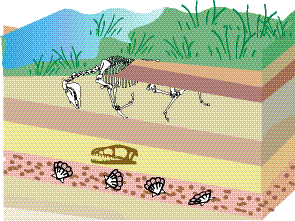
Analyze the seashell found in the white layer.  Which statement is true of the rock layer that contains this fossil?
a)
It could also contain a fossil from the bottom layer.
b)
It is older than the layers below it.
c)
It is younger than the layers above it.
d)
It is older than the layers above it.
25.
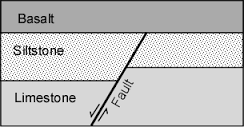
What are the relative ages of the features in order from oldest to youngest?
a)
Limestone, Basalt, Fault, Siltstone
b)
Siltstone, Fault, Basalt, Limestone
c)
Limestone, Fault, Basalt, Siltstone
d)
Limestone, Siltstone, Fault, Basalt
26.
The Law of Superposition helps scientists to determine what?
a)
The absolute age of rock layers
b)
The age of fossils
c)
The relative age of rock layers
d)
the super powers of rocks
27.

How do most fossils form?

a)

An insect becomes trapped in amber.

b)

An entire organism becomes frozen in ice.

c)

A dead organism becomes buried in sediment.

d)

A dead organism becomes buried in tar.

28.
A is older than layer C
a)
TRUE
b)
FALSE
29.
The fault is older than layer B.
a)
TRUE
b)
FALSE
30.

Relative dating determines the

a)

precise age of fossils

b)

age of rock layers and fossils compared to others

c)

climate fossils survived in

d)

movement of continents

31.

An organism that no longer exists on Earth is called

a)

decayed

b)

evolved

c)

extinct

d)

preserved

32.

What is a fossil?

a)

The remains or physical evidence of an organism preserved by geologic processes

b)

Fossils can be preserved in rock, amber, asphalt, or ice

c)

Any naturally preserved evidence of animal activity

d)

Fossil of an organism that lived during a relatively short period of time

33.

Provides evidence about the history of life and past environments on earth, and how life has changed over time.

a)

Relative dating

b)

Fossil record

c)

Unconformities

34.

How does absolute age differ from relative age?

a)

Only absolute dating indicates which rock is older than another

b)

Only absolute dating finds the age in years

c)

Only relative dating finds the age in years

35.

Layer B on side #1 (left) is a match to which layer on side #2 (right)?

a)

z

b)

y

c)

w

d)

there is no match

36.

What is the correct order of the rock layers from oldest to youngest?

a)

F, E, C, B, A, D

b)

F, E, D, C, B, A

c)

A, B, C, D, E, F

d)

D, F, E, C, B, A

37.

What part of an organism is most likely to become a fossil?

a)

Heart

b)

Skin

c)

Bones

d)

Blood

38.

States that younger rocks lie above older rocks if the layers have not been disturbed

a)

Law of superposition

b)

Fossil

c)

Geologic time

d)

Unconformity

39.

_____________ are the trace or remains of an organism that lived long ago.

a)

Climate

b)

Sedimentary

c)

Fossil

d)

Layers

40.

Determining whether an object or event is older or younger than other objects or events is called _____________.

a)

Relative Dating

b)

Absolute age

c)

Fossils

d)

Unconformity

41.

Which rock layer in the diagram seems to be the oldest?

a)

R

b)

M

c)

F

d)

B

e)

I

42.

According to the law of superposition, which layer is the youngest?

a)

A

b)

B

c)

C

d)

D

43.

How does the law of crosscutting explain the age of a fault?

a)

The fault is younger than the rocks above it.

b)

The fault is older than the rocks above it.

c)

The fault is older than the rocks it cuts through.

d)

The fault is younger than the rocks it cuts through.

44.

According to the law of superposition, the oldest fossils are found 

a)

In the middle of the rock layers

b)

Somewhat near the surface

c)

Near the bottom of the rock layers

d)

At the top of the rock layers

45.

In which type of rock are most fossils found?

a)

metamorphic

b)

igneous

c)

sedimentary

d)

volcanic

46.

The best index fossils have which two traits?

a)

widespread geographically, long period of time

b)

specific place, long period of time

c)

specific place, short period of time

d)

widespread geographically, short period of time