wayground logo

Free Printable Worksheets

Font size

S
M
L
XL
Worksheets

Env Chem. Unit 3 Review

Total questions: 100

Worksheet time: 8hrs 20mins

Name
Class
Date
1.
As you move down a group, atomic radius increases because - 
a)

you add more and more neutrons

b)

you add more and more protons

c)

you add more and more shells (energy levels)

d)

you add more atomic mass

2.
The atom with the largest atomic radius in Group 18 is - 
a)
Ar
b)
He
c)
Kr
d)
Rn
3.
The atom with the largest atomic radius in Period 4 (row 4) is - 
a)
K
b)
Kr
c)
Fe
d)
Fe
4.
Electronegativity is...
a)
the ability of an atom to attract/ accept electrons
b)
the ability of an atom to lose electrons
c)
the energy required to remove an electron from a specific atom
d)
how easy it is to make friends. 
5.
Which has the greater Electronegativity: 
N or C?
a)
C
b)
N
6.
Electronegativity __________ from left to right within a period and __________ from top to bottom within a group.
a)
decreases, increases 
b)
increases, increases
c)
increases, decreases 
d)
stays the same, increases
7.
Atomic Radius is...
a)

the relative size of the atom's nucleus

b)

the relative size of the atom's electron cloud

c)

the energy required to shield the outer electrons from the nucleus

d)

a measure of the ability of an atom to attract electrons

8.
As you move down the periodic table atoms get bigger.  This is because ____________.
a)
The atoms have more mass.
b)
The atoms have more protons.
c)
The atoms have more energy levels
d)
The atoms have more nuetrons
9.
Which atom has the largest atomic radius?
a)
potassium
b)
rubidium 
c)
francium
d)
cesium
10.
Which periodic group has the smallest atomic radius?
a)
Alkali metals
b)
Halogens
c)
Noble Gases
d)
Transition metals
11.
Which of the following will have a higher electronegativity than arsenic (As)?
a)
Carbon (C)
b)
Neon (Ne)
c)
Antimony (Sb)
d)
Germanium (Ge)
12.
This is the correct dot diagram for sodium (Na)
a)
true
b)
false
13.
This is a correct dot diagram for oxygen (O)
a)
true
b)
false
14.

How many valence electrons does Carbon have

a)

1

b)

4

15.

What is the correct Lewis Dot Structure for ammonia NH3

a)
b)
c)
d)
16.

Which is the correct molecular structure for carbon dioxide?

a)
b)
c)
d)
17.
Which of the following is the correct Lewis dot structure for the molecule fluorine (F2)?
a)
A
b)
B
c)
C
d)
D
18.

Is this the correct structure for CH2O?

a)

Yes

b)

No

19.
Which of the following is an acceptable Lewis structure for CH3Cl?
a)
Option A
b)
Option B
c)
Option C
d)
Option D
20.
Which of the following is the correct Lewis structure for water?
a)
A
b)
B
c)
C
21.
Three pairs of electrons are shared in a
a)
Single bond
b)
Double bond
c)
Triple bond
22.
What is the correct formula for this molecule?
a)
Si4F
b)
SiF4
c)
SiF
d)
Si4F4
23.

Which of the following compounds has only single bonds?

a)

I only

b)

II only

c)

III only

d)

I and III

e)

III and IV

24.

What is the correct structure for BF3?

a)

Option A.

b)

Option B.

c)

Option C.

d)

Option D.

25.

By replacing the element symbol, this could be a diagram of which element?

a)

Li

b)

Al

c)

C

d)

Be

26.
According to the octet rule most elements need _______ valence electrons.
a)
2
b)
8
c)
6
d)
18
27.
Each line in a Lewis Structure represents __________ electron(s).
a)
3
b)
2
c)
1
d)
4
28.

Which image could be a representation of NH3?

a)

A

b)

B

c)

C

29.

NH3 has how many lone pairs?

a)

0

b)

1

c)

2

d)

3

30.

CCl4 has how many double bonds?

a)

0

b)

1

c)

2

d)

3

31.

In HCN (Carbon is usually the central atom) what kind of bond is between the C and N

a)

Single

b)

Double

c)

Triple

32.
How many electrons should Lithium have around its Lewis dot model?
a)
1
b)
2
c)
3
d)
4
33.
How many electrons should Carbon have around its Lewis dot model?
a)
1
b)
3
c)
4
d)
5
34.

Fluorine, like all halogens, has 7 valence electrons but wants a full shell. What charge will fluorine make?

a)

7+

b)

7-

c)

1-

d)

1+

35.

This could be the dot diagram of

a)

Si

b)

Br

c)

B

d)

S

36.
This is the correct dot diagram for nitrogen, group 15.
a)
true
b)
false
37.

How would you draw a Lewis dot diagram for Magnesium?

a)
b)
c)
d)
38.
What is the VSEPR theory used to predict?
a)
Bond Strength
b)
Polarity
c)
Molecular Shape
d)
Electronegativity
39.
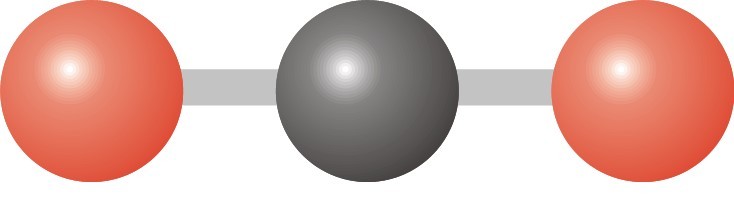
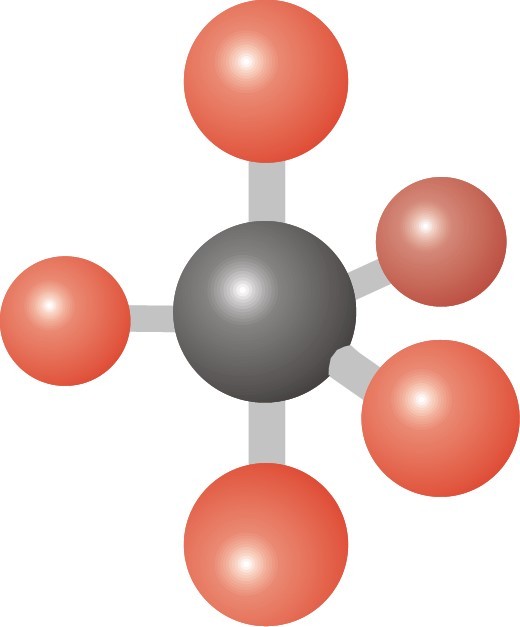
Which molecule would have this shape?
a)
BF3
b)
CH4
c)
PCl5
d)
CO2
40.
Which of the following molecular shapes would have a bond angle of 180 Degrees?
a)
Bent
b)
Trigonal Planar
c)
Tetrahedral
d)
Linear
41.
What molecule could this be? 
a)
BF3
b)
CH4
c)
H2O
d)
CO2
42.
Who could this molecule be?
a)
CH4
b)
CO2
c)
PCl5
d)
BF3
43.
Who could this be? 
a)
CO2
b)
NH3
c)
H2S
d)
CH4
44.
Who could this be?
a)
H2O
b)
NH3
c)
CO2
d)
CH4
45.

What shape would PH3 have?

a)

Trigonal Planar

b)

Trigonal pyramidal

c)

Bent

d)

Linear

46.
Will this molecule be polar or nonpolar? PH3
a)
polar
b)
nonpolar
47.
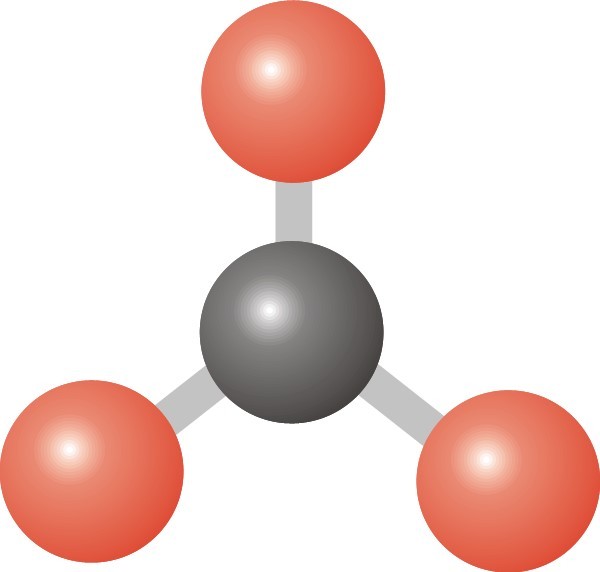
What molecular shape is the structure shown here? (BCl3)
a)
linear
b)
trigonal planar
c)
tetrahedral
d)
trigonal pyramidal
48.
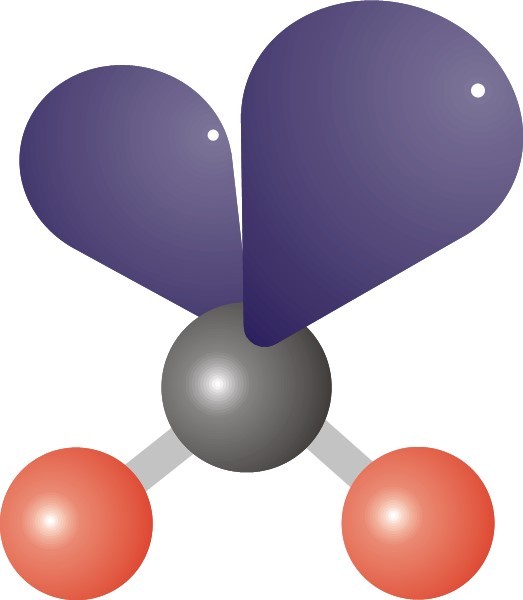
What molecular shape is the structure shown here? (H2O)
a)
tetrahedral
b)
trigonal planar
c)
bent
d)
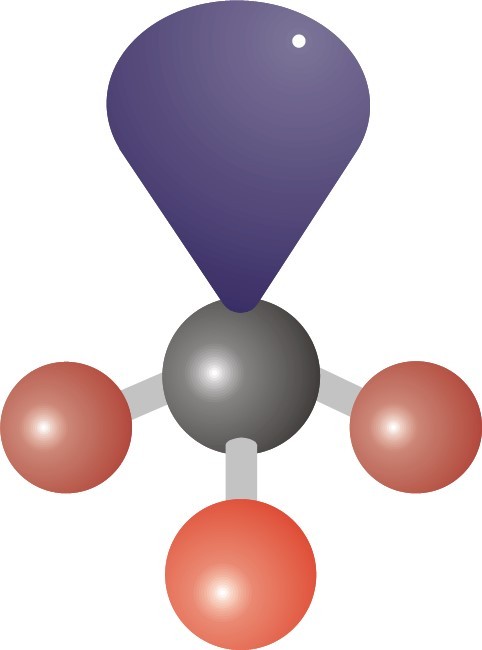
trigonal pyramidal
49.
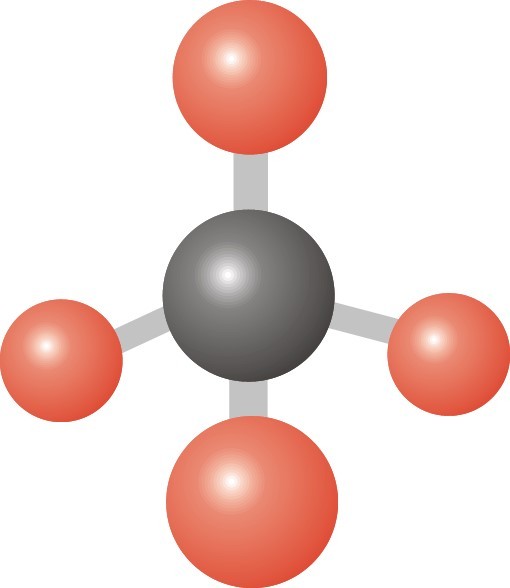
What molecular shape is the structure shown here? (NH4+)
a)
linear
b)
trigonal planar
c)
tetrahedral
d)
trigonal pyramidal
50.
 A lone pair is defined as
a)
A pair of bonding electrons
b)
One non-bonding electron
c)
A pair of non-bonding electrons
d)
A pair of electrons on the central atom
51.
What molecule could this be? 
a)
H2O
b)
CCl4
c)
PCl5
d)
NaCl
52.

Which element has a higher electronegativity value?

a)

Niobium

b)

Tin

c)

Cadmium

d)

Iodine

53.

Which is the correct order of electronegativity from lowest to highest?

a)

Zinc, Nickel, Iron, Scandium

b)

Iron, Nickel, Zinc, Scandium

c)

Scandium, Iron, Nickel, Zinc

d)

Scandium, Iron, Zinc, Nickel

54.

Identify the bond type:

NaCl

a)

Nonpolar Covalent

b)

Polar Covalent

c)

Ionic

d)

Metallic

55.

Identify the bond type:

NaK

a)

Nonpolar Covalent

b)

Polar Covalent

c)

Ionic

d)

Metallic

56.

Identify the bond type:

HH

a)

Nonpolar Covalent

b)

Polar Covalent

c)

Ionic

d)

Metallic

57.

Identify the bond type:

CO

a)

Nonpolar Covalent

b)

Polar Covalent

c)

Ionic

d)

Metallic

58.

Identify the bond type:

HO

a)

Nonpolar Covalent

b)

Polar Covalent

c)

Ionic

d)

Metallic

59.

Identify the bond type:

CF

a)

Nonpolar Covalent

b)

Polar Covalent

c)

Ionic

d)

Metallic

60.

Identify the bond type:

FF

a)

Nonpolar Covalent

b)

Polar Covalent

c)

Ionic

d)

Metallic

61.

Identify the bond type:

AgAu

a)

Nonpolar Covalent

b)

Polar Covalent

c)

Ionic

d)

Metallic

62.

Identify the bond type:

FeO

a)

Nonpolar Covalent

b)

Polar Covalent

c)

Ionic

d)

Metallic

63.

Identify the bond type:

Metal to Metal

a)

Nonpolar Covalent

b)

Polar Covalent

c)

Ionic

d)

Metallic

64.

Identify the bond type:

Metal to Nonmetal

a)

Nonpolar Covalent

b)

Polar Covalent

c)

Ionic

d)

Metallic

65.

Identify the bond type:

Nonmetal to Nonmetal with equal electron sharing.

a)

Nonpolar Covalent

b)

Polar Covalent

c)

Ionic

d)

Metallic

66.

Identify the bond type:

Nonmetal to Nonmetal with unequal electron sharing.

a)

Nonpolar Covalent

b)

Polar Covalent

c)

Ionic

d)

Metallic

67.
What explains the very high melting and boiling point of water
a)
Strong dipole-dipole bonds between water molecules
b)
Strong hydrogen bonds between water molecules
c)
Dispersion forces which are present in all molecules
d)
Asymmetrical shape of the polar bonds.
68.
Does HCl have hydrogen bonding?
a)
yes
b)
no
69.
Does CH4 have hydrogen bonding?
a)
yes
b)
no
70.
All molecules have London forces between them, but dipole-dipole and hydrogen bonding are so much stronger that when they are present we can ignore London forces.  Which of these has ONLY London forces?
a)
I2
b)
NH3
c)
OCl2
d)
SH2
71.

Which substance would have the weakest intermolecular forces of attraction?

a)

CH4

b)

NaCl

c)

H2O

d)

MgF2

72.

Intermolecular forces for: NH3

a)

Dispersion Force

b)

Dipole dipole

c)

Hydrogen bonding

73.
Intermolecular force present in HCl?
a)
dipole dipole
b)
dispersion
c)
H-bond
d)
ionic
74.
Ionic Bonding involves...
a)
The transfer of protons
b)
The transfer of nuetrons 
c)
The transfer of electrons
d)
None Of the above
75.

Which substance has the weakest intermolecular forces?

a)

Substance A, boiling point of 75 °C

b)

Substance B, boiling point of 105 °C

c)

Substance C, boiling point of 25 °C

d)

Substance d, boiling point of 45 °C

76.

The weaker the intermolecular forces of a substance the _____________ the boiling point

a)

higher

b)

lower

77.

Intermolecular forces for: CO2

a)

Dispersion Force

b)

Dipole dipole

c)

Hydrogen bonding

78.

Which of the following compounds consists of dipole molecules?

a)

H2S

b)

CH4

c)

CO2

d)

N2

79.

In which molecule is hydrogen bonding the strongest?

a)

HF

b)

HCl

c)

HBr

d)

HI

80.

Which term represents an intermolecular force in a sample of water?

a)

hydrogen bonding

b)

covalent bonding

c)

metallic bonding

d)

ionic bonding

81.
In a covalent bond, one or more electrons are? 
a)
shared 
b)
lost 
c)
gained 
d)
transferred 
82.
Covalent compounds
a)
Share electrons
b)
transfer electrons
c)
None
d)
conduct electricity
83.
What atom matches this electron configuration?
1s22s22p63s23p64s23d10
a)
Zinc
b)
Copper
c)
Nickel
d)
Germanium
84.
What atom matches this electron configuration?
1s22s22p63s2
a)
Neon
b)
Magnesium
c)
Aluminum
d)
Potassium
85.
What electron configuration matches an oxygen atom?
a)
1s22s22p63s2, 3p64s23d104p5
b)
1s22s22p4
c)
1s22s22p6
d)
1s22s22p63s23p64s23d1
86.
The electron configuration of an atom is 1s22s22p6.  The number of electrons in the atom is 
a)
3
b)
6
c)
8
d)
10
87.
Which electron configuration belongs to Chlorine (Cl)?
a)
1s2s2p3s3p5
b)
1s2s2p3s3p6
c)
1s2s2p3s3p7
88.
Which electron configuration belongs to Copper (Cu)?
a)
1s2 2s2 2p6 3s2 3p6 4s2 3d8
b)
1s2 2s2 2p6 3s2 3p6 4s2 3d9
c)
1s2 2s2 2p6 3s2 3p6 4s2 3d10
89.
Identify the Electron Configuration for Aluminum (Al)
a)
1s2s2p3s3p1
b)
1s2s2p3s3p3
c)
1s2s2p3s4p1
90.
How many electrons can the d sublevel hold?
a)
14
b)
10
c)
2
d)
6
91.
How many electrons can the s sublevel hold?
a)
14
b)
10
c)
2
d)
6
92.

Choose the correct shortcut configuration for iodine.

a)

[Ar]4s24d104p5

b)

[Kr]5s24d105p5

c)

[Xe]5s25d105p5

d)

none of the above

93.
How many valence electrons does Chlorine have?
a)
5
b)
2
c)
7
d)
5
94.
Which element is pictured?
a)
neon
b)
fluorine
c)
magnesium
d)
argon
95.

What is the electron configuration of Iodine?

a)

[Kr]5s24d105p6

b)

[Kr]5s24d106p6

c)

[Kr]5s25d106p6

d)

None of the above

96.

What atom matches this electron configuration?

[Xe] 6s24f145d9

a)

Mercury

b)

Gold

c)

Platinum

d)

Thallium

97.
What is the shorthand electron configuration for Sulfur atom?
a)
[Ar] 3p4
b)
[He] 3s23p4
c)
[Ne] 3s23p4
d)
[Na] 3s23p3
98.
What is the noble gas configuration for phosphorus?
a)
[Ar] 3p5
b)
[He] 3s2 3p5
c)
[Ne] 3s2 3p3
d)
[Na] 3s2 3p5
99.
[Ne]3s23p5 is the noble gas configuration for which element?
a)
chlorine
b)
fluorine
c)
sulfur
d)
aluminum
100.
What is this element? 
1s22s22p63s23p6
4s23d104p6
a)
Argon
b)
Krypton
c)
Selenium
d)
Bromide