
 Worksheets
Unit 5 Quiz#2/ Test Review
Total questions: 59
Worksheet time: 1hrs 11mins

Heat is defined as
The generation of fast moving particles
Thermal energy transferred from one place to another
Thermal energy from a chemical reaction
The total energy of particles

The Law of the Conservation of Energy states:
Energy can be trapped and stored
Energy can be created as needed
Energy cannot be created or destroyed
Energy can be created and modified
Which state of matter has closely packed and organized particles?
Solid
Liquid
Gas
Particles in this state of matter do not move around a lot.
Solid
Liquid
Gas
Particles in this state of matter slide past each other and take the shape of the bottom of their container.
Solid
Liquid
Gas


Solid particles have...
more energy than gas molecules
more energy than liquid molecules
less energy than liquid molecules
the same amount of energy as gas particles

Which diagram represents a gas molecule?
A
B
C

Which diagram represents a solid molecule?
A
B
C

Which diagram represents a liquid molecule?
A
B
C
As temperature increases...
Molecules collide more, have more energy, and spread out.
Molecules have less energy and spread out.
Molecules have less energy and come together.
Molecules have more energy and come together.
As thermal energy increases the . . .
kinetic energy increases causing the particles to move faster
kinetic energy increases causing the particles to move slower
kinetic energy decrease causing the particles to move faster
kinetic energy decrease causing the particles to move slower
The word that best describes the space that matter fills up is...
Equilibrium
Volume
Perimeter
Mass
The word that is best defined as the measurement of amount of the "stuff" that makes up matter
Mass
Volume
Parallelogram
Area
A cup of hot tea was left on the counter in an air-conditioned room for several hours. What happens to the molecules of the liquid in the cup?
The size of the molecules decreases
The space between the molecules decreases
The motion of the molecules increases
The number of molecules decreases
How do molecules of hot air differ from molecules of cold air?
the molecules of hot air move faster than the molecules of cold air
the molecules of hot air move slower than the molecules of cold air
the molecules always move at the same speed
it is not possible to say anything about the speed of molecules
Which process could cause a material to change state from gas to liquid?
Adding heat
Adding energy
Removing particles
Removing energy
What is a conductor?
a material that heat moves through easily
a material that heat does not move through easily
a material that turns cold when heated
a tool for measuring temperature
Which of these is a better conductor?


Stir frying vegetables is an example of
Convection
Conduction
Radiation

Hot water rises and cold water sinks. Is this:
Convection
Conduction
Radiation


Cold Pack on Person
Heat is transferred from the cold pack to the person.
Heat is transferred from the person to the cold pack
The cold pack is getting colder. The person is getting warmer.
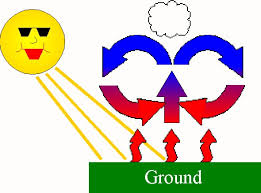

How do you know this is convection?
Direct contact between pot and fire
Moving liquids indicated by arrows
Heat given off by pot travels through space
How do you know this is convection?
Direct contact between pot and fire
Moving liquids indicated by arrows
Heat given off by pot travels through space

what's going to happen as we put the ice into the lemonade?
Heat will flow from the ice to the water
It will stay the temperature of the lemonade
It will stay the temperature of the ice
They will eventually reach the same temperature
Heat transfer by touch
conduction
convection
radiation
evaporation
conduction
heat transfer by touch
convection
heat transfer by motion of fluids
radiation
heat transferred through space


What would be the effect on the particles if more heat is supplied to the system? (CHECK ALLTHAT APPLY)
They would slow down
They would collide with each other more
They would speed up
There would be no effect

According to the ESRT, which material would require the most heat energy to increase the temperature of 1 gram of the material one Celsius degree?
Ice
Water
Basalt
Granite

What would heat up the fastest if left out in the sunlight on a clear, summer day?
Liquid Water
Dry Air
Lead
Granite
Why does water heat heat up and cool down VERY SLOWLY?
High Specific Heat
Low Specific Heat
It's solid
It's always cold

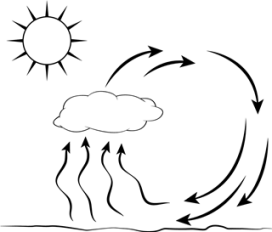
If you squeeze an inflated balloon into a smaller space, the pressure inside the balloon will _____________.
increase
decrease
remain constant
decrease and increase in a constant cycle
At a constant volume for a sealed gas, as temperature decreases, pressure
decreases because the particles slow down and hit the inside of the container softer and less often.
decreases because the particles speed up and hit the inside of the container harder and more often.
increases because the particles slow down and hit the inside of the container softer and less often.
increases because the particles speed up and hit the inside of the container harder and more often.
What do the particles of a gas do when heated?
Move slower and come together
Move faster and come together
Move slower and spread apart
Move faster and spread apart

What is the relationship between pressure and volume from Boyle's actual data shown in the table from top to bottom?
Volume decreases, Pressure increases
Volume and Pressure both increase together
Volume increases, Pressure decreases
Volume and Pressure remain constant.

The graph shows pressure-volume data for a sealed gas at constant temperature. What is the relationship shown?
Volume increases, pressure increases
Volume increases, pressure decreases
Volume decreases, pressure decreases
A student inflates a balloon with helium then places it in the freezer. The student should expect
the balloon's volume to increase
the balloon's volume to decrease
the balloon's moles to increase
the balloon's moles to decrease
If a hairspray can is heated, what can be expected of the pressure of the gas inside the can?
The pressure will increase
The pressure will decrease
The pressure will remain constant
The pressure will equalize



