wayground logo

Free Printable Worksheets

Font size

S
M
L
XL
Worksheets

5th Grade Semester 1 Review Physical Science

Total questions: 105

Worksheet time: 3hrs 38mins

Name
Class
Date
1.

What is energy?

a)

the ability to do work

b)

the movement of electrons

c)

UPS global services

2.
What type of energy does this provide?
a)
heat
b)
light
c)
sound
d)
heat and light
3.

What is kinetic energy?

a)

energy in the form of electricity

b)

movement energy

c)

energy you can see

d)

energy caused by vibrations

4.

Objects with a __________ temperature have particles that are vibrating faster.

a)

higher

b)

lower

5.

Objects with a __________ temperature have particles that do not vibrate as much.

a)

higher

b)

lower

6.

The rock at the top of the hill has what type of energy?

a)

potential

b)

kinetic

c)

light

d)

sound

7.

The rock at the top of the hill has what type of energy?

a)

potential

b)

kinetic

c)

light

d)

sound

8.

Potential and kinetic energy combined are the mechanical energy that an object has.

a)

True

b)

False

9.

Usually, the electric charge that moves is the _______. They can move from one object to another, causing the material to take on a temporary change.

a)

electron

b)

proton

c)

static

10.

Particles with the ___________ charges are attracted to each other.

a)

same

b)

opposite

11.

Particles with the ___________ charges repel from each other.

a)

same

b)

opposite

12.

Which items are good insulators?

a)

wood, copper, plastic

b)

glass, plastic, copper

c)

wood, glass, and plastic

13.

You and your friends climb to the top of a hill to sled ride. You friend pushes you down the hill and end up at the bottom. When do you have the greatest amount of kinetic energy?

a)

while you are sliding down the hill

b)

while you are climbing the hill

c)

at the bottom of the hill, when you are stopped

d)

at the very top of the hill, just before your friend pushes you

14.

A ______ is formed when an electric current passes through an unbroken path of conductors.

a)

circuit

b)

insulator

c)

electron

d)

proton

15.

What is the Law of Conservation of Energy?

a)

law that requires you to save energy

b)

energy can be created and can be destroyed

c)

energy cannot be created or destroyed

d)

fake news

16.

stops the flow of electricity

a)

conductor

b)

insulator

17.

allows electricity to flow

a)

insulator

b)

conductor

18.

For a circuit to work, it must be...

a)

open

b)

incomplete

c)

closed

d)

have a switch

19.

Copper wire is...

a)

conductor

b)

insulator

20.

What do you need to build an electromagnet?

a)

Battery, Iron Nails, Copper Wire

b)

Battery, Paperclips, Copper Wire

c)

Battery, Wires, Light bulb

d)

Battery, Paperclips, Light Bulb

21.

Electrical energy converts into _______________ energy.

a)

Mechanical

b)

Thermal

c)

Sound

d)

All of the above

22.

What is the power source in this circuit?

a)

Bulb

b)

Switch

c)

Wire

d)

Battery

23.
An incomplete circuit is shown.
To complete the circuit, a wire should be placed from —
a)
Point D to Point C
b)
Point B to Point C
c)
Point A to Point D
d)
Point B to Point D
24.
Choose the correct sentence.
a)
This circuit will work because it is an open circuit.
b)
This circuit will work because it is a closed circuit.
c)
This circuit will NOT work because it is an open circuit.
d)
This circuit will NOT work because it is a closed circuit.
25.
Magnetism is....
a)
The part of the magnet where the force is the strongest
b)
A force created by magnets that pulls some metals
c)
To Pull towards
d)
An object able to pull some metals towards itself
26.
Poles are ....
a)
The part of the magnet where the force is the strongest
b)
A force created by magnets that pulls some metals
c)
To Pull towards
d)
An object able to pull some metals towards itself
27.
To attract means....
a)
The part of the magnet where the force is the strongest
b)
A force created by magnets that pulls some metals
c)
To Pull towards
d)
An object able to pull some metals towards itself
28.
To repel means....
a)
To push away
b)
A force created by magnets that pulls some metals
c)
To Pull towards
d)
An object able to pull some metals towards itself
29.
Do these magnets attract or repel? 
a)
Attract
b)
Repel
30.
Do these magnets attract or repel?
a)
Attrack
b)
Repel
31.
A magnet will pick up a nail, but not a penny because the nail
a)
has rust on it.
b)
is lighter than the penny.
c)
has a sharp point.
d)
contains iron.
32.
Amy used a magnet to hold one piece of paper on the refrigerator. Later, she tried to use the same magnet to hold a stack of four pieces of paper, and the magnet wouldn't stick to the fridge. Why did this happen?
a)
The magnet needs glue
b)
The magnet couldn't hold due to the thickness of the paper
c)
Paper repels magnets
d)
A magnet isn't attracted to the refrigerator.
33.
You can make an electromagnet stronger by...
a)
increasing the current through the wire
b)
make the iron core bigger
c)
increase the number of loops around the core
d)
All of these
34.
Magnets stick to any materials that are made of
a)
Iron, Nickel, Copper
b)
Iron, Nickel, Cobalt
c)
Ions, Nickel, Cobalt
d)
Iron, Lead, Cobalt
35.

A green powder is heated & a gas is given off while it turns to a black solid. This describes

a)

Physical Change

b)

Chemical Change

c)

Change in State

d)

Change in Temperature

36.

Which of the following could indicate that a chemical change took place?

a)

Change in color

b)

Production of Energy

c)

Formation of Gas

d)

All are correct

37.
A change in which NEW substances are formed.
a)
Chemical change
b)
Physical change
c)
Casual change
d)
Formal change
38.
Which of the following is NOT an example of chemical change?
a)
sour milk
b)
burning wood
c)
breaking a pencil
d)
rust
39.
Which of the following is NOT an example of a physical change?
a)
crumpled paper
b)
pencil sharpening
c)
shrunken clothing
d)
sour milk
40.
An explosion occurs ...
a)
Chemical Change
b)
Physical Change
41.
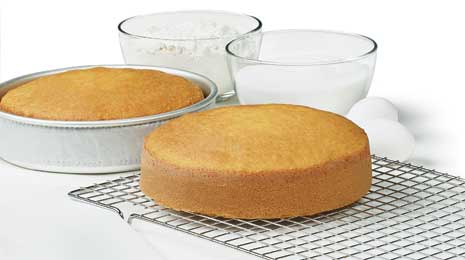
Physical or Chemical Change?  Baking a cake.
a)
Chemical Change
b)
Physical Change
42.

This is a type of mixture where one substance dissolves into another

a)

Solution

b)

Miscibility

c)

Compound

d)

Solubility

43.

Combination of two or more different kinds of substances that keep their own physical properties and can be easily separated.

a)

Solution

b)

Mixture

c)

Solubility

d)

Miscibility

44.

The substance that does the dissolving

a)

Solute

b)

Solvent

c)

Solution

d)

Miscibility

45.

The substance getting dissolved

a)

Solvent

b)

Solute

c)

Solution

d)

Mixture

46.

This is an example of a

a)

Solution

b)

Mixture

47.

This is an example of a

a)

Solution

b)

Mixture

48.

Stirring the solution increases the rate of dissolution (rate of dissolving).

a)

True

b)

False

49.

The smaller the particle size the faster the rate of dissolution (rate of dissolving).

a)

True

b)

False

50.
Which of the following statements is true about how using smaller salt crystals would affect the rate of making a salt solution in water?
a)
Smaller crystals increase the surface area and slow down dissolving.
b)
Smaller crystals decrease the surface area and speed up dissolving.
c)
Smaller crystals increase the surface area and speed up dissolving.
d)
Smaller crystals decrease the surface area and slow down dissolving.
51.

What combination would dissolve a solid solute the fastest?

a)

high temperature, no stirring

b)

no heat, no stirring

c)

sugar cube, no heat

d)

high temperature, stirring

52.

In our Solubility lab, which substances were insoluble? This question MAY have more than one answer!

a)

sand

b)

salt

c)

vegetable oil

d)

lemon juice

53.

James wants to seperate the salt from the water in his glass of salt water. What seperation method should James use?

a)

Magnets

b)

Evaporation

c)

Filter

d)

Using his hands

54.

Nicole wants to dissolve a substance in water. Which substance will dissolve the easiest?

a)

Rocks

b)

sugar

c)

pepper

d)

sand

55.

What item could a magnet separate from a mixture of garbage?

a)

Old metal fork

b)

An apple core

c)

Pieces of paper

d)

A juice can

56.

What mixture could you use this tool to best separate that mixture?

a)

Sugar and Salt

b)

Sand and rocks

c)

Apples and grapes

57.

When thermal energy is increased in a solid, what change in state is happening?

a)

Melting

b)

Evaporation

c)

Freezing

d)

Condensation

58.

When thermal energy is decreased in a liquid, what change in state is happening?

a)

Melting

b)

Freezing

c)

Condensation

d)

Evaporation

59.

The birds can not drink water in the bird bath because the water is solid

a)

Melting point

b)

freezing point

c)

condensation

d)

melting

60.

While walking to school you notice that the grass is wet but it didn't rain the night before is from?

a)

freezing point

b)

boiling point

c)

evaporation

d)

condensation

61.
John placed a pot of water on a stove. As the water boils, how does the state of the water change?
a)
from gas to liquid
b)
from liquid to a gas
c)
from a liquid to a solid
d)
from a solid to a liquid
62.

A substance changing from a gas to a liquid is an example of...

a)

vaporization

b)

condensation

c)

precipitation

d)

melting

63.

Water freezes at what temperature?

a)

32 degrees Celsius

b)

4 degrees Celsius

c)

0 degrees Celsius

d)

-10 degrees Celsius

64.
a)
b)
c)
d)
65.
a)

A, , C, D, B

b)

D, C, A, B

c)

C, D, A, B

d)

B, A, C, D

66.

The gas state of water is called ...................

a)

ice

b)

water vapor

c)

liquid

d)

solid

67.

Water forms on the outside of iced tea on a hot day. What process causes the water to form?

a)

Condensation

b)

Evaporation

c)

Melting

d)

Freezing

68.

____________ tells us how much space a substance takes up.

a)

Mass

b)

Weight

c)

Height

d)

Volume

69.

Mass is the amount of ___________ there is in an object.

a)

matter

b)

weight

c)

length

d)

volume

70.

Which state of matter has a definite volume, but not a definite shape because it takes the shape of the container it's in?

a)

solid

b)

liquid

c)

gas

71.

Which state of matter has a definite shape and a definite volume?

a)

solid

b)

liquid

c)

gas

72.

Which state of matter does NOT have a definite shape OR volume, but expands to fill the container it's in?

a)

solid

b)

liquid

c)

gas

73.

In this state of matter, particles are packed tightly and can't move freely (they can only wiggle).

a)

solid

b)

liquid

c)

gas

74.

In this state of matter, particles are somewhat spread out and are able to slide past one another.

a)

solid

b)

liquid

c)

gas

75.

In this state of matter, particles have lots of free space and are able to flow past one another easily.

a)

solid

b)

liquid

c)

gas

76.

When heat or energy is added to a substance, the particles move ___________ and ____________.

a)

faster and closer

b)

faster and further apart

c)

slower and closer

d)

slower and further apart

77.

When heat or energy is removed from a substance, the particles move _______ and ____________.

a)

faster and further apart

b)

faster and closer together

c)

slower and closer together

d)

slower and further apart

78.

What is another term used to describe ‘characteristics’ of a substance?

a)

life skills

b)

traits

c)

properties

d)

identifiers

79.
What tool is used to measure the volume of a liquid?
a)
thermometer
b)
hand lens
c)
graduated cylinder
d)
ruler
80.
What tool is used to measure temperature?
a)
meter stick
b)
thermometer
c)
balance
d)
spring scale
81.
What tool is used to measure length?
a)
balance
b)
ruler
c)
thermometer
d)
graduated cylinder
82.
What tool is used to magnify objects?
a)
graduated cylinder
b)
balance
c)
hand lens
d)
thermometer
83.
What tool is this?
a)
triple beam balance 
b)
pan balance 
c)
spring scale 
d)
flask
84.

What is the volume of Object X?

a)

10.0 cm3

b)

15.0 cm3

c)

25.0 cm3

d)

20.0 cm3

85.
LeGacey puts her ear against a door and hears sounds from the other side of the door. What happens when sound waves travel through a material, such as a door?
a)
They vibrate the particles in the material
b)
They stop vibrating
c)
They change volume
d)
None of the other answer choices
86.
How does a beam of light travel after it has been reflected off a mirror?
a)
In a straight line
b)

In a wave

c)
In many different directions
d)
It stops traveling
87.
How do white light waves act when they enter a prism?
a)
They bend or refract.
b)
They are reflected.
c)
They become raindrops.
d)
They are absorbed.
88.
Refraction occurs when a light wave _____
a)
bends as it moves from one medium to another.
b)
bounces back off an object or a surface.
c)
is talen in by an object.
d)
changes into heat.
89.
Edward plucks the string of his guitar. Each of the strings has the same thickness and length, but a different tightness. Which statement correctly describes how the guitar strings will sound?
a)
The tightest string will make the highest sound. The loosest string will make the lowest sound.
b)
The tightest string will make the softest sound. The loosest string will make the loudest sound.
c)
The tightest string will make the loudest sound. The loosest string will make the softest sound.
d)
The tightest string will make the lowest sound. The loosest string will make the highest sound.
90.
Which object would BEST reflect light from a light bulb?
a)
a shiny spoon
b)
notebook paper
c)
a black sweater
d)
a glass of water
91.
A scientist wanted to conduct an experiment with special equipment that is very sensitive to sound. A place where the equipment would NOT be affected by sound waves is
a)
 deep under water.
b)
high in the air. 
c)
in a solid piece of granite. 
d)
in outer space. 
92.
What happens to a beam of light as it passes from air to water?
a)
moves at a faster speed
b)
continue to move straight
c)
it will bend
d)
it cannot pass through water
93.
Mechanical Energy is transferred to _____ Energy.
a)
Solar
b)
Mechanical
c)
Electrical
d)
Potential
94.
In which  medium will sound travel fastest?
a)
air
b)
water
c)
glass
d)
salt water
95.

In thermal energy transfer, heat always flows from the _______________ object to the _______________ object until both objects have reached equilibrium.

a)

Warmer to cooler

b)

Cooler to warmer

c)

Warmer to warmer

d)

Cooler to cooler

96.
Which of the following is an example of friction that is helpful?
a)
Brakes used on a bike
b)
Tires from a car on the road
c)
Tread on the bottom of your shoes
d)
All are examples that are helpful
97.
Friction is a force that acts in an ___________ direction of movement.
a)
similar
b)
opposite
c)
parallel
d)
west
98.
How does friction affect speed?
a)
more friction decreases speed
b)
more friction increases speed
c)
less friction decreases speed
d)
less friction doesn't affect speed
99.

What is Newton's first Law of Motion?

a)

Every action has an equal opposite reaction

b)

Sandwich

c)

An object in motion stays in motion unless acted upon by an unbalanced force

d)

The force acting on an object is equal to the mass of an object times its Acceleration

100.

process of changing position

a)

motion

b)

speed

c)

velocity

d)

force

101.

The distance an object moves in a unit of time

a)

speed

b)

force

c)

velocity

d)

acceleration

102.

Which two formulas show the correct formula for calculating speed?

a)

D ÷T=SD\ \div T=S  

b)

D×T=SD\times T=S  

c)

T÷D=ST\div D=S  

d)

DT=S\frac{D}{T}=S  

103.

A bus carrying students to a band concert traveled 90 km in 2 hours. What was the speed of the bus?

a)

45 km/h

b)

45 h/km

c)

180 km/h

d)

180 h/km

104.

What is the speed of the International Space Station if it travels 300 miles in 60 seconds?

a)

5 miles/second

b)

0.2 miles/second

c)

5 seconds/mile

d)

18,000 miles/second

105.
What is the definition of velocity?
a)
A force that opposes motion
b)
Uniform circular motion
c)
The speed of an object in a particular direction