
 Worksheets
DNA to Proteins (and Mutations)
Total questions: 70
Worksheet time: 39mins
There are a number of enzymes that work to help DNA become replicated. Which one unwinds and unzips the DNA molecule?
DNA polymerase
DNA helicase
RNA primase
DNA ligase
Which term means that one strand of DNA serves as the template and is an old strand while one strand of DNA is the new strand?
antiparallel construction
semiconservative replication
semidiscontinous replication
continuos replication
The twisted ladder shape of DNA is called what?
single helix
double helix
lagging strand
semiconservative replication
The DNA molecule belongs to which of the 4 major organic molecules we learned about earlier in the year?
carbohydrates
lipids
nucleic acids
proteins
In eukaryotic cells, the DNA can be found on structures called ________ that are found in the cell’s ___________.
histones, cytoplasm
histones, nucleus
chromosomes, cytoplasm
chromosomes, nucleus
DNA is made of smaller structures called monomers. The monomers of DNA are called _________.
nitrogenous bases
nucleotides
deoxyribose
phosphate groups
The sides of the DNA are made of a sugar ________ and a __________
deoxyribose, phosphate group
ribose, phosphate group
deoxyribose, nitrogenous base
ribose, nitrogenous base
The rungs of the ladder are made of ____________ .
deoxyribose sugars
nucleotides
nitrogenous bases
phosphate groups
The four nitrogenous bases of DNA are _____, _____, ________, _________.
thymine, adenine, guanine, and uracil
thymine, uracil, guanine, and cytosine
adenine, uracil, guanine, and cytosine
adenine, thymine, guanine, and cytosine
Who used x-ray diffraction to discover that DNA is a double helix?
Watson and Crick
Griffith
Wilkins and Franklin
Avery, McCarty, and McLeod
Who was ultimately given credit for figuring out DNA’s structure?
Avery, McCarty, and MacCleod
Watson and Crick
Griffith
Wilkins and Franklin
Which scientist discovered that the number of adenine bases equals the number of thymine and the number of guanine bases equals the number of cytosine bases?
Chargaff
Griffith
Watson and Crick
Wilkins and Franklin

Looking at the diagram above, the X, Y, an Z together make a(n) _____.
deoxyribose
nitrogenous base
nucleotide
phosphate group

Looking a the diagram, what do the letters W and X represent?
nucleotids
deoxyribose sugars
phosphate groups
nitrogenous bases

Looking at the following diagram, letter Y must represent a(n) _____.
phosphate group
nitrogenous base
deoxyribose sugar
hydrogen bond

In the diagram above, which letter represents the phosphate group?
W
X
Y
Z

In the following diagram, the bond that holds together letters W and X are called _______.
covalent bonds
ionic bonds
hydrogen bonds
all of the options listed
ATG TGA CAG
What is the correct order to make a protein?
Protein, DNA, RNA
RNA, DNA, Protein
DNA, RNA, Protein
Protein, RNA, DNA
RNA contains which sugar?
deoxyribose
Ribose
glucose
fructose
RNA has what base that is instead of thymine?
guanine
adenine
thymine
uracil
What enzyme does transcription use?
DNA polymerase
ligase
RNA polymerase
helicase
Which RNA brings amino acids?
rRNA
tRNA
mRNA
Which RNA forms part of the ribosomes?
tRNA
mRNA
rRNA
Which RNA carries the message?
mRNA
rRNA
tRNA

ATG GGA ACT CCA
How many nucleotides make up a codon?
1
2
3
4
Which organelle makes proteins?
ribosome
nucleus
mitochondria
chloroplast
The triplets of mRNA read by a ribosome are called _____.
anticodons
coded gene
codons
rRNA
What is translation?
the process in which DNA is copied to make another molecule of DNA
the process in which DNA is coded into mRNA
the process in which mRNA is decoded into a protein
the process in which enzymes break down mRNA
What is the name of a chain of amino acids?
hydrogen bonds
polypeptide
amino acid chain
double helix

Which amino acid matches with the following codon:
GAU
GLU
SER
ASP
ILE
Which amino acid matches with the following codon:
CAC
STOP
HIS
LYS
ARG

Use the mRNA below to select the correct amino acid sequence:
AUG-UCA-AAA-UAG
MET-SER-LYS-STOP
MET-THR-LYS-TYR
LEU-SER-CYS-STOP
ILE-LYS-SER-STOP

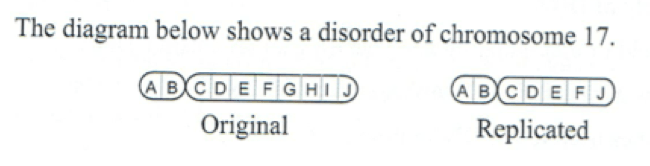

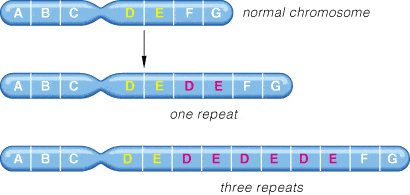


Notice the abnormal 23rd chromosome. This individual has an extra X chromosome. What type of mutation is this?
Translocation
Nondisjunction
Dublication
Inversion
Deletion
ATTGAGCC - Mutated
The example above is an example of a
T-G-A-C-C-A
T-G-A-G-C-A
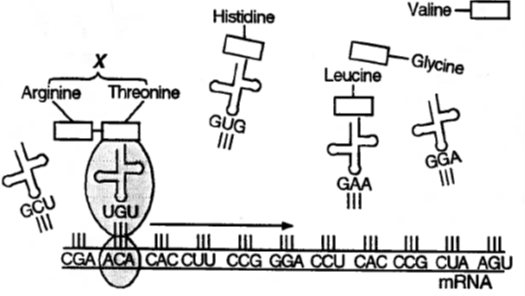
The addition, removal, or replacement of a single nucleotide nitrogen base
Cell Mutation
Chromosome Mutation
Point Mutation
Other Outcome
A change in the DNA sequence that doesn't change protein made.
Nonsense
Silent
Missense
Substitution
A change in the DNA sequence that results in a premature stop codon
Nonsense
Silent
Missense
Substitution
A particular DNA sequence is made up of 46 codons, if a frameshift mutation were to occur at the 12th codon how many codons would be affected?
35
all of them
just the 12th codon
none of them this is a silent mutation
Identify the outcome of the following mutation:
Normal gene - UUU ACA AAG GCU UAG
Mutated Gene - UUU ACA UAG GCU UAG
silent Mutation
missense mutation
nonsense mutation
Identify the type of mutation that occurred and the outcome of it:
Normal Gene - CAU AUC GUA UUU UAA
Mutated Gene - CAA UAU CGU AUU UUAA
Substitution
Insertion
Deletion
Silent
Missense
Identify the type of mutation that occurred and the outcome of the mutation:
Normal Gene - TAC TTT GTC AAA
Mutated Gene - TAC TTC GTC AAA
Substitution
Deletion
Missense mutation-the codon TTT has a mistake in it
Silent mutation- the second codon still codes for the amino acid PHE after the mutation. The protein is not affected
Silent mutation- the second codon still codes for the amino acid LYS after the mutation. The protein is not affected
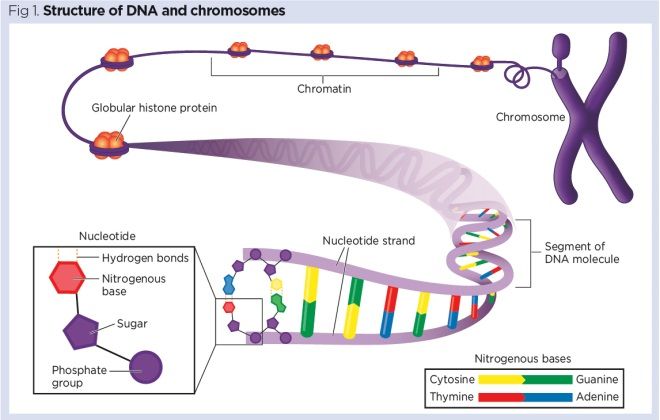
The portion or segment of the DNA strand that codes for a particular protein is called a _____________________.
gene
chromosome
codon
anticodon
Which statement best defines a mutation?
a physical trait that negatively impacts the organism
an adaptive trait that allows the individual to be better fit for survival
a change in the order, number, or type of bases in the genetic code
an identical copy of the original DNA strand
Mutations can be beneficial because they increase genetic _____________________ and can make the individual and species more likely to survive.
diseases
complications
disorders
diversity
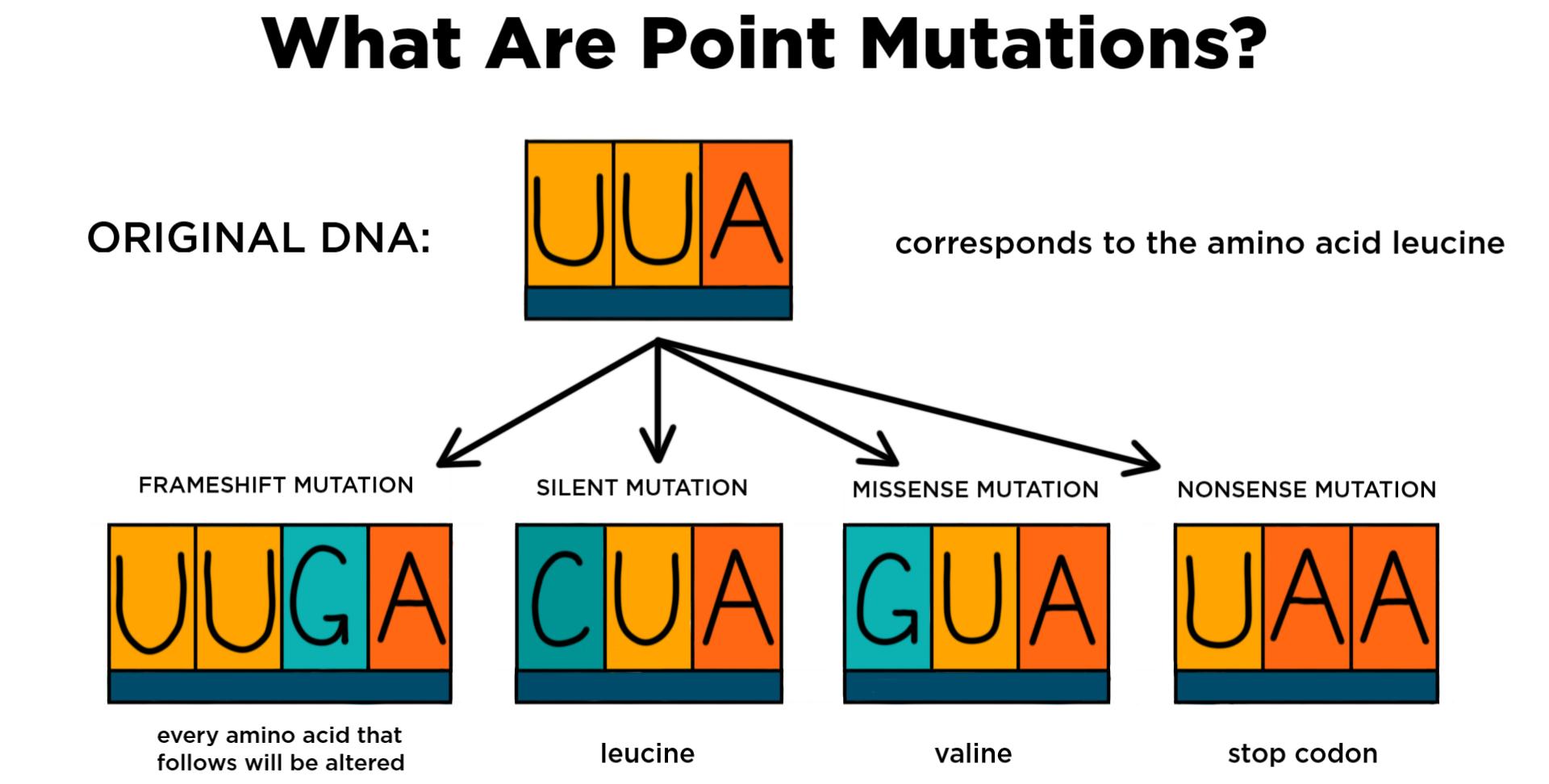
Mutations that change the amino acid specified by the codon, affecting the amino acid sequence, are called:
nonsense mutations
missense mutations
silent mutations
all of the above

