
 Worksheets
Brain and spine review
Total questions: 35
Worksheet time: 18mins
Which of the following is not one of the brain areas?
cerebellum
brainstem
cerebrum
ventricles
diencephalon
Interpretation of sensory input, initiating voluntary muscular movements, stores memory, integrates information for reasoning, intelligence and personality are a function of this brain area....
brainstem
cerebrum
crebellum
medulla
Cutaneous senses, visual area, auditory area, taste area and smell area are this type of area:
sensory areas
motor areas
association areas
voluntary areas
Sensory impulses from the right side of the body are interpreted by centers in the left cerebral hemisphere.
unilateral chiasm
Criss crossing
centralization
cross over
These areas are responsible for the complex processing of sensations
initiating
continuous
divergence
association

Byron had a stroke in his brain that damaged this part which caused him to speak random words.
Broca's
Wernicke's
Thalamus
Midbrain

The primary motor area lies ________________ to the central sulcus
anterior
posterior
within
under
Sarah Scott was incapable of speaking even though she knew what she wanted to say. Her stroke damaged this brain area
Diencephalon
Wernicke's
Pons
Broca's
The left hemisphere focuses on logical, analytical and orderly functions. This describes theory of
hemisphere dominance
cerebrum separation
multiple personalities
compartmentalization
This structure connects the two cerebral hemispheres
hypothalamus
cerebellum elastic
pituitary fibers
corpus callosum
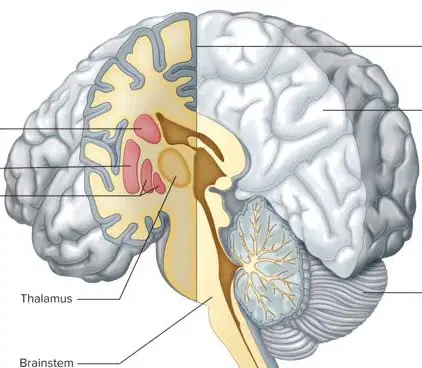
Masses of gray matter located deep within the cerebral hemispheres that relay impulses from the motor cortex to the thalamus
pineal gland
thalamus
basal nuclei
nuclear sulci
A series of connected cavities within the cerebral hemispheres and brainstem and are continuous with the spinal cord, filled with cerbrospinal fluid.
ventricles
peduncles
meninges
gyri
Ependymal cells line the ventricles and secrete
blood
plasma
cerebrospinal fluid
mucous
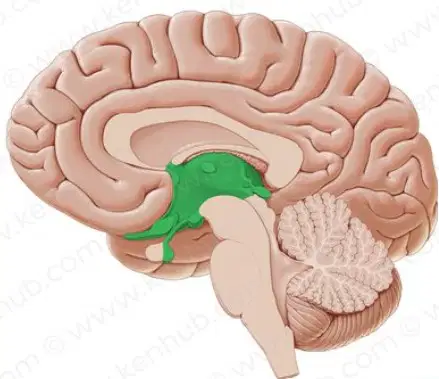
The thalamus and hypothalamus are the major areas that make up the
brainstem
diencephalon
cerebral hemispheres
crebellum
This brain structure sorts and directs signals to and from the cerebrum. It also produces awareness of the sensations of pain, touch and temperature.
Thalamus
Occipital lobe
Medulla
hippocampus
This brain structure maintains homeostasis by producing several hormones and regulating many visceral activities.
cerebrum
Pons
thalamus
hypothalamus
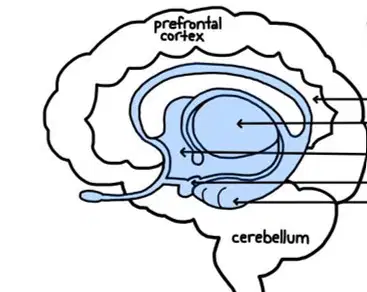
This broad system consists of parts of the cerebral cortex, thalamus, hypothalamus and basal nuclei. It controls emotional experience and expression of fear, anger, pleasure and sorrow.
Reticular system
Limbic system
Brainstem
Memory system
The brainstem controls essential bodily functions. This part of the brainstem contains centers that help regulate the rate and depth of breathing.
Midbrain
Medulla
Pons
Cerebellum
The medulla oblongata controls all of these functions, except
digestion
cardiovascular
coughing
vomiting
swallowing
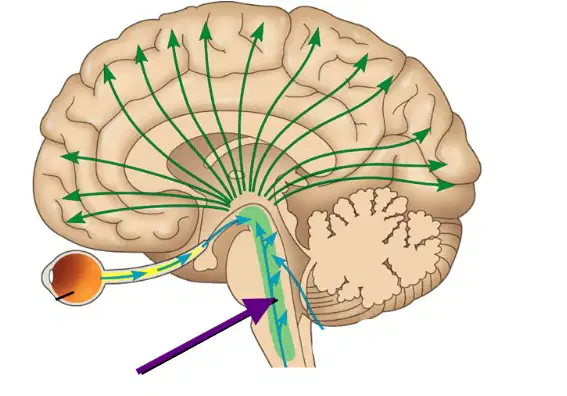
This broad area's activity controls sleep and wakefulness.
limbic system
reticular formation
diencephalon
cerebellum
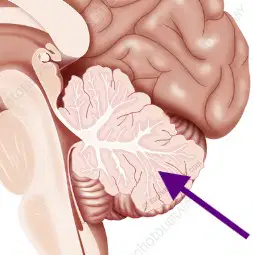
This muscle coordinating area of the brain contains a layer of gray matter surround a branching white inner layer called arbor vitae.
basal nuclei
brainstem
cerebrum
cerebellum
The peripheral nervous system consists of spinal nerves and
cranial nerves
appendage nerves
cardiac nerves
central nerves
The branch of the nervous system responsible for control of the bodily functions not consciously directed, such as breathing, heartbeat, and digestive processes
somatic
sensory
brain
autonomic
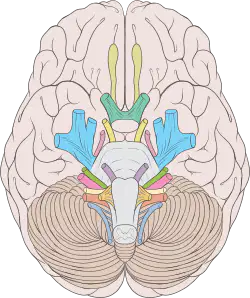
How many pairs cranial nerves are there?
8
12
31
20
Looking closely at the functions of the cranial nerves, you will notice that they mostly control parts found where
legs
below clavicles
arms
above shoulders
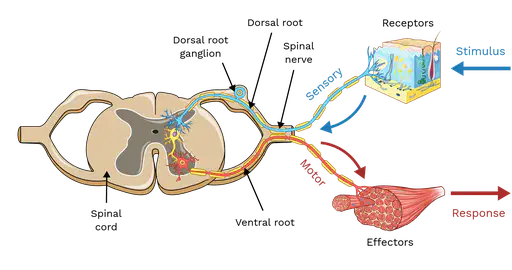
Each spinal nerve arises from two roots: a sensory dorsal root and a motor ___________ root.
ventral
back
double
bottom

A ventral root and dorsal root unite to form a
plexus
spinal nerve
large axon
nerve buncle
Spinal nerves that exit the cervical, lumbar and sacral regions form many complex branches are called
roots
branches
plexuses
routes
The two branches of the autonomic system are (choose two)
sympathetic
happy
parasympathetic
depressed
stimulated
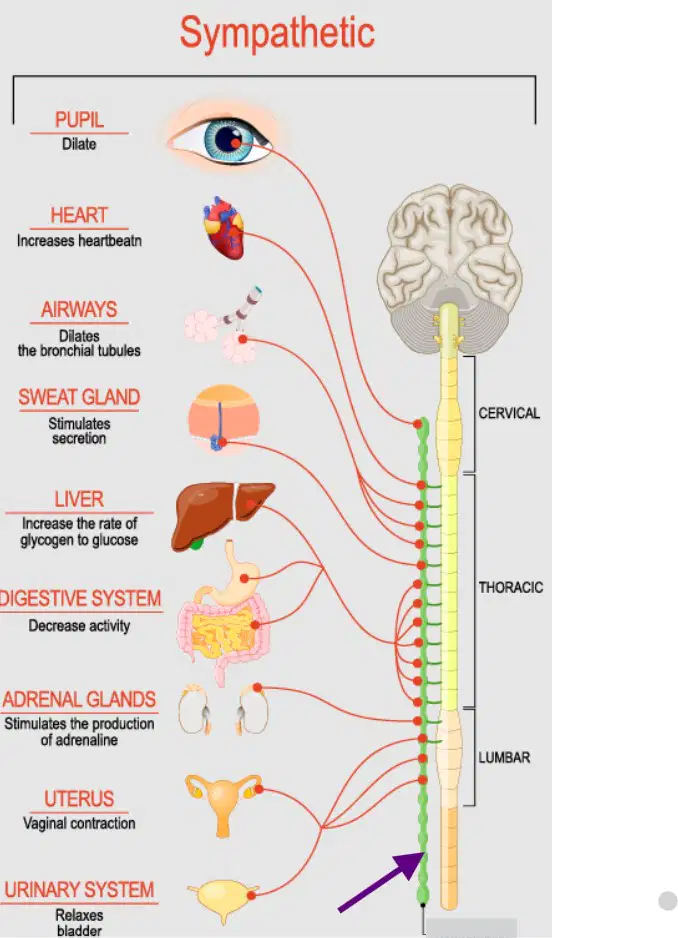
The sympathetic nervous system fibers exit mostly the thoracic region and enter this collection of cell bodies
somatic muscles
organs
spinal cord
paravertebral ganglia
The sympathetic nervous system primarily is responsible for
relaxing
digestion
sleeping
stimulation
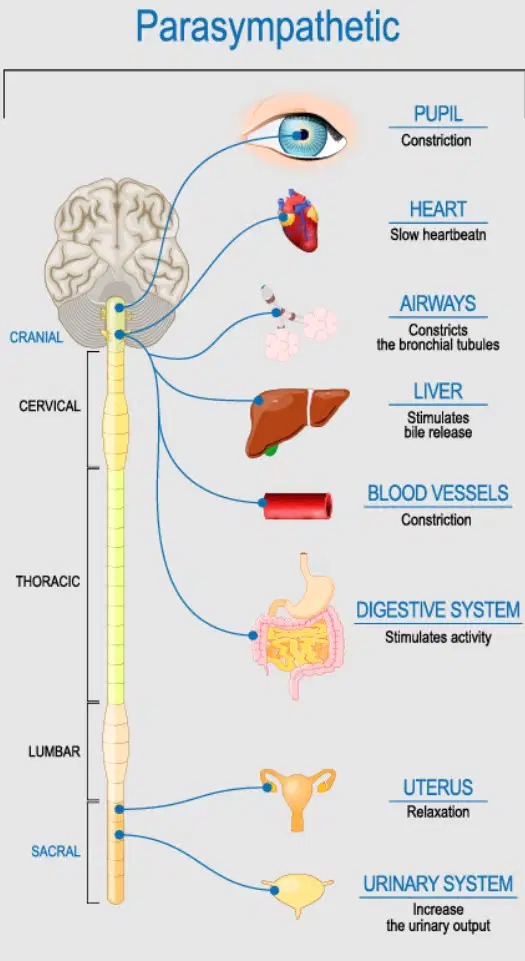
Where do the nerves of the parasympathetic nervous system exit the CNS? Choose two.
cervical
brainstem
sacrum
thoracic
If the function of the parasympathetic nervous system is to rest and digest, what will happen to the activity of the stomach and intestines when these nerves are activated?
increase digestion
stop digestion
reverse the food flow
prepare you for sports
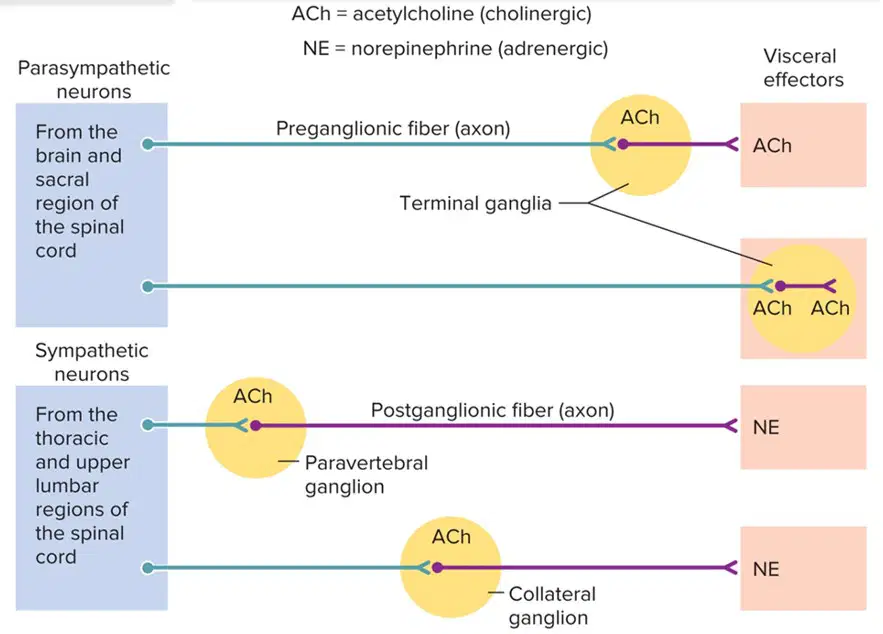
Which of the autonomic nervous systems uses only ACh?
parasympathetic
sympathetic
somatic
sensory
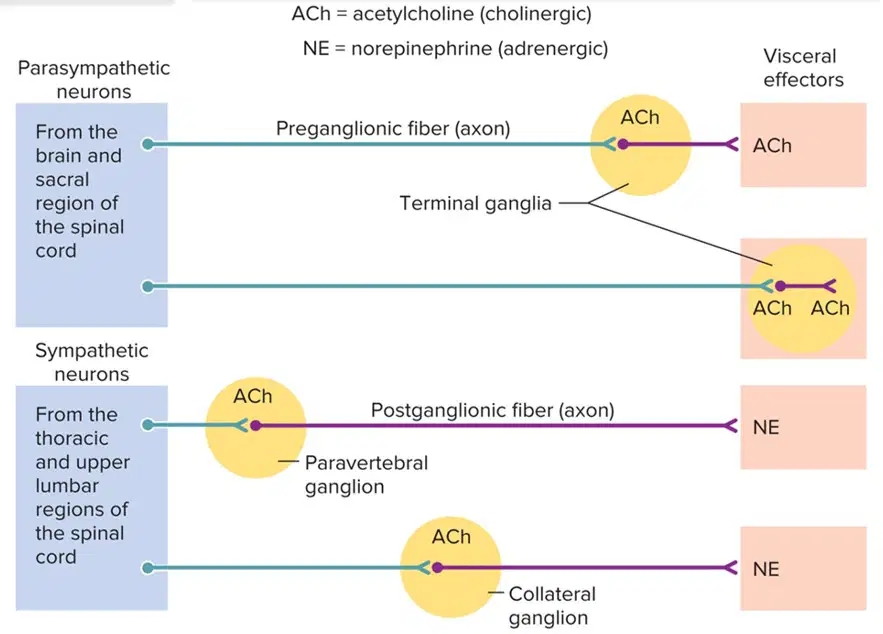
Which autonomic nervous system has shorter preganglionic fibers?
sympathetic
parasympathetic

