
 Worksheets
Biology grade 9
Total questions: 79
Worksheet time: 1hrs 7mins


Hypotonic solutions
make cells shrink
make cells swell
Some celery sticks were placed in pure water. What type of solution are they in? What will happen to the celery sticks?
hypotonic, the cells will swell
hypertonic, the cells will shrink
Some celery sticks were placed in salt water. What type of solution are they in? What will happen to the celery sticks?
hypotonic, the cells will swell
hypertonic, the cells will shrink


Find the volume of the skateboard ramp shown.
80 cm³
160 cm3
42 cm3
40 cm³

55 yd3
121 yd3
22 yd3
330 yd3

Find the surface area of the rectangular prism.
680 cm2
278 cm2
556 cm2
340 cm2

Find the surface area of the rectangular prism.
108 in²
144 in²
110 in²
145 in²
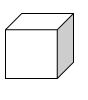
How many faces are on a cube?
3
4
6
5

Find the surface area of this cube.
84 cm2
420 cm2
343 cm2
294 cm2
What is surface area?
The measure of the amount of space inside of a solid figure
The sum of all the areas of the sides of an object
What is volume?
The measure of the amount of space inside of an object
The sum of all the areas of the sides of an object
What units do we use when calculating surface area?
Units
Square untis
Cubic units
What units do we use when calculating volume?
Units
Square units
Cubic units
What are the functions of the roots? (Select two answers)
Absorbing Water and Minerals
Attracting Insects
Anchoring the Plant
Performing Photosynthesis
Making Nectar

What is the cell on the right of this image?
A xylem cell
A guard cell
A palisade cell
A root hair cell
Where does water enter the plant?
The stem
The roots
The leaves
The flower
What adaptations do roots have that help them absorb water and minerals?
They have a high surface area and lots of mitochondria
They are covered in water attracting chemicals
They have a low surface area with very few mitochondria
They have no chloroplasts
What does the Xylem transport?
Water and Minerals
Glucose
Blood
Chlorophyll
What does the Phloem transport?
Water and Minerals
Glucose
Blood
Chlorophyll
In a plant, water is transported from the roots to the...
Flowers
Seeds
Leaves
Phloem

Select the correct term for the following definition:
"The water transport system in plants."
Villi
Bronchi
Bolus
Xylem

Recall the main function of a xylem cell.
To transport nutrients (mainly sucrose) to different parts of a plant.
To make energy for the plant via photosynthesis.
To transport carbon dioxide to the leaves for photosynthessis.
To transport water to different parts of plant.

Recall what is dissolved in the water in the xylem.
Glucose
Amino acids
Mineral ions
Starch

Recall what the pathway of water from roots to leaves is called.
Respiration
Translocation
Transpiration stream
Evaporation
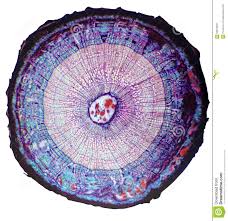
Recall what substance is used to thicken and strengthen xylem walls in woody plants.
Protein
Mineral ions
Lignin
Glucose

Select the correct term for the following definition:
"The nutrient transport system in plants."
Enzyme
Guard cells
Phloem
Proteins
Select which of the following statements are true for phloem.
Bi-directional movement (up and down stem).
Elongated, tubular shape with thin walled sieve tubes.
Transportation of feed and nutrients.
Occupy the centre of the vascular bundle.
Water and mineral transport from roots to aerial parts of the plant.
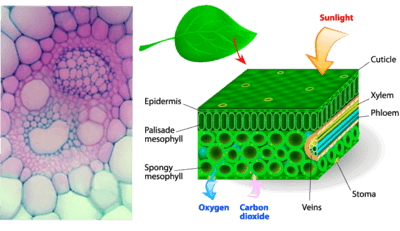
Recall that the movement of food in the phloem is called.
Translocation
Transpiration stream
Evaporation
Respiration
What are the functions of the roots? (Select two answers)
Absorbing Water and Minerals
Attracting Insects
Anchoring the Plant
Performing Photosynthesis
Making Nectar
What is water used for in the leaves of the plant?
Drinking
Respiration
Photosynthesis
Transport
When photosynthesis takes place during the day, stomata will...
open
close
static
hot
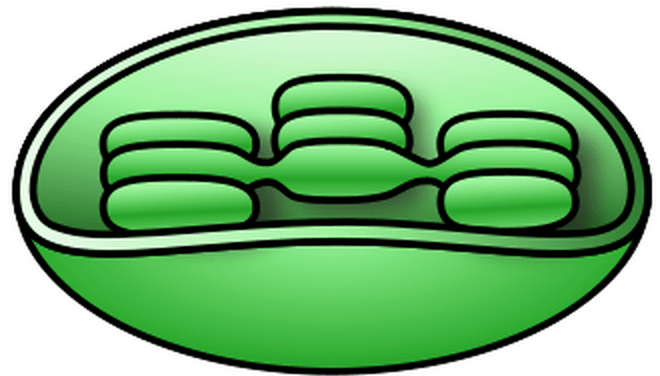
cell membrane
Where do plants get the energy for photosynthesis to take place?
nutrients in the soil
the sun
chlorophyll
bee pollination

The openings that are found in the leaves of plants are called:
Stomata
Chlorophyll
Xylem
Chloroplast
The process of photosynthesis takes place in the:
Leaves of the Plant.
Stem of the plant.
Roots of the plant.
All of the above.
Photosynthesis uses sunlight to make sugar from water and _______________.
carbon monoxide
oxygen
carbon dioxide
sodium bicarbonate
More water is lost from which part of the plant?
upper surface of leaf
flowers
stem
lower surface of leaf
Mineral ions move from the soil into the roots by the process of ?
osmosis
diffusion
active transport
none of the above
In spring season which part of the potato plant acts as a source?
leaves
roots
stomata
tubers
rate of transpiration decreases when .....
light intensity increases
humidity increases
wind speed increases
temperature increases
Xylem is ...............tissue and phloem is ...............tissue.
dead, live
live, dead
live , live
dead , dead

How does water move from the soil into the root hair cell and reach the xylem vessels?
diffusion
osmosis
active transport
none of the above
Movement of substances is one way in ..............and two way in the ...................
xylem , phloem
phloem, xylem
stem, root

water leaves the plant by ....
the stomata
the epidermis
the palisade cells
the spongy mesophyll

Transpiration is
the movement of water through a plant from the roots up the stem
the loss of water from the leaves of a plant by the process of evaporation
the flow of water into plant roots by osmosis from the soil
the process of minerals and sugars moving through plant veins

What do the guard cells do?
Control active transport
control nutrient moving into the cell
Controls loss of water through the leaf
The equation for photosynthesis is
oxygen + water --> glucose + carbon dioxide
oxygen + glucose --> carbon dioxide + water
carbon dioxide + water --> glucose + oxygen
carbon dioxide + glucose --> oxygen + water
An increase in wind or temperature will ________________ transpiration
increase
decrease
not affect
stop
The inorganic nutrient that is involved in the opening and closing of stomata
Iron
Phosphorus
Potassium
Nitrogen
What is the name of the part of the root that allows water and minerals enter?
root hairs
epidermis
phloem
xylem
This is the definition for which word: The movement of particles down a concentration gradient (from a high concentration to a low concentration)
Osmosis
Diffusion
Active transport
Transpiration
Why is the evaporation of water from leaves important?
It cools leaves and helps move water up the plant.
It helps the plant to respire
It makes the plant wilt
Plant transports food made in the leaves to __________.
roots
flowers
stem
all of the above
True or False
You need a sharp pencil for Biology drawings?
True
False
True or False
You should make your drawing as large as possible?
True
False
True or False?
You can use a pen (as long as it's a black ball point pen)
True
False
True or False?
When labelling the diagram you should use arrow without arrow heads to show the points of interest
True
False
True or False?
You should draw a clear, continuous outline for what you are drawing
True
False
True or False?
You should not shade your diagram, but it is okay to 'stipple' (use small dots to make it look like it's shaded)
True
False
True or False?
Sketching the lines is allowed
True
False
True or False?
The lines from your labels only need to point at the general are of the feature
True
False
True or False?
You should use CAPITALS to label your diagram
True
False
True or False
You should make your drawing as large as possible?
True
False

Identify and state the six mistakes made with this scientific drawing below
What is biology?
The study of chemicals
The study of living things
The study of energy
The study of space
Which is part of the cell theory
All living things are made of cells
Cells are the basic unit of life
Cells come from pre-existing cells
All of the above
Which of the following should you not do when completing a scientific drawing?
Use pencil
Add labels on horizontal lines
Add shading for detail
Include magnification
True or false: when drawing plants you add colour.
true
false

