wayground logo

Free Printable Worksheets

Font size

S
M
L
XL
Worksheets

CW Feb 1st: Absolute and Relative Dating

Total questions: 60

Worksheet time: 2hrs 49mins

Name
Class
Date
1.

States that younger rocks lie above older rocks if the layers have not been disturbed

a)

superposition

b)

cross-cutting

c)

unconformity

d)

uniformitarianism

2.

What is the law of superposition?

a)

The age of sedimentary rock not found in the original layers.

b)

Metamorphic rock is younger than the nearby igneous rock.

c)

Sedimentary rock in it's original position is older than layers above it.

d)

Metamorphic rock is older because it was deposited to nearby sedimentary rock.

3.

Analyze the seashell found in the white layer. Which statement is true of the rock layer that contains this fossil?

a)

It could also contain a fossil from the bottom layer.

b)

It is older than the layers below it.

c)

It is younger than the layers above it.

d)

It is older than the layers above it.

4.

Which rock layer in the diagram seems to be the oldest?

a)

F

b)

B

c)

E

d)

A

5.

According to the law of superposition, which layer is the youngest?

a)

F

b)

B

c)

E

d)

A

6.

Which of the following is the oldest?

a)

Layer L

b)

Intrusion H

c)

Intrusion D

d)

Layer E

7.

How does sedimentary rock usually form?

a)

Vertically

b)

Folding

c)

Diagonally

d)

Horizontally

8.

Layer B on side #1 (left) is a match to which layer on side #2 (right)?

a)

z

b)

y

c)

w

d)

there is no match

9.

Is intrusion V older or younger than layer W?

a)

younger

b)

older

10.

What is the correct order of the rock layers from oldest to youngest?

a)

B, C, D, E, A

b)

E, D, C, B, A

c)

A, B, C, D, E

d)

B, C, D, A, E

11.

What is the correct order of the rock layers from oldest to youngest?

a)

F, E, C, B, A, D

b)

F, E, D, C, B, A

c)

A, B, C, D, E, F

d)

D, F, E, C, B, A

12.

Layer D on site #1 (left) is a match to which layer on site #2 (right)?

a)

z

b)

y

c)

w

d)

there is not a match

13.

Length of time for half the atoms of an isotope to decay

a)

Isotope

b)

Half-Life

c)

Radiometric Dating

d)

Absolute Dating

14.
According to the law of __________, in horizontal sedimentary rock layers the oldest layer is at the bottom and the youngest layer is at the top. 
a)
Superposition
b)
Index Fossil
c)
Alfred Wegener
d)
Geologic Records
15.
The age of a rock compared to the ages of other rocks is the rock's
a)
absolute age
b)
geologic age
c)
sedimentary age
d)
relative age
16.

What is the last event to happen?

a)

Deposition of Breccia

b)

Igneous Intrusion

c)

Faulting

d)

Deposition of Limestone

17.
How does absolute age differ from relative age?
a)
only absolute dating indicates which rock is older than another
b)
only absolute dating finds the age in years
c)
only relative dating finds the age in years
18.
How old is the Earth?
a)
4.6 billion years
b)
1.4 billion years
c)
4.6 million years
d)
6000 years
19.

Uses radioactive elements near the fossils to determine the actual age of the fossils.

a)

Relative Dating

b)

Absolute Dating

20.

Above what layer is there an unconformity?

a)

H

b)

M

c)

R

d)

F

21.
A is older than layer C
a)
TRUE
b)
FALSE
22.
The length of time required for half of the radioactive atoms in a sample to decay is its...
a)
era
b)
age
c)
half-life
d)
eon
23.
Radiometric dating is possible because the rates of decay of radioactive isotopes _____.
a)
change over time
b)
change from place to place
c)
are constant
d)
vary widely
24.
If the half-life of a radioactive group of atoms is 100 years, then how old is the rock if there have been two half-lives?
a)
25 years
b)
200 years
c)
400 years
d)
800 years
25.
The original element that undergoes radioactive decay is known as the...
a)
daughter element
b)
half-life
c)
parent element
d)
carbon-14
26.
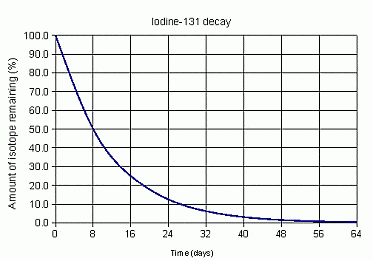
What is the half-life of iodine-131?
a)
32 days
b)
8 days
c)
16 days
d)
24 days
27.

The % of the parent isotope remaining after 2 Half Lives.

a)

50%

b)

25%

c)

12.5%

d)

6.25%

28.
An element that has broken down and released particles and energy is said to be _______________.
a)
radioactive
b)
subatomic
29.

The element that is the product of radioactive decay is known as the...

a)

daughter element

b)

half-life

c)

parent element

d)

carbon-14

30.

If the half-life of a radioactive group of atoms is 300 years, then how old is the rock if there have been three half-lives?

a)

37.5 years

b)

100 years

c)

600 years

d)

900 years

31.
What percent of carbon-14 would be left after 11,460 years? (2 half lives)
a)
100%
b)
75%
c)
50%
d)
25%
32.
According to the law of superposition, which layer is the youngest?
a)
A
b)
B
c)
C
33.
A break in the geologic record that is made when rock layers are eroded over a long period of time
a)
Law of Superposition
b)
Law of Crosscutting
c)
Relative Dating
d)
Unconformity
34.

Use page 7 of the reference table and use the metamorphic rock chart. What type of Metamorphic Rock would form at location A?

a)

Marble

b)

Slate

c)

Quartzite

d)

Sandstone

35.

What is the most recent event to happen?

a)

A

b)

B

c)

C

d)

D

36.
You find a rock sample with radioactive atoms present.  If 25% of the original radioactive atoms were present, how many half-lives has the rock been around for? (Hint, at Half-Life = 0, you start with 100%)
a)
zero
b)
1
c)
2
d)
3
37.
You find a rock sample with radioactive atoms present.  If 12.5% of the original radioactive atoms were present, how many half-lives has the rock been around for? (Hint, at Half-Life = 0, you start with 100%)
a)
zero
b)
1
c)
2
d)
3
38.

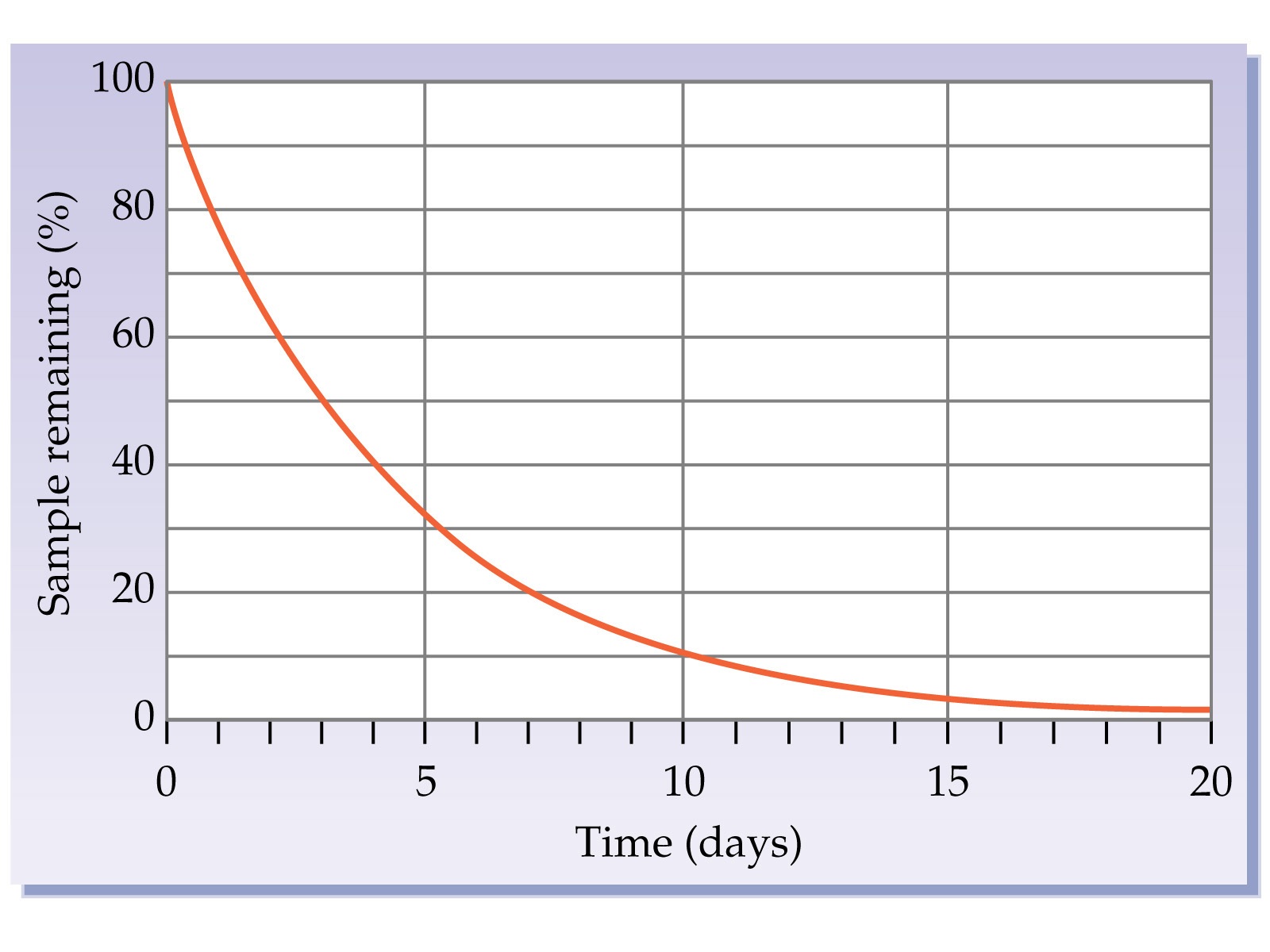
What is the Half Life of this isotope?

a)

3 days

b)

5 days

c)

8 days

d)

10 days

39.
How old do Paleontologists believe the Earth is?
a)
2015 years old
b)
3.6 billion years old
c)
4.6 billion years old
d)
4.6 million years old
40.

Which radioactive isotope (version of an element) is most often used when determining the age of fossil bones found from the last ice age?

a)

Carbon-14

b)

Potassium-40

c)

Uranium-238

d)

Rubidium-87

41.
One similarity between uranium-238 and carbon-14 is that both
a)
decay at predictable rates
b)
Have the same half-life
c)
Are normally found in large quantities in living matter
d)
Are found in granite
42.
Relative dating of rock layers tells us that the deeper we dig, _______.
a)
the younger the rocks get
b)
the smellier the rocks get
c)
the harder the rocks get
d)
the older the rocks get
43.

How many grams of Carbon-14 will remain after 17,100 years- C-14 has a half life 5,730 so 17,100 is about 3 half lives?

a)

32 g

b)

16 g

c)

8 g

d)

4 g

44.

What percentage of Rubidium-87 will remain after 4 half-lives?

a)

25%

b)

12.5%

c)

6.25%

d)

3.125%

45.

What percent of carbon-14 would be left after 5700 years?

a)

100%

b)

75%

c)

50%

d)

25%

46.
gaps in rock layers caused by erosion are called
a)
law of superposition
b)
unconformities
c)
uniformitarianism
d)
relative dating
47.
How many of the original atoms of a decaying isotope remain unchanged after three half-lives?
a)
three-halves
b)
three-quarters
c)
one-quarter
d)
one-eighth
48.
Why are isotopes with short half-lives not useful for dating very old rocks?
a)
because not enough of the parent isotope remains to measure accurately
b)
because not enough of the daughter product has formed to be detectable
c)
because neither the parent isotope nor the daughter product will be detectable
d)
because very old rocks would never have contained these isotopes
49.
This rock diagram has a line running through with arrows pointing in the direction of rock movement.  What does the line represent?
a)
A fold
b)
A fault
c)
A tilt
d)
An intrusion
50.

Which principle states that these sedimentary rock layers were originally deposited as horizontal sediment layers?

a)

Superposition

b)

Original Horizontality

c)

Cross-cutting

d)

Contact Metamorphism

51.

Which principle states that the oldest sedimentary layers are deposited first, and should be found closest to the bottom?

a)

Superposition

b)

Original Horizontality

c)

Cross-cutting

d)

Contact Metamorphism

52.

Which fossil is considered an index fossil?

a)

1

b)

2

c)

3

d)

4

53.

In order to be considered an index fossil, the organism must have existed...

a)

over a large area in a long period of time

b)

over a large area in a short amount of time

c)

over a small area quickly

d)

over a small area in a long period of time

54.

Which rock layer is the youngest?

a)

A

b)

B

c)

C

d)

D

55.

If a 300 gram rock of uranium goes through 3 half lives, how much material will be left?

(a)  
56.
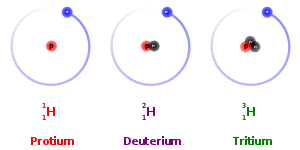
Different isotopes have...
a)
different masses
b)
different atomic numbers
c)
different electrons
d)
different protons
57.

Which radioactive isotope should be utilized to date a mummy?

a)

Carbon-14

b)

Nitrogen-14

c)

Potassium-40

d)

Uranium-238

58.

Match the radioactive isotope to its decay product.

a)

14C

1.

14N

b)

40K

2.

40Ca

c)

238U

3.

206Pb

d)

87Rb

4.

87Sr

59.

Every half-life the % of a radioactive isotope is cut in ​ ​ (a)  

Choose from the below words
half
quarters
sixths
pieces
60.

Which radioactive isotope should be utilized to date a rock from billions of years ago?

a)

Carbon-14

b)

Nitrogen-14

c)

Calcium-40

d)

Uranium-238