wayground logo

Free Printable Worksheets

Font size

S
M
L
XL
Worksheets

Conflict and Cans (CH 4) Test Review

Total questions: 106

Worksheet time: 4hrs 46mins
Name
Class
Date
1.
What is the atomic number?
a)
the number of protons
b)
the number of protons and neutrons
c)
the number of neutrons
d)
the number of protons and electrons
2.
What is the mass number defined as?
a)
the number of protons
b)
the number of protons and neutrons
c)
the number of neutrons
d)
the number of protons and electrons
3.
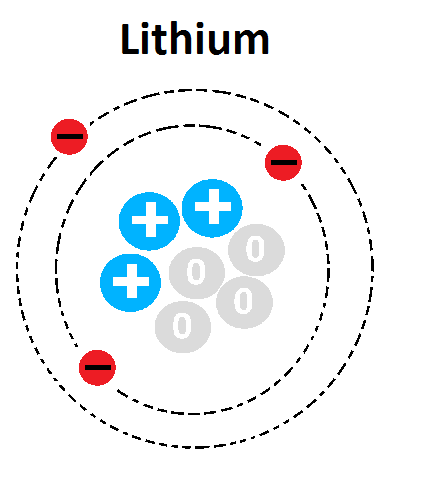
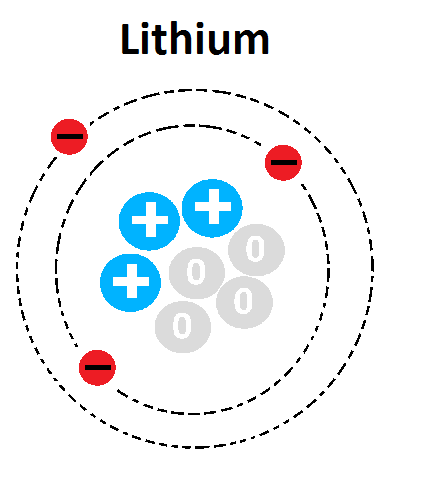
What is the atomic number of this atom?
a)
1
b)
3
c)
4
d)
7
4.

What is the mass number of this atom?

a)

1

b)

3

c)

4

d)

7

5.

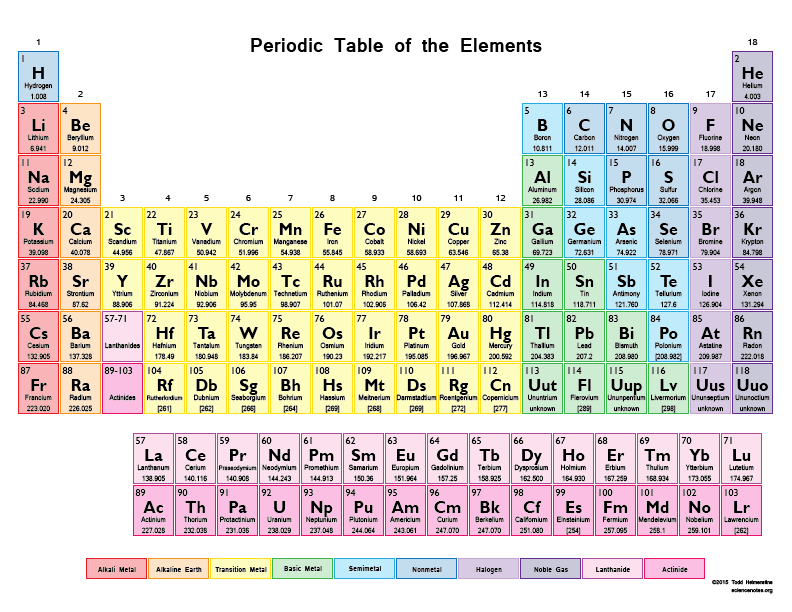
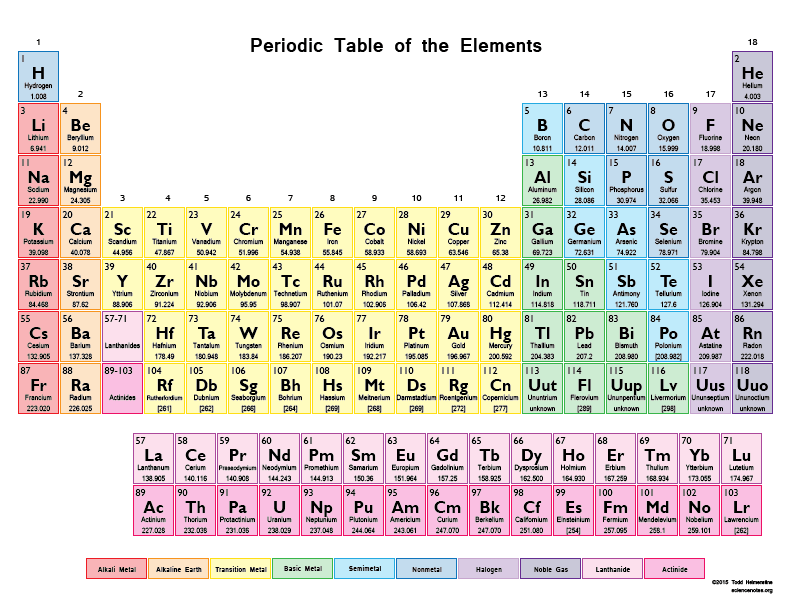
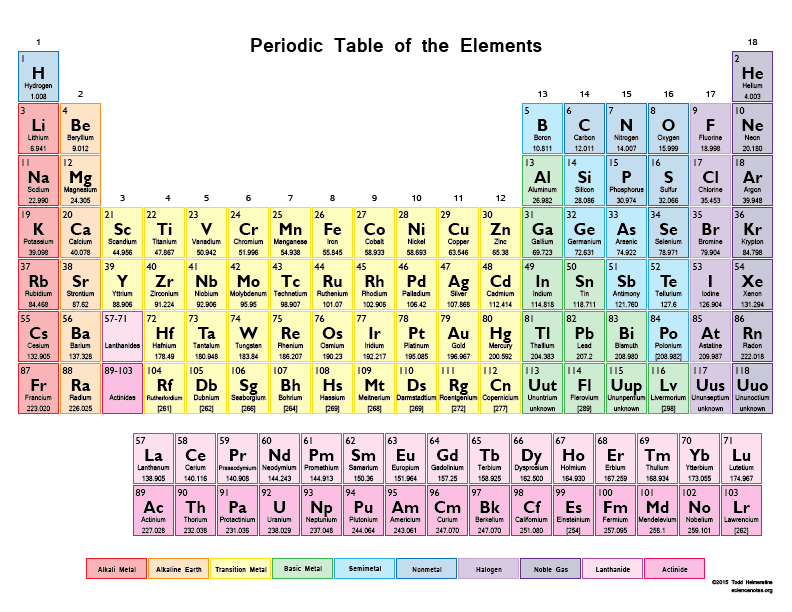
What is the atomic number of Barium, Ba? (enlarge the periodic table)

a)

20

b)

38

c)

56

d)

88

6.

What is the atomic number of Nickel? (enlarge the periodic table)

a)

110

b)

28

c)

46

d)

78

7.

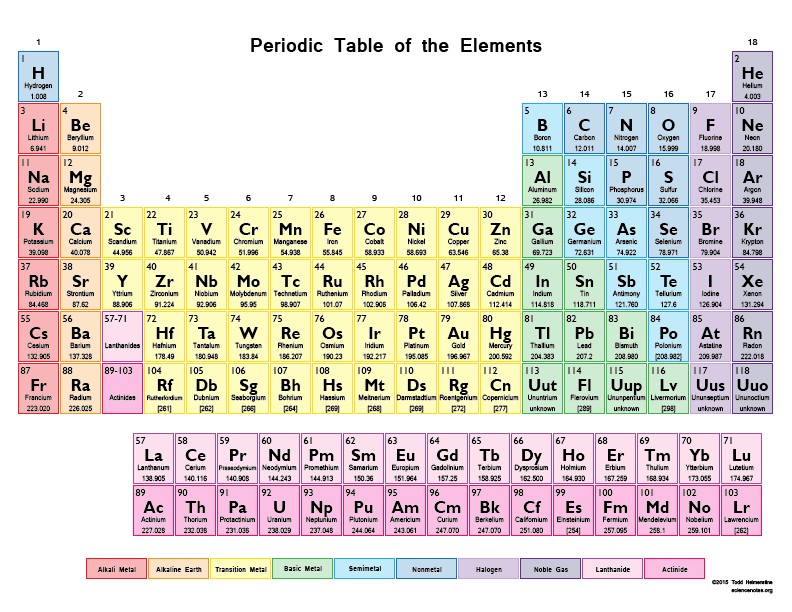
How many protons are in a sodium atom, Na? (tap to enlarge the periodic table)

a)

Sodium has 1 proton.

b)

Sodium has 3 protons.

c)

Sodium has 11 protons

8.

An element has the mass number 12 and atomic number 6. The number of neutrons in it is:

a)

6

b)

10

c)

4

d)

8

9.

Atoms of the same element which have a different number of neutrons are called _________________.

a)

ions

b)

isotopes

c)

quarks

d)

molecules

10.

Which subatomic particle has a negative charge in the atom?

a)

proton

b)

neutron

c)

electron

d)

quark

11.

How many neutrons does C-14 [atomic #6] contain? (tap to enlarge the image)

a)

6

b)

7

c)

14

d)

8

12.

How many neutrons does an atom of the isotope Neon-22 have? (tap to enlarge the image)

a)

12

b)

10

c)

22

d)

20

13.

How many neutrons does an atom of Nitrogen-13 have? (tap to enlarge the image)

a)

6

b)

7

c)

13

d)

5

14.

If an atom has 10 electrons, how many protons does it have?

a)

0

b)

1

c)

10

d)

5

15.

How many electrons are in an atom with an atomic number of 50?

a)

5

b)

8

c)

50

d)

2

16.
Oxygen has 8 protons. What is oxygen's atomic number?
a)
16
b)
8
c)
15.999
d)
0
17.
A neutral atom of Carbon-13 has ________ electrons and _________ neutrons
a)
13, 13
b)
6, 7
c)
7, 7
d)
6, 6
18.
Isotopes are atoms of the same element that have the same number of __________ but different number of __________ . Therefore, isotopes of the same element have different masses. 
a)
protons, neutrons
b)
protons, electrons
c)
neutrons, protons
d)
electrons, protons
19.
The  mass of an atom is located  in the ___________ and the volume of an atom is made of the ____________
a)
electron cloud, nucleus
b)
electron cloud, energy levels
c)
nucleus, electron cloud
d)
nucleus, neutrons
20.
A neutral atom of the isotope 2612Mg would consist of
a)
12 protons, 26 neutrons, 26 electrons
b)
26 protons, 12 neutrons, 26 electrons
c)
26 protons, 14 neutrons, 14 electrons
d)
12 protons, 14 neutrons, 12 electrons
21.
How many electrons can the first energy level hold?
a)
1
b)
2
c)
8
d)
0
22.

How many electrons can a d sublevel hold?

a)

14

b)

10

c)

2

d)

6

23.

How many orbitals does an s sublevel have?

a)

1

b)

3

c)

5

d)

7

24.

How many orbitals does a d sublevel have?

a)

1

b)

3

c)

5

d)

7

25.

How many orbitals does an f sublevel have?

a)

1

b)

3

c)

5

d)

7

26.

How many electrons can an d sublevel hold?

a)

5

b)

10

c)

6

d)

2

27.

Electrons fill energy levels and sublevels _____ in energy first.

a)

lower

b)

higher

28.
Which of the following statements is true about the 3s and the 4s sublevels?
a)
These sublevels have the same energy
b)
These sublevels are the same distance from the nucleus
c)
These sublevels hold different amounts of electrons
d)
These sublevels have the same shape
29.

The maximum number of electrons that can fit into the 2nd energy level is

a)

2

b)

8

c)

18

d)

32

30.

Of the following sublevels, which is the highest in energy?

a)

4s

b)

3d

c)

4p

d)

5s

31.

Which orbital does the image represent?

a)

s

b)

p

c)

d

d)

f

32.

What statement is correct for this diagram?

a)

Both arrows in the 2p box should be pointing up

b)

There should only be 1 electron in the first 2p orbital and one in the 2nd 2p orbital

c)

There is nothing incorrect with this diagram

d)

All the arrows should be pointing up.

33.

Which sublevel is filled first?

a)

4s

b)

3d

c)

4p

d)

4f

34.

126C\frac{12}{6}C  What is the 12 represent

a)

mass number (n+p)

b)

proton/atomic number

c)

element symbol

d)

number of neutrons

35.

126C\frac{12}{6}C  What is the 6 represent

a)

mass number (n+p)

b)

proton/atomic number

c)

element symbol

d)

number of neutrons

36.

126C\frac{12}{6}C  What is the C represent

a)

mass number (n+p)

b)

proton/atomic number

c)

element symbol 

d)

number of neutrons

37.
Se
a)
2-
b)
2+
c)
3+
d)
4+
38.
F
a)
1-
b)
1+
c)
3+
d)
2-
39.
K
a)
1+
b)
1-
c)
3+
d)
2-
40.
N
a)
3-
b)
3+
c)
2-
d)
2+
41.
S
a)
2-
b)
2+
c)
3-
d)
4+
42.
C
a)
4+/4-
b)
0
c)
1+
d)
2-
43.
C
a)
4+/4-
b)
0
c)
1+
d)
2-
44.
What group does this element belong to?
a)
Group 1: Alkali metals
b)
Group 18: Noble Gases
c)
Group 2: Alkaline-Earth Metals
d)
Group 17: Halogens
45.
How many valence electrons?
a)
2
b)
3
c)
5
d)
10
46.
What's a valence electron?
a)
electrons in the second energy level
b)
electrons in the outermost energy level
c)
the atomic number
d)
electrons in the first level
47.

On the periodic table, Periods are

a)

Horizontal rows

b)

Vertical columns

48.

On the periodic table, Groups are

a)

Horizontal rows

b)

Vertical columns

49.
What is the name of this element?
a)
Helium
b)
Hydrogen
c)
Argon
d)
Silver
50.
What is the name of this element?
a)
Lithium
b)
Boron
c)
Carbon
d)
Neon
51.
What atom matches this electron configuration?
1s22s22p63s23p64s23d10
a)
Zinc
b)
Copper
c)
Nickel
d)
Germanium
52.
What atom matches this electron configuration?
1s22s22p63s2
a)
Neon
b)
Magnesium
c)
Aluminum
d)
Potassium
53.
What do you start electron configuration with?
a)
1s2
b)
1d10
c)
1f14
d)
1p6
54.
What is the noble gas configuration for beryllium?
a)
[He]1s2
b)
[He]2s2
c)
[Li]2s1
d)
[Li]2s2
55.
What is the noble gas configuration for phosphorus?
a)
[Ar] 3p5
b)
[He] 3s2 3p5
c)
[Ne] 3s2 3p3
d)
[Na] 3s2 3p5
56.
[Ne]3s1 is the noble gas configuration for which element?
a)
sodium
b)
lithium
c)
fluorine
d)
aluminum
57.
[Ne]3s23p1 is the noble gas configuration for which element?
a)
scandium
b)
boron
c)
nitrogen
d)
aluminum
58.
Which of these grouping of elements could have the characteristic of luster (shiny)?
a)
Metal
b)
Nonmetal
c)
metalloids
d)
Both metals and metalloids
59.
Which of these is a property of metals?
a)
It's malleable
b)
It can't conduct electricity
c)
They are used in food
d)
It's very brittle
60.
Brittle
a)
Metal
b)
Nonmetal
61.
Good conductor of heat
a)
Metal
b)
Nonmetal
62.
Which element is a metalloid?
a)
Titanium
b)
Selenium
c)
Potassium
d)
Polonium
63.
Iron is a good conductor, malleable and magnetic. What type of element is Iron? 
a)
Metal
b)
Nonmetal
c)
Metalloid
d)
Pretty
64.
A student is given a sample of an unknown substance. He is asked to determine if it is classified as a metal, a metalloid, or a nonmetal. He discovered that the unknown element conducted some heat and electricity, had a shiny luster, and broke easily. This element is most likely a 
a)
metal
b)
nonmetal
c)
metalloid
d)
cannot be determined
65.
All of the following are properties used to classify elements as metals, non-metals, and metalloids EXCEPT —
a)
texture
b)
conductivity
c)
luster
d)
malleability
66.
Which of the following correctly lists the three main groups of elements from greatest conductivity to least conductivity?
a)
Nonmetals -metalloids-metals
b)
metals-nonmetals-metalloids
c)
metalloids-metals-nonmetals
d)
metals-metalloids-nonmetals
67.
The word “luster” refers to which property of matter?
a)
The ability to conduct electrical or thermal energy
b)
Capable of being drawn out into thin wires
c)
The way a surface appears when it reflects light
d)
Suitable for being shaped by beating or rolling
68.

Which group of the periodic table are alkali metals found in?

a)

Group 1

b)

Group 2

c)

Group 7

d)

Group 8

69.

Which of the followings is the most reactive alkali metal in water?

a)

Lithium

b)

Sodium

c)

Potassium

d)

Hydrogen

70.

...... is released when alkali metal react with water.

a)

Hydrogen

b)

Oxygen

c)

Metahne

d)

Carbon di oxide

71.

Alkali earth metals are found in which group of the periodic table?

a)

Group 1

b)

Group 2

c)

Group 7

d)

group 8

72.

Which of the following is NOT an alkali earth metal?

a)

Be

b)

Mg

c)

Ca

d)

Sn

73.

Which block on this periodic table represents the transition metals?

a)

s block

b)

d block

c)

p block

d)

f block

74.

Which of the following is correct for transition metals?

a)

They can conduct electricity

b)

The cannot conduct electricity

c)

They cannot conduct heat

d)

They can conduct heat

75.

Choose all of the transition metals from the list below

a)

potassium

b)

manganese

c)

copper

d)

beryllium

e)

cobalt

76.

Fe2+ and Fe3+ are both ions of iron. What is different about them?

a)

they have different numbers of protons

b)

they have different numbers of neutrons

c)

they have a different charge

d)

they are different elements

77.

Which of these elements are Halogens?

a)

Fluorine

b)

Helium

c)

Zinc

d)

Bromine

78.

How many electrons do Halogens have in their outer shell?

a)

0

b)

1

c)

6

d)

7

79.

As you move down the group, halogens' reactivity...

a)

increases

b)

decreases

c)

doesn't change

d)

shows no trend.

80.
Which of these is not a noble gas?
a)
Helium
b)
Argon
c)
Nitrogen
d)
Krypton
81.

6.15: Which of these is not a property of noble gases?

a)

Colourless

b)

Odourless

c)

Flammable

d)

Gas at room temperature

82.

The reason that Noble Gases do not react is because

a)

Their outer electron shell is filled

b)

Their inner electron shell is filled

c)

They are able to bond to fill their outer shell

d)

None of the above, Noble Gases are highly reactive

83.

Which atom has the largest atomic radius?

a)

potassium

b)

rubidium

c)

francium

d)

cesium

84.
As you move down the periodic table atoms get bigger.  This is because ____________.
a)
The atoms have more mass.
b)
The atoms have more protons.
c)
The atoms have more energy levels
d)
The atoms have more nuetrons
85.
As you move across the periodic table atoms tend to get smaller because, ______________.
a)
the atoms have more mass.
b)
the atoms have less mass
c)
the atoms have more protons.
d)
the atoms have less electrons.
86.
Order the following in increasing atomic radii: 
Ra, Be, Ca, Rb, H
a)
Ra, Be, Rb, H, Ca
b)
Rb, H, Ca, Be, Ra
c)
Ra, Rb, Ca, Be, H
d)
H, Be, Ca, Rb, Ra
87.
Which one has the largest radius?
a)
Lithium (Li, atomic #3)
b)
Boron (B, atomic #5)
c)
Neon (Ne, atomic #10)
d)
Nitrogen (N, atomic #7)
88.

What is the trend for ionic radius down a group?

a)

increase

b)

decrease

c)

remain constant

89.

Which is larger:

P or P-3 ?

a)

P because it is the neutral atom.

b)

P-3 because it lost 3 electrons.

c)

P-3 because it gained 3 electrons.

d)

They are the same size since they are both P.

90.

Which is the smaller atom: Mg or Mg+2?

a)

Mg because it gains an energy level since it gains 2 electrons.

b)

Mg due to extra electron repulsion created by gaining 2 electrons.

c)

Mg+2 because of extra electron repulsion created by gaining 2 electrons.

d)

Mg+2 because it loses an energy level since it loses 2 electrons.

91.

Electronegativity trends are the same as:

a)

Atomic radius trends

b)

Ionization energy trends

c)

Both of these

d)

None of these

92.

What does electronegativity do as you go across a period?

a)

decrease

b)

no pattern

c)

stay the same

d)

increase

93.

As you move across a period, the outer electrons are ________ to the nucleus, so the nucleus of the atom is ________ to attract electrons in a bond.

a)

closer, more able

b)

closer, less able

c)

further, less able

d)

further, more able

94.

Do noble gases have electronegativity values?

a)

yes

b)

no

95.

Why does electronegativity decrease as you go down a group?

a)

As you go down a group, the outer electrons are further away from the nucleus

b)

As you go down a group, the nucleus is less able to attract electrons in a bond

c)

Both of these

d)

None of these

96.

Which is the correct order of electronegativity from lowest to highest?

a)

Zinc, Nickel, Iron, Scandium

b)

Iron, Nickel, Zinc, Scandium

c)

Scandium, Iron, Nickel, Zinc

d)

Scandium, Iron, Zinc, Nickel

97.
Which of the following sequences corresponds to a correct trend in ionization energy?
a)
Cl > S > P > Al
b)
Sr > Ca > Mg > Be
c)
Rb > K > Na > Li
d)
Rb > Sr > I > Xe
98.
What is ionization energy?
a)
Energy required to remove an electron
b)
Energy needed to split an electron
c)
Energy required to add an electron
99.

Ionization energy __________ as you go down a group.

a)

stays the same

b)

decreases

c)

increases

100.

Ionization energy __________ as you go across a period

a)

stays the same

b)

decreases

c)

increases

101.

Why is there a large jump in ionization energy 1 and 2 for Lithium?

a)

the valence electrons are harder to lose than core electrons

b)

the valence electrons are easier to lose than core electrons

102.

How many sublevels are in this atom?

a)

4

b)

6

c)

12

d)

Impossible to determine

103.

How many electrons are in this atom?

a)

6

b)

12

c)

4

d)

Impossible to determine

104.
This could be the dot diagram of
a)
Mg
b)
Cl
c)
C
d)
O
105.

Which of the following shows a correct Lewis dot structure?

a)
b)
c)
d)
106.

Which of these is correct?

a)
b)
c)