
NEW
Font size
 Worksheets
Hydrology Review #1
Total questions: 48
Worksheet time: 2hrs 36mins

What type of bond is formed when shared electrons are attracted to one atom more than the other?
an ionic bond
a polar covalent bond
a nonpolar covalent bond
a hydrogen bond

The separation of charges, due to unequal sharing of electrons, is called ___
polarity
opposition
antagonism
negativism

Which type of chemical bond involves the sharing of electron pairs between atoms?
an ionic bond
a covalent bond
a hydrogen bond
James Bond

When electrons are evenly shared between two identical atoms, what type of bond forms?
a hydrogen bond
a nonpolar covalent bond
a polar covalent bond
an ionic bond

What type of bond is formed between a positive ion and a negative ion?
an ionic bond
a polar covalent bond
a nonpolar covalent bond
a treasury bond

Because ions interact with water molecules, ionic compounds are generally ___
soluble in water
insoluble in water
nonelectrolytes
radioactive in water
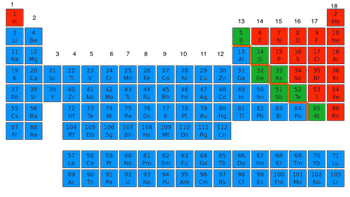
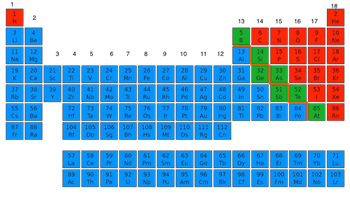
For metals (groups 1-3), its easier to _____ electrons to have a full outer shell.
gain
lose
share
For nonmetals (grousp 5-7), its easier to _____ electrons to have a full outer shell.
gain
lose
share


When salt is dissolved in water, water is the
solvent
solute
solution
reactant

Capillary action is....
adhesion
cohesion
change in matter (heat of fusion)
both adhesion and cohesion

Oil and water don't mix because oil is
polar
nonpolar
an emulsifier
a buffer
Where is the water table located?
at the top of the saturated zone
between layers of impermeable rock
in the unsaturated zone
below layers of clay

Out of all the water on Earth, how much is freshwater?
100%
70%
30%
3%
Groundwater is stored in permeable layers of rock called aquifers. If a well is drilled - what is the correct order of the different layers that it would move through?
saturated zone, unsaturated zone, water table
water table, unsaturated zone, saturated zone
unsaturated zone, water table, saturated zone
saturated zone, water table, unsaturated zone
What does the quantity of groundwater that can be stored depend upon?
It depends upon the porosity of the underground rock.
It depends upon the pH of the groundwater.
It depends upon the underground depth of the storage system.
It depends upon the temperature of the underground rock.

What would cause the water table to lower?
Periods of low precipitation
Low rates of evaporation and transpiration
Increasing amounts of runoff
A heavy rainstorm with a lot of precipitation
Which surface would have the most runoff from it after a rainstorm?


Water is able to flow more easily through the aquifer because its material has a ___________.
low permeability
low porosity
high porosity
high permeability

Which image would have a higher porosity, allowing water to move more quickly through the pore space?
A
B
Gravel tends to have a ...
low porosity & high permeability
low porosity & low permeability
high porosity & high permeability
high porosity & low permeability
Put these samples in order from highest permeability to lowest permeability: clay, gravel, & sand.
sand, clay, gravel
gravel, clay, sand
gravel, sand, clay
clay, sand, gravel
Which of the following is a factor you'd want to consider when locating a drinking well?
porosity & permeability of surrounding Earth materials
location to runoff to avoid pollution
elevation of water table
all of the above!


What is the relationship for the variables given in the image?


What is the relationship for the variables given in the image?

What is the relationship for the variables given in the image?

What is the relationship for the variables given in the image?

What is the relationship for the variables given in the image?

What is the relationship for the variables given in the image?

What is the relationship for the variables given in the image?

What is the relationship for the variables given in the image?

