
 Worksheets
Physical Science Unit 4- Bonding and Reactions
Total questions: 215
Worksheet time: 4hrs 48mins
one carbon (C)
two oxygen (O)
Atoms that gain electrons become
positively charged
neutrally charged
negatively charged
Na1+ F1-
K1+ S2-
Name the following compound: CaCl2
calcium dichloride
calcium chloride
calcium (II) chloride
carbon chloride
None of these.
Name the following compound: Na2S
sodium sulfide
disodium sulfide
sodium sulfur
sodium monosulfide
None of these.
What is the formula for: magnesium sulfide
MgS
Mg2S2
MnS
MgS2
None of these.
What is the formula for: aluminum phosphide
AlP
AlP3
Al3P3
Al3P2
None of these.
Hexaboron monosilicide
B5S
B6S
B6Si
Br6Si2
Br6Si
Iodine pentafluoride
I1P6
I1F5
IF5
IFl5
Dinitrogen trioxide
NO3
N2O3
N4O6
2N3O
P4S5
phosphorus sulfide
quadphosphorus hexasulfide
tetraphosphorus pentasulfur
tetraphosphorus pentasulfide
SeF6
silicon fluoride
selenium fluoride
selenium hexafluoride
selenium heptafluoride
CCl4
Methane
carbon tetrachloride
carbon quadchloride
monocarbon tetrachloride
2
Which is the correct name for the ionic compound, LiCl?
monolithium monochloride
lithium chloride
lithium monochloride
lithium (I) chloride
Which of the following is TRUE about ionic compounds?
They have low melting and boiling points.
They can conduct electricity in the solid state.
They are stronger than covalent bonds.
They are usually formed from 2 metals.
Which of the following is NOT TRUE about covalent compounds?
They have low melting and boiling points.
They are formed from 2 nonmetals.
They can conduct electricity when dissolved in water (aqueous).
What property is describing an ionic compound?
shares electrons
high melting point
weak bonds
made up of nonmetals.

Select all the true statements about the compound shown above.
It is covalent
It will conduct electricity when dissolved in water
It is ionic
It will dissolve in water
It has a low melting point

Which two elements would NOT form an ionic bond?
calcium and lithium
calcium and oxygen
lithium and oxygen
calcium and carbon
A sodium ion has a charge of
-1
-2
+1
+2
True or False: Sodium and Chloride ions have equal but opposite charges
True
False
True or False: An ionic bond forms when atoms of a non-metal give up electrons to atoms of a metal
True
False
An example of a covalent compound is
sodium floride
calcium chloride
carbon dioxide
all of the above
In all covalent bonds, valence electrons are
lost
gained
shared equally
shared
What is the chemical formula for the compound containing one nitrogen atom and two oxygen atoms?
O2N
N2O
NO
NO2
Chemical bonds always involve
ions
protons
metals
electrons
True or False: An oxygen atom has eight valence electrons
True
False
The chemical formula for carbon dioxide is
CO
C2O
CO2
C2O2
Chemical bonds form when atoms
gain protons
combine nuclei
give up neutrons
share or transfer electrons

Nonmetals tend to
gain electrons
lose electrons

Metals tend to
gain electrons
lose electrons
What is the name of the following compound: CS2?
Carbon Sulfide
Monocarbon Sulfide
Monocarbon disulfide
Carbon disulfide
What is the name of the following compound: CO2?
Carbon Dioxide
Monocarbon dioxide
Dicarbon monoxide
Carbon oxide
What is the name of the following compound: NaCl?
Monosodium monochloride
Sodium chlorine
Sodium chloride
Sodium monochloride
What is the chemical formula of the following compound: potassium chloride
PCl
KCl
KCl2
K2Cl
A covalent bond is made of the 2 following kinds of elements:
Metal and metal
Nonmetal and nonmetal
Metalloid and Metalloid
Metal and nonmetal
Ionic compounds are made of the two following kinds of elements:
Metal and metal
Nonmetal and nonmetal
Metalloid and metalloid
Nonmetal and metal
What is the name of the following compound: Ag3PO4?
Silver potassium
Silver phophate
Gold potassium
Gold phosphate
What is the formula for the compound carbon tetrachloride?
CF
CF3
C2F4
CF4
What is the name of the following formula: Li2O?
Lithium oxide
Dilithium monoxide
Lithium monoxide
Lithium oxygen
What is the name of the following chemical compound: SF6?
Sulfur fluoride
Monosulfur hexafluoride
Sulfur hexafluoride
Sulfur fluorine
Al3+ O2-
Na1+ F1-
K1+ S2-
Which of these is NOT a property of most metals?
Good conductor of electricity
Malleable
Low melting point
Ductile

Most SIMPLE covalent molecules are (a) at room temperature
When would you find ionic bonding?
Between metal and non-metal
In metals
Between two or more non-metals
When would you find covalent bonding?
Between metal and non-metal
In metals
Between two or more non-metals

What type of bonds hold together the carbon atoms in diamond?
covalent
ionic
metallic
Ionic substances can conduct electricity only when (a) or dissolved in water

Which bonds hold together the atoms in a molecule of carbon dioxide?
ionic
covalent
metallic
Compounds composed of a ______________ and _____________ like the compound CaCl2 , are ionic compounds.
metal ... metal
nonmetal ... nonmetal
metal ... nonmetal
Which of the following describes covalent bonds?
Bonds form because of opposite charges
electrons are shared to fill outer electron shells
Electrons are transferred between atoms
Covalent bonds are magical
Is the following compound ionic or covalent?
A material that LOSES and GAINS electrons
Ionic
Covalent
What two types of atoms make a covalent bond?
2 Nonmetals
1 Nonmetal and 1 Metal
2 Metals
2 Noble Gases
Which of the following is TRUE about ionic compounds?
They have low melting and boiling points.
They can conduct electricity in the solid state.
They are stronger than covalent bonds.
They are usually formed from 2 metals.

The following properties are all characteristics of ionic compounds EXCEPT
high melting and boiling points
soft
crystal lattice structure
conduct electricity when dissolved in water
To form the nitride ion, the nitrogen atom needs to _____ electrons and will have a ______ charge.
gain 3; 3−
gain 3; −3
lose 5; 5−
lose 5; 5+

What type of bonding does this picture show?
Ionic
Covalent

What type of bonding does this picture show?
Ionic
Covalent


When electrons are lost by one atom and gained by another, so that they both get full outer shells.
Covalent bond
Ionic bond
Pairing
Compound

When atoms share electrons so that they both get a full outer shell.
Covalent bond
Ionic bond
Compound
Pairing

What type of reaction involves the breaking down of a substance into simpler substances?
Single Displacement Reaction
Double Displacement Reaction
Synthesis Reaction
Decomposition Reaction

What type of reaction involves 2 substances combining to form 1 new compound?
Decomposition Reaction
Single Displacement Reaction
Double Displacement Reaction
Synthesis Reaction

What type of reaction involves one element replacing another element in a compound?
Single Displacement Reaction
Double Displacement Reaction
Synthesis Reaction
Decomposition Reaction
What type of reaction involves ions from 2 compounds exchanging places to form 2 completely new compounds?
Single Displacement Reaction
Double Displacement Reaction
Synthesis Reaction
Decomposition Reaction
What type of reaction involves one element replacing another element in a compound?
Single Displacement Reaction
Double Displacement Reaction
Synthesis Reaction
Decomposition Reaction

What are the reactants in the chemical equation pictured?
CH4 and CO2
CH4 and O2
CO2 and H2O
O2 and H2O

What are the products of the chemical reaction pictured?
CH4 and CO2
CH4 and O2
CO2 and H2O
O2 and H2O
What type of chemical reaction is this one?
Al(OH)3 --> Al2O3 + H2O
Decomposition
Combustion
Synthesis
Single Replacement
What type of chemical reaction is this one?
CUO + CO2 --> CuCO3
Decomposition
Combustion
Synthesis
Single Replacement
What type of chemical reaction is this one?
Ca + MgCl2 --> CaCl2 + Mg
Decomposition
Combustion
Synthesis
Single Replacement
What type of reaction is illustrated below?
2HI --> H2 + I2
synthesis
decomposition
single replacement
double replacement
What type of reaction is illustrated below?
Zn + H2S --> ZnS + H2
synthesis
decomposition
single replacement
double replacement
3KOH + H3PO4 --> K3PO4 + 3H2O
Combination
Decomposition
Single replacement
Double replacement
2Na +S → Na2S
Double Replacement
Decomposition
Combustion
Synthesis
2 NO2 ---> 2 O2 + N2
Synthesis
Single Replacement
Decomposition
Combustion
What reaction has the following general formula:
A + CD --> C + AD
Combination
Decomposition
Single Replacement
Double Replacement
Combustion
What reaction has the following general formula:
AB --> A + B
Combination
Decomposition
Single Replacement
Double Replacement
Combustion
What reaction has the following general formula:
AB + CD --> CB + AD
Combination
Decomposition
Single Replacement
Double Replacement
Combustion
What reaction has the following general formula:
A + B --> AB
Combination
Decomposition
Single Replacement
Double Replacement
Combustion
What type of reaction is the following:
BaCl2+2KI −> 2KCl + BaI2
Combination
Decomposition
Single Replacement
Double Replacement
Combustion
What type of reaction is the following:
2KI −> 2K + I2
Combination
Decomposition
Single Replacement
Double Replacement
Combustion
What type of reaction is the following:
2NaHCO3−> Na2CO3+CO2+H2O
Combination
Decomposition
Single Replacement
Double Replacement
Combustion
What type of reaction is the following:
Zn + 2HCl −> ZnCl2+H2
Combination
Decomposition
Single Replacement
Double Replacement
What type of reaction is the following:
3CuS +2Al −> Al2S3+3Cu
Combination
Decomposition
Single Replacement
Double Replacement
What type of reaction is the following:
Na2S +2HCl −> H2S+2NaCl
Combination
Decomposition
Single Replacement
Double Replacement
What type of reaction is the following:
Na2S +2HCl −> H2S+2NaCl
Combination
Decomposition
Single Replacement
Double Replacement
What type of reaction is the following:
Ag3N + 3HBr−>3AgBr+H3N
Combination
Decomposition
Single Replacement
Double Replacement

CoCO3 → CoO + CO2
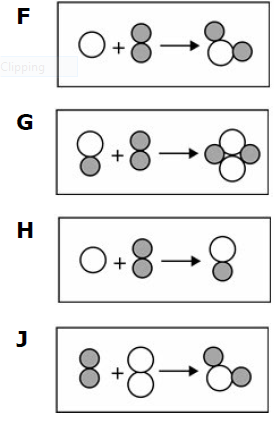
What type of reaction is shown in all four models?
synthesis
decomposition
single replacement
double replacement

Identify the type of chemical reaction
Synthesis
Decomposition
Single replacement
Double replacement
Combustion

Identify the type of chemical reaction
Synthesis
Decomposition
Single replacement
Double replacement
Combustion
a different way to say Law of Conservation of Matter
Law of Conservation of Volume
Law of Conservation of Energy
Law of Conservation of Mass
Law of Conservation of Environment
a way to describe a chemical reaction using chemical formulas and other symbols
mathematical formula
mathematical equation
chemical formula
chemical equation
a substance that takes part in and undergoes change during a reaction
coefficient
subscript
reactant
product
a new material formed in a chemical reaction
coefficient
subscript
reactant
product
a reaction in which energy is absorbed
exothermic reaction
endothermic reaction
red hot reaction
cool reaction
a reaction that releases energy, usually in the form of heat.
exothermic reaction
endothermic reaction
red hot reaction
cool reaction
Suppose you have 15g of baking soda and mix it with 15g of vinegar. When they are combined they bubble and fizz a lot. The final solution has a mass of 25g. What happened to the "lost" 5g?
it dissappears
it is still there just not weighted
it is in the gas that is formed
nothing happened
Balance this equation:
MgCl2 --> Mg4 + Cl2
It's already balanced.
4 MgCl2 --> Mg4 + 4 Cl2
4 MgCl2 --> Mg4 + 5 Cl2
How many atoms of aluminum are on each side of the following equation?
4Al + 3O2 --> 2Al2 O3
2
6
4
1
The Law of Conservation of Mass States
Energy cannot be created nor destroyed, it can only change form.
Mass cannot be created nor destroyed, it can only change form.
Mass can be created or destroyed, it cannot change form.

Which of the models of a chemical reaction best represents the Law of Conservation of Mass?
A
B
C
D

Which of the models of a chemical reaction best represents the Law of Conservation of Mass?
A
B
C
D

A student pours hydrochloric acid (HCl) into an open beaker that contains a piece of magnesium (Mg). A chemical reaction occurs, and the data for the reaction is shown in the image. Which of the following answer choices best identifies a possible explanation for the change in mass? SELECT TWO.
There was a increase in mass.
There was a decrease in mass.
There was no change in mass.
Because the reaction occurred in an open container, a gas that was produced was able to escape
Because the reaction occurred in an open container, a gas in the air was able to react with the other chemicals
A student heated a 10 gram sample of a chemical in an open container. A chemical reaction occurred, and the mass of the sample was measured again. The mass of the sample was found to be less than before the reaction. Which of the following best explains the decrease in mass of the sample?
The heat caused the chemical to become less dense.
The reaction gave off more heat than was added.
Some of the lighter particles were destroyed.
Some of the particles escaped as a gas formed.
A student measures the mass of an iron nail to be 25 grams. The student heats the nail over a bunsen burner and measures the mass of the nail afterwards. The mass of the nail is found to be greater after burning. Which of the following best explains the increase in mass of the nail?
The heat caused the compound to become more dense.
The reaction gave off less heat than was added.
Some of the heavier particles multiplied inside the nail.
Extra particles from the air were added to the nail during burning.
How many oxygen atoms are in the products for the chemical reaction below?
4Fe + 3O2 → 2Fe2O3
2
3
5
6
H2 + O2 --> H2O
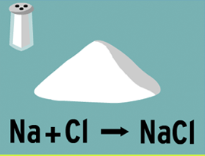
When sodium and chlorine combine to form sodium chloride, sodium chloride is the:
Originator
Reactant
Product
Produce
In an endothermic reaction, heat is ...
taken in
given out
1. Equal amounts of four different substances (A-D) where added separately to equal amounts of an acid and a thermometer placed in the mixture. For which substance is the reaction the most exothermic?
A. temperature rises by 3 °C
B. temperature falls by 5 °C
C. temperature falls by 3 °C
D. temperature rises by 5 °C
4. Equal amounts of four different substances (A-D) where added separately to equal amounts of an acid and a thermometer placed in the mixture. For which substance is the reaction the least endothermic?
A. temperature falls by 3 °C
B. temperature rises by 5 °C
C. temperature falls by 5 °C
D. temperature rises by 3 °C

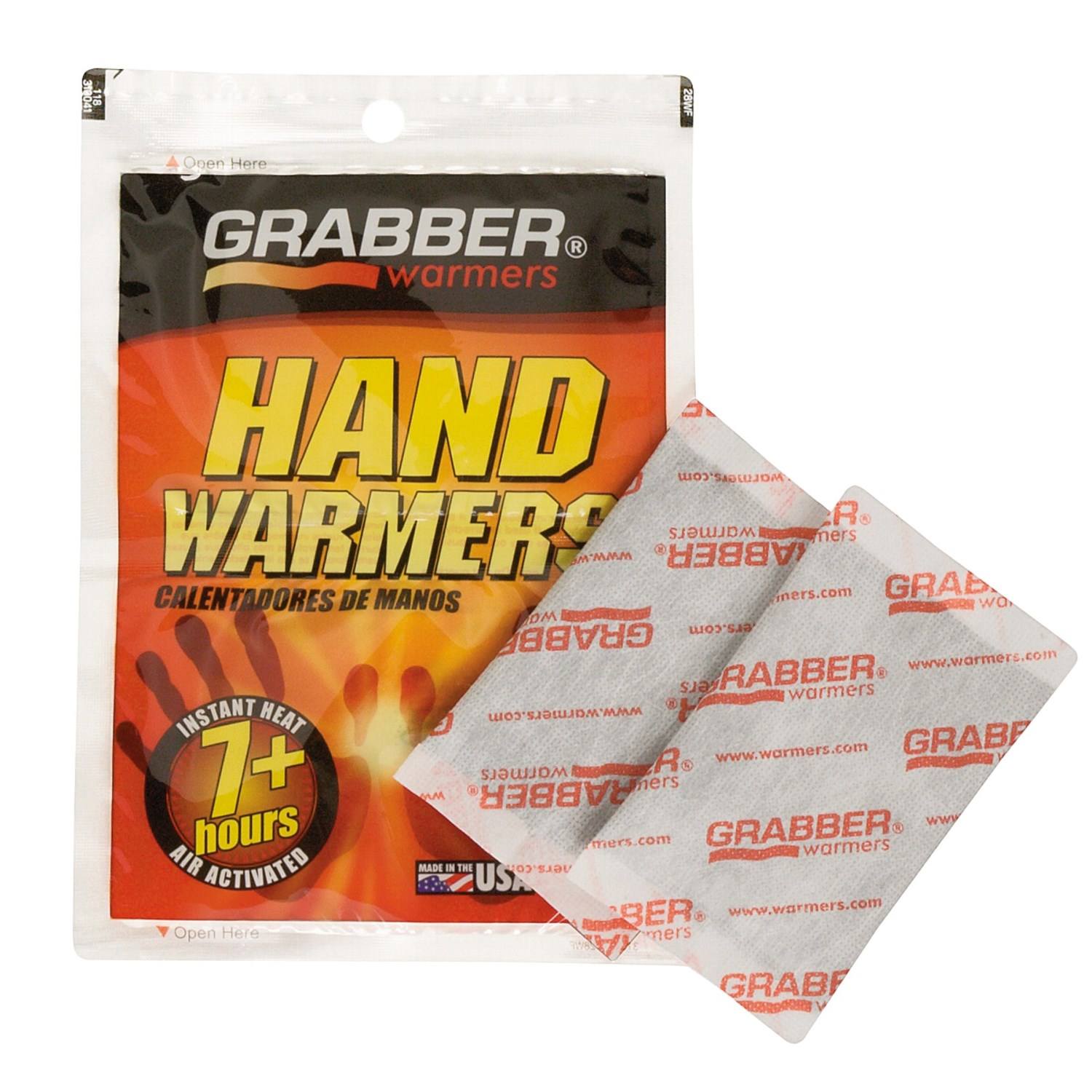
What type of reaction occurs in a hand warmer?
exothermic
endothermic
5. When ammonium chloride dissolves in water the temperature falls. The type of energy change is described as?
A. exothermic
B. activated
C. decomposition
D. endothermic
O2(g) + 2 H2 (g) → 2 H2O (g) + Energy
endothermic
exothermic
6 CO2+ 6 H2O + Energy → C6H12O6 + 6 O2
endothermic reaction
exothermic reaction
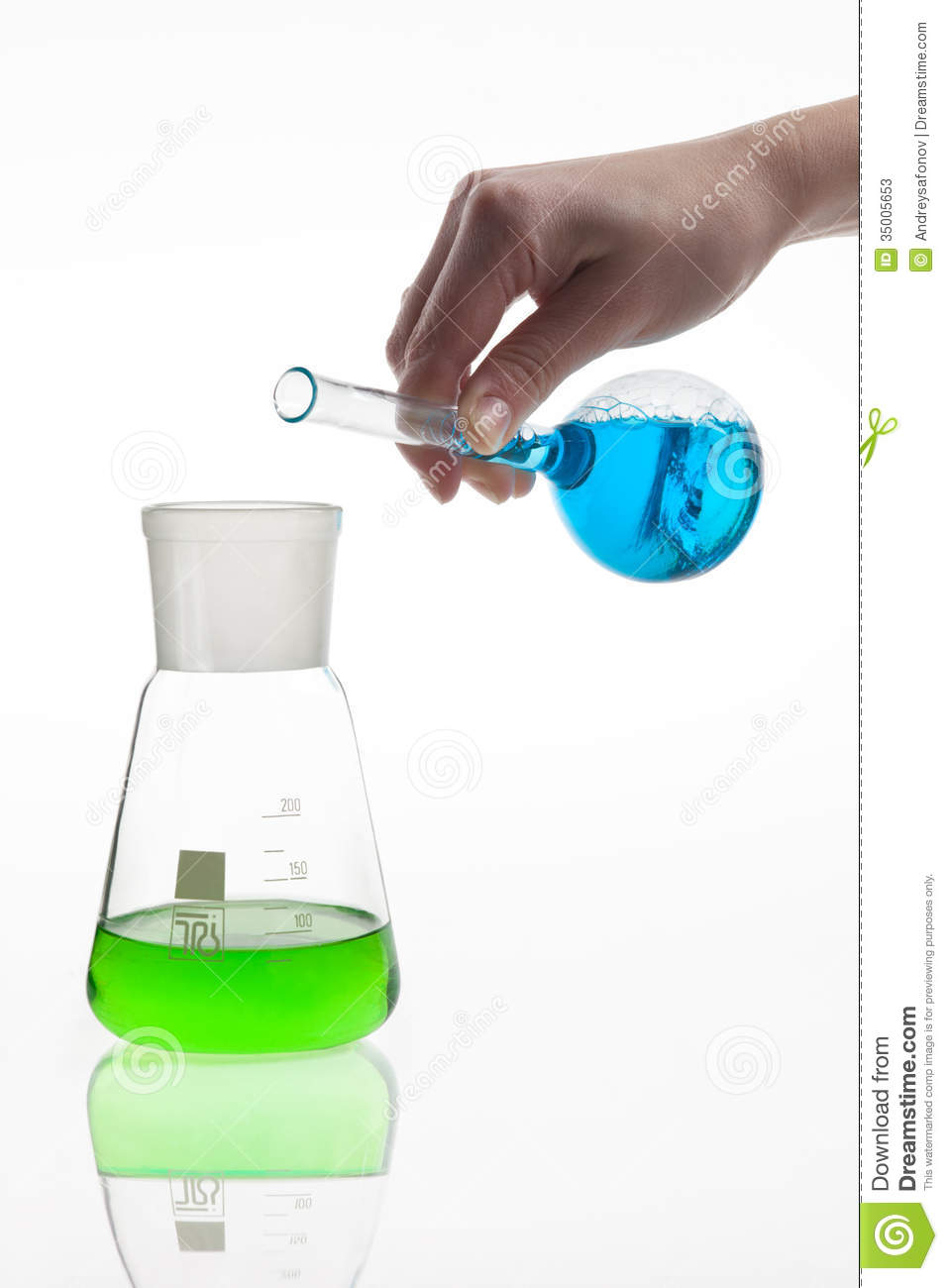
A student mixed two chemicals to allow them to react. The temperature before the reaction was 25 ° C. The temperature after the reaction was 18° C. Which of the following is true?
It is an exothermic reaction
It is an endothermic reaction

Fire is an example of
exothermic reaction
endothermic reaction
none
both

Fireworks are an example of
exothermic
endothermic
both
none

Your hands get cold outside from not wearing gloves
exothermic
endothermic
both
none

An ice pack in an example of
exothermic
endothermic
both
none

A melting ice cube is an example of
exothermic
endothermic
none
both
What coefficients are needed to balance the equation?
__ SiCl4 + __ H2O → __ H4SiO4 + __ HCl
write the numbers in order like this: #, #, #, #
(a)
What coefficients are needed to balance the equation?
__ Al + __ HCl → __ AlCl3 + __ H2
write the numbers in order like this: #, #, #, #
(a)
What coefficients are needed to balance the equation?
__ C7H6O2 + __ O2 → __ CO2 + __ H2O
write the numbers in order like this: #, #, #, #
(a)
KClO3 → KClO4 + KCl
(a)
H2SO4 + HI → H2S + I2 + H2O
(a)
What is the left part of a chemical equation called?
2H2 + O2 ---> 2H2O
Reactants
Yields
Products
Chemical equation
What is the right part of a chemical equation called?
2H2 + O2 ---> 2H2O
Reactants
Yields
Products
Chemical Equation
What is the total number of atoms present in 5Na3PO4?
5
55
40
8
What is the little number after an element in a chemical equation called?
Example: H2
Coefficient
Atom
Subscript
Equation
Is the following equation balanced?
Al + O2 ---> 2Al2O3
YES
NO
What is the number before a chemical formula called?
Example: 2H2 + O2 ---> 2H2O
Coefficient
Atom
Subscript
Equation
Which of the following equations are correctly balanced?
12CO2 + H2O ---> C6H12O6 + O2
CO2 + H2O ---> 3C6H12O6 + O2
CO2 + 9H2O ---> C6H12O6 + O2
6CO2 + 6H2O ---> C6H12O6 + 6O2
Balance this equation:
H2 + Cl2 ---> HCl
It is balanced.
H2 + Cl2 ---> 2HCl
3H2 + Cl2 ---> 6HCl
H2 + 3Cl2 ---> 6HCl
_Zn+_HCl-->_ZnCl2 +_H2
_Mg + _Cl2 --> _MgCl2
__P4 + __O2 --> __P2O3
Fill in the blanks with coefficient:
PCl5+_ H2O→_ HCl+H3PO4
4, 5
1, 6
3, 8
2,2
P4+O2 --> P2O3
Balance the following equation:
___ Mg+ ___ O2→___ MgO
1, 1, 3
2, 1, 2
1, 2, 1
2, 2, 2
Select all of the reactants in the following reaction:
Hydrogen + Oxygen --> Water
Hydrogen
Oxygen
Water
Select all of the reactants in the following reaction:
Barium carbonate + Nitric acid --> Barium nitrate + Water + Carbon dioxide
Barium carbonate
Nitric acid
Barium nitrate
Water
Carbon dioxide
Select all of the reactants in the following reaction:
Sodium hydroxide + Hydrochloric acid --> Sodium chloride + Water
Sodium hydroxide
Hydrochloric acid
Sodium chloride
Water


When hydrogen reacts with sulfur, a smelly gas, dihydrogen monosulfide, is produced.
H2 + S → HS
H2 + S → H2S
H + S→ HS
H + S→ H2S
Hydrogen gas and nitrogen monoxide gas forms water and nitrogen gas.
H2 + NO --> H2O + N2
H + NO --> H2O + N
H2 + N2O3 --> H2O + N2
H + NO --> H2O + N2
Aluminum bromide and chlorine gas produce aluminum chloride and bromine gas.
AlBr3 + Cl2 --> AlCl3 + Br2
AlBr3 + Cl --> AlCl3 + Br
Al3Br + Cl --> Al3Cl + Br2
AlBr3 + Cl2 --> AlCl3 + Br
Hydrogen gas and chlorine gas produce hydrogen chloride
H2 + Cl2 --> HCl
H + Cl --> HCl
H2 + Cl2 --> H2Cl2
H + Cl --> H2Cl
Aluminum and oxygen produces aluminum oxide
Al + O2 --> Al2O3
Al + O --> Al2O3
Al3 + O2 --> Al2O3
Al + O --> AlO

