wayground logo

Free Printable Worksheets

Font size

S
M
L
XL
Worksheets

IPC Fall Final Review

Total questions: 213

Worksheet time: 6hrs 47mins

Name
Class
Date
1.

What are the steps of the scientific method, in the correct order:

a)
  1. 1. Hypothesis

  2. 2. Experiment

  3. 3. Analysis

  4. 4. Experiment

  5. 5. Conclusion

b)
  1. 1. Observation

  2. 2. Research

  3. 3. Hypothesis

  4. 4. Experiment

  5. 5. Data Analysis

  6. 6. Conclusion

  7. 7. Communicate

c)
  1. 1. Observation

  2. 2. Hypothesis

  3. 3. Research

  4. 4. Communicate

  5. 5. Experiment

  6. 6. Data Analysis

  7. 7. Communicate

d)
  1. Just wing it, bruh

2.

What SI Unit is used for Length?

a)

Gram

b)

Foot

c)

Meter

d)

Liter

3.

What SI Unit is used for Volume

a)

Ounce

b)

Liter

c)

Cup

d)

Gram

4.

The distance between two points is called?

a)

Length

b)

Measurement

c)

Mass

d)

Volume

5.

The amount of space occupied by an object is called?

a)

Mass

b)

Volume

c)

Length

d)

Measurement

6.

The amount of matter in an object is called?

a)

Weight

b)

Volume

c)

Length

d)

Mass

7.

The SI unit for mass is _________.

a)

Pounds

b)

Inches

c)

Kilograms

d)

Ounces

8.

The SI unit for temperature is ____.

a)
degree fahrenheit  (° F)
b)
degree celsius  (° C)
c)
kelvin  (K)
d)
degree centigrade  (°C)
9.

The SI unit for time is the ____.

a)

hours (h)

b)

liter (L)

c)

gram (g)

d)

second (s)

10.

Convert 500 centimeters to meters.

a)

5000 meters

b)

5 meters

c)

0.5 meters

d)

50 meters

11.

Convert 3 kilometers to meters.

a)

1000

b)

2000

c)

3000

d)

5000

12.

If a pencil is 15 centimeters long, how many meters is that?

a)

1.5 meters

b)

0.015 meters

c)

15 meters

d)

0.15 meters

13.

If a road is 10 kilometers long, how many meters is that?

a)

5000

b)

20000

c)

1000

d)

10000

14.

12.5 g = __________ mg

a)

12,500 mg

b)

.0125 mg

c)

125 mg

15.

14 L = __________ hL

a)

.14 hL

b)

.014 hL

c)

1400 hL

16.

187 km = _____________ m

a)

187,000 m

b)

1.87 m

c)

.0187 m

17.

4.4 dL = ___________ cL

a)

44 cL

b)

440 cL

c)

0.44 cL

18.

245.6 dag = _________ g

a)

2456 g

b)

24.56 g

c)

2.456 g

19.

2319 kL = _______ mL

a)

2,319,000 mL

b)

2,319,000,000 mL

c)

2.319 mL

d)

0.0002319 mL

20.

34 m = _____ mm

a)

340 mm

b)

3400 mm

c)

0.034 mm

d)

34,000 mm

21.

1 mL = _____L

a)

0.001 L

b)

0.1 L

c)

0.01 L

d)

1000 L

22.

Convert 5 meters to centimeters.

a)

50 centimeters

b)

5 centimeters

c)

50,000 centimeters

d)

500 centimeters

23.

Convert 500 grams to kilograms.

a)

0.05

b)

0.5

c)

5

d)

50

24.

Convert 3 liters to milliliters.

a)

300

b)

30

c)

3000

d)

30000

25.

Convert 2 kilograms to grams.

a)

200 grams

b)

20000 grams

c)

20 grams

d)

2000 grams

26.

Convert 100 milliliters to liters.

a)

10

b)

0.1

c)

1

d)

1000

27.

Convert 8 centimeters to meters.

a)

0.8

b)

0.008

c)

0.8 meters

d)

0.08

28.

Convert 250 grams to kilograms.

a)

0.0025

b)

2.5

c)

25

d)

0.25

29.

Convert 1 liter to milliliters.

a)

100

b)

500

c)

10

d)

1000

30.

Convert 500 meters to kilometers.

a)

0.5

b)

50

c)

5

d)

0.05

31.
A kind of matter that keeps its shape and volume is a 
a)
solid
b)
liquid
c)
gas
32.
Which container shows the particles of a liquid?
a)
Container A
b)
Container B
c)
Container C
33.
In a solid, the particles
a)
vibrate in place
b)
slide past one another
c)
overcome the strong attraction
34.
At higher temperatures
a)
particles in an object have less energy
b)
particles in an object move faster
c)
a gas contracts
35.
Which state of matter has particles arranged like this?
a)
solid
b)
liquid
c)
gas
36.
Which state of matter has particles arranged like this?
a)
solid
b)
liquid
c)
gas
37.
What is anything that has mass and takes up space?
a)
atom
b)
matter
c)
molecule
d)
physical property
38.
Which is more dense?
a)
left cube
b)
right cube
39.

Which of the following is a gas

a)
b)
c)
d)
40.
Is this a solid, liquid or gas?
a)
Solid
b)
Liquid
c)
Gas
41.
Which phrase best describes the particles in a solid?
a)
not moving
b)
very far apart
c)
vibrating in place
d)
able to slip past one another
42.
A gas has a no definite shape and ________.
a)
a definite shape
b)
a definite volume
c)
no definite shape
d)
no definite volume
43.
A liquid has no definite shape and ________.
a)
a definite shape
b)
a definite volume
c)
no definite shape
d)
no definite volume
44.
A solid has ________ and a definite volume.
a)
a definite shape
b)
a definite volume
c)
no definite shape
d)
no definite volume
45.
Which of these will flow and fill up any shape of container?
a)
solid
b)
liquid
c)
gas
d)
cats
46.

State of matter that takes the shape of it's container and has a definite volume.

a)

Solid state

b)

Liquid state

c)

Gas state

d)

Plasma state

47.

State of matter in which materials have a definite shape and volume.

a)

Solid state

b)

Liquid state

c)

Gas state

d)

Plasma state

48.

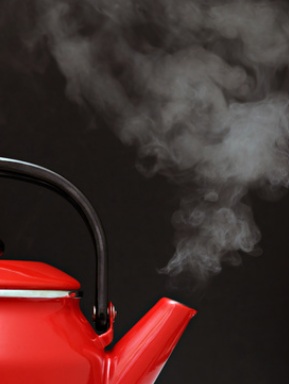
What change of state is taking place in this photograph?

a)

Condensation

b)

Freezing

c)

Vaporization

d)

Melting

49.

What change of state is taking place in this photograph?

a)

Condensation

b)

Freezing

c)

Vaporization

d)

Melting

50.

The diagram shows the changes in state of water (H2O). What is the process Z called?

a)

Condensation

b)

Freezing

c)

Vaporization

d)

Melting

51.

Which of the following is a property of gases?

a)

They have a definite volume.

b)

They are not compressible.

c)

They have no definite shape.

d)

They have no ability to flow.

52.

What is matter?

a)

Anything that takes up space

b)

Anything that can be seen or touched

c)

Anything that cannot be seen or touched

d)

Anything that is made up of atoms

53.

What are liquids and gases called?

a)

Fluids

b)

Solids

c)

Plasma

d)

Atoms

54.

What is the volume of a solid?

a)

The amount of space that an object takes up

b)

The shape of the object

c)

The forces holding the atoms or molecules together

d)

The temperature of the object

55.

What is the fourth state of matter called?

a)

Plasma

b)

Solid

c)

Liquid

d)

Gas

56.

Anything that has mass and volume

a)

volume

b)

liquid

c)

matter

57.

What is the most common state of matter in the universe?

a)

liquid

b)

gas

c)

plasma

58.
If you wanted to change liquid water into solid ice, you would ______ it.
a)
add salt
b)
melt
c)
freeze
59.
Water becomes a solid when __________.
a)
temperature is increased
b)
temperature is decreased
60.
Phase change from a solid to a gas.
a)
sublimation
b)
deposition
c)
condensation
d)
evaporation
61.
The molecules in the picture are tightly held together with little movement. They have shape and energy.  Therefore, the picture represents _________.
a)
solid
b)
liquid
c)
gas
d)
plasma
62.

A change of state from a liquid to a solid is called....

a)

Melting

b)

Freezing

c)

Evaporation

63.
What takes place when a solid changes to a liquid?
a)
condensation
b)
freezing
c)
melting
d)
evaporation
64.
What is viscosity?
a)
A liquid's resistance to flow.
b)
a liquids flow.
c)
a liquid
d)
gas to solid.
65.

Liquids with very high viscosity flow very _______________________.

a)

fast

b)

not at all

c)

slow

d)

whenever it wants

66.

The best example of high viscosity would be?

a)

Honey

b)

Soap

c)

Marbles

d)

Water

67.
Evaporation occurs when water changes into 
a)
transpiration
b)
snow
c)
solid
d)
vapor
68.

Milk takes the shape of its container because it is a:

a)

Solid

b)

Liquid

c)

Gas

69.

A state of matter that has a definite volume and shape.

a)

solid

b)

gas

c)

liquid

d)

matter

70.

Its particles are very closed to each other.

a)

Solid

b)

Liquid

c)

Gas

d)

Shape

71.

If a solid transitions directly to a gas it is called

a)

Sublimation

b)

Melting

c)

Vaporisation

d)

It is impossible

72.
A student is heating a pan of water.  What happens to the molecules as the temperature of the water gets hotter?
a)
the molecules move faster
b)
the molecules stop moving
c)
the molecules move slower
d)
there is no change in the movement of the molecules
73.

Which type of motion in the figure best represents the movement of gas particles?

a)

Motion 1

b)

Motion 2

c)

Motion 3

d)

Motion 4

74.

Which state of matter has particles that are far apart and move freely?

a)

plasma

b)

gas

c)

liquid

d)

solid

75.

Which state of matter can be compressed easily?

a)

Plasmas

b)

Liquids

c)

Solids

d)

Gases

76.

Which state of matter cannot be compressed easily?

a)

liquid

b)

gas

c)

plasma

d)

solid

77.
Liquids are described as having a 
a)
definite shape and indefinite volume
b)
indefinite shape and indefinite volume
c)
definite shape and definite volume
d)
indefinite shape and definite volume
78.
Gases are described as having a 
a)
definite shape and indefinite volume
b)
indefinite shape and indefinite volume
c)
definite shape and definite volume
d)
indefinite shape and definite volume
79.
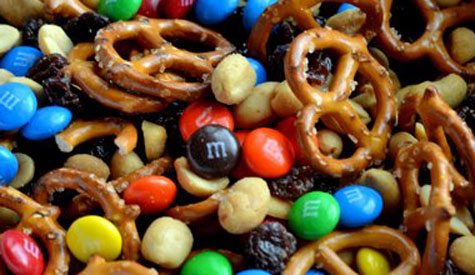
What type of mixture is this?
a)
homogenous mixture
b)
chemical
c)
heterogeneous mixture 
d)
solid mix
80.
Which of the following is an element?
a)
Sugar
b)
Salt
c)
Water
d)
Oxygen
81.

Classify the matter:

Salad

a)

Element

b)

Compound

c)

Heterogeneous Mixture

d)

Homogeneous Mixture

82.

Classify the matter: Ethanol (C2H5OH)

a)

Element

b)

Compound

c)

Heterogeneous Mixture

d)

Homogeneous Mixture

83.

Classify the matter: Mg (Magnesium)

a)

Element

b)

Compound

c)

Heterogeneous Mixture

d)

Homogeneous Mixture

84.

Which of the following is NOT an example of matter?

a)

Trees

b)

Sunlight

c)

Rocks

d)

Air

85.
Table salt (NaCl), sugar (C12H11O22), and water (H2O) are examples of 
a)
Elements
b)
Compounds
c)
Mixtures
86.

Carbon dioxide is an example of

a)

an element

b)

a compound

c)

a homogeneous mixture

d)

a heterogeneous mixture

87.
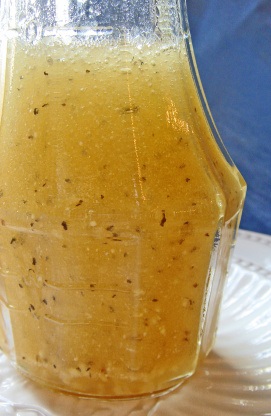
Italian Salad Dressing is a . . .
a)
heterogeneous mixture
b)
homogeneous mixture
c)
Pure Substance
d)
Compound
88.

CaCO3 is an example of which type of matter?

a)

Element

b)

Homogeneous Mixture

c)

Compound

d)

Heterogeneous Mixture

89.

Which of the following are elements? (Pick All Answers That Are Correct)

a)

Salt (NaCl)

b)

Mercury (Hg)

c)

Hot chocolate with whipped cream and marsh mellows on top

d)

Sweet Tea

e)

Pure Water (H2O)

90.

Which of the following are Compounds? (Pick All Answers That Are Correct)

a)

Salt (NaCl)

b)

Mercury (Hg)

c)

Hot chocolate with whipped cream and marsh mellows on top

d)

Sweet Tea

e)

Pure Water (H2O)

91.

Which of the following are Heterogeneous Mixtures? (Pick All Answers That Are Correct)

a)

Salt (NaCl)

b)

Mercury (Hg)

c)

Hot chocolate with whipped cream and marshmallows on top

d)

Sweet Tea

e)

Pure Water (H2O)

92.

Which of the following are Homogeneous Mixtures? (Pick All Answers That Are Correct)

a)

Salt (NaCl)

b)

Mercury (Hg)

c)

Hot chocolate with whipped cream and marsh mellows on top

d)

Sweet Tea

e)

Pure Water (H2O)

93.

Lemonade is a

a)

solution

b)

element

c)

compound

d)

heterogeneous mixture

94.

What is matter?

a)

Matter is all things.

b)

Matter is only liquids.

c)

Matter is only animals.

d)

Matter is only things that are not alive (abiotic).

95.

Matter can be divided into categories.

a)

true

b)

false

96.

Pure substances are

a)

elements and compounds

b)

heterogeneous mixtures

c)

solutions

d)

homogeneous mixtures

97.

Mixtures are

a)

heterogeneous mixtures

b)

homogeneous mixtures

c)

solutions

d)

elements

98.

Gold, silver, zinc, and copper are

a)

elements

b)

mixtures

c)

solutions

d)

compounds

99.

salt and baking soda are

a)

compounds

b)

homogeneous mixtures

c)

solutions

d)

heterogeneous mixtures

100.

Soil and sand are

a)

mixtures

b)

solutions

c)

elements

d)

compounds

101.

Oil and water are a

a)

heterogeneous mixture

b)

element

c)

compound

d)

solution

102.

Salt water is a

a)

solution

b)

element

c)

compound

d)

heterogeneous mixture

103.

A characteristic of matter that can be observed or measured without changing the identity of matter and is determined by your senses.

a)

matter

b)

physical property

c)

chemical property

d)

density

104.

Anything that has mass and takes up space

a)

matter

b)

physical change

c)

chemical change

d)

light

105.

Which of the following is NOT an example of a physical property?

a)

odor

b)

malleability

c)

reacting with water

d)

conductivity

106.

Which of the following is NOT a chemical property?

a)

flammability

b)

luster

c)

Reactivity w/ oxygen

d)

reactivity with water

107.

Pure substances that cannot be broken down further and are made of 1 type of atom is called

a)

elements

b)

atoms

c)

mixture

d)

compound

108.

The smallest whole unit of matter/ the basic particle from which elements are made is...

a)

mixtures

b)

compounds

c)

atom

d)

element

109.
Which of the following below is a chemical property? 
a)
Color
b)
Density
c)
Boiling Point
d)
Reactivity with Acid
110.
Which of the following situations is evidence of chemical change? 
a)
Boiling water produces steam
b)
Adding vinegar to baking soda makes foaming bubbles
c)
Sharpening a pencil
d)
Cutting paper
111.
The fact that sugar can be white is a 
a)
Chemical Property 
b)
Physical Property 
c)
Both A and B
d)
None of the above 
112.
Flammability is a 
a)
Chemical Property 
b)
Physical Property 
c)
Both A and B
d)
None of the above 
113.
Iron's ability to rust when exposed to air is a 
a)
Chemical Property 
b)
Physical Property 
c)
Both A and B
d)
None of the above 
114.
Density is a 
a)
Chemical Property 
b)
Physical Property 
c)
Both A and B
d)
None of the above
115.
Which one of the following is NOT a physical property of paper? 
a)
It is solid
b)
It is white
c)
It is flammable
d)
It is smooth
116.
An antacids (TUMS) ability to change pH in your stomach is an example of a 
a)
Chemical Property 
b)
Physical Property 
c)
Both A and B 
d)
None of the above 
117.
After blowing out the flame on the candle, James noticed the wick changed from white to black, this is a
a)
Physical Property
b)
Physical Change
c)
Chemical Property 
d)
Chemical Change 
118.
The candle has a texture that is soft enough to scrape with a fingernail, this is a 
a)
Physical Property 
b)
Physical Change
c)
Chemical Property 
d)
Chemical Change 
119.
The mass of the candle is 2.12 grams, this is a 
a)
Physical Property 
b)
Physical Change
c)
Chemical Property 
d)
Chemical Change 
120.
The candle wick started to smoke after it was lit, this is a 
a)
Physical Property 
b)
Physical Change
c)
Chemical Property 
d)
Chemical Change 
121.
Which example represents a chemical change occurring? 
a)
A blue bike is painted pink
b)
Sand paper is used to smooth wood
c)
When the two chemicals inside an ice pack are mixed it becomes cold 
d)
Paper is ripped into smaller pieces 
122.
In a chemical change
a)
Bonds are not broken
b)
A new substance is formed and bonds are rearranged 
c)
No new substances are formed 
d)
None of the above 
123.
While burning, sugar changed from a white solid substance to a brown liquid substance. What occurred? 
a)
No new reactants were formed
b)
The products combined to form a new reactant
c)
The bonds of the reactants were broken and rearranged into a new product 
d)
The reactants were the same as the product 
124.
Which of the following would be the BEST scientific question to ask after the teacher burned the sugar? 
a)
What time is class over?
b)
Can we do this experiment again? 
c)
Did a chemical change occur? 
d)
Is sugar an element? 
125.
Which of the following is a physical property of vinegar (acetic acid)? 
a)
The liquid is dark and cloudy
b)
The powder is blue
c)
The white powder can rust 
d)
The liquid is clear and has a strong odor
126.
Which of the following is a chemical property of vinegar? 
a)
Vinegar is flammable
b)
Vinegar has the ability to rust 
c)
Vinegar is white
d)
Vinegar has a low pH and can react with a base 
127.
Matter can not be created nor destroyed: it can only be
a)
Destroyed a little bit
b)
Invisible
c)
Transformed, changed
d)
None of the above
128.

The Law of Conservation of Mass States

a)

Energy cannot be created nor destroyed, it can only change form.

b)

Mass cannot be created nor destroyed, it can only change form.

c)

Mass can be created or destroyed, it cannot change form.

129.

The scientist tested his _______ by performing repeated _______.

a)

hypothesis - experiments

b)

hypothesis- data

c)

facts - experiments

d)

facts - observations

130.

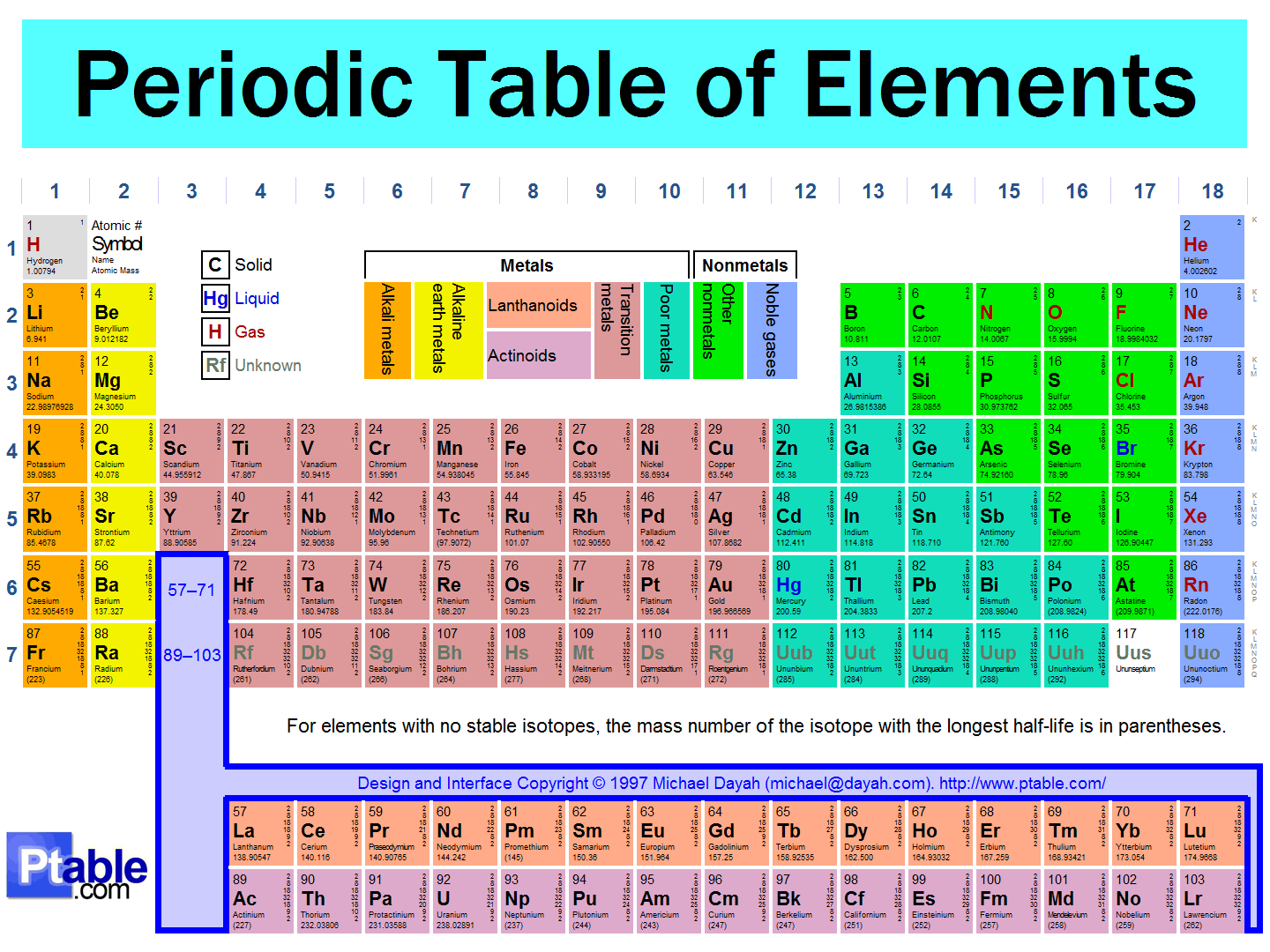
What is the atomic mass of hydrogen?

a)

1.001

b)

1.01

c)

1.008

d)

1.02

131.

What is the atomic number of helium?

a)

4

b)

1

c)

3

d)

2

132.

What is the atomic mass of oxygen?

a)

18.00

b)

17.00

c)

15.00

d)

16.00

133.

What is the atomic number of fluorine?

a)

7

b)

16

c)

9

d)

12

134.

What is the symbol of neon?

a)

N

b)

Ni

c)

Neon

d)

Ne

135.

What is the atomic mass of sodium?

a)

23.01

b)

20.55

c)

22.99

d)

25.12

136.

What is the atomic number of magnesium?

a)

12

b)

20

c)

16

d)

8

137.

What is the name of element with atomic number 13?

a)

sodium

b)

aluminum

c)

magnesium

d)

iron

138.

What element has the symbol K?

(a)  

139.

What is the symbol for Silicon?

(a)  

140.
Name group 1 on the periodic table.
a)
alkali metals
b)
alkaline earth metals
c)
noble gases
noble gases
d)
halogens
141.
Name group 2 on the periodic table.
a)
alkali metals
b)
alkaline earth metals
c)
noble gases
d)
transition metals
142.
Name group 18 on the periodic table.
a)
alkali metals
b)
alkaline earth metals
c)
transition metals
d)
noble gases
143.
Name groups 3 - 12 on the periodic table.
a)
noble gases
b)
halogens
c)
metalloids
d)
transition metals
144.
Name group 17 on the periodic table.
a)
transition metals
b)
metalloids
c)
halogens
d)
alkali metals
145.
Name the group that contains inert (nonreactive) elements.
a)
noble gases
b)
halogens
c)
alkali metals
d)
alkaline earth metals
146.
The majority of elements on the periodic table are
a)
man made.
b)
nonmetals.
c)
metals.
d)
gases.
147.
The atoms along the staircase are called 
a)
metals
b)
nonmetals
c)
metalloids
d)
noble gases
148.

The vertical (up and down) columns in the Periodic Table are called

a)

groups

b)

towers

c)

periods

d)

atomic numbers

149.
These are found on the Periodic Table.
a)
Compounds
b)
Elements
c)
Mixtures
150.
Which is an alkali metal?
a)
Magnesium
b)
Iron
c)
Sodium
d)
Europium
151.
Which is a halogen?
a)
Helium
b)
Chlorine
c)
Oxygen
d)
Neptune
152.
Elements in a ..................have similar chemical properties.  
a)
period
b)
group
c)
row
153.

Select the element Alkali Earth Metal found in Period 4

a)

Calcium

b)

Potassium

c)

Titantium

d)

Krypton

154.

Select the element that is a metalloid

a)

Gallium

b)

Boron

c)

Oxygen

d)

Magnesium

155.

The horizontal rows in the Periodic Table are called

a)

groups

b)

families

c)

periods

d)

rows

156.
How many Protons does Bromine have?
a)
45
b)
79.904
c)
80
d)
35
157.
How many Neutrons does Bromine have?
a)
35
b)
80
c)
45
d)
79.905
158.
A particle with a negative charge inside of an element is called
a)
isotope
b)
neutron
c)
proton
d)
electron
159.
What is titanium's atomic mass?
a)
47.867
b)
22
c)
26
d)
49
160.
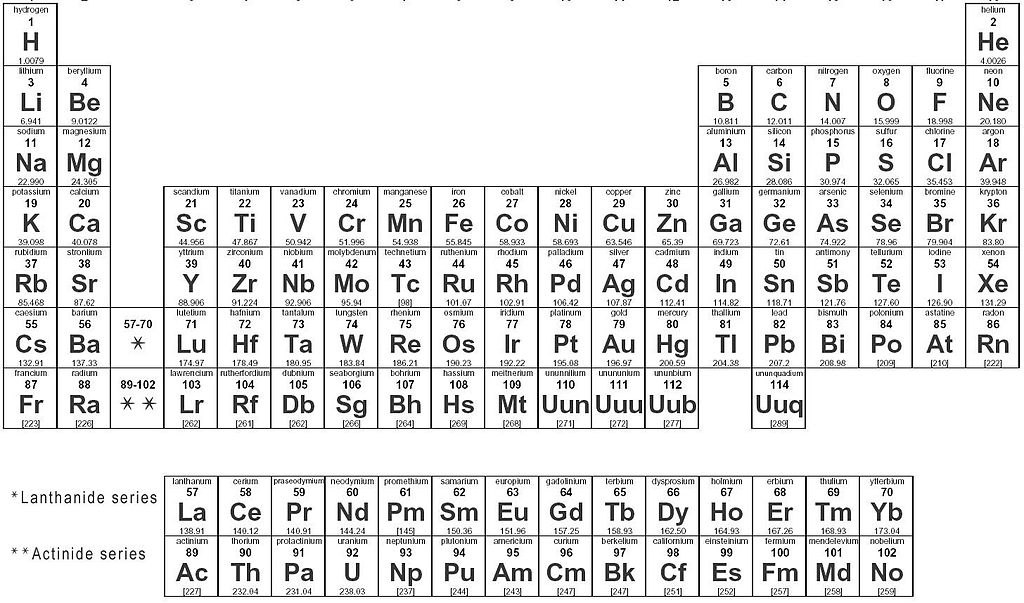
How many protons does this atom have?
a)
2.5
b)
6
c)
5
d)
10.811
161.
In order for me to find the number of neutrons, I must round the atomic mass and then do what?
a)
atomic number-atomic mass
b)
atomic number x atomic mass
c)
atomic mass + atomic number
d)
atomic mass - atomic number
162.

How many neutrons are in Magnesium?

a)

36

b)

12

c)

24

d)

6

163.

Which would you do to change this Lithium to a new element?

a)

Add a neutron

b)

Add an electron

c)

Add a proton

d)

Add a proton and neutron\

164.

A proton has what charge?

a)

Positive

b)

Negative

c)

It has no charge (it is neutral)

165.

What is the atomic # of iron?

a)

55

b)

56

c)

26

d)

2

166.

How many protons does krypton have?

a)

84

b)

36

c)

48

d)

8

167.

How many electrons does oxygen have?

a)

8

b)

16

c)

2

d)

15

168.

How many neutrons does lithium have?

a)

3

b)

4

c)

6

d)

7

169.

What is the best mass number for silver?

a)

47

b)

107

c)

108

d)

154

170.

What is the symbol for arsenic?

a)

A

b)

As

c)

33

d)

75

171.

How many neutrons does beryllium have?

a)

4

b)

5

c)

9

d)

13

172.
Name group 1 on the periodic table.
a)
alkali metals
b)
alkaline earth metals
c)
noble gases
noble gases
d)
halogens
173.
Name group 18 on the periodic table.
a)
alkali metals
b)
alkaline earth metals
c)
transition metals
d)
noble gases
174.
Name groups 3 - 12 on the periodic table.
a)
noble gases
b)
halogens
c)
metalloids
d)
transition metals
175.
Which of the following is not a property of metals?
a)
brittle
b)
malleable
c)
lustrous
d)
conductive
176.

what is the biggest group on the table

a)

metals

b)

nonmetals

c)

metaloids

d)

halogens

177.

The vertical (up and down) columns in the Periodic Table are called

a)

groups

b)

towers

c)

periods

d)

atomic numbers

178.
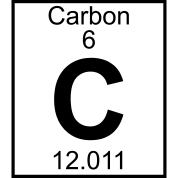
What does the 6 represent?
a)
atomic mass
b)
atomic number
c)
element name
d)
chemical symbol 
179.
An element's identity is determined by the number of
a)
electrons.
b)
protons.
c)
neutrons.
d)
valence.
180.
Which of these is a property of metals?
a)
It's malleable
b)
It can't conduct electricity
c)
They are used in food
d)
It's very brittle
181.
Good conductor of heat
a)
Metal
b)
Nonmetal
182.
Which of the following is a property of a non-metal?
a)
Conducts electricity and heats well
b)
Can be hammered into thin sheets
c)
Is brittle and breaks easily
d)
Has a shiny, metallic luster
183.
Iron is a good conductor, malleable and magnetic. What type of element is Iron? 
a)
Metal
b)
Nonmetal
c)
Metalloid
d)
Pretty
184.
The word “luster” refers to which property of matter?
a)
The ability to conduct electrical or thermal energy
b)
Capable of being drawn out into thin wires
c)
The way a surface appears when it reflects light
d)
Suitable for being shaped by beating or rolling
185.
At room temperature metals are ____________.
a)
plasma
b)
gases
c)
liquid
d)
solid
186.
Metalloids _____________
a)
have no properties of metals.
b)
have no properties of nonmetals.
c)
have some properties of both metals and nonmetals.
d)
none of the above
187.
Where are metalloids located on the periodic table?
a)
to the right of nonmetals
b)
along the zig-zag line
c)
to the left of the zig-zag line
d)
to the right of the zig-zag line
188.

When an object changes shape when struck by a hammer it is said to be...

a)

luster

b)

malleable

c)

brittle

d)

ductile

189.
Is gold metal or nonmetal?
a)
metal
b)
nonmetal
190.
How do metals differ from nonmetals?
a)
metals are shiny, nonmetals are dull
b)
metals are good insulators, nonmetals are good conductors
c)
metals are powdery
d)
nonmetals are shiny
191.

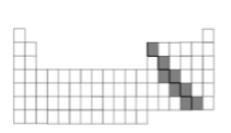
Elements in the shaded area can best be described as -

a)

Shiny and brittle, semiconductors

b)

Insulators

c)

Good conductors

192.
Brittleness is _________
a)
the capability of being broken.
b)
the capability of being bent.
c)
the capability of being stretched.
d)
the capability of being molded.
193.

Carbon is dull and brittle. Carbon is a

a)

metal

b)

nonmetal

c)

metalloid

194.
The blue atoms are called 
a)
metals
b)
nonmetals
c)
metalloids
d)
noble gases
195.
The atoms along the staircase are called 
a)
metals
b)
nonmetals
c)
metalloids
d)
noble gases
196.
Which is an alkali metal?
a)
Magnesium
b)
Iron
c)
Sodium
d)
Europium
197.
Which is a halogen?
a)
Helium
b)
Chlorine
c)
Oxygen
d)
Neptune
198.
In the modern periodic table elements are arranged by:
a)
atomic mass
b)
atomic number
c)
valence electrons
d)
number of isotopes
199.

The ability of something to be reshaped without breaking; ability of a substance to be hammered or flattened into thin sheets.

a)

Luster

b)

Matte

c)

Brittle

d)

Malleability

200.

A material that does not conduct heat or electrical current.

a)

Compound

b)

Insulator

c)

Conductor

d)

Conductivity

201.

What scientist proposed this atomic model?

a)

Dalton

b)

Thomson

c)

Rutherford

d)

Bohr

202.

This picture best represents ___________________ atomic model.

a)

Thomson's

b)

Dalton's

c)

Bohr's

d)

Chadwick's

203.

Which one of these is Dalton's Model?

a)
b)
c)
d)
204.

Elements are made of tiny solid particles

a)

Bohr

b)

Democritus

c)

Thomson

d)

Aristole

205.

All matter is made of atoms

a)

Rutherford

b)

Bohr

c)

Democritus

d)

Dalton

206.

electrons travel in fixed orbits

a)

Dalton

b)

Bohr

c)

Thomson

d)

Rutherford

207.

Small dense nucleus in atom that is surrounded by electrons

a)

Heisenberg

b)

Shrodinger

c)

Thomson

d)

Rutherford

208.
His atomic model was depicted similar to a planetary/solar system
a)
Niels Bohr
b)
Joseph Thomson
c)
Ernest Rutherford
d)
Democritus
209.

Subatomic particles with a negative charge

a)

Electrons

b)

Neutrons

c)

Protons

d)

Quarks

210.
Subatomic particles with a positive charge
a)
neutrons
b)
atomic mass
c)
protons
d)
isotopes
211.
The scientist responsible for "discovering" the nucleus is:
a)
Bohr
b)
Rutherford
c)
Schroedinger
d)
Einstein
212.
The scientist responsible for "discovering" the nucleus is:
a)
Bohr
b)
Rutherford
c)
Schroedinger
d)
Einstein
213.

What is the current accepted model of the atom?

a)

Electron Cloud Model

b)

Plum Pudding Model

c)

Rutherford's Model

d)

Atomos