
 Worksheets
Covalent, VSEPR, Naming, Bonding Review
Total questions: 60
Worksheet time: 2hrs 7mins
Hydrogen
Carbon
Oxygen
Chlorine
Fe₂, Rn₂, O₂, He₂, Ne₂, C₂, Br₂
H₂, N₂, O₂, F₂, Cl₂, Br₂, I₂
H₂, N₂, O₂, He₂, Ne₂, Cl₂, Br₂
H₂, N₂, O₂, He₂, Ne₂, C₂, Na₂
In the correct Lewis structure for the methane (CH₄) molecule, how many lone pairs (non-bonding valence-electron pairs) surround the carbon?
0
2
4
8

Option L

Option O

Option V

Option E

Option L

Option O

Option V

Option E
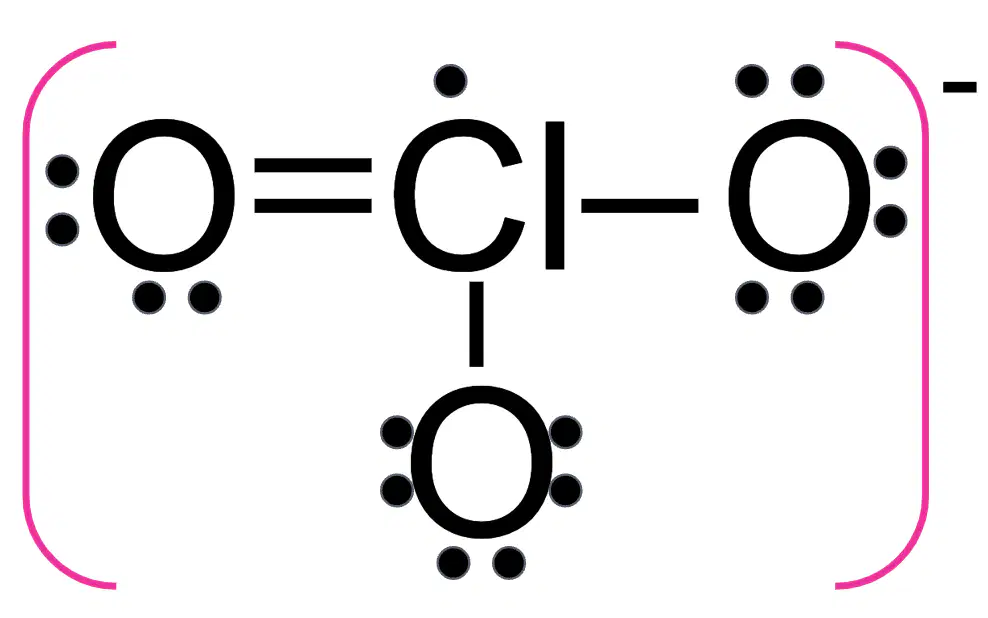
This lewis structure is WRONG! What ie one error in this Lewis structure for ClO3-?
There are too few valence electrons shown in the structure.
There are too many total valence electrons shown in the structure.
All 3 bonds between Cl and O should be double bonds.
None of the oxygen atoms are connected to 8 valence electrons.
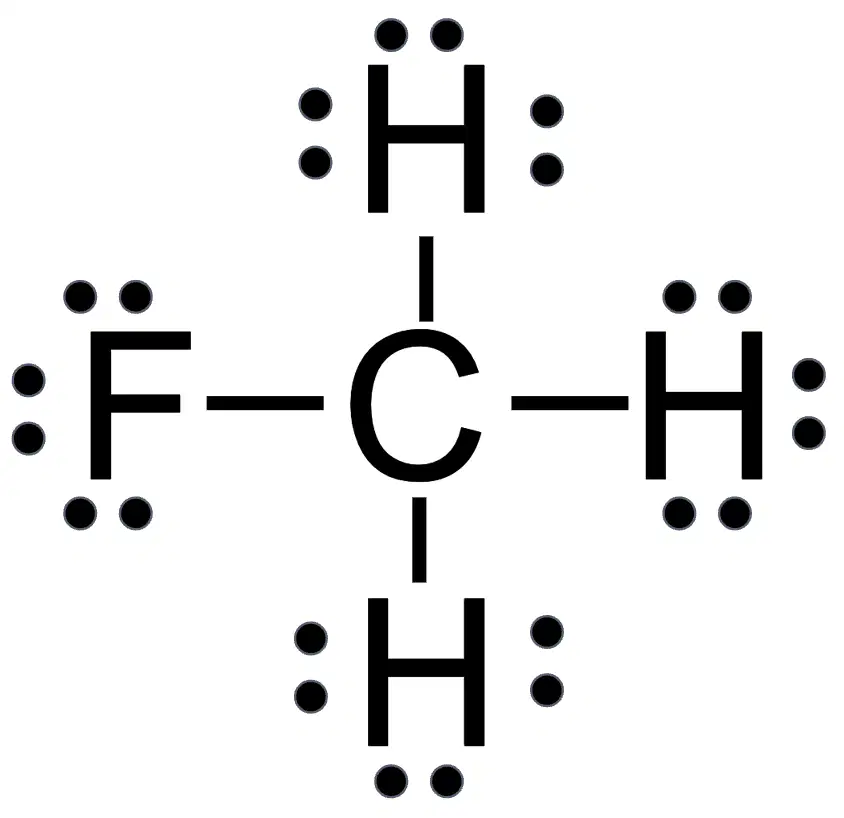
This Lewis structure for CH3F is WRONG! What's is one thing that is wrong with it?
The F atom should be the center of the molecule, because it’s less electronegative than C.
The C atom are connected to less than 8 valence electrons, which would make this molecule unstable.
The H atoms are connected to more than 2 valence electrons. They form bonds to connect to 2 valence electrons only.
The C atom at the center needs to have at least 1 lone pair of electrons.
Which of the following diatomic molecules will form a triple bond?


Polar covalent and nonpolar covalent compounds are almost always poor conductors of electricity.
False
True
Molecular (covalent) compounds have high melting points
True
False
Why do solid metals conduct electricity?
Metals form strongly-bonded latices made from + and - ions.
Metals have low electronegativity. The valence electrons are delocalised and able to flow.
Metals have high electronegativity. The valence electrons are shared between two metal ions
Iron and sulfur will form a ______ bond
ionic
covalent
metalloid
One atom transfers its valence electrons to a different atom, resulting in oppositely-charged ions that are attracted to each other. This type of bond is called:
ionic
metallic
non polar covalent
covalent
Bonds formed by sharing valence electrons between atoms are:
ionic
metallic
covalent
best friend bonds
A compound is made of two nonmetals. It is
ionic
metallic
covalent
A compound that is a poor conductor of electricity and has a low melting point is most likely
ionic
metallic
covalent
Which compound would be likely to have a very low melting point?
potassium chloride (KCl)
iron (II) oxide
(FeO)
sulfur difluoride
(SF₂)
Calcium
(Ca)
Which solid pure substance would be a good conductor of electricity?
sodium chloride (NaCl)
copper (II) sulfate
(CuSO₄)
glucose
(C₆H₁₂O₆)
aluminum
(Al)
Which compound would be a good conductor when dissolved in water?
aluminum (Al)
sulfur dioxide (SO₂)
ammonia (NH₃)
sodium bromide (NaBr)
Why don't noble gases form bonds?
Noble gases do form bonds
They all have a full octet
They only bond with each other
Predict the type of bond between helium and fluorine.
ionic
covalent
metallic
no bond
Identify the following compound as ionic, metallic or covalent: MgO
ionic
covalent
metallic
Identify the following compound as ionic or covalent: Na2SO4
ionic
covalent
Name the compound H₂S.
hydrogen sulfide
dihydrogen sulfide
dihydrogen monosulfide
dihydrogen monosulfate
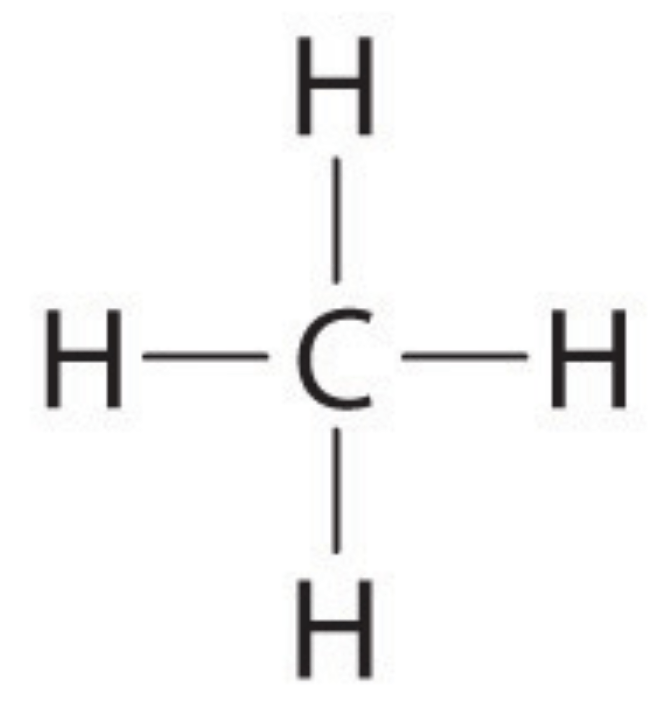
Classify the following molecule.
polar
nonpolar
Classify the following molecule as polar or nonpolar: HCl
Polar
Nonpolar
Classify the following molecule as polar or nonpolar: F2
Polar
Nonpolar
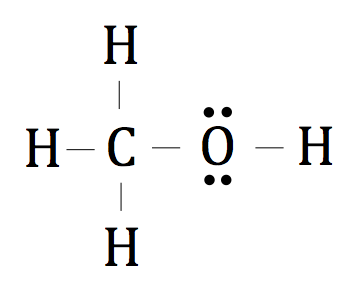
Is the following molecule polar or nonpolar?
polar
nonpolar
Electronegativity is a measurement of the ability of a nucleus to:
attract bonding electrons
attract other nuclei
attract electrons in the non-valence energy levels
Which of the following formulas represents a polar molecule?
H2
NI3
CO2
CCl4
Classify the following molecule as polar or nonpolar: NCl3
polar
nonpolar

Is the following molecule polar or nonpolar?
polar
nonpolar

Is the following molecule polar or nonpolar?
polar
nonpolar

Is the following molecule polar or nonpolar?
polar
nonpolar

The total number of electrons to be counted for the Lewis structure of the PO43- polyatomic ion is:
8
26
29
32
What molecular geometry would the compound PCl3 have?
Trigonal planar
Trigonal pyramidal
Tetrahedral
Linear

Is this molecule polar or non-polar?
Polar
Non-polar

Is this molecule polar or non-polar?
Non-polar
Polar
What molecular geometry will this compound have? BCl3
Trigonal planar
Tetrahedral
trigonal pyramidal
bent
What geometry will this molecularcompound have?: CCl4

