Font size
 Worksheets
NEWTONS LAWS
Total questions: 67
Worksheet time: 1hrs 2mins
A soccer ball is sitting in the middle of a field. The ball will remain at rest until an outside force like a players foot or the wind acts upon it. Which of Newton's laws is represented by this?
1st
2nd
3rd
Think about pushing a shopping cart and a car. If you apply the same amount of force to both, the shopping cart will travel fast, but the car will hardly move. To move the car yo would need a larger force. Which of Newton's laws is being represented?
1st
2nd
3rd
Sally jumps on her trampoline. She exerts a force on the trampoline and the trampoline exerts an equal but opposite force back on Sally. This represents
Law 1
Law 3
Law 2

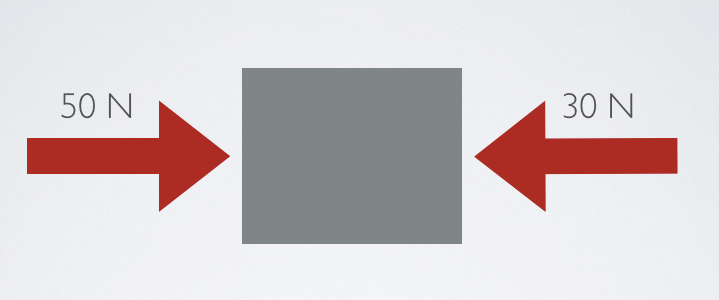
What Newtons law does this picture represent
Newtons 1st law
Newtons 2nd law
Newtons 3rd law

Which law explains that it would take more force to push the car than the lawnmower?
1st
2nd
3rd
There is a skateboard rolling and then Billy steps on it and it stops. What Law of motion is this?
3rd
2nd
1st

Which way would a swimmer push to move forward in the water?
To the left
Forward
Backward
Observe what happens to the motion of the penny. Which of Newton's Laws does this represent?
Newton's 1st Law, inertia
Newton's 2nd Law, Force = m x a
Newton's 3rd Law, action/reaction
Watch as Blake pushes the 2 cars of different masses with about the same force. Observe what happens. Which of Newton's Laws does this represent?
Newton's 1st Law, inertia
Newton's 2nd Law, Force = m x a
Newton's 3rd Law, action/reaction

Newton's 1st Law
Newton's 2nd Law
Newton's 3rd Law

Newton's 1st Law
Newton's 2nd Law
Newton's 3rd Law

Newton's 1st Law
Newton's 2nd Law
Newton's 3rd Law


Which of the following is the units for acceleration?
kg*m/sec/sec
kg*m/sec
m/sec/sec
m/sec 2
force
mass
acceleration
velocity

An archer pulls the bowstring back, then releases the string and the arrow flies forward. Pulling the string back is the...
action force
reaction force
net force
inertia

An archer pulls the bowstring back, then releases the string and the arrow flies forward. The arrow flying forward is the...
action force
reaction force
net force
inertia
Which law states F=ma?
Newtons first law
Newtons second law
Newtons third law
Newtons first law is also called what?
Law of motion
Law of action and reaction
Law of force
Law of inertia
An evil ewok threw a rock with a force of 24.6N and an acceleration of 6m/s2 at an innocent stormtrooper. What was the rocks mass?
4Kg
41kg
4.1kg
46kg
Your car has a mass of 2500 kg and a force of 5000 N. How fast will it accelerate?
20 m/s2
2 m/s2
0.5 m/s2
120 N
A 20 kg bike accelerates at 10 m/s2. What was the force?
25 Newtons
20 Newtons
200 Newtons
10 Newtons
Jenny applies a 60 N force to a 20 Kg cart, what is the acceleration of the cart if friction can be neglected?
1200 m/s/s
0.33 m/s/s
20 m/s/s
3 m/s/s
The mass of a wagon is 40 kg. The wagon accelerates at 8 m/s2 . What is the force?
38.25 Kg
320N
5N
3.825Kg
If an object was accelerating at 10 m/s2, and a force of 10 newtons was required to accelerate it, what was the object's mass?
1kg
10kg
5kg
2kg
The more mass an object has, the _______ force it takes to accelerate it.
more
less
Jenny applies a 60 N force to a 20 Kg cart, what is the acceleration of the cart if friction can be neglected?
1200 m/s/s
0.33 m/s/s
20 m/s/s
3 m/s/s
What is the mass of a truck if it produces a force of 14,000N while accelerating at a rate of 5 m/s2
Sally has a car that accelerates at 5 m/s2. If the car has a mass of 1000 kg, how much force does the car produce? (DON'T FORGET TO LABEL)
(a)
Your car will accelerate at a rate of (a) m/s2 if it produces 5000N and has a mass of 2000kg.
If a force of 26 N is exerted on two balls, one with a mass of 0.52 kg and the other with a mass of 0.78 kg, which ball will have the greater acceleration? (F=ma)
The one with a mass of .78 kg will have the greatest acceleration.
The one with a mass of .52 kg will have the greatest acceleration.
They will both accelerate at the same rate.
An object with a mass of 20 kg accelerates 8.3 m/s² when an unknown force is applied to it. What is the amount of the force?
An object with a mass of 7.5 kg accelerates 8.3 m/s2 when an unknown force is applied to it. What is the amount of the force?
What does it mean when forces are balanced?(Select all that are correct)
The object is accelerating.
The object is moving at a constant velocity.
The object is at rest.
What is the effect of mass on inertia?
More mass means less inertia.
Mass has no effect on inertia.
More mass means more inertia.
Only shape, not mass, affects inertia.
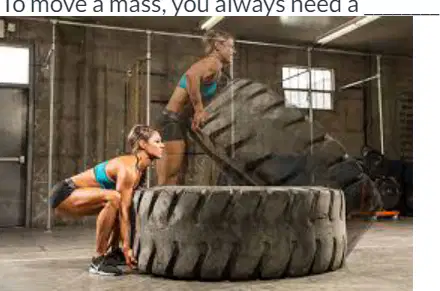
To move a mass, you always need a ______.
speed
friction
air resistance
force
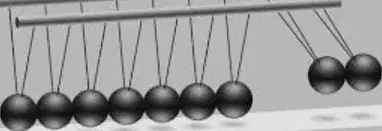
Miss Stanley is playing with the Newton's Cradle again! According to the picture, how many balls should go up on the opposite side of this Newton's Cradle?
two
four
one
three
Which of the following best describes inertia?
The tendency of an object to resist changes in its state of motion
The force that pulls objects toward the Earth
The energy required to move an object
The speed at which an object moves

Which one of Newton's laws is shown
3rd law
2nd law
1st law

Which one of Newton's laws are displayed
2nd law
1st law
3rd law

Which of Newton's laws is shown
1st law
3rd law
2nd law

This is Newton's 2nd law
True
False
An object in motion will stay in motion and an object at rest will stay at rest unless acted upon by an outside force. Which law does this describe
2nd law
1st law
3rd law
Figure skaters A and B both apply the same amount of force to skate forward. If figure skater B has faster acceleration, is her mass less than that of figure skater A?
Yes
No
In referring to how much matter a body contains, we use the term:
Volume
Weight
Mass

Alan travels 100 km in 5hrs. Find his average speed in km/h
5km/hr
10km/hr
50km/hr
20km/hr
What is the formula for average speed?
s = d2 – d1 / t2 – t1
s = d / t
s = d2 + d1 / t2 + t1
s = d1 – d2 / t1 – t2

Match the following average speeds to the correct graph.

0.2

1.66

0.12

0.15

5.2
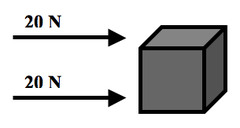

Which of the following is an example of an unbalanced force?