
 Worksheets
DMV Test
Total questions: 80
Worksheet time: 20hrs 0mins
The minimum age to receive a drivers license is ___.
14
16
15
For the first 12 months of your provisional license term, you are not allowed to drive ___________________.
with passengers under the age of 20
between the hours of 11:00 am and 5:00 pm
with any passengers after 9:00 pm
If you get a traffic ticket, you must follow certain procedures that usually require _______________.
a court appearance and paying fines
talking behind-the-wheel training
the cancelation of your car insurance
When approaching an intersection controlled by a STOP sign, you should _______________.
slow down and cross the intersection if it is clear
always come to a complete stop behind a crosswalk before proceeding
stop only when you see pedestrians crossing
A person with a Class C drivers license may operate
a 3-axle vehicle weighing 6,000 lbs. or more
any truck
a 2-axle vehicle with a Gross Vehicle Weight Rating of 26,000 lbs, or less
You must give your new address to the DMV within ___ days if you move.
15
20
10
Two yellow lines (one solid, another broken) in the center of a two-way road mean that vehicles traveling ___________.
in both directions may pass
next to the broken line may pass
next to the solid line may pass
You may only stop long enough to pick up or drop off passengers or mail. This statement is true for parking at a _______ curb.
red
white
blue
When you cannot stop safely at a yellow traffic light before entering an intersection, ______________.
enter the intersection carefully and continue across
accelerate so you'd cross the intersection before the light turns red
stop in the intersection as soon as the light turns red
If there is no crosswalk or limit line near an intersection, you should stop
20 ft before the corner
one car length before the corner
at the corner

What does this sign mean?
Slippery when wet
Narrow lines ahead
The right lane will end ahead
A flashing yellow light at an intersection means ______________.
stop before entering the intersection if you can do so safely
stop and yield to all cross traffic before crossing the intersection
slow down and cross the intersection carefully
When you have a green light, but traffic is blocking the intersection, you should ___________.
stay out of the intersection until traffic clears
enter the intersection and wait until traffic clears
change your lane and go around the traffic
You may legally turn right on a steady red light _______________.
after slowing down and making sure it is safe
when permitted by a sign
after you come to a complete stop unless otherwise posted
When you are about to make a turn in direction of a lighted green arrow, which of the following is true?
you may turn without checking traffic
oncoming vehicles and pedestrians are stopped by a red light
All traffic in the intersection must yield to you
Orange road signs warn of a ___________ ahead.
school zone
railroad crossing
road contrustion
Smoking in a vehicle with a minor present is _______________.
illegal whether the vehicle is in motion or parked
not restricted by law
illegal unless the child is your relative
It is illegal to ____________________.
have an unrestrained animal in the vehicle
adjust the rearview mirror while driving
listen to music through headphones while both ears are covered
Which of the following is not only dangerous but also illegal while driving a motor vehicle?
writing, sending, or reading text messages
talking to passengers
eating and drinking
When can you legally use your cell phone while driving?
in case of an emergency
never
when waiting for a train to pass at a closed gate
Which of the following is a positive and safe way to handle road rage?
Trying to gain the upper hand and teach someone a "lesson"
Staying away from drivers who are speeding or appear anxious
Establishing eye contact and responding on negative behavior
What should you do if you feel drowsy while driving on a trip?
drink coffee to stay awake
eat a snack
get off the road and get some sleep
Why is it dangerous to keep loose objects in the cabin of your vehicle?
They will distract you from paying attention to the road
Your passengers could feel uncomfortable having them around
They could be thrown into motion and injure someone in the event of a sudden stop
On what type of road surface do drivers have the best traction and need less room to stop?
Ice
Dry concrete
Dirt
When two vehicles moving at the same speed are involved in a collision, the vehicle that __________________.
weighs less will take the greater impact
weighs more will take the greater impact
has a manual transmission will take the greater impact
When you're driving uphill,___________________.
you need to double your speed
it is more difficult to stop your car as opposed to driving downhill
it is much easier to stop your car as opposed to driving downhill
To safely negotiate a curve, use your brakes ________________.
after you enter the curve
before you enter the curve
while driving through the curve
You must turn on your headlights _________________.
before starting your vehicle
whenever you use your windshield wipers
when vehicles cannot be seen at a distance of 2,000 ft
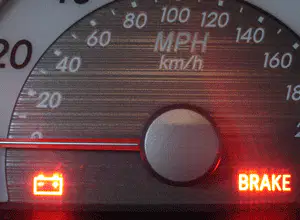
Choose the correct names for the car symbols shown in this picture.
Engine failure; parking brake engaged
Battery low warning light; brake failure indicator
Oil pressure low; parking brake engaged
Battery low warning light; parking brake engaged
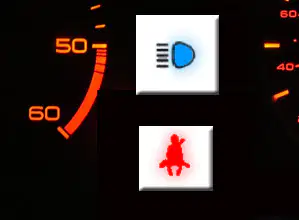
Choose the correct names for the car symbols shown in this picture.
Low beam; safety belt
High beam; safety belt
Low beam; head restraint system
High-beams; air bag on
You must notify the DMV within 5 days, when you ________.
sell or transfer your vehicle
purchase a vehicle from a private party
change your address
You need to maintain steady pressure on the ______________ to activate ABS.
accelerator
clutch
break pedal
How can you save fuel while driving on hills?
brake while going uphill
accelerate on the hill
accelerate before you start climbing the hill
You can be jailed up to six months and fined up to $1,000 if you _________________.
abandon or dump an animal on the road
are convicted of being a habitual truant from school
drive faster than the posted limit
Driving slower than other cars ______________.
has no effect on the chances of having collision
increases the chance of having a collision
helps prevent collisions
What should you do when you see a school bus stopped ahead with its red lights flashing on your side of the road?
slow down and pass the bus carefully
stop, check for crossing the students, then proceed
stop and remain stopped as long as the red lights flash

In this graphic, if both cars arrive at the same time _____________________.
Car B doesn't need to stop
Car A should yield to Car B
Car B should yield to Car A
None of these answers are correct
When you come within 100 ft of the uncontrolled railroad crossing and you cannot see the tracks for 400 ft in both directions, the speed limit is ____ mph.
15
20
25
Unless otherwise posted, the speed limit in business and residential areas is ____ mph.
25
30
35
50
Which of the following is not true about seat belts?
The seat belt must be worn by you and all passengers
Wearing a seat belt prevents collisions
If a passenger is 16 years or over, both of you will be given a ticket
A child must be secured in a child restraint system in the rear seat if he or she is _______________.
six years old and 4'10" tall
seven years old and 4'7" tall
nine years old and 4'4" tall
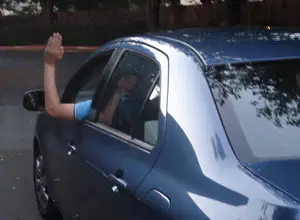
This driver is signaling his or her intention to __________.
turn left
turn right
slow down
stop
If you can choose among three lanes on your side of the road, ________________________
pick the right lane for the smoothest driving
use the middle lane to drive slowly, enter, or turn off the road
use the left lane to go faster, pass, or turn left
Unless prohibited by a sign, you may legally make a U-turn ________________.
at an intersection with a green light
in front of a fire station
at an intersection on a one-way street
Any time you merge with other traffic, you should _____________.
have the right-of-way
make sure you have a gap of at least four seconds
stop first and check for cross traffic
You are traveling on a one-way street. When you want to turn left into another one-way street, you __________________.
may turn only if traffic on the crossing street moves right
have to start your turn from the far right lane
may end your turn into any lane that is safely open
Turn your front wheels toward the curb when you park your car __________.
facing downhill
facing uphill
on a level street
To be safe from air-bag related injuries, you should sit _______________.
as close as possible to the steering wheel
within 5 inches of the steering wheel
at least 10 inches away from the steering wheel
To use your turn signals legally, you should ____________________.
signal for a lane change only when other traffic is present
never use both electric and hand signals
always signal to let other drivers know your intentions
________ is the second most common drug found in the bodies of collision victims
Cocaine
Marijuana
Heroin
Alcohol
The first most common drug found in the bodies of collision victims
Cocaine
Marijuana
Heroine
Alcohol
Drivers under 21 may not carry unopened containers of liquor, beer, or wine in a vehicle unless _______________.
someone over 21 is also present
they are placed in the trunk
they are in the glove compartment
The Zero tolerance law applies to drivers _________.
all ages
under the age of 21
over 21
In California, it's illegal for anyone 21 years of age or older to drive a motor vehicle with a BAC of ____% or more.
0.01
0.05
0.08
It's illegal to drive a motor vehicle with a BAC of ____% or more if under the age of 21.
0.01
0.005
0.08
In which of the following situations will you be required to take a test of your blood, breath, or urine for the presence of alcohol or drugs?
Only when there is a strong evidence that you have been drinking
After being arrested on suspicion of DUI
Only when you are involve in a collision
To avoid a collision, you need as much time as possible to react. Allow a following distance of at least ____ seconds.
two
three
four
When you hit a parked vehicle and cannot find the owner, you should ___________.
leave a note with your name and address and report the collision to police
leave a note with your insurance information and drivers license number
call the police to report the unattended vehicle
If someone is following you too closely, what is the best way to lose a tailgater?
honk your horn to remind the tailgater about safe following distance
speed up and leave the tailgater behind
slow down or pull off the road when it is safe and let the tailgater pass
When you drive along the right-rear side of another vehicle, you are ______________.
maintaining a space cushion on your left side
using a good defensive technique
in one of the driver's blind spots and in danger of a collision
To drive defensively, you should _______________
concentrate all your attention on a car in front of you
keep your eyes moving, look over and around the vehicle ahead
expect the other driver to do what you think he or she should do
In order to identify hazards early and avoid last minute moves, you should scan the road _________ seconds ahead of your vehicle.
10 to 15
5 to 10
15 to 20
When merging with freeway traffic, you should try to merge ________________.
5 mph slower than freeway traffic
at a speed that matches the posted speed limit
at the same speed as freeway traffic
If you are driving a vehicle on a two-lane highway where passing is unsafe, and five or more vehicles are following you, _________________.
pull to the side of the road wherever you can and let them pass
maintain your speed and lane position
speed up and leave them behind
At freeway entrances, you should check traffic by ____________________.
using the mirrors only
looking over the shoulder
looking in all the mirrors and over the shoulder
Why drivers have difficulty seeing side traffic at T-intersections in rural areas
Curved highways hide side streets
These sides streets are hidden because of crops, bushes, or tree overhangs
Drivers don't expect traffic coming from side streets
When you see a street with white markings only, what kind of street is it?
One-way street
Two-way street
Depends on the posted sign
Weaving in and out of lanes during heavy traffic _____________________.
creates more space for lane changes
slows down other vehicles
improves fuel efficiency
Roadways are most slippery ______________.
after it has been raining for awhile
during a heavy downpour
when it first starts to rain
What is the correct response when your vehicle starts to skid on ice?
Switch to a low gear
Take your foot off the accelerator
Hit the brakes hard
California law states that you must drive with your headlights ____________________.
no later than 30 minutes after sunset and until at least 30 minutes before sunrise
when you cannot see at least 2 miles in front of your vehicle
one hour before sunset until one hour after sunrise
What should you do if you have a tire blowout?
Use your brake to slow down and stop to fix the tire
Turn your steering wheel in direction of the blown tire and apply the brake
Hold the steering wheel tightly and take your foot off the accelerator
If your accelerator suddenly gets stuck what should you do?
Shift to neutral
Put gear in reverse
Shut off your engine
When driving at night, only use your high-beam headlights ______________.
when it is legal and safe
on unlighted streets
when you cannot see oncoming traffic
You should never cross a railroad track if ______________________.
you have passengers in the vehicle
the tracks have frequent train traffic
there isn't room on the other side of the tracks
Drivers are required to yield the right-of-way to pedestrians ___________.
only within marked crosswalk
only when traffic is controlled by signals or signs
withing any crosswalk, marked or unmarked
Many animals are most active __________.
on sunny winter days
around dusk and dawn
in the afternoon
To safely share the road with a light rail vehicle, you _________________.
may turn in front of an approaching LRV at an uncontrolled intersection
should watch traffic signals closely because they can change for the light rail vehicle
should never drive in the lane nextto the light rail vehicle
Why should you visually check for motorcycles when changing lanes?
They have the right-of-way at intersections
They need more space to maneuver
They are small and are often hidden in blind spots
When you see a blind person pulling in his or her cane and stepping away from the crosswalk, this usually means _________________.
wait and let the blind person go first
you may go
honk your horn to let the person know of your presence

