
 Worksheets
Electronegativity / Molecule Models
Total questions: 40
Worksheet time: 36mins

Which element has a higher electronegativity value?
Niobium
Tin
Cadmium
Iodine

Which element has a lower electronegativity value?
Calcium
Barium
Electronegativity (a) as you go down a group.
Electronegativity trends are the same as:
Atomic radius trends
Ionization energy trends
Both of these
None of these
What does electronegativity do as you go across a period?
decrease
no pattern
stay the same
increase
As you move across a period, the outer electrons are ________ to the nucleus, so the nucleus of the atom is ________ to attract electrons in a bond.
closer, more able
closer, less able
further, less able
further, more able
Do noble gases have electronegativity values?
yes
no
Why does electronegativity decrease as you go down a group?
As you go down a group, the outer electrons are further away from the nucleus
As you go down a group, the nucleus is less able to attract electrons in a bond
Both of these
None of these

Which is the correct order of electronegativity from lowest to highest?
Zinc, Nickel, Iron, Scandium
Iron, Nickel, Zinc, Scandium
Scandium, Zinc, Iron, Nickel,
Scandium, Iron, Zinc, Nickel
Electronegativity is the ability of an atom to attract electrons in a physical bond.
false
true
A material used in making Electrical wires
Metallic Bond
A material used to make insulation wrapped around transmittion lines
Covalent Bond
A material that is dissolved in large quantities in sea water
Ionic Bond
Atoms form bonds in such a way as to produce the electron confguration of (a)
In General, the melting point of ionic compounds tend to be (a)
In general, the water solutions of ionic compounds are able to (a) Electrical Current
Cesium is an example of an element with a (a) Electronegativity
The sheilding effect would be (a) in an atom of Chlorine than in an atom of Flourine.
A bond formed between two atoms with an electronegativity difference of 0.7 is likely to be a (a) covalent Bond
Electronegativity differences that result in a polar covalent bond range between 0.5 and (a) .
Conductivity in metals can be explained by what is called a (a)
(a) diatomic molecules are linear.
A dipole interaction takes place when the positive end of one polar molecule attracts to the (a) end of a second polar molecule
In general, the boiling of a polar liquid is likely to be (a) than the boiling point of a nonpolar liquid of about the same mass
In General, the vast majority of ionic compounds are (a) at room temperature.
Use your electronegativities chart to find the difference between each element and predict what type of bond.
Calcium and Fluorine is
(a)
Use your electronegativities chart to find the difference between each element and predict what type of bond.
Carbon and Silicon
(a)
Use your electronegativities chart to find the difference between each element and predict what type of bond.
Beryllium and Sulfur
(a)
Use your electronegativities chart to find the difference between each element and predict what type of bond.
Hydrogen and Germanium
(a)
Use your electronegativities chart to find the difference between each element and predict what type of bond.
Zinc and Bromine
(a)

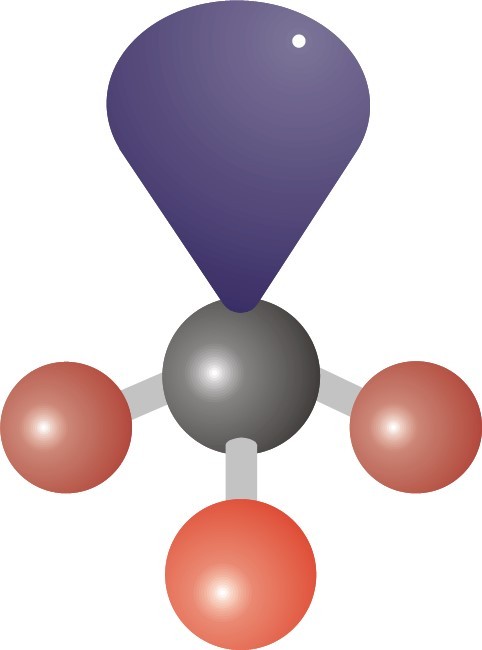

What molecular geometry is the structure shown here? (H2O)
tetrahedral
trigonal planar
bent
trigonal pyramidal
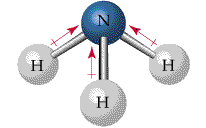
Use your knowledge and electronegativity sheet to predict what the following compound is classified as.
polar covalent
nonpolar covalent
ionic
metallic

Use your knowledge and electronegativity sheet to predict what the following compound is classified as.
non-polar covalent
polar covalent
ionic
metallic
A diatomic molecule like O2 is always _____ because electrons are shared _____
nonpolar; unequally
polar; equally
nonpolar; equally
polar; unequally


When you have Br-Br, what is the polarity?
Polar
nonpolar
Ionic
Partial charges are present in which type of bond?
Ionic
Nonpolar Covalent
Polar Covalent
Both Polar Covalent and Ionic

