
Font size
 Worksheets
anatomy and physiology
Total questions: 81
Worksheet time: 1hrs 22mins
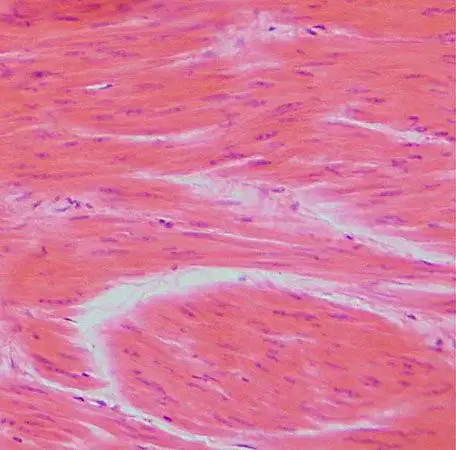
what type of muscle is this?
smooth
cardiac
skeletal
the trachea is lined with what?
pleura
ciliated mucosa
smooth muscle
squamous epithelium
which of the following hormones would bind to receptors located on the inside of the cell?
testosterone
prolactin
growth hormone
follicle-stimulating hormone
which membrane is a serous membrane that folds into itself into two-layered membranous sac around the lungs?
pleura
visceral membrane
peritoneum
pericardium
the cervical vertebrae has 7 vertebrae, the lumbar vertebrae has 5 vertebrae. how many vertebrae does the thoracic vertebrae have?
3
6
8
12
true or false: steroid hormones are made from cholesterol
true
false
rank the following blood vessels in order of their average pressure, from high to lowest: artery, vein, arteriole, venule, aorta, capillary.
aorta > artery > arteriole > capillary > vein > venule
capillary > arteriole > venule > artery > vein > capillary
aorta > arteriole > venule > artery > vein > capillary
capillary > vein > venule > artery > arteriole > aorta
what muscle flexes the leg and extends the thigh?
gluteus medius
quadriceps
hamstrings
quadriceps femoris
what forms the posterior roof of the mouth?
uvula
soft palate
hard palate
labia
which is the largest cartilage in the body?
nose
ear
epiglottis
thyroid
single layer of flattened cells
simple columnar
stratified columnar
simple squamous
stratified squamous
pseudostratified
which blood would normally contain the highest systolic and diastolic blood pressure?
veins
arteries
capillaries
which organ forms part of the gastrointestinal tract?
diaphragm
trachea
aorta
esophagus
where do the auditory tubes enter at the pharynx?
epiglottis
laryngopharynx
oropharynx
nasopharynx
simple diffusion of water
bulk transport
osmosis
exocytosis
solute pumping
endocytosis
what is the most important element found in bones?
potassium
sodium
calcium
phosphate
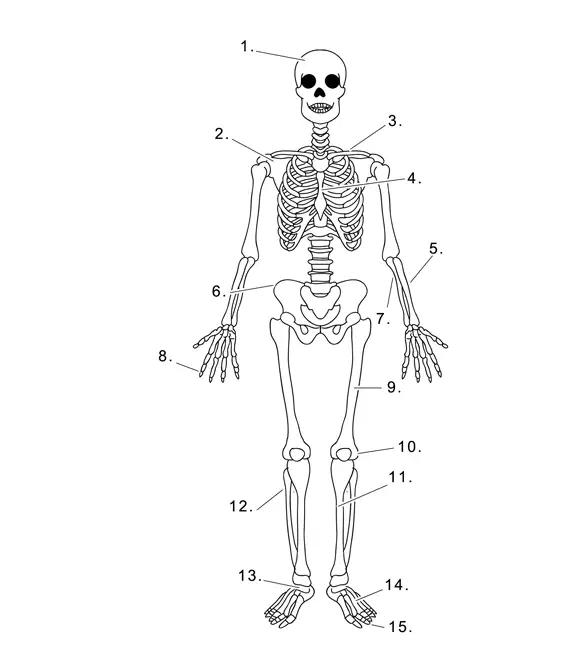
number 4 is also known as besides the breastbone?
ACL
sternum
kneecap
patella
which of these is not a characteristic of skeletal muscles?
striated
cells are multinucleated
involuntary
cells are surrounded by bundles of connective tissue
what are the two subdivisions of the autonomic nervous system?
central nervous system
parasympathetic nervous system (rest and digestion process)
sympathetic nervous system (fight-or-flight response)
somatic nervous system
what is Athlete's foot caused by?
parasite
fungus
virus
bacterial
what muscle helps and is used for chewing because it elevates the mandible to close the mouth and is is assisted by the temporalis?
masseter
frontalis
orbicularis oculi
occipitofrontalis
where would you find the reticular layer?
epidermis
hypodermis
dermis
subcutaneous
during the diastole part of the cardiac cycle, which of these valves are closed?
aortic
semilunar
tricuspid
pulmonic
which one of these is not in the nucleus?
protons
neutrons
electrons
what is the lesser omentum?
a saliva-producing gland that produces a sticky alkaline mucus
attaches to the greater curvature to the posterior wall
secrete gastric juices
attaches to the liver to the lesser curvature
which of the following is an important function of the skull?
to protect vital organs like the spinal cord and the eyes
to protect vital organs like the spinal cord and the nose
to protect vital organs like the brain and the eyes
to protect vital organs like the brain and the carpus
what allows light to enter the eye?
pupil
retina
cornea
iris
what is the heart sound caused by?
relaxation of diastole
the contraction of systole
the valves (tricuspid and bicuspid) opening and closing
the exchange of gasses between blood vessels by capillaries
blood leaving the right and left atrium into the right and left ventricles
which sequence is most correctly represents the network of passageways which normally permits air to flow from the external environment to the human lungs?
nasal cavity, bronchioles, trachea, pharynx, bronchi
nasal cavity, bronchi, bronchioles, pharynx, trachea
nasal cavity, trachea, pharynx, bronchi, bronchioles
nasal cavity, pharynx, trachea, bronchi, bronchioles

what type of muscle is this?
cardiac
skeletal
smooth
which of the following is the most deadly skin cancer of all skin cancers?
squamous cell carcinoma
basal cell carcinoma
malignant melanoma
contractile unit of muscle
sarcolemma
sarcomere
epimysium
sarcoplasmic reticulum
how many bones does the skeleton have?
5,000
206
365
108
name the two hormones produced by the adrenal cortex. (also sex hormones but name the other two.)
epinephrine
mineralocorticoids (aldosterone)
norepinephrine
glucocorticoids (cortisone & cortisol)
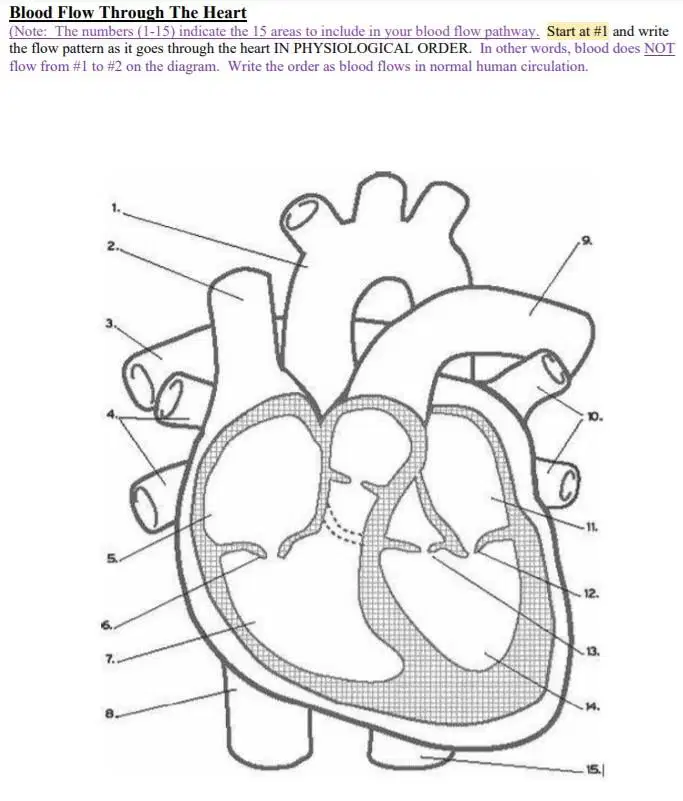
what is number 15 pointing to?
descending aorta
inferior vena cava
right atrium
coronary sinus
what is the gap between the nerve and the muscle?
synaptic cleft
neuromuscular junction
neurotransmitter
which of these is not a function of the respiratory system?
to keep blood supplied with oxygen
removes carbon dioxide and supplies oxygen
transport materials in the body via the blood
to warm, purify, and moisten air

what type of muscle is?
smooth
skeletal
cardiac
what is the body's major digestive organ?
large intestine
small intestine
mouth
stomach
what is the purpose the thyroid hormone?
to help with the body's posture
to control the body's activities
to regulate body temperature
in humans, which structure is primarily responsible for maintaining balance and coordinating motor activities?
medulla
spinal cord
cerebrum
cerebellum
contraction of the biceps and triceps muscles in the arm would be regulated by the:
autonomic nervous system
hypothalamus
somatic nervous system
pituitary gland
what reaction is a series of metabolic pathways that occur in the mitochondria?
aerobic respiration
anaerobic glycolysis
cellular respiration
isotonic contractions
name two hormones produced by the adrenal medulla.
epinephrine
follicle-stimulating hormone (FSH)
norepinephrine
antidiuretic hormone (ADH)
what allows light to pass through your eye?
iris
cornea
pupil
scelera
which of these is not part of the urinary system because it's also parts of the reproductive system?
ureters
kidneys
urethra
bladder
what is the correct pathway of the circulatory system which describes the passage of blood originating in the leg?
vena cava → left atrium → right atrium → lungs → left ventricle → right ventricle → aorta
vena cava → right atrium → left atrium → lungs → right ventricle → left ventricle → aorta
vena cava → left atrium → left ventricle → lungs → right atrium → right ventricle → aorta
vena cava → right atrium → right ventricle → lungs → left atrium → left ventricle → aorta
after consuming a banana split, which hormone is most likely to increase?
glucagon
parathyroid hormone
insulin
prolactin
which part of the muscle is covered by the endomysium?
sarcoplasmic reticulum
muscle fiber
sarcolemma
after having a double-bacon cheeseburger with a milkshake, which of these hormones would NOT expect to increase?
secretin
cholecystokinin
insulin
glucagon
the vertebral column, rib cage and skull are part of what division of the skeletal system?
appendicular
intermediate skeleton
axial
which of these following statements are true about flexion?
the angle between two joints is increased
the bone moves toward the center of the body
the angle between two joints are decreased
the bone moves way from the body
true or false: the right lung has 2 lobes
true
false
the blood vessel that carries oxygenated blood to the left atrium is called what?
pulmonary arteries
pulmonary veins
superior vena cava
aorta
What percentage of your blood is plasma?
55%
45%
35%
1%
What physical feature of large systemic arteries (resistance vessels) makes them relatively more responsive to changes in intracellular calcium concentrations?
Thick tunica media
Absent tunica media
Thick tunica intima
Absent tunica intima
Stimulus, Efferent Pathway, Response, Input, Output, Afferent Pathway, Receptor, Control Center
What is the correct order?
Receptor, Stimulus, Input, Efferent Pathway, Control Center, Output, Afferent Pathway, Response
Stimulus, Receptor, Input, Efferent Pathway, Control Center, Output, Afferent Pathway, Response
Stimulus, Receptor, Input, Afferent Pathway, Control Center, Output, Efferent Pathway, Response
Receptor, Stimulus, Input, Afferent Pathway, Control Center, Output, Efferent Pathway, Response
The heart is located ____ to the diaphragm.
Superior
Inferior
Medial
Lateral
The muscles are ____ to the skin.
Superficial
Proximal
Distal
Deep
The shoulder JOINT is ____ to the elbow JOINT.
Proximal
Distal
Superior
Inferior
The vertebral region is _______ to the scapular region.
Lateral
Medial
Superior
Inferior
How many bones in phalanges in hand consists?
14
18
12
15
The layer of the heart that is damaged during a heart attack is the
epicardium
pericardium
endocardium
myocardium

Ball and socket joints fall under which larger category of joints?
Fibrous joints
Cartilaginous joints
Synovial joints
Immobile joints

The membrane surrounding bones:
Periosteum
Osteoclast
Osteon
Epiphysis
What acidic compound is present in gastric juice within the stomach that acts primarily in protein digestion?
hydrochloric acid
lactic acid
citric acid
acetic acid
What layer of skin senses pain?
callus
epidermis
dermis
hypodermis
Vasodilation is used to
Increase body temperature
Decrease body temperature
What are the functions of the digestive system?
digestion, absorption, elimination
ingestion, congestion, elimination
congestion, digestion, elimination
Enzymes in your saliva help break down food, this is an example of ...
Mechanical digestion
Chemical digestion
What is the function of the teeth and tongue
chemical digestion
break down food
mechanical digestion
they only chew food
The mouth carries out
mechanical digestion
chemical digestion
mechanical and chemical digestion
No digestion
Which of the following helps digest carbohydrates in the mouth...
salivary amylase
lysozymes
mucin
bolus
Name the proteins on the surface of red blood cells.
Antibodies
Antigens
Plasma
Collagen
Where are antibodies located?
surface of red blood cells
surface of white blood cells
plasma
surface of platelets
Someone with blood type B has B antigens on their RBC's and B antibodies in their plasma.
true
false

