
 Worksheets
Cells Part II Review
Total questions: 101
Worksheet time: 2hrs 28mins
What is DNA and RNA made up of?
Nucleotides
Monosaccharides
Polysaccharides
Sugars
Which of the following are nucleotides NOT made up of?
A carbon compound
A sugar
A phosphate group
A nitrogen-containing base
What shape is DNA?
A double helix
A single strand
A pleated sheet
An omega helix
What does DNA stand for?
Deoxyribonucleic acid
Ribonucleic acid
Deoxynucleic acid
Nucleic acid
What does RNA stand for?
Deoxyribonucleic acid
Ribonucleic acid
Deoxynucleic acid
Nucleic acid
How many polynucleotide chains make up RNA?
2
1
3
4
What four nitrogen base pairs make up DNA?
Adenine, Thymine, Guanine, Cytosine
Adenine, Uracil, Guanine, Cytosine
Adenine, Thymine, Glucose, Cytosine
Adenine, Thymine, Guanine, Fructose
What four nitrogen base pairs make up RNA?
Adenine, Thymine, Guanine, Cytosine
Adenine, Uracil, Guanine, Cytosine
Adenine, Thymine, Glucose, Cytosine
Adenine, Thymine, Guanine, Fructose
What base pair does Adenine (A) bind with in DNA?
Guanine
Cytosine
Thymine
Uracil
What base pair does Guanine (G) bind with in both DNA and RNA?
Guanine
Cytosine
Thymine
Uracil
What base pair does Adenine (A) bind with in RNA?
Guanine
Cytosine
Thymine
Uracil
How would you read the second strand to this first strand? 5'-ATTGACC-3’
3’-TAACTGG-5’
5’-TAACTGG-3’
3'-CGGTCAA-5'
5'-CGGTCAA-3'
Where in the cell can DNA be found?
In the ribosomes
In the nucleus
In the cytoplasm
All of the above
For the given DNA sequence, what would the complementary RNA sequence be?
A-G-G-C-T-A
T-G-C-A-A-G
U-C-C-G-A-U
U-C-G-C-A-U
T-C-C-G-A-T
DNA codes for which of the following?
Monosaccharides
Traits
Proteins
Ribosomes
RNA codes for which of the following?
Monosaccharides
Traits
Proteins
Ribosomes
What are the three parts of a nucleotide?
Phosphate group
Nitrogenous base
Thymine
Sugar
Hydrogen
If cytosine accounts for 32% of a DNA molecule's total bases, what percentage will guanine account for?
68%
32%
64%
18%
The process of DNA replication is called semi conservative because it results in
none of these
Two DNA molecules. One original molecule and one with two new strands
two exact copies with new strands
two DNA molecules, each with 1 original strand and one new.
Why does DNA replicate?
To create a duplicate copy in case the original gets damaged
New cells will have a copy of the DNA
To create a new copy to replace the damaged original
Nitrogen bases are joined by which type of bond?
polar bonds
hydrogen bonds
phosphate bonds
deoxyribose bonds

The picture below shows an enzyme unwinding and unzipping DNA.
What is the name of this enzyme?
DNA Helicase
DNA Ligase
DNA polyermase
RNA Polymerase
Which enzyme is responsible for adding the free nucleotides to the replicating DNA?
DNA Helicase
DNA Ligase
DNA polyermase
RNA Polymerase
Which is the first step?
DNA Helicase unwinds original DNA strand
RNA Primase lays down RNA primer for new nucleotide bases.
DNA polymerase builds new strands by bring in new nucleotide bases.
Ligase knits together fragments on lagging strand
Which is the second step?
DNA Helicase unwinds original DNA strand
RNA Primase lays down RNA primer for new nucleotide bases.
DNA polymerase builds new strands by bring in new nucleotide bases.
Ligase knits together fragments on lagging strand
Which is the third step?
DNA Helicase unwinds original DNA strand
RNA Primase lays down RNA primer for new nucleotide bases.
DNA polymerase builds new strands by bring in new nucleotide bases.
Ligase knits together fragments on lagging strand
Which is the fourth step?
DNA Helicase unwinds original DNA strand
RNA Primase lays down RNA primer for new nucleotide bases.
DNA polymerase builds new strands by bring in new nucleotide bases.
Ligase knits together fragments on lagging strand

Which letter in the picture below depicts the leading strand in DNA replication?
A
C
B
None of the above
Which letter in the picture below depicts the lagging strand in DNA replication?
A
C
B
None of the above
DNA replication runs from ______' to _____' and is said to be ______________________
5, 3, antiparallel
3, 5, antiparallel
5, 3, parallel
3, 5, parallel
Okazaki fragments appear on which strand of DNA during DNA replication?
lagging
leading
The directionality of DNA is said to be ___________, because it is side by side by goes in opposite directions.
Anti-directional
Parallel
Anti-parallel
Anti-uniform
During transcription, this type of ribonucleic acid is responsible for copying the DNA and brining it out of the nucleus.
tRNA
mRNA
rRNA
dRNA
When these bond together, they form a protein
Amino Acids
Peptide Bonds
Ribose
Nucleotides
These building blocks consist of a sugar, phosphate, and nitrogen base.
Ribose
Nucleotide
Gene
Protein
A string of nucleotides that contain the information to make a specific protein
Ribose
Amino Acids
tRNA
Gene
During translation, this type of ribonucleic acid is responsible for delivering amino acids to help make a protein.
mRNA
rRNA
tRNA
dRNA
mRNA occurs during this process
Translation
Transcription
Replication
Delivery
How many amino acids are found on one tRNA?
20
4
1
3


Why must transcription occur in the nucleus?
because DNA can't leave the nucleus
because ribosomes are in the nucleus
because DNA polymerase is found there
because helicase unzips the DNA
How are DNA and RNA different? (CHECK ALL THAT APPLY)
Only DNA can leave the nucleus
RNA contains Thymine; DNA contains Uracil
DNA is double stranded, RNA is a single stranded
DNA contains Thymine, RNA contains Uracil
Which organelle contains rRNA and reads the mRNA to synthesize a protein?
Ribosome
Nucleus
Cytoplasm
Nucleotide

What brings the amino acids to the ribosome to assemble a protein?
DNA

Which anticodon would be placed in spot #2
GGC
CCA
GGA
GGT

Which process does this diagram illustrate?
transcription
DNA replication
translation
What determines the shape and function of a protein?
The sequence of amino acids
The type of ribosome that assembles the protein
The cell that manufactures the protein

True or False: mRNA contains anticodons and tRNA contains codons.
True
False
Mutations can be negative because
They can cause cancer
They can cause birth defects
They can help an organism thrive in its environment.
They can affect offspring.
Mutations can benefit humans because they can:
Cause illness
Make an organism more suited to live in its environment.
Make organisms live shorter lives
Cause organisms to grow extra limbs.
Another name for a point mutation is:
Substitution
Frameshift
Insertion
Deletion
ATTTGAGCC- Original
ATTGAGCC - Mutated
The example above is an example of a
Insertion
Point mutation
Deletion
Substitution
Mutations are SOMETIMES helpful to the organism.
True
False
A mutation in which only one nucleotide is altered is called a:
Frameshift Mutation
Deletion Mutation
Point Mutation
Insertion Mutation
Another name for a point mutation is:
Substitution
Frameshift
Insertion
Deletion
A piece of a chromosome is copied and remains within the chromosome
deletion
duplication
inversion
translocation
A piece of the chromosome detches, turns 180 degrees, and reattaches
deletion
duplication
inversion
translocation
Genetic mutations can be...
beneficial, harmful, or neutral
beneficial only
harmful only
neutral only
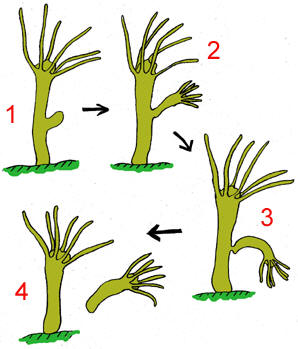
When an offspring grows off from the body of a parent organism it is called __________________.
budding
fission
fragmentation
sporulation
____________________ occurs when a male gamete (sperm) combines with a female gamete (egg).
sporulation
fertilization
fission
regeneration
How many parents are required for sexual reproduction?
0
1
2
3
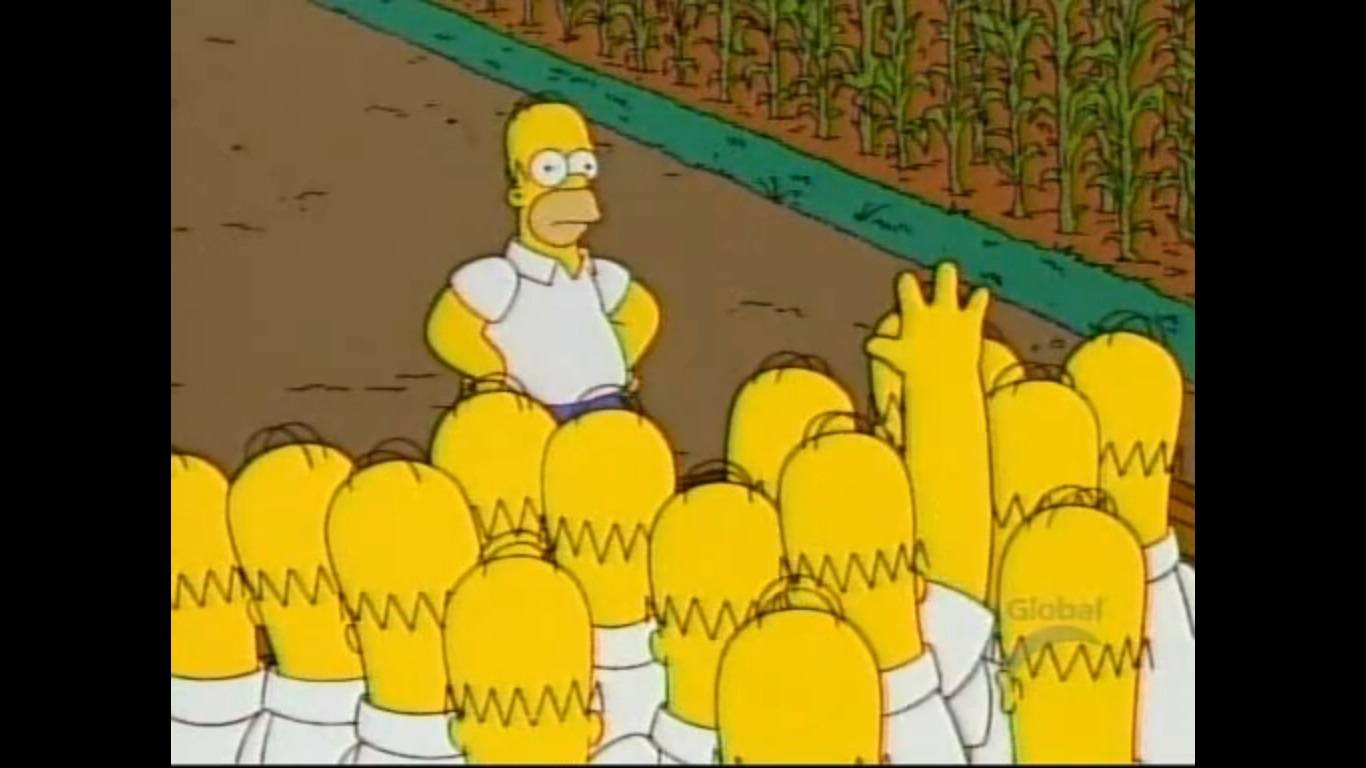
New PLANTS are reproduced from roots, stems, or leaves of the parent plant (Ex: Strawberries, Potatoes)
Sexual Reproduction
Vegetative Reproduction
Budding
Regeneration

Which of the following is not a benefit of asexual reproduction?
Offspring will be successful in an unchanged environment.
Good at adapting to changing environments.
Only requires one parent to produce offspring.
Can reproduce rapidly.

Asexual reproduction is associated with what type of cell division?
Mitosis
Meiosis

What is the type of cell division associated with sexual reproduction?
Mitosis
Meiosis

If a cow has 60 chromosomes in a somatic cell how many chromosomes would be in a cow's sex cell?
60
120
30
90

95% of the cells life cycle
Stage where DNA is copied
Interphase
Metaphase
Telophase
Prophase

Nuclear membrane disappears
Chromosomes can now be seen
Centrioles move to opposite sides
Metaphase
Interphase
Telophase
Prophase

Chromosomes line up at the equator of the cell
Spindle fibers extend from the centrioles to the middle of the chromosomes
Prophase
Metaphase
Anaphase
Interphase

Chromatids separate
Anaphase
Metaphase
Prophase
Telophase

Nuclear membrane reforms around the new daughter cells.
Cytoplasm begins to "pinch" in.
Anaphase
Metaphase
Telophase
Interphase
During what phase of the cell cycle is DNA replicated?
G1 phase
G2 phase
S phase
M phase


Meiosis would occur in which of these cells?
skin cells
liver cells
brain cells
sperm cells
In humans, sperm cell have ___________ chromosomes and are ___________________, while skin cells have _____________ chromosomes are are diploid.
23. haploid. 46 diploid
46. haploid. 23. diploid
23 diploid. 46 haploid
46. diploid. 23. haploid.

