
 Worksheets
Science Review MSA 2 New Book
Total questions: 55
Worksheet time: 34mins
On a hot summer day, a student dropped an ice cube onto a park bench. Within minutes, the ice cube melted. Which best describes the process the student observed?
radiation
combustion
conduction
convection

A cold metal spoon is placed in a bowl of hot soup. Which best describes how the spoon is affected?
The heat from the soup does not affect the temperature of the spoon.
The heat from the soup is conducted through the spoon, making the spoon warmer.
The cold air in the room radiates into the soup, cooling it, and keeping the spoon cool.
The cold from the spoon is conducted into the soup, causing the soup to cool to the same temperature as the spoon.T

Which best explains why a hot air balloon floats?
The heated air expands to fill the balloon. The air in the balloon is now lighter than the surrounding air, causing the balloon to rise.
The heated air expands to fill the balloon. The air in the balloon is now heavier than the surrounding air, causing the balloon to rise.
The heated air contracts to fill the balloon. The air in the balloon is now denser than the surrounding air, causing the balloon to rise.
The heated air contracts to fill the balloon. The air in the balloon is now lighter than the surrounding air, causing the balloon to rise.
James measured the temperature outside his house everyday for 2 months. He observed that on days the sky was mostly cloudy, the temperature was an average of 9 degrees cooler than days the sky was mostly sunny. Which best describes the reason for this pattern?
The clouds blocked radiation from the sun, causing cooler temperatures.
The clouds blocked conduction from the sun, causing cooler temperatures.
The clouds allowed more radiation from the sun to reach the Earth’s surface.
The clouds allowed more conduction from the sun to reach the Earth’s surface.

A small ice cube at a temperature of 0°C is dropped into a glass of water at 28°C and melts. What is the temperature of the water in the glass just after the ice cube melts?
0°C
between 0°C and 28°C
28°C
greater than 28°C
Which best explains how convected heat causes a hot air balloon to stay in the air?
The heat is falling and replacing cooler air.
The heat is produced from the rising of air currents.
The heat is absorbed through the balloon from the sun.
The heat is rising and circulating, causing the balloon to stay up in the air.
Which best explains how ice melts in a person’s hand?
The heat from a person’s hand transfers by radiation to the ice, causing it to melt.
The heat from a person’s hand transfers by conduction to the ice, causing it to melt.
The cool temperature of the ice transfers by radiation to a person’s hand, cooling it off.
The cool temperature of the ice transfers by conduction to a person’s hand, cooling it off.

Tina is boiling water in a metal pot for a weather experiment. What is most likely the reason she would need to use a pot holder for moving the metal pot?
Radiation causes the pot to be hot.
Conduction causes the pot to be hot.
Convection causes the pot to be hot.
Transpiration causes the pot to be hot.
A pot of water is placed on a stove. The water begins to boil rapidly. Which explains why the water is boiling faster?
The cooler water is rising in the pot to replace the warmer water on top through the process of radiation.
The warm water is rising in the pot to replace the cooler water on top through the process of radiation.
The warm water is rising in the pot to replace the cooler water on top through the process of convection.
The cooler water is rising in the pot to replace the warmer water on top through the process of convection.

A boy touches a stove and gets burned. What transfer of heat caused his hand to get burned?
radiation
conduction
convection
combustion

Which is the best choice for the handle of a frying pan?
Metal, because it conducts heat.
Wood, because it conducts heat.
Metal, because it does not conduct heat.
Wood, because it does not conduct heat.
Which substance will conduct the least amount of heat?
glass
copper
plastic
aluminum
Ice cubes are placed in a glass of water that is at room temperature. Which statement best describes the temperature of the water after 10 minutes?
The temperature decreases because some of the water’s heat is lost to the ice.
The temperature decreases because some of the ice’s heat is lost to the water.
The temperature increases because some of the coolness of the water is absorbed by the ice.
The temperature increases because some of the coolness of the ice is absorbed by the water.

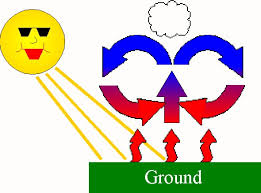
Which part of the diagram shows conduction?
Part A
Part B
Part C
These are the abiotic factors in ecosystem, except …
Light
Air
Water
Fungi
Without the Sun, which of the organisms could no longer survive?
Producers
Consumers
Producers and Consumers
All organisms
What would happen when an ecosystem doesn’t have enough water resources?
The land will polluted
The bacteria will multiply
The ecosystem still works well
plants and animals will be died
The polluted oceans, rivers and lakes are harmful for animals below, except …
Sun
Fish
Seals
Birds

Decomposers get energy from...
the sun
eating plants
eating animals
dead things and waste

Arrows in a food web show
eating
sunlight
energy flow
matter

An animal that hunts other animals for food is a ___________
herbivore
predator
prey
producer

This is an example of a producer because it makes its own food.
venus fly trap
bacteria
algae
toadstools

A field mouse eats seeds,
a snake eats the field mouse, & a hawk eats
a snake
This is called a...
food web
food link
energy chains
food chain

These helps to break down
dead or decaying matter.
producers
predators
plants
decomposers

What is an ecosystem?
A community of non-interacting organisms and their physical environment.
A biological community of interacting organisms and their chemical environment.
A biological community of interacting organisms and their physical environment.
A community of non-interacting organisms and their chemical environment.

What is a biotic factor?
Any non-living component that affects the population of another organism, or the environment.
Any living component that has a population.
Any living component that affects the population of another country.
Any living component that affects the population of another organism, or the environment.
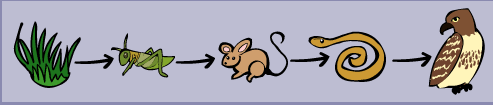
Explain the flow of energy in this food chain (who passes energy to who).
The hawk gives energy to the snake. The snake gives energy to the mouse. The mouse gives energy to the grasshopper who gives energy to the grass.
The mouse gives energy to the hawk. The snake gives energy to the grasshopper. The grass gives energy to the snake.
The grass gives energy to the grasshopper. The grasshopper gives energy to the mouse. The mouse gives energy to the snake who gives energy to the hawk.
The grass gives energy to the grasshopper. The mouse gives energy to the grasshopper. The mouse gives energy to the snake and to the hawk.

Electrical energy to chemical energy
the process whereby plants make their own food is called
adaptation
photosynthess
pollination
germination
Which statement is true about photosynthesis?
A process that is similiar to respiraton
A process that convert oxygen to carbon dioxide
A process that makes sugar out of carbondioxide and water
A process that release water
The question below represent the photosynthesisn process
P + water ⟶ Q + sugar
What is P and Q ?
P : Oxygen, Q : carbon dioxide
P : Chlorophyll, Q : sunlight
P : sunlight, Q is chlorophyll
P is carbondioxide, Q : Oxygen
Which allows exchange of gases to happe in plants?
Chlorophyll
stomata
Vein
Epidermis
Green plants are very important to humans because they.....
give us clothing materials
provide food to us directly and indirectly
Give us shape from the Sun
Are green in color
Forest are said to be our green lungs. why?
Forest have soft leaves like our lungs
Forest are green
Forest release oxygen and absorb carbon dioxide
Forest breathe too like us
rice, peanut and green bean plants store their food in their .....
seeds
fruits
stem
leaves
mango, papaya and tomato plants store their food in their ....
fruit
seed
stem
leaves

sugar cane store their food in their...
seeds
stems
fruits
roots

lettuce store their food in their...
seeds
stems
fruits
leaves

carrots store their food in their...
seeds
stems
fruits
roots
What is the function of chlorophyll in photosynthesis?
to make the plants green
to absorbs water
to absorb sunlight
to absorb carbon dioxide
Which statement is true about photosynthesis?
A process that is similiar to respiraton
A process that convert oxygen to carbon dioxide
A process that makes sugar out of carbondioxide and water
A process that release water
which of the following correctly shows how energy flows through a food chain?
sun --> carnivores --> herbivores --> producers
sun --> producers --> carnivores --> herbivores
sun --> herbivores --> producers --> carnivores
sun --> producers --> herbivores --> carnivores

what is the role of a consumer in the flow of energy through a food chain?
transforming the Sun's energy to make food
obtaining necessary nutrients from the soil
decomposing the remains of living things
gaining energy by eating other living things

