
Font size
 Worksheets
Mega Biochem Unit
Total questions: 89
Worksheet time: 2hrs 32mins
All matter is made of what
energy
atoms
electrons
compounds
The central region of an atom where its neutrons and protons are is its
nucleus
electron cloud
core
center
An atom with atomic number 6 would have how many protons
6
12
3
cannot be determined
What charge does an atom have when it GAINS electrons?
Positive
Negative
Neutral
What two particles determine the mass number?
Protons and electrons
Electrons and neutrons
Protons and neutrons

If the mass number of this chlorine atom is 36, how many neutrons does it have?
17
18
19
can't be determined
Which of the following describes covalent bonds?
Bonds form because of opposite charges
electrons are shared to fill outer electron shells
Electrons are transferred between atoms
Covalent bonds are magical
When an atom loses an electron, it becomes a
positive ion
negative ion
neutral ion
neutral atom
Electrons in the last shell are called
Valence electrons
Hard electrons
Outside electrons
Best electrons
Atoms form bonds with other atoms in order to be ______
Happy
Stable
Not Happy
Friends
The valence shell corresponds to this grouping on the periodic table?
The Groups
The Periods
Ionic compounds
Molecular compounds



What is a TRUE statement of a polar covalent compound?
donates and accepts electrons
shares electrons unevenly
shares electrons evenly
has an electronegativity difference of less than 0.4
What does pH measure?
the amount of hydrogen (H+) ions
the amount of hydroxide (OH-) ions
amount of water
all of the above
Which of the following is the strongest acid?
1
5
3
8
Which of the following is the strongest base?
4
14
7
15
What is a mixture of chemicals that react with a base/acid to keep pH in a particular range?
catalyst
enzyme
water
buffer
What does a base release when placed in water?
hydroxide ions (OH-)
hydrogen ions (H+)
ions
molecules
What does an acid release when placed in water?
hydroxide ions (OH-)
hydrogen ions (H+)
ions
nothing
An acid has a pH
higher than 7
lower than 7
7
greater than 14

Most enzymes are composed of .....
Lipids
Carbohydrates
Proteins
Nucleic Acids
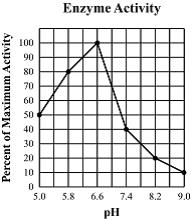
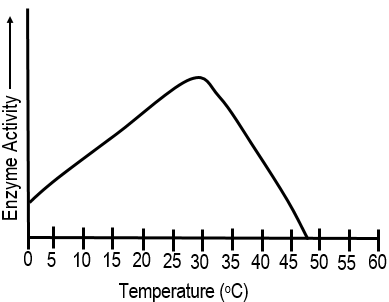
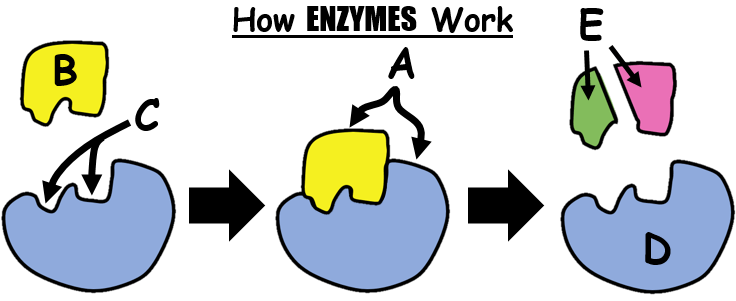

What happens to an enzyme when it denatures?
The activation energy of the reaction is doubled.
The activation energy of the reaction is lowered.
It's optimal conditions for temperature of the enzyme are doubled.
The shape of the enzyme molecule is changed.
Organic compounds are considered organic because they contain ______________ bonded with a hydrogen, where as _____________ compounds do not.
Carbon; inorganic
Hydrogen; organic
Nitrogen; complex
Carbon; organic
Which chemical reaction uses water to break bonds?
dehydration synthesis
hydrolysis
ionization

Carbohydrates contain ONLY these elements:
Carbon, Hydrogen, Oxygen
Carbon, Hydrogen, Oxygen, Nitrogen, Phosphorous
Carbon, Hydrogen, Oxygen, Nitrogen
Hydrogen, Oxygen
Carbohydrates are made of monomers called:
Amino acids
Monosaccharides
Nucleotides
Fatty acids & Glycerol

Because it is composed of TWO (2) monosaccharides, lactose is an example of a:
Polysaccharide
Trisaccharide
Tetrasaccharide
Disaccharide
Carbohydrate functions:
Genetic instructions & Information storage
Short-term energy storage & Structural support
Long-term energy storage & Insulation
Catalyzing chemical reactions & Cell-to-cell recognition

This carbohydrate functions to store short-term energy in the roots and seeds of plants:
Chitin
Cellulose
Starch
Glycogen

This carbohydrate functions to store short-term energy in the muscles and liver of animals:
Chitin
Cellulose
Starch
Glycogen

This carbohydrate functions to provide structural support within the cell walls of plants and serves as the fiber in our diet:
Chitin
Cellulose
Starch
Glycogen

When animals eat a polysaccharide like starch, they digest it into individual glucose monomers through a reactions called:
Hydrolysis
Dehydration synthesis
Condensation reaction
Both dehydration synthesis & condensation reaction are correct
Which carbohydrate is matched correctly?
glucose; monosaccharide
cellulose; monosaccharide
chitin; monosaccharide
fructose; protein

What functional group is shown?
amino
hydroxyl
carboxyl
sulfhydryl

What functional group is shown?
carboxyl
carbonyl
hydroxyl
amino
Functional group(s) in carbohydrates
Carbonyl and hydroxyl
Carboxyl
Phosphate

This picture shows what type of lipid?
unsaturated fat
phospholipid
saturated fat
steroid
Which of the following is NOT a function of lipids?
long term energy
controls what enters/leaves a cell
cell signaling and communication
building of muscles
The tails of phospholipids are
Hydrophilic
Hydrophobic

Which type of lipid is this?
unsaturated fat
triglyceride
phospholipid
steroid

Which of these are examples of Lipids?
simple sugars
complex carbohydrates
fats, oils, & waxes
hair, skin, & nails


Used for growth and repair, includes enzymes
proteins
carbs
lipids
nucleic acids
What elements make up Proteins?
Carbon
Hydrogen
Oxygen
Nitrogen
Carbon
Hydrogen
Oxygen
Hydrogen
Oxygen
Nitrogen
Carbon
Nitrogen
Oxygen

Which monomer is listed?
amino acid
glucose
fatty acid
triglyceride
What is a chain of amino acids called?
polypeptide
polysaccharide
What type of covalent bond joins amino acids together to make a protein?
peptide bond
ionic bond
covalent bond

Which macromolecule is pictured?
nucleic acid
carbohydrate
lipid
protein

The quaternary structure of a protein is
the simplest structure
the most complex level
is less complex than tertiary structure
is less complex than primary structure

The R group in a molecule determines
the function of the molecule
the speed of the molecule
whether the molecule is organic or not

What functional group(s) is/are on the amino acid here (check all that apply)
Carbonyl Ketone
Hydroxyl
Carboxylic Acid
Amine
The monomer of Nucleic acids are:
fatty acid
amino acid
glucose
nucleotide

Which macromolecule is pictured?
carbohydrate
lipid
protein
nucleic acid
The two types of nucleic acids are:
DNA
NA
RNA
TNT
What is the main function of nucleic acids?
store lipids
store genetic information
reproduction
makes carbohydrates
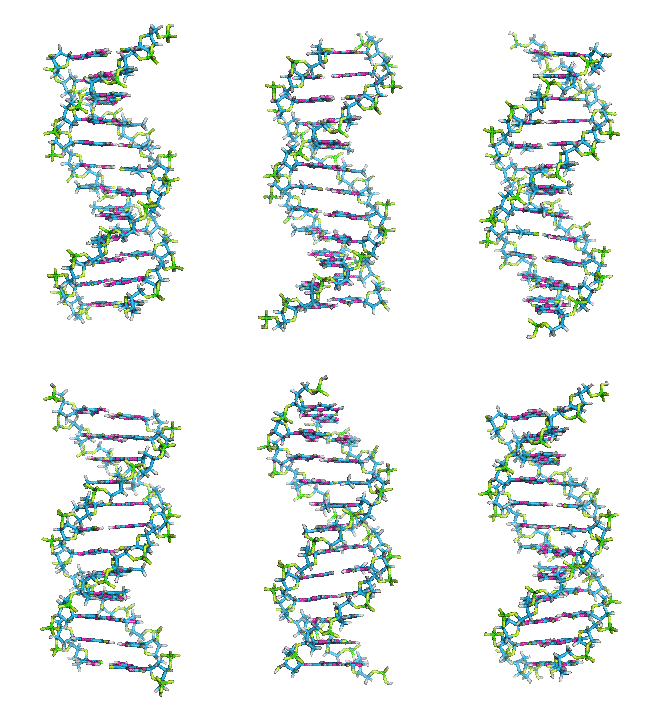
Which type of macromolecule had C-H-O-N-P
carbohydrates
lipids
proteins
nucleic acids

