
 Worksheets
Matter Unit Assessment Review
Total questions: 123
Worksheet time: 1hrs 8mins
Which of the following statements about the mass of an object is correct?
Mass remains constant
Mass changes with location
Mass changes with altitude
Mass changes with gravity
The SI unit of volume is the kilogram.
True
False
Four measurable properties of matter are mass, weight, volume, and pressure.
True
False
The formula for calculating density is _______.
Mass divided by Volume
Volume divided by Mass
Mass x Weight
Mass x Volume
A balloon filled with air does not rise as high as a balloon filled with helium. What does this tell you about the density of helium?
Helium is more dense than air
The two gases have the same density.
Helium is less dense than air
When heated, helium becomes more dense
The SI unit of mass is the cubic meter.
True
False
An object that floats in water has a density less than 1g/mL.
True
False
One liter is equal to 100 milliliters
True
False
The amount of matter in an object is a measure of its _______.
Volume
Density
Weight
Mass
An object's weight is less on the moon than on Earth. On the moon, the object's mass decreases.
True
False
Mass is a measurement of matter. What common units can we use to measure mass?
Ounces
Grams
Liters
Pounds
What units do we use to measure the volume of a liquid, like water or Coca-Cola?
Cubic meters (cm3)
Grams (g)
Grams per cubic centimeter (g/cm3)
Milliliters (mL)
What is the density of water?
1.2 grams per milliliter
1 gram
1 gram per milliliter
.75 grams per milliliter

Which of the following particulate models has a lower density?
Model A
Model B

Read the following chart and answer the question that follows.
The volume of the liquid in graduated cylinder B is:
182 mL
193 mL
182 grams
92 mL
Dylan has two beakers filled with liquids. Beaker A has a liquid with a density of 1.78 grams/mL and Beaker B has a liquid with a density of .64 grams/mL. If Dylan poured the beakers into a graduated cylinder, what would happen?
The liquid in Beaker A would float on the liquid of Beaker.
The liquid in Beaker B would float on the liquid of Beaker A.
The liquids would turn into a solid.
The liquids would combust.
What is the formula for the density of an object?
D = Mass x Volume
D = Volume / Mass
D = Mass + Volume
D = Mass / Volume
Samantha has a solid with a certain density. She knows the mass of the solid is 170 grams and the volume of the object is 20 cubic centimeters. When she calculates the density of the solid, what units should Samantha use?
cm3
grams
grams / cm3
mL
Samantha has a solid with a certain density. She knows the mass of the solid is 120 grams and the volume of the object is 30 cubic centimeters. What is the density of the object?
4 g/mL
40 g/mL
3,600 g/mL
8 g/mL
Your ____________ is a measure of the force of gravity on you.
mass
volume
density
weight
_____________ is the measurement of how much mass of a substance is contained in a given volume.
mass
volume
weight
density
The _____________ of an object is the measurement of the amount of matter in the object.
mass
volume
weight
density
The amount of space that matter occupies is called its _____________.
mass
volume
weight
density
To measure the properties of matter, scientists use the __________________________.
weight
mass
volume
SI units

The table below shows the masses and volumes of four cubes made of different materials. Which two cubes have the same density? (Choose two responses)
Cube 1
Cube 2
Cube 3
Cube 4
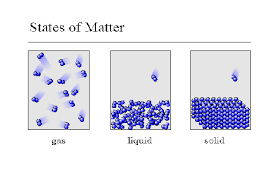
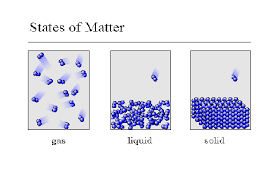

Freezing
Solid to gas
Liquid to solid
Gas to solid

Boiling
liquid to gas
gas to solid
gas to liquid
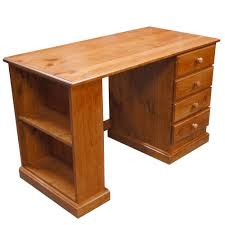

What is happening when my ice cream changes from a solid to a liquid?
freezing
melting
burning

The state of matter that has no definite size or shape is
Solid
Liquid
Gas

Particles in a ______________________ move quickly and are far apart.
gas
solid
liquid

Particles of a liquid
are tightly packed together and stay in a fixed position.
are free to move around one another but still touch.
Solid to Gas
Deposition
Sublimation
Evaporation
What is condensation?
gas to solid
gas to liquid
liquid to solid
The slower the particles in a substance move,
the colder it is.
the warmer it is.
the more energy it has.

Is this a picture of something hot or cold?
Hot
Cold

Is this a picture of something hot or cold?
Hot
Cold

Definite shape and definite volume
Solid
Liquid
Gas

Has a definite volume but not a definite shape
Solid
Liquid
Gas
Liquid to Gas
Condensation
Evaporation
Sublimation
A solid is a state of matter that has a(n)
indefinite volume and indefinite shape
definite volume and a definite shape
definite volume and an indefinite shape
indefinite volume and a definite shape
The freezing point of water is the same as its
melting point
boiling point
sublimation point
evaporation point
An uncovered pot of soup is simmering on a stove, and there are water droplets on the wall above the back of the stove. What sequence can you infer has occurred?
melting, then boiling
freezing, then thawing
vaporization, then condensation
condensation, then vaporization
In a(n) (a) , the particles are packed closely together, but they can move past each other freely.
The common state of matter that does not have a definite shape or a definite volume is a(n) (a) .
The characteristic temperature at which a pure solid changes to a liquid is its (a) point.
A shrinking puddle is an example of (a) , or vaporization that takes place only on the surface.
(a) occurs when a liquid changes to a gas below its surface as well as at the surface.

In which state of matter are the particles least able to move?
A
B
C

Which of these three states represents a liquid?
A
B
C

Which of these three states would you expect to be the most affected by the volume of its container?
A
B
C


All changes in the state of matter of a substance requires the addition or subtraction of
vibration
water
permission
energy
The drops of water that appear on the outside of a glass of cold juice on a warm day are an example of?
sublimation
condensation
evaporation
Which phase change absorbs energy to take place?
freezing
condensation
evaporation
all of the above


Physical properties....
change the matter when studied
can be observed and measured without changing the matter being studied
include the ability to burn and rust
are useless unless studied in a lab
______________________ can only be recognized when substances react or do not react chemically with one another.
Physical properties
Chemical properties
Flammable properties
Colorful properties
Flammability means the ability to _______ and is a _________ property.
melt; chemical
rust; physical
change; physical
burn; chemical
All of the following are examples of physical properties EXCEPT
Density
Heat conductivity
pH (acidic or basic)
Boiling point
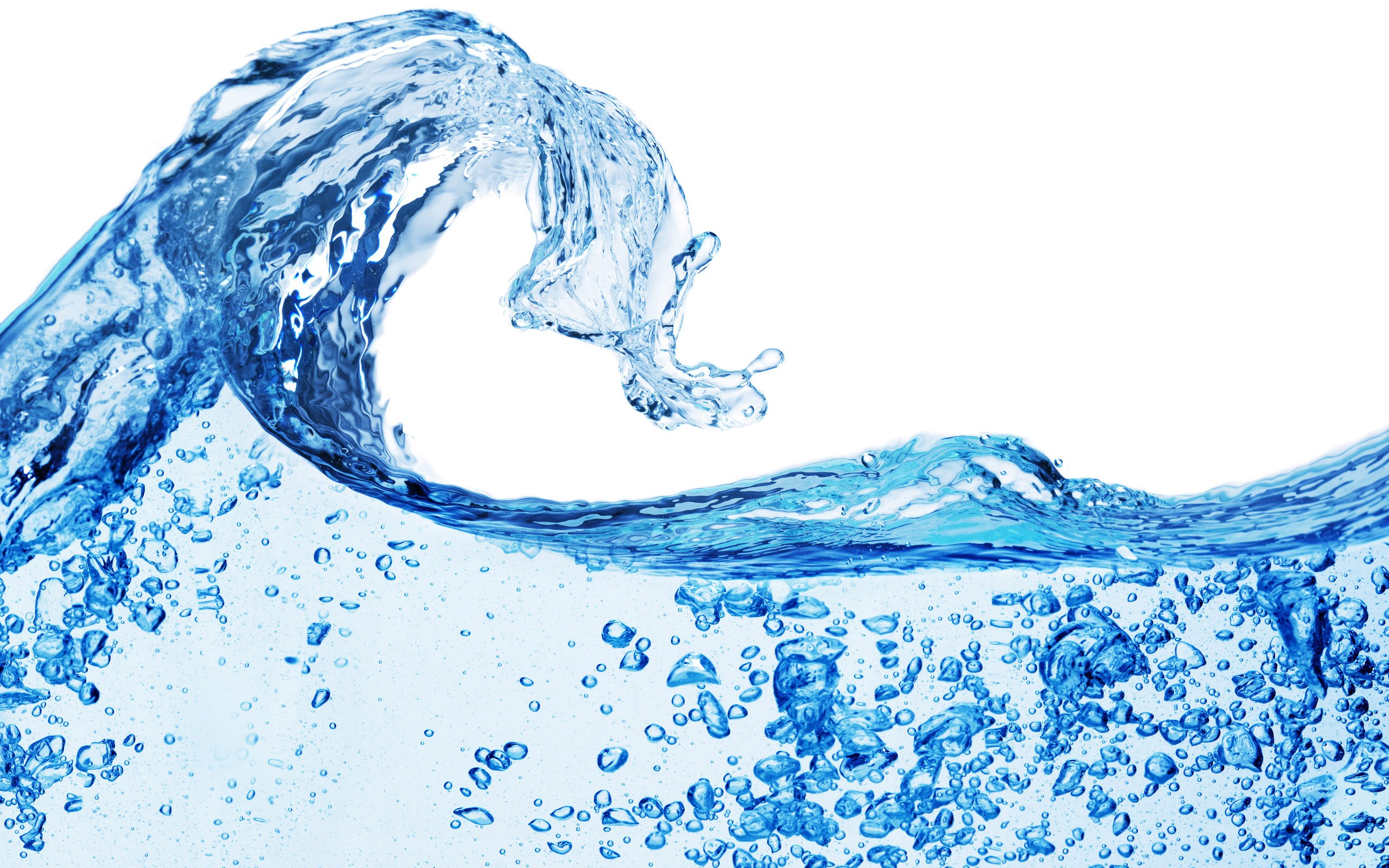
Which of the following is a chemical property of water?
Reacts with pure sodium
Boils at 100 oC
Is liquid at room temperature
Has a density of 1 gm/mL
Choose the one that is a chemical property
Magnetism
Size
Color
Reactivity with water
What is the outcome of observing a chemical property?
Nothing
A new substance is formed with different properties
NaCl
A rise in thermal conductivity

What is the best evidence that an exothermic reaction occurred in the beaker?
color change
the temperature increased
odor
mass decreased

What is the best evidence that an endothermic reaction occurred in the beaker?
color
odor
temperature decreased
gas

What evidence in the picture indicates that a chemical change occurred?
temperature change
odor
gas

What state of matter is image 3?
solid
liquid
gas
Heat will continue to transfer between two areas or objects until
melting point is reached
the colder object absorbs all the heat energy
both objects are the same temperature
all heat is lost to the air

Table salt is edible, therefore the elements that make up table salt must be edible. True or False
true
false
How does thermal energy move?
cold to warmer objects
warmer to cooler objects
solids to liquids

Hot air rises because it is ___________ dense than cooler air
more
less
Mrs. Logan bought a bag of m&m's and carried them home from the store on a hot day. When she got home her candy had begin to melt. Why?
heat transferred from the candy to the bag
heat evaporated from the bag to the candy
heat transferred from the environment to the candy
heat condensed from her hand

Which of the following is true? Choose one answer.
Aluminum is a conductor of heat. Plastic is an insulator (but not as good as foam).
Plastic is a conductor. Aluminum is an insulator.
both aluminum and plastic are good conductors of heat
both aluminum and plastic are insulators.
Styrofoam is best for serving hot cocoa and a milkshake because foam is a(an) ________________.
conductor
insulator

Energy is absorbed by the reaction from the surroundings
endothermic
exothermic

Energy is transferred from the reaction to the surroundings as heat is released
endothermic
exothermic

Which of the following statements is correct about the picture?
2 oxygen atoms are in the reactant and 3 oxygen atoms are in the product, therefore this is NOT a balanced equation.
this equation is balanced based on the image shown

According to the law of conservation of mass, matter cannot be created or destroyed. Which of the following is true?
a
b
c
d

Which of the following is true
Dissolving candy is a physical change because a new substance is NOT formed, this can be reversed.
Dissolving candy is a physical change because the color changed
Dissolving is a chemical change because its irreversible

