
 Worksheets
CHEM2 Finals
Total questions: 50
Worksheet time: 54mins
Consider the reaction: 2 H2O + energy --> 2H2 + O2
exothermic because releasing energy
exothermic because absorbing energy
endothermic because absorbing energy
endothermic because releasing energy

A 500g piece of aluminum has a temperature of 7°C. What is the heat energy produced? Specific heat of Aluminum is 0.900 J/gºC.
3000 J
3000 g
3150 J
3150 g

How much heat does an aluminum block absorb if 10.00 grams is heated from 25.0oC to 50.0oC? *Specific heat of aluminum is 0.900 J/goC
450 J
-450 J
225 J
-225 J

A 24.0 gram sample of copper was heated from 25.0oC to 500.0oC, 4378 J of heat were absorbed, what is the specific heat of copper?
0.384 J/g°C
49909200 J/g°C
2.60 J/g°C
8.77 J/g°C
Endothermic:_________:__________
Exothermic:_________:__________
positive:warm
negative:cold
positive:warm
negative:warm
positive:cold
negative:cold
positive:cold
negative:warm

Use the Hf values provided below to calculate Hrxn for the reaction. (Exclude units in your answer)
CO2(g) + N2(g) ⟶ NO(g) + CO(g) ΔH = ?
Data:
CO(g) = -110 kJ/mol
CO2(g) = -394 kJ/mol
NO(g) = +90 kJ/mol
(a)
How will a rate of reaction be altered if temperature is increased?
reaction rate decreases (goes slower)
reaction rate increases (goes faster)
reaction rate is constant (stays the same)
When a sugar cube is crushed up, the particles get smaller. How has the surface area of the particles changed?
the surface area increases
the surface area decreases
the surface area remains constant
A reaction between which of the following would increase the rate of a reaction and make it occur the fastest? What variable is being manipulated?
10 g of aluminum strip and 0.5 M hydrochloric acid at 20°C
10 g of aluminum strip and 0.5 M hydrochloric acid at 60°C
10 g of aluminum strip and 0.5 M hydrochloric acid at 20°C; concentration is being altered
10 g of aluminum strip and 0.5 M hydrochloric acid at 60°C; concentration is being altered
10 g of aluminum strip and 0.5 M hydrochloric acid at 20°C; temperature is being altered
10 g of aluminum strip and 0.5 M hydrochloric acid at 60°C; temperature is being altered
You have a solution of 0.1 M silver nitrate reacting with a 5 g chunk of salt at room temperature. If you crush/pulverize the salt chunk, how will this alter the reaction rate?
it will make the reaction faster because you are increasing the surface area of the salt
it will make the reaction slower because you are increasing the surface area of the salt
it will make the reaction faster because you are decreasing the surface area of the salt
it will make the reaction slower because you are decreasing the surface area of the salt
How does increasing concentration increase the rate of a reaction?
fewer collisions occur among reactants
more kinetic energy is provided to the reactants
more collisions occur among reactants
less kinetic energy is provided to the reactants
How can you increase the concentration of a reactant?
crush/pulverize the reactant into smaller pieces
increase the molarity of a reactant
add more water to the test tube
increase the temperature of the reacting solutions
You have a 0.2 M aqueous solution of copper (II) sulfate reacting with powdered iron at room temperature. If you put the solution of copper (II) sulfate in an ice water bath, how will this alter the reaction rate when combined with the iron?
it will make the reaction faster because you are increasing the temperature of the solution
it will make the reaction slower because you are increasing the temperature of the solution
it will make the reaction faster because decreasing the temperature of the solution
it will make the reaction slower because you are decreasing the temperature of the solution
You have 1 M HCl reacting with 5 g of granular magnesium at room temperature. If you add water to the 1 M HCl, how will this alter the reaction rate?
it will make the reaction faster because you are increasing the concentration
it will make the reaction slower because you are increasing the concentration
it will make the reaction faster because you are decreasing the concentration
it will make the reaction slower because you are decreasing the concentration
You have a solution of 0.1 M silver nitrate reacting with a 5 g chunk of salt at room temperature. If you crush/pulverize the salt chunk, how will this alter the reaction rate?
it will make the reaction faster because you are increasing the surface area of the salt
it will make the reaction slower because you are increasing the surface area of the salt
it will make the reaction faster because you are decreasing the surface area of the salt
it will make the reaction slower because you are decreasing the surface area of the salt
Which best describes a catalyst?
decreases reaction rate by raising activation energy
increases reaction rate by lowering activation energy
prevents reaction
raises activation energy no matter what
Calculate the equilibrium constant (Kc) for the given reaction
N2 (g) + 3H2 (g) ↔ 2NH3 (g)
At equilibrium [N2] = 0.34 M, [H2] = 0.13 M, and [NH3] = 0.19 M.
48
33
48.0
33.07

Calculate the equilibrium constant (Kc) for the given reaction and tell whether equilibrium lies to the left or the right.
2NO (g) + Br2 (g) ↔ 2NOBr (g)
At equilibrium [NO] = 0.5 M, [Br2] = 0.25 M, and [NOBr] = 3.5 M.
56 lies to the right
200 lies to the right
196 lies to the left
56 lies to the left
Consider the following system at equilibrium:
CH4(g) + 2H2O (g) ↔ CO2 (g) + 4H2O (g)
Suppose the concentration of CH4 decreased, in which direction does the reaction shift to reestablish equilibrium?
The reaction shifts to the left
The reaction shifts to the right
What is the Kc expression for this reaction? 2 NO(g) + O2(g) ⇌ 2 NO2(g)
Kc = [NO2]2 / [NO]2 [O2]
Kc = [NO]2 [O2] / [NO2]2
Kc = [NO]2 [O2] [NO2]2
Kc = [NO2]2 / [NO]2 + [O2]
Consider the following reaction: 2SO2(g) + O2(g) <=> 2SO3(g): ΔΗ = - 197 kJ mol -1 Which of the following will NOT shift the equilibrium position to the right?
Adding more O2
Adding a catalyst
increasing the pressure
Lowering the temperature
Left (towards reactants)
Right (towards products)
Does not affect equilibrium
Left (towards reactants)
Right (towards products)
Does not affect equilibrium
N2O4 → 2NO2
Write the equation for the equilibrium constant:
K = [N2O4][NO2]
K = [NO2][N2O4]
K = [N2O4][NO2]2
K = [NO2]2[N2O4]
146C --> 0-1e + ________
94Be + 11H → _____ + 42He
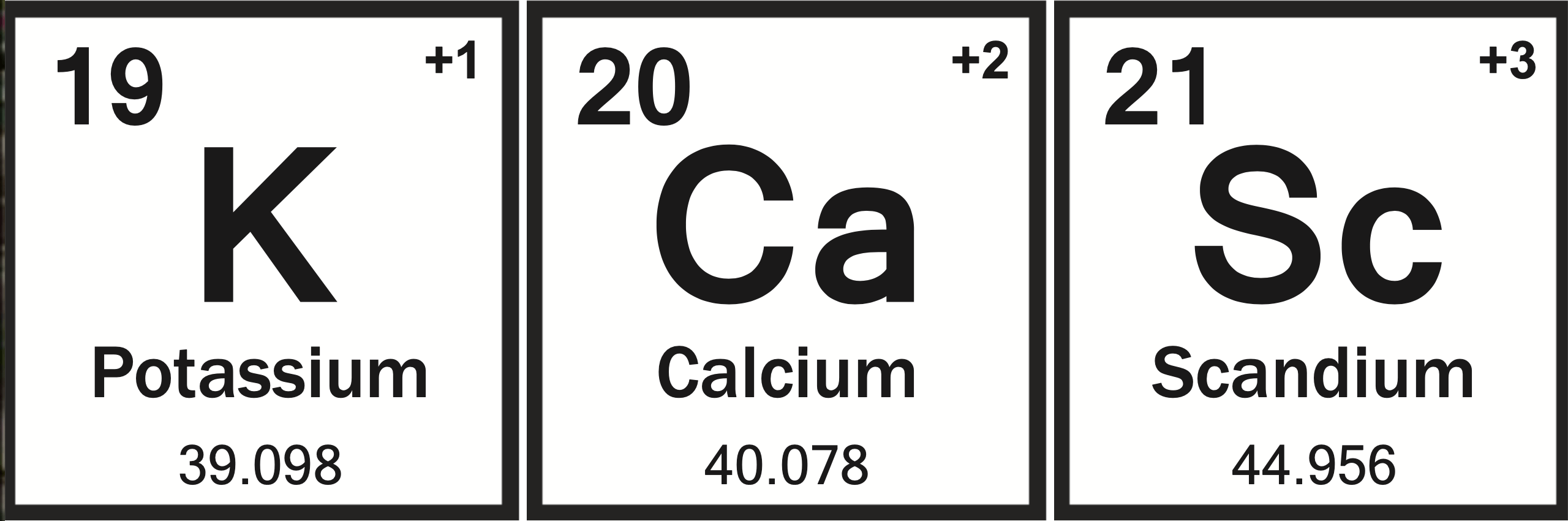
If an atom of potassium-40 (K) goes through gamma decay, what would you have at the end?
Potassium-40
Calcium-40
Argon-35
Potassium-39

When the isotope 5024X releases a beta particle we get another element, Y, that looks like
5023Y
4622Y
5025Y
5024Y
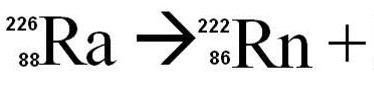
Complete the nuclear equation and determine the type of decay that is occurring in this reaction.
alpha, 42He
beta, 0-1e
gamma
none
7534Se + 0-1e --> 7533As


What functional group is shown?
amino
hydroxyl
carboxyl
sulfhydryl

What functional group is shown?
carboxyl
carbonyl
hydroxyl
amino

Identify the functional group.
Benzene ring
Carbon-carbon double bond
Carbonyl
Carboxyl

Identify the functional group.
Carbonyl
Carboxyl
Hydroxyl
Carboalkoxy

Identify the functional group.
Carboalkoxy
Carbon-carbon double bond
Halogen
Acyl chloride

Identify the functional group.
Halogen
Amino group
Anhydride
Nitro group
Neutral solutions have a pH of:
0
1
7
14
Acid or Base?
Ca(OH)2 → Ca2+ + OH-
Base
Acid
What is the pH of 0.0004M HF?
4
3.39
3.40
What is the pH of a solution with a concentration of 2.6 x 10⁻⁴ KOH solution?
3.59
14
10.41
4
TRUE OR FALSE?
Bronsted-Lowry Base accept the proton (H+)
TRUE
FALSE
Identify the Bronsted-Lowry Acid-Base in the given equation.
HNO3 + CH3OH → NO3- + CH3OH2
Base + Acid → Acid + Base
Acid + Base → Base + Acid
Acid + Base → Acid + Base
A solution has a pOH of 10.34
Is it an Acid or a Base?
Acid
Base
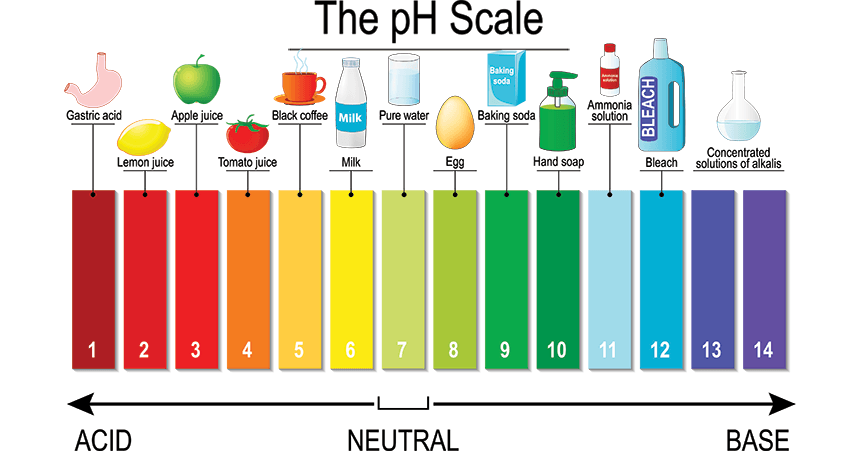
Which of the following represents an Acid?
pH = 12
pOH = 3
pOH = 12
[H+] = 2.3 x 10⁻¹⁰
In the equation below, OH- would be considered a ______
NH3 + H2O --> NH4+ + OH-
Conjugate Acid
Conjugate Base
Salt

